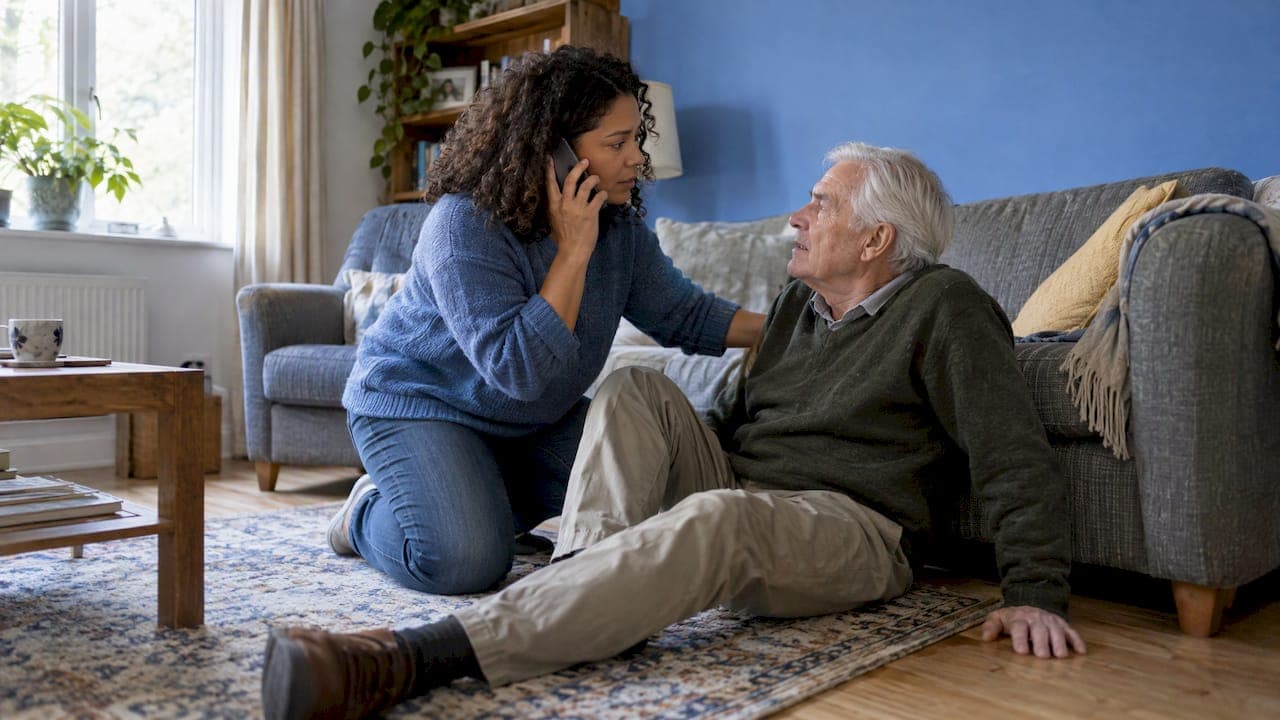
Incident escalation means moving a problem up to the right person at the right speed. For a caregiver, that usually means this: if a life is in danger, call 911 first. If it is urgent but stable, call the person's clinician or the supervising nurse. Then tell the family, and write down what happened while it is fresh. This guide walks nannies, au pairs, senior caregivers and the families who hire them through each step, so nobody has to improvise in a stressful moment.
TL;DR
- Life-threatening situations (trouble breathing, choking, stroke signs, uncontrolled bleeding) mean calling 911 immediately, before anyone else.
- After 911, the usual order is the person's doctor or nurse, then the family or other responsible parties.
- Suspected abuse, neglect or exploitation is a separate path: reporting rules differ by state, so learn yours.
- Write a factual report with time, date, place, who was present, what you saw and heard, and who you told.
- Agree on the plan with the family before the first shift, and keep emergency details in one place everyone can reach.
Table of Contents
- What counts as an incident
- The escalation ladder: 911 first, then everyone else
- De-escalating before it becomes an incident
- Who to notify after the incident
- Suspected abuse, neglect or exploitation
- What to put in an incident report
- Prepare before anything happens
- Put the plan in one place
- FAQ
- Sources
What counts as an incident
An incident is anything that puts the health, safety or welfare of the person in your care at risk, or that the family would want to know about right away. Some are obvious, like a fall with injury. Others are quieter, like a missed medication or a visitor who makes the person uncomfortable.
Official definitions give a useful picture. Pennsylvania's Office of Long-Term Living describes a critical incident as an occurrence that jeopardizes a participant's health or welfare. Its examples include death, serious injury or hospitalization, staff misconduct, abuse, neglect, exploitation, service interruption, and medication errors that lead to an ER visit or other medical intervention.
Louisiana's Department of Health goes further in its Critical Incident Reporting Manual. Its categories also include extortion, falls, major behavioral incidents, involvement with law enforcement, and loss or destruction of a participant's home. These programs apply to publicly funded services, so your household may not be bound by them. They are still a sound checklist for what deserves a phone call.
A simple way to sort what you see
- Emergency: a threat to life right now. Call 911.
- Urgent: a sudden change that is not immediately life-threatening, such as a new fever, a fall without obvious injury, or a medication taken twice. Call the doctor, nurse or supervising provider, then the family.
- Reportable: anything involving suspected abuse, neglect, abandonment or exploitation. Follow your state's reporting process.
- Notable: a bad night, a refused meal, a behavior change, a near miss. Log it and tell the family at handoff.
The US Nanny Association's code of conduct states that nannies should report suspected abuse, neglect, abandonment or exploitation to the appropriate authorities as required by law.
The escalation ladder: 911 first, then everyone else
The most common mistake is calling the family first because it feels polite or familiar. When life is at risk, that costs minutes.
Johns Hopkins Medicine, citing the American College of Emergency Physicians, lists conditions that need an immediate 911 call. They include trouble breathing, choking, chest or upper belly pain lasting two minutes or more, fainting or sudden dizziness, vision changes, confusion or a change in mental status, sudden or severe pain, uncontrolled bleeding, severe vomiting or diarrhea, coughing or vomiting blood, trouble speaking, and numbness or weakness in any part of the body.

For seniors, the AMDA Caregiver Communication Guide gives a clear sequence. If the situation appears life threatening, call 911 immediately. The order is then: call 911, call the older adult's primary care practitioner, and call family or other responsible parties.
Matching the response to the level
| Level | Examples | First call | Then |
|---|---|---|---|
| Emergency | Choking, stroke signs, severe bleeding, seizure that will not stop | 911 | Doctor or nurse, then family |
| Urgent | New fever, minor fall, medication error without symptoms | Doctor, nurse or supervising provider | Family |
| Reportable | Suspected abuse, neglect or exploitation | 911 if danger is immediate, otherwise the reporting agency | Family, if safe to do so |
| Notable | Mood change, skipped meal, near miss | Log it | Family at handoff |
A professional training resource describes the same two-tier idea. For severe situations such as sudden chest pain, stroke signs, or severe allergic reaction, call 911 and then notify the nurse and family. For urgent changes that are not immediately life-threatening, call the supervising nurse or provider.
If a child is involved, the same logic applies: 911 for anything life-threatening, then the parents. Parents should put the pediatrician's number and the poison control line next to the emergency contacts so the nanny never has to search.
Calling 911 well
- Say where you are first, with the full address and any gate code.
- Describe what you see, not what you guess.
- Stay on the line until the dispatcher ends the call.
- Have the medication list, allergies and the person's date of birth ready for the responders.
That last point matters more than most families realize. The ranking guidance on working with EMS personnel is one reason to keep a one-page summary by the door, but the principle is simple: responders decide faster when the information is in front of them.
De-escalating before it becomes an incident
Not every incident is medical. A frightened senior with dementia, an overtired toddler in a meltdown, or a family member in a heated argument can all turn into a safety problem. Early de-escalation often prevents the need for escalation.
The University of Pittsburgh's child welfare training materials list basic principles for personal safety: stay calm, slow your responses, lower your voice, acknowledge anger or fear, show empathy, share information and explore alternatives.
Autism Speaks adds practical steps in its crisis planning toolkit. Reduce environmental stressors by removing triggers or distracting elements, and use clear, simple language when giving directions to an agitated person.
Keep yourself safe too
A caregiver who is hurt cannot help anyone. The same Pittsburgh handout advises carrying a phone whenever possible, knowing where the exits are and keeping a clear path to them, and leaving if the situation continues to escalate. Leaving the room, or the home, and calling for help is a sound decision, not a failure of care.
After a hard moment, record what happened before the behavior began, what you tried, and what helped. That pattern is what a doctor or the family needs to change the plan.
Who to notify after the incident
Once the immediate danger is handled, tell the right people in a sensible order. A good default is:
- Emergency responders, if needed.
- The person's doctor, nurse or supervising provider.
- The family member or employer in charge of care.
- Anyone else named in the care plan, such as a second caregiver covering the next shift.
Au pairs have an additional path. The State Department's Au Pair Program resource page says that in an emergency au pairs should contact their sponsor. If more help is needed, they can call the State Department's 24/7 hotline. The same page notes that sponsors must report any serious incident that has or could have the effect of endangering an exchange visitor's health, safety or welfare, and that a quick email about an evolving situation may be followed by a formal incident report. Host families should therefore expect the sponsor to be told.
Speed matters, but so does tone. Give the family the facts plainly: what happened, when, what you did, and the current condition. Save opinions for later.
Suspected abuse, neglect or exploitation
This category follows different rules from an ordinary injury. The HHS guidance on reporting elder abuse says to call the police or 9-1-1 immediately if someone is in immediate, life-threatening danger. If the danger is not immediate but you suspect abuse is occurring, relay your concerns to local adult protective services, the long-term care ombudsman, or the police.
State law decides who must report. In Texas, for example, the Attorney General's office states that if you are aware of a specific act of abuse, neglect or exploitation of a senior, you are required by law to report it. Requirements differ across the country: a 2020 review of reporting duties found that rules vary across the United States, even for professionals trained in them.
What this means in practice:
- Look up your state's adult protective services and child protective services numbers and save them in your phone.
- Do not investigate on your own or confront the suspected person.
- Report what you observed. You do not need proof.
- Families should write the reporting numbers into the care plan so a new caregiver knows them on day one.
If you are unsure whether something rises to a reportable level, ask your state agency. They would rather take a call than miss one.
What to put in an incident report
A written report protects the person in care, the caregiver and the family. Keep it short, factual and prompt.
Maryland's assisted living regulation shows what a thorough report looks like. It requires the time, date and place, the individuals present, a complete description, the staff response, required notifications and follow-up activities, and staff must finish it within 24 hours of learning of the incident. That rule governs assisted living in Maryland, but the structure works well for a home setting, and finishing it the same day is a good habit.
A report template you can copy
- When and where: date, time, room or location.
- Who was there: the person in care, other people, any witnesses.
- What happened: in order, in plain words.
- What you did: first aid, calls made, who arrived.
- Who was told and when: family, doctor, sponsor, agency.
- Follow-up: what changes, what to watch for, what the doctor said.
Stick to what you saw and heard
Good documentation describes what the reporter saw and heard in sequence, without conclusions, blame or speculation. Incident reports may also be discoverable in a legal dispute. Write "Mom was on the kitchen floor, said her hip hurt" rather than "Mom fell because the rug was a hazard."
For more formats, our guides to caregiver report templates for shift handoffs and the caregiver daily log show how short notes each shift make an incident report much easier to write later. If you are deciding what records the household must keep, see what caregiver compliance reports should include.
Prepare before anything happens
Most escalation failures come from missing information, not missing courage. A caregiver who cannot find the doctor's number or the medication list loses time at the worst moment.
Autism Speaks recommends that crisis plans be developed with the team and family, with hands-on training and practice for caregivers and staff. That advice fits any household, not only those caring for someone with autism. A 20-minute walkthrough on the first day is worth more than a long document nobody reads.
The family's pre-shift checklist
- Emergency contacts, in order of who to call first, with a backup.
- Allergies, medications, doses and times.
- Doctor, pediatrician or clinic numbers, and the preferred hospital.
- Which situations mean 911, and which mean a call to the family.
- Where the first aid kit, spare keys and insurance cards are.
- Quiet-hours rules: whether it is fine to call at night, and when.
- Who is in charge when the main contact cannot be reached.
Make the information easy to reach
Paper on the fridge helps, but it goes out of date. When several people share care, a single source of truth reduces mistakes. Our guides on coordinating multiple caregivers and senior caregiver coordination explain how to build that shared plan. Because care records are sensitive, review how to protect caregiver data before sharing health details.
Scheduling gaps also create risk. When a shift is uncovered or double-booked, someone is left without help. See what to do about caregiver schedule conflicts before they turn into a safety problem.
Our perspective on escalation
We build tools for nannies, au pairs and caregivers, and we see the same pattern in households that handle incidents well: everyone knows who to call, and the information they need is already in front of them.
We believe the caregiver should never have to hunt for an allergy, a medication or an emergency contact. That is why our app is designed to let caregivers view allergies, medications, emergency contacts, nap and nursing schedules and daily activities in one place, and why it is free for caregivers.
We also believe clear hours and clear records build trust. When a family can see the schedule and a caregiver can show accurate time, conversations after a hard day stay about the person in care, not about who was where.
Escalation is a skill. Families make it easier by agreeing on the plan before the first shift, and we are glad to help households put that structure in place.
mercedes
Put the plan in one place
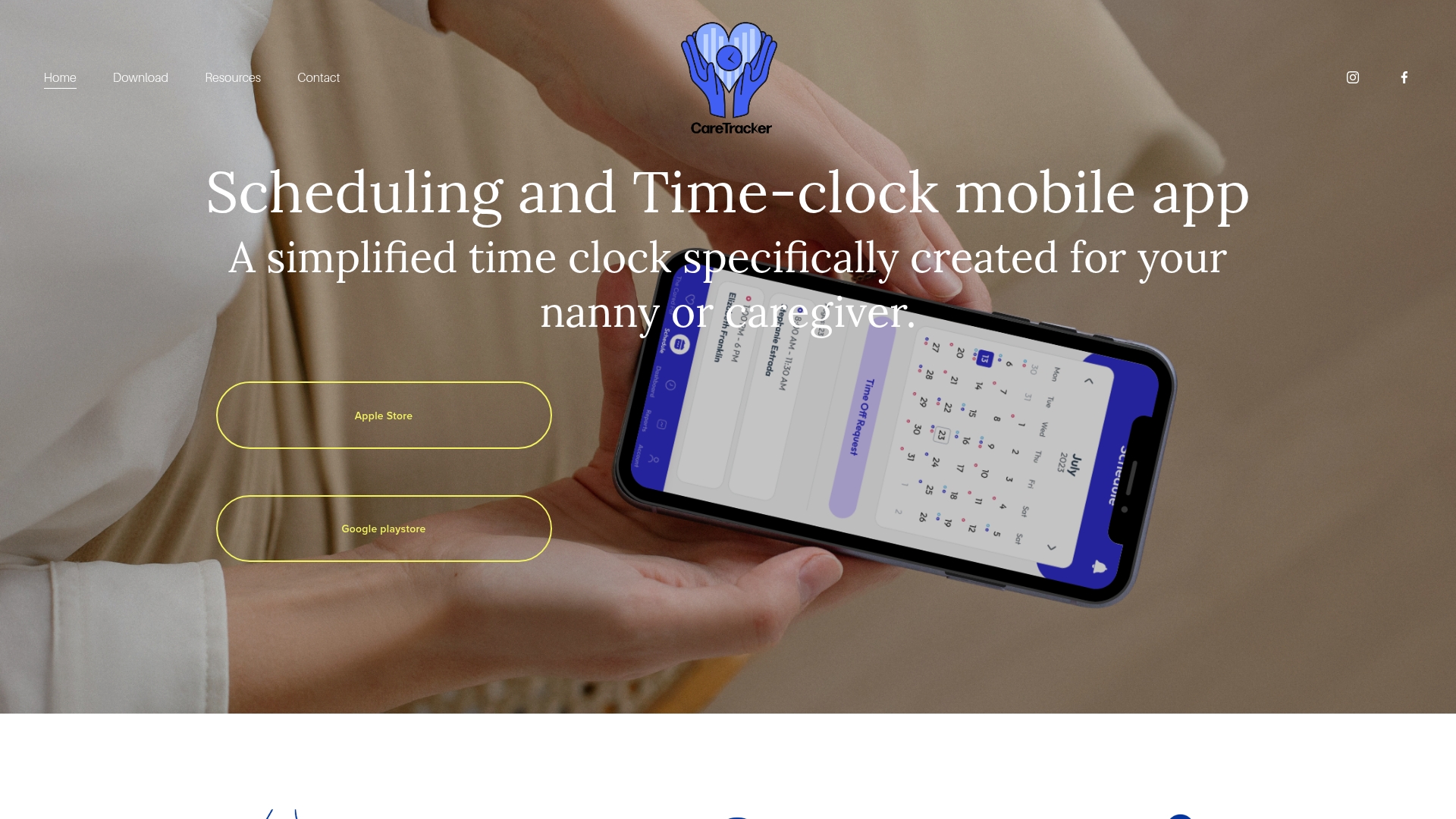
If you are a household employer, the plan is only as good as the records behind it. Our free mobile app gives caregivers their schedule, a unified calendar of jobs, accurate weekly hours and quick access to key care details, so you and your caregiver work from the same information. See the Scheduling and Time-clock app or the nanny time tracking page.
If you also need help with household payroll, we offer a one-off Standard Payroll Consultation package for $150, and a Premium consultation for $150. For hours and pay rules, our guide to caregiver time tracking for families covers the federal rules in five steps.
FAQ
Should a caregiver call the family or 911 first?
Call 911 first whenever the situation appears life threatening. The AMDA guide sets the order as 911, then the older adult's primary care practitioner, then family or other responsible parties. For urgent but stable problems, call the doctor or nurse, then the family.
What if I am not sure it is an emergency?
Treat symptoms such as trouble breathing, confusion, sudden severe pain or numbness as reasons to call 911 right away. For anything less clear, call the doctor, nurse or supervising provider and describe exactly what you see. Keep notes of the time and symptoms for whoever answers.
Am I legally required to report suspected abuse?
It depends on your state and your role. Some states, such as Texas, require anyone aware of a specific act of elder abuse, neglect or exploitation to report it. Check your state's adult or child protective services for the rule that applies to you.
How soon should I write the incident report?
As soon as the person is safe, and ideally the same day. Maryland's assisted living rule gives staff 24 hours from learning of the incident, which is a sensible benchmark. Write only what you saw and heard, in order.
What should an au pair do in an emergency?
Call 911 for a life-threatening emergency, then contact the program sponsor. If more help is needed, the State Department runs a 24/7 hotline for au pairs. Host parents should keep the sponsor's contact details with the emergency list.
Sources
- Code of Conduct, US Nanny Association
- Critical Incident Reporting Manual, Louisiana Department of Health
- OLTL Critical Incidents and Protective Services Webinar, Pennsylvania DHS
- Au Pair Program Resource Page, BridgeUSA
- When to Call For Help, Johns Hopkins Medicine
- Caregiver Communication Guide, AMDA
- When to Call for Help and Who to Call, HomeHealthGuys Academy
- Several Basic Principles to Assure Personal Safety, University of Pittsburgh
- Planning for a crisis, Autism Speaks
- How do I report elder abuse, HHS.gov
- How to Spot and Report Elder Abuse and Neglect, Texas Attorney General
- Reporting interpersonal violence and abuse, PubMed Central
- Md. Code Regs. 10.07.14.33, Incident Reports
- Mental Health Incident Report Example, BastionGPT