
Medication authorization for caregivers means written consent, a signed care plan, or a nurse-delegated order that spells out exactly which medication tasks you're allowed to perform for the person in your care. Before you assist with or administer a single dose, get that authorization in writing from the prescriber, a delegating nurse, or the family member who holds healthcare decision authority.
Your first move should be:
- Confirm a signed care plan or prescriber instruction exists for every medication.
- Get contact information for the prescriber, the primary pharmacist, and one responsible family member.
- Ask directly, "Am I authorized to administer this, or only to assist?"
Key Takeaways
Medication authorization for caregivers requires written consent or nurse delegation, an accurate two-copy medication list, and a documented plan for pharmacy pickups and emergencies.
| Point | Details |
|---|---|
| Get authorization first | Secure a signed care plan, prescriber order, or nurse delegation before assisting or administering. |
| Know your scope | Assisting means reminding or organizing; administering usually requires clinical delegation. |
| Keep two medication lists | Maintain a printed wallet card and a synced digital version, updated after every change. |
| Call the pharmacy ahead | Confirm ID and authorization requirements before picking up controlled substances. |
| Centralize daily logging | Thecaretracker lets caregivers store medication lists and share real-time updates with family and nurses. |
Table of Contents
- What's the difference between assisting and administering medication?
- How do you get written authorization or consent as a caregiver?
- What should a complete medication list include?
- What do pharmacies require for controlled-substance pickups?
- How do you build a daily medication routine that actually holds up?
- What should you do immediately after a medication error?
- Why medication authorization deserves more attention than it gets
- Put your medication list where the whole care team can see it
- Where to read more on caregiver medication management
- Sources
What's the difference between assisting and administering medication?
Assisting means reminding someone to take a pill, opening a bottle cap, or handing over a pre-filled organizer. Administering means physically giving the medication, drawing up an injection, or making a judgment call about timing or dosage. That second category almost always requires clinical training or formal nurse delegation before you touch it.
The line matters because crossing it without authorization can put the care recipient at risk and leave you legally exposed. A home health aide who hands someone their morning pills from a labeled organizer is assisting. A caregiver who crushes a tablet, mixes it into food, or gives an injection is administering, and that requires a documented delegation from a licensed nurse in most states.
Watch for these red flags that mean stop and call a clinician:
- You're asked to give a medication you don't recognize or that isn't on the authorized list.
- The dose looks different from what's written on the label or care plan.
- The person shows confusion, breathing trouble, or an unusual reaction after a dose.
Pro Tip: Keep the nurse delegation document or prescriber order in the same folder as your medication list. If a family member or new caregiver ever questions your scope, you show the paper instead of explaining from memory.
How do you get written authorization or consent as a caregiver?
Securing authorization isn't a single form; it's a short sequence of calls and signatures that, once done, protects everyone involved.
- Call the prescriber's office and ask specifically: "Can you send a written order or care plan authorizing [caregiver name] to assist with or administer these medications?" Most offices have a standard release form for this.
- Contact the home health nurse, if one is involved, and request formal nurse delegation for any task beyond reminders, refills, or organizer prep.
- Get the family or legal decision maker's signature on a caregiver authorization form that names you specifically and lists the medications covered.
- Request the pharmacy's contact details in writing, including the pharmacist's direct line, so you're not searching for it during a pickup emergency.
Documents worth requesting and keeping on file:
- A signed medication administration record (MAR) or care plan
- The prescriber's written order for any administration task
- A signed caregiver authorization or consent form naming you and the scope of your role
- Pharmacy and prescriber contact sheets, updated whenever a provider changes
Record every signature with a date, and write the exact scope next to it, not just "medication help" but "administer morning insulin injection only." Vague authorization creates confusion later. Set a reminder to revisit the paperwork every 90 days or whenever a medication, dose, or diagnosis changes, since old authorizations tied to outdated prescriptions won't hold up if something goes wrong. This kind of documentation belongs inside a broader home care plan so it doesn't live as a loose sheet of paper that gets lost between shifts.
What should a complete medication list include?
A medication list is the single most important safety document a caregiver keeps, and it needs to answer six questions at a glance: what, how much, when, why, who prescribed it, and since when. Each entry should include the drug name, strength, dosing schedule, reason for use, prescribing provider, start date, and any known allergies or reactions. Don't leave off over-the-counter drugs or supplements; interactions there cause real harm.
Many caregivers handle medication management tasks like filling prescriptions, tracking adherence, and watching for side effects, which is exactly why a sloppy or outdated list becomes dangerous fast.
Keep two versions, always synced:
- A printed, wallet-sized card that works even when a phone dies or has no signal
- A digital version, whether an app field or a photo of pill bottle labels, backed up to the cloud
Pill organizers and blister packs help daily accuracy, but they're only as good as the list behind them. Photograph every new prescription label the day you fill it. That single habit closes most of the gaps between "what the bottle says" and "what the list says," which is where dosing errors start. A caregiver medication log template makes this easier to standardize across shifts or family members.
What do pharmacies require for controlled-substance pickups?
Call the pharmacy before you drive there, especially for controlled substances. Many pharmacies check state prescription drug monitoring programs and require a government-issued photo ID that matches the name on file, and some will refuse pickup outright if your ID doesn't match their authorization records.
Ask the pharmacy these questions in one call:
- Is a signed caregiver authorization or power of attorney required for pickup?
- Does your ID need to be on file in advance, or can you bring it the day of pickup?
- Are there separate rules for mail-order refills versus in-person pickup?
Documentation that commonly satisfies pharmacy staff includes a signed authorization form, a power of attorney, and a photo ID. Bring all three the first time you pick up for someone, since you won't know which one the pharmacy actually wants to see until you're standing at the counter.
Pharmacists are also an underused resource for more than just dispensing. They can flag dangerous interactions, suggest a liquid or patch formulation if pills are hard to swallow, and set up blister-pack compliance packaging that cuts down on missed or doubled doses.

Pro Tip: Ask the pharmacist directly, "Can you set up compliance packaging for these medications?" It's a free service at many pharmacies and it turns a confusing pill regimen into one sorted, dated pack per day.
How do you build a daily medication routine that actually holds up?
Authorization and a good list only work if you follow the same routine every day. Start each shift with a quick review, and end it with a log entry, so nothing depends on memory.
- Review the MAR or medication list at the start of your shift.
- Confirm each dose taken, and log any missed or delayed dose immediately, not at the end of the day.
- Check refill status weekly so a prescription never runs out on a weekend.
- Share updates with family or the nurse the same day something changes.
An app like CareTracker centralizes this instead of scattering it across sticky notes and text threads. You can store the medication list, set dose reminders, and give a family member or nurse read-only access so everyone sees the same information in real time. If the phone dies or the app is down, fall back to the printed card and paper log. Anything that looks like an adverse reaction still means calling the prescriber, not waiting for a digital fix.
| Point | Details |
|---|---|
| Daily review | Check the MAR or list at shift start, before touching any medication. |
| Log immediately | Record missed or delayed doses the moment they happen, not later. |
| Weekly refill check | Confirm supply so nothing runs out over a weekend or holiday. |
| Shared access | Use an app like CareTracker so family and nurses see the same updated log. |
What should you do immediately after a medication error?
Speed and documentation matter more than anything else in the first few minutes after a mistake.
- Assess severity first. Check breathing, alertness, and any visible reaction before doing anything else.
- Call for help based on severity: the prescriber for a mild concern, poison control for a suspected overdose, or 911 for a severe reaction.
- Write down the time, the medication, the dose given, and the symptoms observed, while it's still fresh.
- Notify the family and the delegating nurse the same day, not at the next scheduled check-in.
A repeated error or a new adverse reaction is a signal to revisit the care plan, not just log the incident and move on.
Why medication authorization deserves more attention than it gets
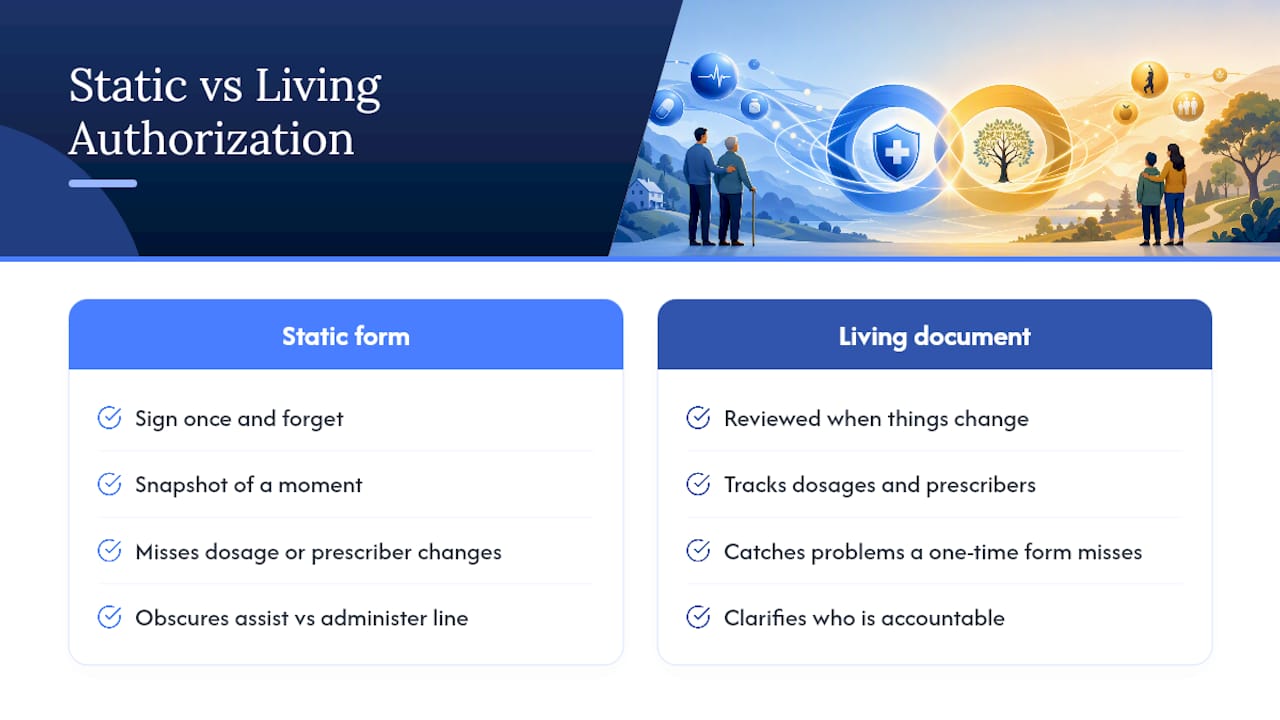
Most caregiving advice treats medication authorization as paperwork, something to sign once and forget. That's backwards. The paperwork is a snapshot of a moving target: dosages change, prescribers change, and a caregiver's scope of practice can shift after a hospitalization or a new diagnosis. Treating the authorization form as a living document, reviewed every time something changes, catches problems that a one-time signature never will.
The bigger blind spot is the assist versus administer line. Families often assume that if a caregiver is trustworthy and experienced, the legal distinction doesn't matter much in practice. It matters constantly, because it determines who is accountable when something goes wrong, and because insurance and liability protections frequently hinge on whether a task was properly delegated. Caregivers who write down medication logs and share them, using something as simple as a medication log built for this exact purpose, protect themselves as much as the person they're caring for.
— mercedes
Put your medication list where the whole care team can see it
Thecaretracker gives caregivers a free way to keep the medication list, schedule, and authorization details in one place instead of split across paper, text messages, and memory. You can log allergies, medications, and nursing schedules directly in the app, then give family members or a nurse read-only access so nobody has to ask "did she take her pills yet" over text.
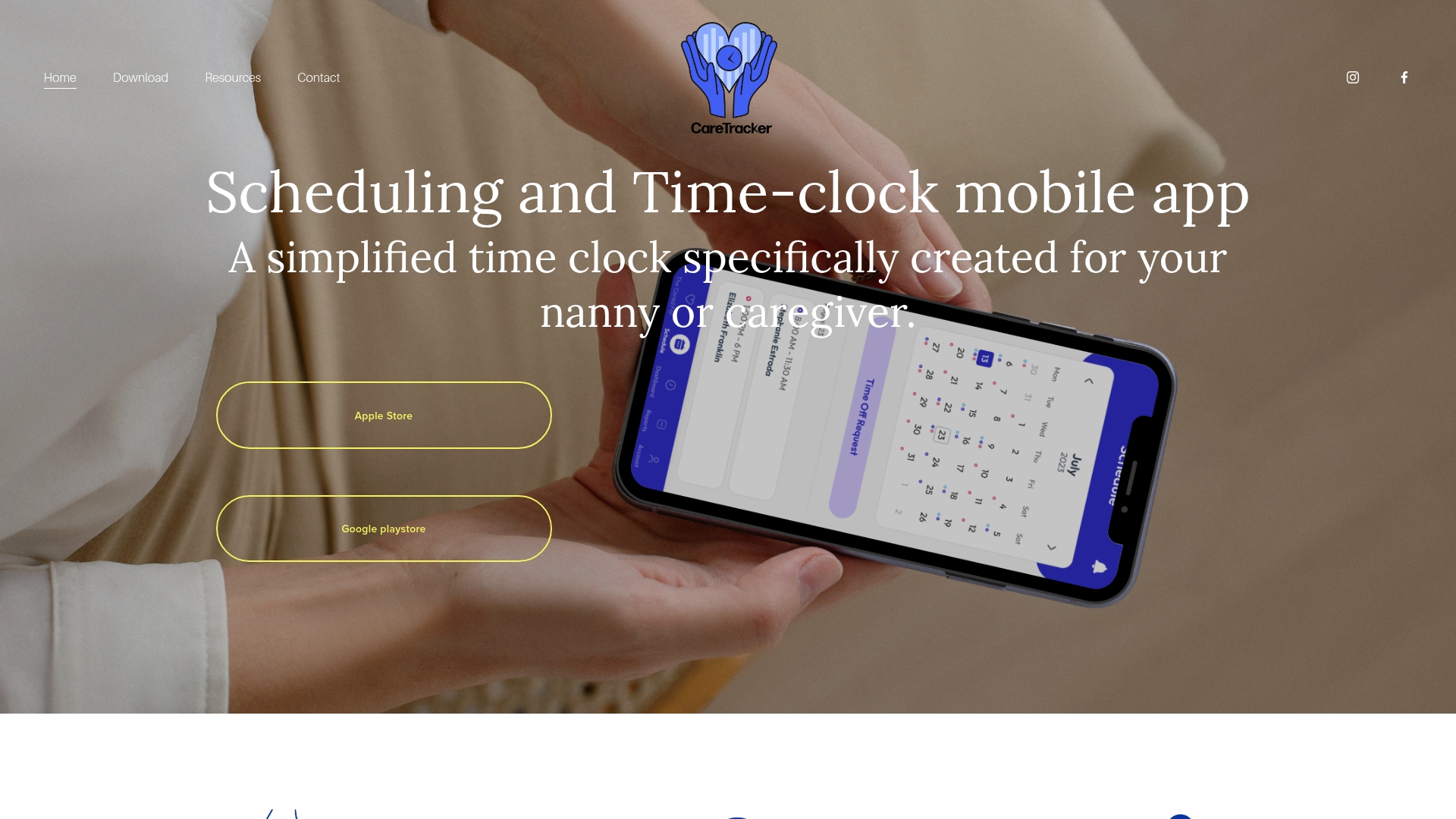
Start by creating a care recipient profile and entering the current medication list, then turn on shift reminders so doses don't get missed during handoffs. If you're juggling multiple caregivers on rotation, the shared calendar keeps everyone working from the same information instead of separate notes. Thecaretracker supports documentation and handoff between caregivers, but it doesn't replace a prescriber's order or a nurse's formal delegation. You'll still need those signed first. Once you have them, set up your free CareTracker account and build your first medication list today.
Where to read more on caregiver medication management
- Caregiver Action Network covers survey data on caregiver medication responsibilities.
- MedlinePlus offers plain-language guidance on working with pharmacists.
- AARP's caregiver guide walks through appointment prep and organization tools.
- Akerman's legal note explains ID rules for controlled-substance pickups.
- Workit's healthcare HR resource covers secure access considerations for caregiving teams.
This article is general information, not a substitute for advice from a qualified doctor. Consult a qualified healthcare professional about your own circumstances before acting on anything here.
Sources
- Supporting Your Loved One — Managing Their Medications | Caregiver Action Network
- Caregiving - Medication management: MedlinePlus Medical Encyclopedia
- Family caregiver's guide to medication management | AARP
- Florida imposes new ID requirements for pharmacist dispensing of controlled substances | Akerman