A nanny confidentiality agreement is a short clause or standalone NDA that spells out which family information your caregiver must keep private, both during and after employment. Most families do this well: add it directly to the nanny contract, cover the basics below, and have an attorney review it before anyone signs.
- Include: a definition of confidential information, a social media policy, a survival period, and permitted disclosures.
- Format: a clause inside your existing contract works for nearly every family; a standalone NDA suits high-profile households or households with unusual financial or security exposure.
- Next step: draft it, then get a quick legal review before you present it.
Key Takeaways
A nanny confidentiality agreement protects family privacy only when it defines specific information, sets a reasonable duration, and explicitly permits legally required disclosures.
| Point | Details |
|---|---|
| Choose the right format | A clause inside the contract covers most families; reserve a standalone NDA for high-profile or high-risk households. |
| Define terms narrowly | Name specific categories like health, finances, and photos rather than vague blanket language. |
| Always carve out disclosures | Abuse reporting, legal subpoenas, and protected wage discussions can never be restricted. |
| Get legal review before signing | An attorney familiar with household employment can catch overly broad terms early. |
| Back the clause with daily habits | Thecaretracker lets you control exactly which care details a caregiver can see, reinforcing the written agreement in practice. |
Table of Contents
- What Is a Nanny Confidentiality Agreement?
- When Should You Add a Nanny Confidentiality Clause?
- What Clauses Belong in a Nanny Confidentiality Agreement?
- Sample Nanny Confidentiality Clause You Can Copy
- Are Nanny NDAs Actually Enforceable?
- How Do You Add and Sign the Confidentiality Clause?
- What Everyday Habits Protect Family Privacy?
- Where CareTracker Fits Into Managing Care Information
- Where to Find Official Guidance and Templates
- Frequently Asked Questions
- Sources
What Is a Nanny Confidentiality Agreement?
A confidentiality clause or NDA for a household employee is a written promise that the caregiver won't share what she learns or sees on the job. That includes your family's health details, finances, home layout, security routines, and daily schedule.
Most families fold this into the employment contract as a single clause rather than drafting a separate document. A standalone NDA tends to show up when a family has significant media exposure, unusual wealth visibility, or shares a nanny with another household, since a confidentiality clause is often sufficient for most families, while a standalone NDA is mainly reserved for high-profile situations. Either way, the substance matters more than the format: name what's covered and be specific about it.
When Should You Add a Nanny Confidentiality Clause?
Not every family needs an NDA, but a quick checklist helps you decide:
- Do you have public visibility (a public role, social media presence, or a recognizable name)?
- Do frequent visitors, contractors, or a shared nanny arrangement increase who might overhear sensitive details?
- Does your nanny have routine access to financial documents, security codes, or legal paperwork?
If you answered yes to any of these, a written clause is worth the ten minutes it takes to draft. If none apply, a basic clause covering photos and general privacy is usually proportionate. Scope should always match your actual risk, not a worst-case scenario.
What Clauses Belong in a Nanny Confidentiality Agreement?
A workable agreement covers six areas. Skip any of these and you'll either leave a real gap or write something so vague it's unenforceable.
- Definition of confidential information. Name it specifically: medical conditions, financial details, home security systems, family conflicts, and identifying details about your children. Exclude publicly known information and anything the nanny already knew before working for you.
- Social media and photo policy. State clearly whether she can post photos of your children, tag your location, or discuss her workday online. Many free templates handle this by restricting sharing of family medical, financial, and personal information outright.
- Duration and survival. Confidentiality obligations typically continue after the job ends, often for one to three years, sometimes indefinitely for sensitive categories like medical records.
- Return of property. Require that keys, documents, devices, and access codes come back to you when employment ends.
- Permitted disclosures. Carve out mandatory reporting of abuse, responses to a legal subpoena, and any wage discussions protected under labor law. This isn't optional. Skipping it is the single most common way these clauses become unenforceable.
- Remedies. Keep this reasonable: a written warning process, then termination for a serious breach. Avoid stacking financial penalties on top of termination, since courts tend to view punitive damages clauses skeptically for household employment.
Pro Tip: Keep your definition of "confidential" narrow and your survival period reasonable, usually one to two years. Vague terms like "anything about the family" and unlimited durations are exactly what make a clause hard to enforce if you ever need to.
Sample Nanny Confidentiality Clause You Can Copy
Here's a short version you can adapt for your own contract. This is a starting point, not a finished legal document.
Confidentiality: Employee agrees to keep confidential all information regarding the Family's health, finances, home security, and personal matters learned in the course of employment, and will not post photographs, videos, or descriptions of the Family or children on social media without prior written consent. This obligation continues for a reasonable period after the end of employment. Nothing in this clause restricts Employee's right to report suspected abuse or neglect, respond to a valid legal subpoena, or discuss wages as protected by law.
Most families embed language like this directly into the main contract rather than drafting a separate NDA. If your situation calls for a standalone document instead, it should still carry a legal-review disclaimer of its own. Either way, have an attorney read the final version before anyone signs. A clause that's too broad can backfire, and one that's too narrow won't protect what actually matters.
Are Nanny NDAs Actually Enforceable?
Confidentiality clauses have real limits, and knowing them upfront saves you from writing something a court would toss out. No NDA can block a nanny from reporting suspected child abuse, a crime, or responding to a lawful government request. Whistleblower protections generally override private confidentiality terms, and most household employment in the U.S. is at-will, meaning either party can end the relationship regardless of what the NDA says.
- Overly broad clauses (banning any mention of the family, ever, forever) are the ones most likely to fail if challenged.
- Wage discussions are often protected by law and shouldn't be restricted.
- The three elements that hold up best: a narrow definition, a reasonable survival period, and explicit carve-outs for required disclosures and worker-protected rights.
For broader employer obligations, the Department of Labor's FLSA compliance toolkit and IRS Publication 926 are worth reviewing alongside any confidentiality language you draft.
How Do You Add and Sign the Confidentiality Clause?
- Draft the clause using the sample above as a base, adjusting scope to your household's actual privacy needs.
- Have it reviewed by an attorney, ideally one familiar with household employment in your state, before presenting it.
- Discuss it openly with your candidate or current nanny rather than sliding it in silently. Explain why it's there.
- Give her time, a few days is standard, to read it and ask questions or seek her own advice.
- Sign and file the completed contract, keeping copies both parties can access.
If a nanny pushes back, don't treat it as a red flag automatically. Nannies often expect clear, reasonable terms and view overly broad NDAs with suspicion, so try narrowing the scope before assuming the relationship won't work. Legal review typically runs a modest flat fee or an hour of attorney time, cheap insurance against a clause that doesn't hold up.
What Everyday Habits Protect Family Privacy?
A signed clause only goes so far. Pair it with simple daily habits:
- Keep financial and legal documents out of common areas the nanny uses.
- Lock home offices or filing cabinets containing sensitive paperwork.
- Label which care files are shareable and which aren't.
- Set explicit social media rules rather than assuming she'll guess your preferences.
- Use an app with permission controls so care details are visible only to the people who need them.
Store the signed agreement somewhere both of you can retrieve it, a paper copy plus a secured digital backup works well.
Author Perspective: Trust and Clarity Aren't Opposites
A confidentiality clause isn't a vote of no confidence in your nanny. It's an expectation-setting tool, the same as a schedule or a pay rate. The families who handle this best talk through it openly instead of treating it as fine print to slip past someone.

Where CareTracker Fits Into Managing Care Information
Once you've signed a confidentiality agreement, the next challenge is keeping it useful day to day, not buried in a drawer where nobody can find it when a question comes up.
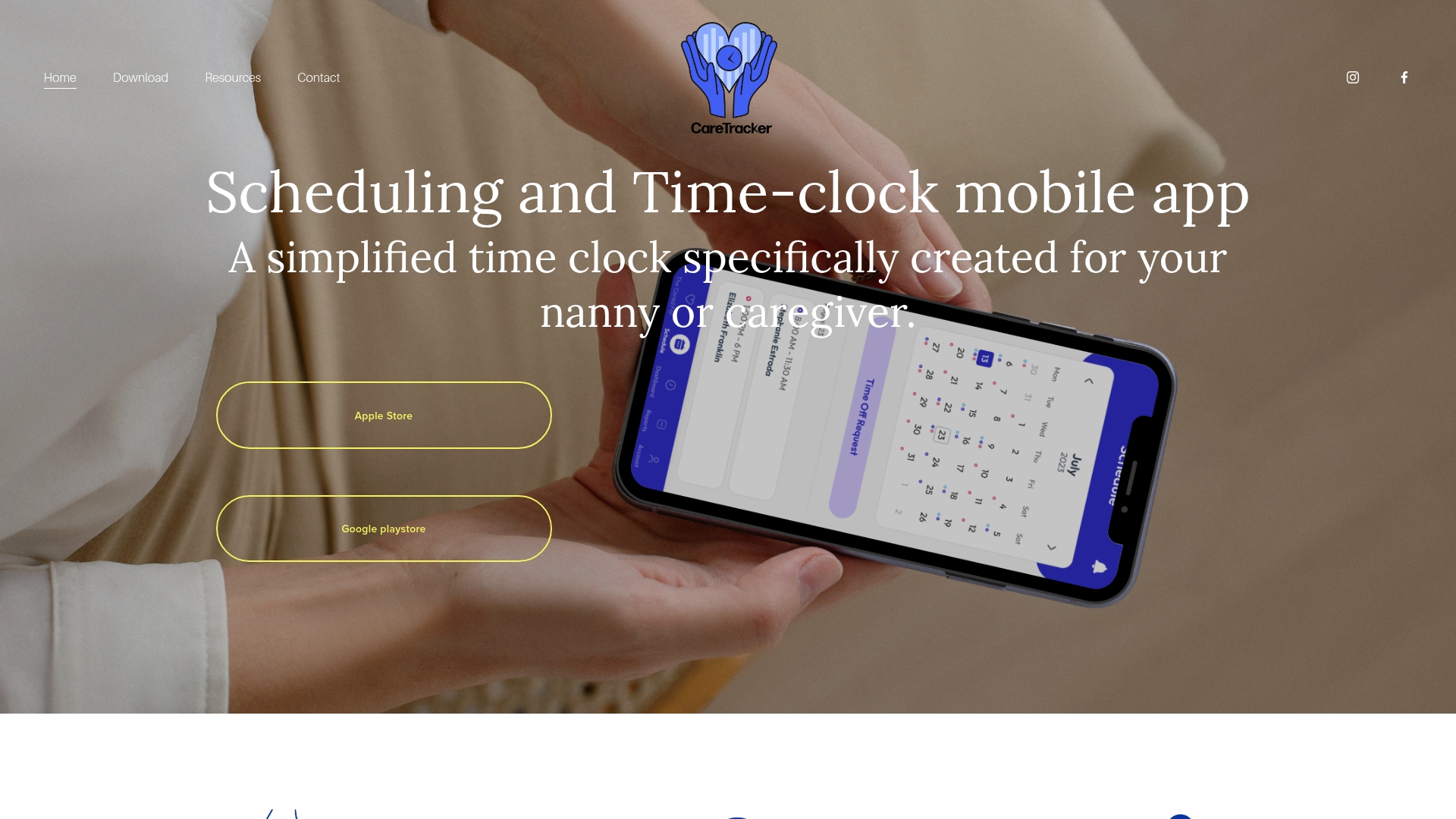
Thecaretracker gives caregivers a free way to access the care details you choose to share, allergies, medications, emergency contacts, nap and nursing schedules, without exposing anything beyond that. Instead of texting sensitive details or leaving printed sheets around the house, you control exactly what's visible in one place, which keeps your written confidentiality clause backed by actual practice, not just paper. Families managing multiple caregivers can also use it to track hours and coordinate schedules alongside those care profiles. If payroll or tax compliance questions come up while you're formalizing your nanny's employment terms, Thecaretracker's payroll consultation service connects you with expert help. Start by exploring how CareTracker works for your household.
Where to Find Official Guidance and Templates
Before finalizing anything, check these resources:
- The DOL's sample household employment agreement for informational contract language and its FLSA toolkit.
- IRS Publication 926 for tax and payroll obligations as a household employer.
- The US Nanny Association for industry standards and employer resources.
- A local employment attorney for enforceability questions specific to your state.
Frequently Asked Questions
Does a nanny confidentiality agreement need to be a separate document? No. Most families add a single clause to the existing nanny contract rather than drafting a standalone NDA, which is typically reserved for high-profile households or unusual security concerns.
Can a nanny still report abuse if she's signed an NDA? Yes, always. No confidentiality agreement can legally block mandatory reporting of suspected child abuse, criminal activity, or responses to a lawful subpoena.
What happens if my nanny refuses to sign the confidentiality clause? Try narrowing the scope first, since overly broad language is the most common objection. If she still declines after a reasonable clause is offered, consider whether the working relationship is the right fit.
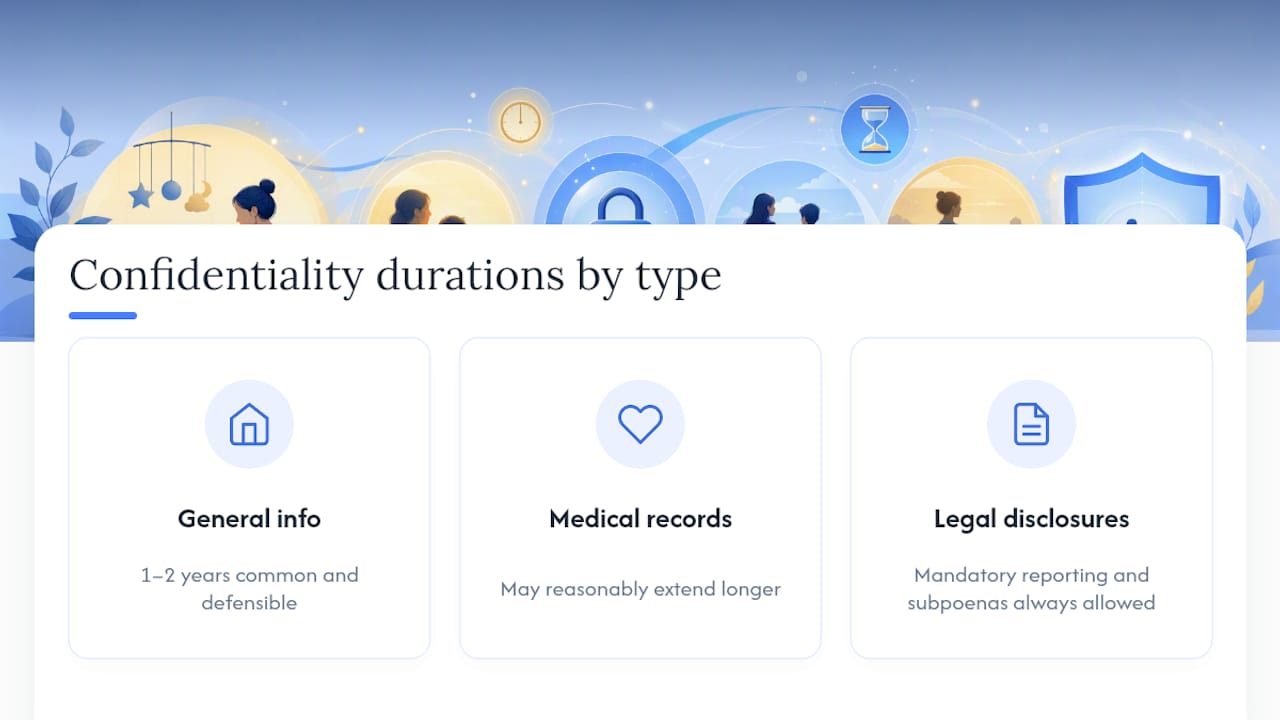
How long should confidentiality obligations last after employment ends? One to two years is common and defensible. Indefinite terms for general information are harder to enforce, though sensitive categories like medical records may reasonably extend longer.
Do I need a lawyer to write a nanny confidentiality clause? You can draft a first version yourself using a sample clause as a base, but a brief attorney review before signing catches overly broad terms and confirms the clause holds up under your state's employment law.
This article is general information, not a substitute for advice from a qualified lawyer. Consult a qualified legal professional about your own circumstances before acting on anything here.
Sources
- Employment Sample Agreement for Nannies (DOL)
- Nanny Agreement (Rocket Lawyer)
- Nanny contract template & free guide — Beverly
- Publication 926 (Household Employer's Tax Guide) — IRS