
A caregiver medication log is the single shared record that tracks every medication, dose, timing, purpose, and who administered it. Keeping one accurate and up to date is one of the most direct ways to protect the person in your care.
The short version:
- Record every medication by brand and generic name, exact dose, timing, route, purpose, prescriber, pharmacy, and any known allergies. Include all over-the-counter (OTC) drugs and supplements, since these frequently cause dangerous interactions with prescription medications.
- Maintain two separate documents: a master medication history for appointments and a daily dose log for shift-by-shift administration tracking.
- Schedule a formal medication review at least once a year and immediately after any hospitalization.
Table of Contents
- What fields does a caregiver medication log need to include?
- How do you keep a medication log accurate and safe?
- Paper vs. digital: which medication log format works better?
- How do you set up a caregiver medication log in five steps?
- Practical tips for nannies and caregivers on the job
- How Thecaretracker supports your medication log
- Key Takeaways
- Why this guide matters to us
- Authoritative sources and further reading
- Thecaretracker: free medication tracking for caregivers
What fields does a caregiver medication log need to include?
A complete log covers more than just the drug name and dose. The FDA recommends capturing every detail a clinician or emergency responder would need in 30 seconds.
| Field | What to record | Example |
|---|---|---|
| Medication name | Brand AND generic | Tylenol (acetaminophen) |
| Dose | Strength and unit | — |
| Route/form | How it's taken | Tablet, liquid, inhaler |
| Frequency/timing | Clock times, not vague terms | — |
| Purpose | Plain language | Blood pressure |
| Prescribing clinician | Name and phone | Dr. Reyes |
| Pharmacy | Name and phone | Main St. Pharmacy |
| Rx/refill number | For refill coordination | Rx# — |
| Start and stop/review date | Active period | Started March 1, 2026 |
| Allergies and reactions | Specific drug and reaction | Penicillin → hives |
| OTCs and supplements | All non-prescription items | Fish oil daily |
| PRN rules | As-needed limits | Max 2 doses per day |
| Administration record | Who gave it and when | J. Smith |
| Notes | Side effects, missed-dose reason | Took with food |
Practitioners advise keeping two separate records: the master medication history (used at appointments) and the daily dose log (used during shifts). Conflating the two creates gaps in both.
Pro Tip: Always list both the brand and generic name together. In an emergency, a paramedic may only recognize one of them. Keeping both on the same line removes any guesswork.
How do you keep a medication log accurate and safe?
The rule is simple: update the log at the moment of administration, not at the end of the shift. Memory fades fast, and a log filled in retroactively is a log that invites errors.
Daily and weekly routines that reinforce accuracy:
- Log each dose with a timestamp and your name immediately after giving it.
- Do a quick visual check at the start of every shift to confirm nothing changed overnight.
- Run a weekly stock check so refills are ordered before supplies run low.
- After every appointment, update the log before leaving the parking lot.
Hospital discharge is the highest-risk moment for medication errors. Treat every discharge as a full reset: compare the discharge paperwork line-by-line against the master list, then call the pharmacy to confirm which prescriptions are still active. Do not assume the hospital list matches what was in place before admission.
Escalation rules: If a dose is missed, document the time and reason, then follow the prescriber's instructions for missed doses. If a double dose occurs or a suspected adverse reaction appears, stop the medication if it is safe to do so, contact the prescribing clinician or pharmacy immediately, notify the family, and document the time and symptoms in detail.

Pro Tip: When an order seems ambiguous, call the pharmacy first. Pharmacists are a primary resource for interaction checks and refill coordination and can often clarify instructions faster than waiting for a callback from the prescriber's office.
Paper vs. digital: which medication log format works better?
For a single caregiver working alone, paper works. For any situation involving multiple caregivers or family members, a shared digital log is the better choice. Scattered notes and multiple prescribers are the leading cause of missed and double doses. A centralized platform removes that risk.
| Feature | Paper log | Digital shared log |
|---|---|---|
| Real-time sharing | No | Yes |
| Edit history | No | Yes |
| Missed-dose alerts | No | Yes |
| Adherence charts | No | Yes |
| Refill/low-stock warnings | No | Yes |
| Multiple caregiver access | Limited | Yes |
| Emergency access | Immediate (if present) | Anywhere with a phone |
| Privacy/security | Physical only | App-level security |
That said, digital does not replace paper entirely. A printed wallet card and a refrigerator copy are still recommended because emergency responders are trained to look in predictable locations. The best setup is a digital log as the primary source of truth, with a printed backup updated at least monthly.
**App features worth prioritizing: **
- One-tap dose confirmation with automatic timestamps
- Shared access with role-based permissions (who can edit vs. who only views)
- Missed-dose alerts sent to designated caregivers or family members
- Adherence charts for appointment summaries
- Low-stock and refill reminders
- Exportable medication lists for doctor visits
- Secure storage with privacy-aware practices
The most effective log is the one the whole care team will actually keep updated. Simplicity and shared access matter more than advanced features most caregivers will never use. Learning about family health tracking tools can help you decide which features genuinely fit your workflow.
How do you set up a caregiver medication log in five steps?
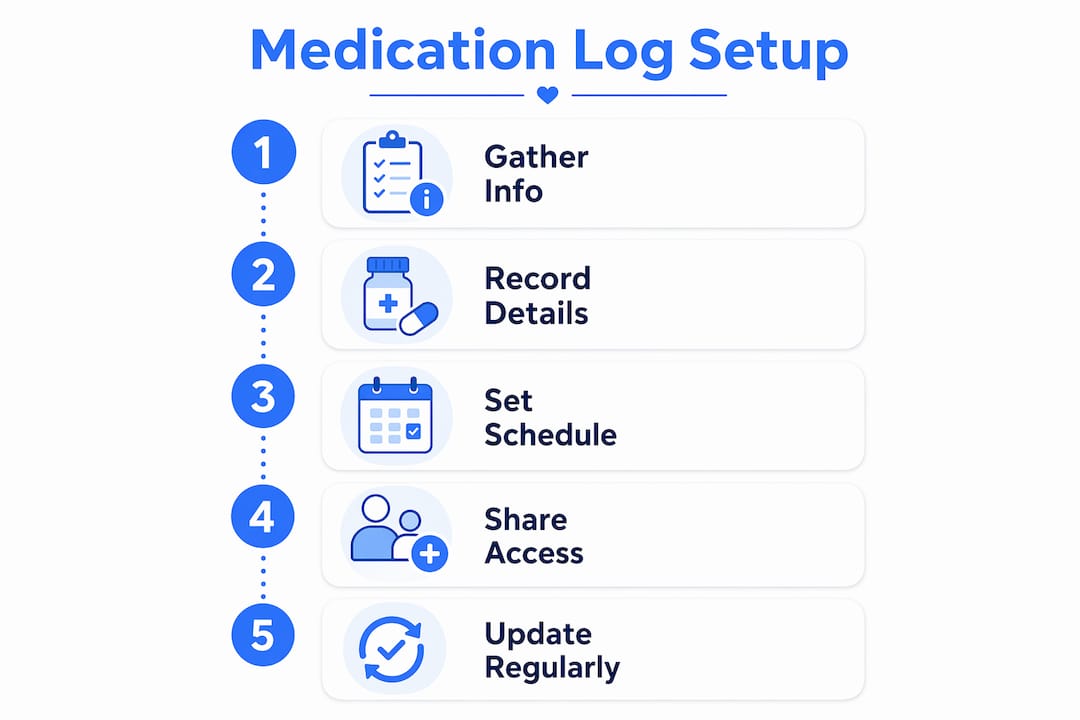
Complete these five steps in your first 20–30 minutes and you will have a working log ready for your next shift.
- Gather. Collect every bottle, blister pack, inhaler, and supplement in the home. Check the medicine cabinet, kitchen counter, nightstand, and purse. Photograph each label if you cannot bring everything to one place.
- Verify. Call the pharmacy for a current dispensing record. Compare it against the bottles. Confirm any unclear instructions with the prescribing clinician or pharmacist before entering anything into the log.
- Enter. Populate every field from the checklist above. Use this sample row as your template:
| Generic name | Brand | Strength | Route | Dose | Time(s) | Purpose | Prescriber | Pharmacy | Allergies | Last dose | Notes |
|---|---|---|---|---|---|---|---|---|---|---|---|
| lisinopril | Zestril | — | tablet | 1 tablet | — | blood pressure | Dr. Reyes | Main St. Pharmacy | none | March 12 | take with water |
- Share and assign roles. Invite family members and co-caregivers to the shared log. Set who can edit, who receives missed-dose alerts, and who handles refill reminders.
- Maintain. Set a weekly stock-check reminder. Update the log after every appointment or hospital discharge. Schedule the annual formal medication review and note it in the log.
Printable templates that use clock-time entries rather than vague terms like "twice daily" speed up this process considerably.
Practical tips for nannies and caregivers on the job
Small, consistent routines prevent most medication errors. Here is what that looks like in practice.
Do:
- Confirm the medication list at every shift handoff and note any changes.
- Photograph new prescription labels when a medication is added or changed.
- Use a written checklist for PRN (as-needed) medications so the daily limit is always visible.
- Log every administration with a timestamp the moment it happens.
- Call the family or clinician whenever an instruction is unclear. Never guess.
Don't:
- Never estimate a dose or split a pill without explicit clinician instructions.
- Never transfer pills between bottles. Labels are part of the safety record.
- Never rely on memory or a personal note that no one else can see.
- Never skip logging a dose because the shift is almost over.
When talking with families: A short, direct script works well. "I gave [medication name] at [time] and noted it in the log. I also noticed [observation]. Do you want me to call the pharmacy or the doctor's office?" That one sentence keeps the family informed and documents your communication.
For caregivers new to medical terminology: Ask the pharmacist to walk you through each medication at pickup. Practice reading labels aloud. Use the master medication history as your reference during every shift. The AARP caregiver medication guide is a plain-language resource worth bookmarking.
How Thecaretracker supports your medication log
Thecaretracker gives caregivers and families a shared care profile where medication data, allergies, and emergency contacts live in one place, accessible from any phone.
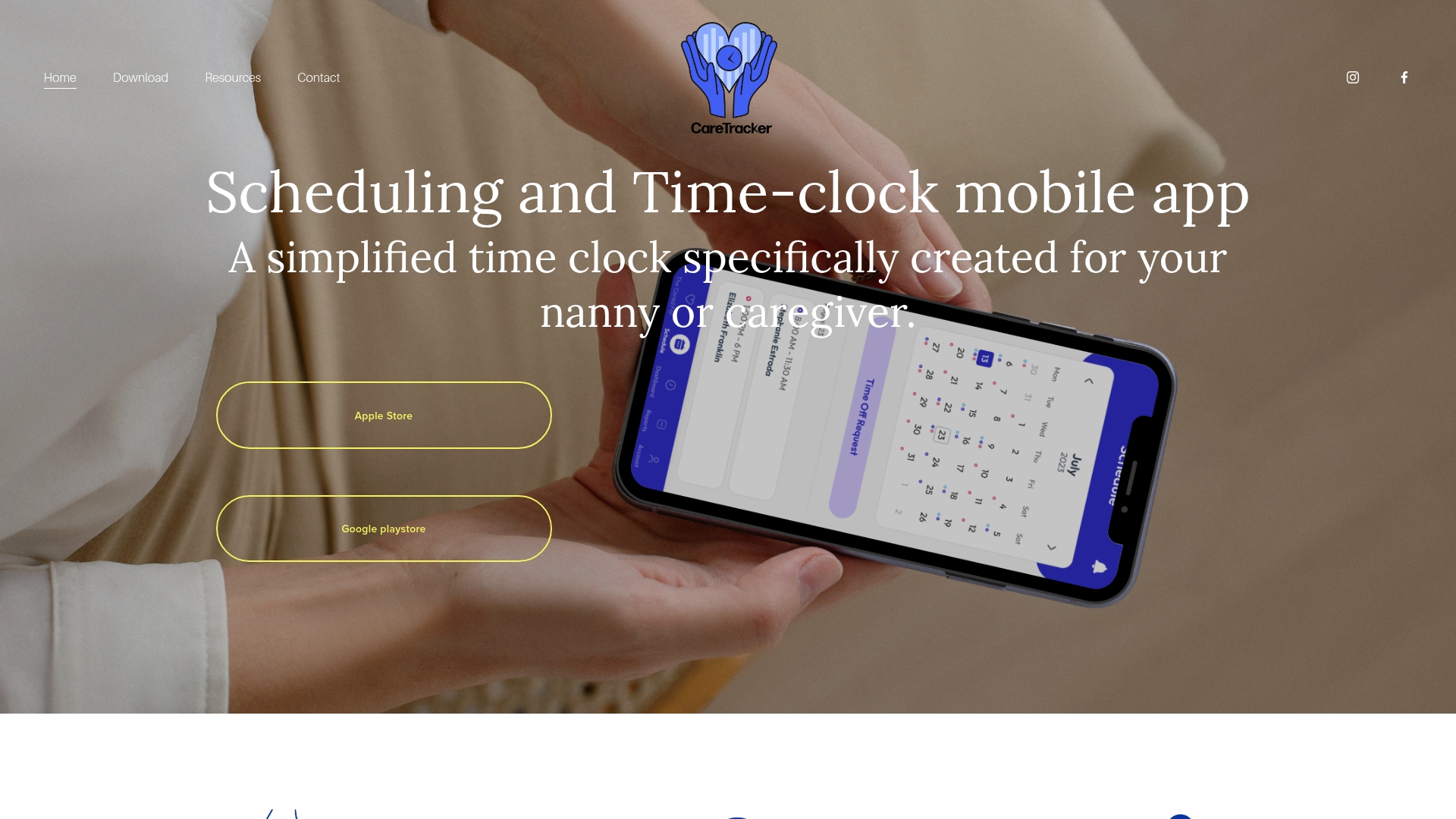
Features mapped to this guide's recommendations:
- Shared care profiles with medication details, allergies, and emergency contacts
- Timestamped administration records showing who logged each dose
- Missed-dose alerts sent to designated caregivers or family members
- Low-stock and refill notifications
- Exportable care information for appointments
- Unified calendar so every caregiver sees the full schedule
Getting started takes about 15 minutes:
- Create a care recipient profile in the CareTracker app.
- Add the master medication history using the fields from this guide.
- Invite family members and co-caregivers and set their permission levels.
- Turn on missed-dose and refill alerts.
- Run your first reconciliation against the pharmacy's dispensing record.
Thecaretracker is completely free for caregivers. You can also explore the full app feature set to see how shared profiles, alerts, and schedule management work together.
Pro Tip: Keep both the app and a printed wallet copy updated. The app is your real-time source of truth; the printed copy is what emergency responders will look for.
Key Takeaways
A complete, shared caregiver medication log is the single most effective tool for preventing missed doses, double doses, and dangerous interactions across multiple caregivers.
| Point | Details |
|---|---|
| Record every field | Include brand and generic name, dose, timing, purpose, prescriber, pharmacy, allergies, OTCs, and supplements. |
| Update at the moment of administration | Log each dose with a timestamp and your name immediately after giving it. |
| Schedule formal reviews | Request a medication review at least annually and immediately after any hospitalization. |
| Use a shared digital log with a paper backup | A digital log gives real-time access to all caregivers; a printed copy stays ready for emergencies. |
| Thecaretracker | Free for caregivers, with shared profiles, timestamped records, missed-dose alerts, and refill reminders built in. |
Why this guide matters to us
Medication errors in home care settings are rarely caused by carelessness. They happen because information is scattered, handoffs are rushed, and no one has a single place to check. The team behind Thecaretracker built this guide because caregivers deserve clear, practical tools that make their jobs safer and easier. Thecaretracker is free for every caregiver who uses it, and the medication tracking features described here are part of the core app. If you have questions about the app or want help getting set up, the support resources are available directly through the platform.
Authoritative sources and further reading
- FDA: Create and Keep a Medication List — mandatory fields and OTC/supplement guidance
- MedlinePlus: Medication Review — when and how to request a formal review
- AHRQ: Discharge Medication Safety — post-hospitalization reconciliation guidance
- AARP: Medication Management for Caregivers — pharmacist coordination and caregiver tips
- PMC: Medication History vs. Daily Log — why caregivers need both records
- Family Caregivers Online: Free Medication Log Templates — printable templates with clock-time entries
- Elder Safety Hub: Medication History Template — wallet card and refrigerator copy guidance
- Thecaretracker — free app for caregivers with shared profiles, alerts, and medication tracking
This guide provides general information for caregivers and is not a substitute for professional medical advice. Always confirm dosing, timing, and medication changes with the prescribing clinician or pharmacist.
Thecaretracker: free medication tracking for caregivers
Every recommendation in this guide, from shared real-time logs to missed-dose alerts and timestamped records, is built into Thecaretracker at no cost to caregivers. You get shared care profiles, refill reminders, and a unified calendar that keeps every caregiver and family member on the same page. There is no subscription fee and no complicated setup. Families who want additional support with scheduling and mobile care coordination can also explore premium options through the platform.
Download Thecaretracker free and set up your first care recipient profile today. Your medication log, schedule, and care information will be ready for your next shift.