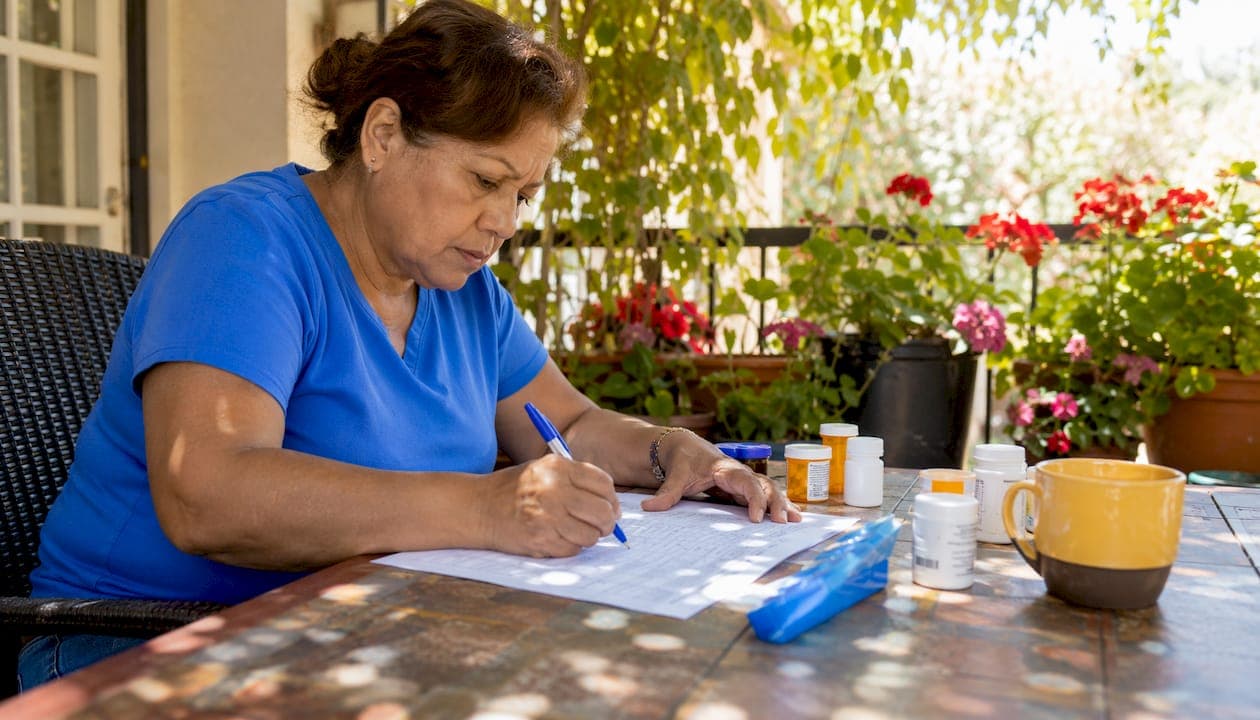
What every caregiver needs in a medication log
A good medication log for caregivers does one thing above all else: it removes guesswork. When you're managing multiple medications for someone you care for, a single accurate document can be the difference between a calm week and an emergency room visit. Free, printable templates are available from trusted sources like the VA Caregiver Support Line, the Caregiver Action Network, and Family Caregivers Online, and most require no sign-up to download.
The best templates separate two distinct documents: a Master Medication Record that captures every detail about each drug, and a Daily Log that functions as a simple checkbox sheet for dose-by-dose tracking. Keeping these two formats separate makes emergency use faster and routine tracking less error-prone.
Every solid template covers these core fields:
- Medication name (brand and generic)
- Dosage strength and amount per dose
- Timing, frequency, and whether the drug is taken as needed
- Route of administration (oral, topical, inhaled, etc.)
- Purpose of the medication
- Prescribing physician's name and contact
- Pharmacy name and phone number
- Start and end dates
- Drug allergies and any prior reactions
To get started, download a template, print one copy per week for the daily log, and keep the master record in a binder or digital folder that travels with the person you care for.
What your caregiver medication log must include
Completeness is what separates a useful log from a dangerous one. A log that lists only the drug name and dose leaves out the context a doctor or pharmacist needs to catch a problem. Thorough medication records include the drug name, dosage, frequency (including as-needed use), route, purpose, start and end dates, and both prescriber and pharmacy contacts.
Recording both the brand name and the generic name matters because caregivers, pharmacists, and substitute providers may refer to the same drug by different names. Listing the pill's physical appearance, such as color, shape, and markings, adds another layer of safety when multiple medications look similar.
Beyond the basics, a complete log captures:
- Special instructions (take with food, avoid sunlight, refrigerate)
- Known drug allergies and the type of reaction experienced
- Recent medications that caused problems or were discontinued
- "As-needed" medications with the specific condition that triggers use
- The prescribing doctor's name, phone, and address for each drug
Specificity here prevents ambiguity. A note that reads "take as needed" is far less useful than "take one tablet for pain rated 6 or above, no more than twice daily."
How to keep your medication log accurate over time
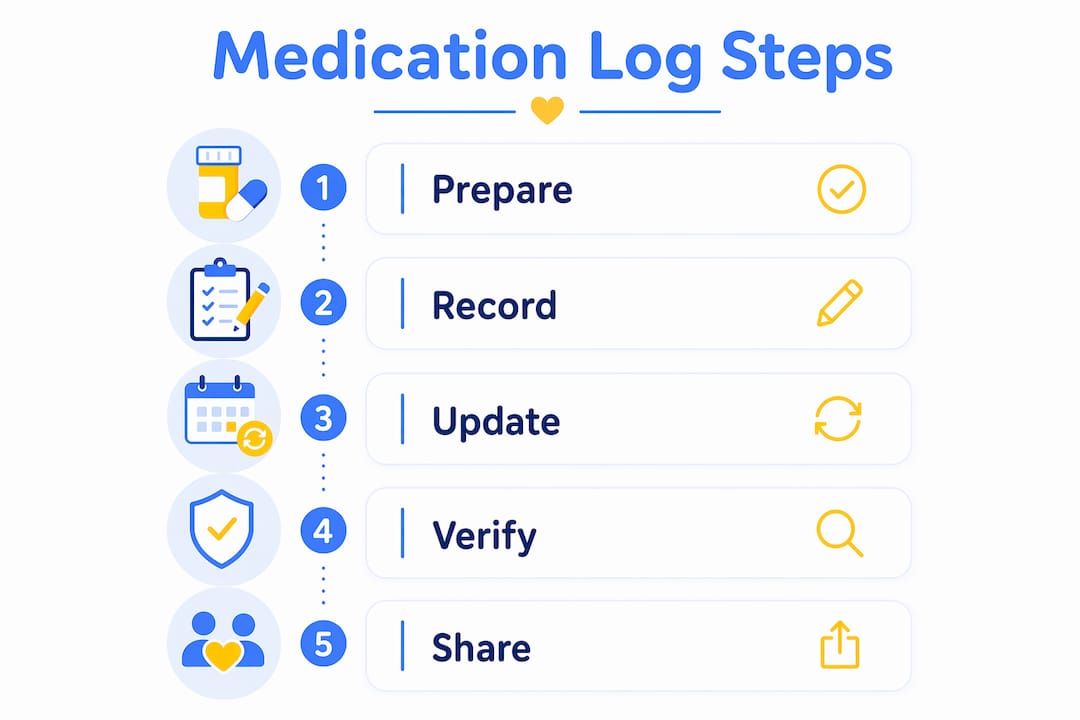
Update the master record immediately after every pharmacy refill, doctor visit, or hospital discharge. Those three moments are when medications change most often, and a log that lags even a day behind can lead to double dosing or a missed transition to a new drug. Even when nothing changes, a monthly review of the full record catches outdated entries before they cause problems.

Keeping both a physical binder and a digital copy protects against loss. If the binder is left at a specialist's office or damaged, the digital version on your phone or a shared cloud folder keeps care moving without interruption.
When correcting an entry, draw a single line through the old information, write the correct detail beside it, and add the date of the change. Never erase or use correction fluid on a paper log. That practice preserves a readable history if a provider ever needs to trace when a medication was changed.
Pro Tip: Scan the prescription label with your phone's camera when a new medication arrives. Many pharmacy labels include the drug name, dose, and instructions in a format you can photograph and reference directly, which reduces transcription errors when updating the master record.
Where to store and share medication lists for safety
Redundancy is the strategy. A medication list stored in only one place is one accident away from being unavailable when it matters most. The Vial of Life program, used by emergency medical services across the country, recommends keeping a master medication record in five locations:
- Home: A visible spot such as the refrigerator door or a labeled medical binder
- Vial of Life container: A sealed tube placed inside the refrigerator, where paramedics are trained to look
- Caregiver's wallet: A folded, laminated card with the most critical medications and allergies
- Phone photo: A clear photo of the current printed list, saved in the camera roll for instant access
- Vehicle glove box: A printed copy for medical transport or roadside emergencies
Sharing a digital copy with family members and the full care team means everyone works from the same current version. When a doctor updates a prescription, one person updates the shared document and the change reaches everyone at once. For privacy, avoid sending full medication lists over unsecured text messages. A shared folder with controlled access, or a printed copy handed directly to a provider, keeps sensitive information protected.
Why medication management directly affects patient safety
Medication errors are one of the most preventable causes of harm in home care settings. Medication logs reduce the risks of double dosing, missed doses, and dangerous drug interactions by creating a single source of truth that both caregivers and providers can reference. Without a log, a caregiver working a second shift has no reliable way to know whether the morning dose was given.
The benefits of consistent, logged medication management include:
- Fewer missed or duplicate doses
- Faster, more accurate communication with doctors and pharmacists
- Reduced risk of harmful drug interactions
- Lower likelihood of preventable hospital readmissions
- Greater confidence for caregivers managing complex medication schedules
- A documented history that supports continuity of care across multiple providers
For seniors managing multiple chronic conditions, the log also becomes a record of what has and hasn't worked over time, which is information a new specialist or urgent care provider cannot easily get from a chart alone.
How to coordinate your medication log with healthcare providers
A medication log does not replace medical advice. It gives providers the accurate, current information they need to make good decisions quickly. Printed medication lists are critical during healthcare visits because they allow doctors to perform medication reconciliation, the process of comparing a patient's current medications against new orders to prevent duplications and adverse events.
Bring a printed or clearly visible copy of the log to every appointment, ER visit, and hospital discharge meeting. Steps for effective coordination include:
- Hand the log to the nurse or intake staff at the start of every visit
- Ask the pharmacist to review the full list for interactions at least once a year
- Note any side effects with the date they started and the medication suspected
- Clarify "as-needed" medications with the prescribing doctor so the log reflects the exact trigger condition
- Request a written summary of any medication changes before leaving a hospital or specialist visit
- Update the master record the same day any change is made
When a log entry and a prescription bottle disagree, contact the prescribing doctor or pharmacist before giving the next dose.
Digital tools that help caregivers track medications and care information
Paper logs work well, but digital tools add a layer of organization that paper alone can't match. Apps built for caregivers let you store medication details, set dose reminders, share information with family members, and access emergency contacts from a single place on your phone.

Thecaretracker is a free app designed for nannies and caregivers that centralizes care information including medications, allergies, emergency contacts, and daily schedules in one place. It supports multiple caregivers working with the same family, so everyone sees the same current information without relying on phone calls or paper handoffs.
Key features to look for in any caregiver-focused digital tool:
- Medication and allergy storage accessible to all authorized caregivers
- Dose reminders and scheduling alerts
- A shared calendar for coordinating care across multiple providers
- Emergency contact access without requiring a login
- Symptom or side effect tracking linked to medication timing
- Offline access so the app works without a cell signal
Tracking symptoms alongside medication timing can reveal side effects that family caregivers often overlook, particularly when a symptom appears hours after a dose rather than immediately. Privacy-conscious apps that store data locally on the device reduce the risk of data loss if a cloud service is discontinued. When choosing a tool, prioritize one that matches your comfort level with technology. The best app is the one you'll actually use every day. You can explore Thecaretracker's features to see how it fits into your caregiving routine.
Legal and privacy considerations for medication logs
Medication logs contain sensitive health information, and how you handle that information carries real responsibilities. In home care settings, professional aides are often bound by confidentiality agreements with the families they work for, and sharing a care recipient's medication list with anyone outside the care team without permission can breach that agreement.
For family caregivers, HIPAA (the Health Insurance Portability and Accountability Act) applies directly to healthcare providers, not to family members acting as caregivers. Still, treating medication records with the same discretion a provider would is a sound practice. Avoid leaving printed lists in unsecured locations, and use password-protected folders or apps with access controls when storing digital copies.
Professional caregivers working through agencies should confirm with their employer which records they are authorized to maintain and share. Some states have specific rules about what non-licensed caregivers may document regarding medication administration. When in doubt, document what was observed (the person took the pill at 8:00 AM) rather than clinical interpretations, and flag any concerns directly to the supervising nurse or physician.
Thecaretracker keeps your care information organized and accessible
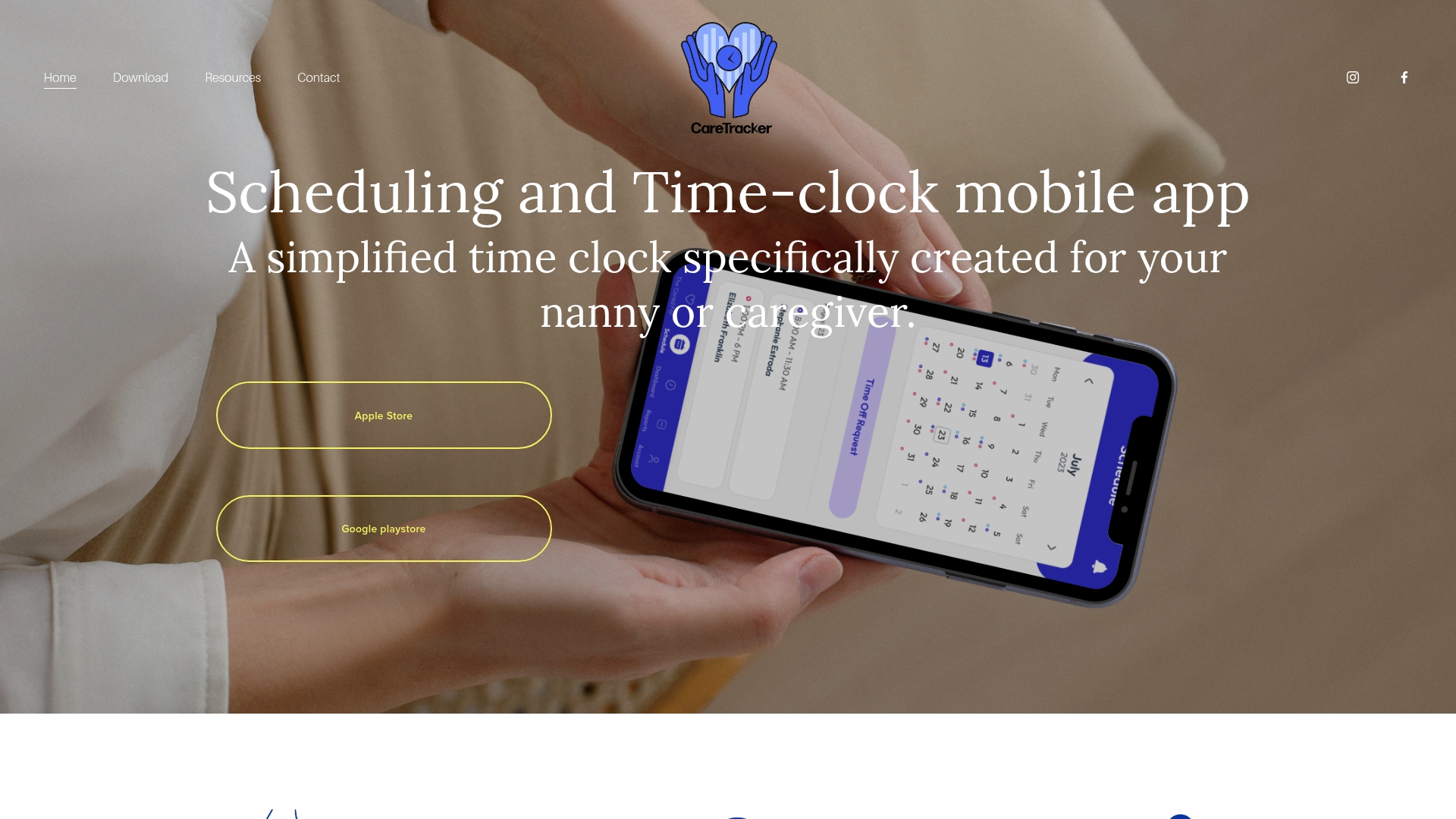
Thecaretracker is completely free for caregivers and puts everything you need in one place: medications, allergies, emergency contacts, schedules, and daily care notes. Whether you're a family member managing a parent's prescriptions or a professional aide coordinating with multiple families, the app keeps your records current and accessible. Download Thecaretracker today and spend less time tracking down information and more time focused on care.
Key Takeaways
A well-maintained medication log is the single most effective tool a caregiver has for preventing medication errors and supporting coordinated care.
| Point | Details |
|---|---|
| Use two separate documents | Keep a Master Medication Record for full details and a Daily Log for dose-by-dose checkboxes. |
| Store lists in five locations | Home, Vial of Life container, caregiver wallet, phone photo, and vehicle glove box cover most emergencies. |
| Update after every change | Refresh the master record immediately after any pharmacy refill, doctor visit, or hospital discharge. |
| Bring the log to every visit | Printed medication lists enable medication reconciliation and help prevent duplicate prescriptions and adverse events. |
| Use digital tools for coordination | Apps like Thecaretracker centralize medications, allergies, and emergency contacts for all authorized caregivers. |