
Name one care lead and build one shared master care guide before anything else. That single move prevents most of the missed medications, duplicate errands, and dropped updates that come from several well-meaning people acting without a common source of truth. From there, you assign backup owners for each task domain, build a visible shared schedule, and run short handoffs at every shift change. The templates and tools below make each step concrete.
TL;DR:
- Assign a care lead based on availability, communication skills, and willingness to ensure reliable information flow and coordination.
- Build a shared care guide with up-to-date medication, provider contacts, legal documents, and routines, maintaining both digital and printed copies.
- Use a family responsibility matrix to clearly designate primary and backup owners for each care domain, balancing local and remote caregivers.
- Create a simple, consistent schedule with detailed shifts and automatic reminders, integrating paid aides and family members seamlessly.
- Conduct regular, structured family meetings and quick shift handoffs to keep responsibilities clear and prevent communication breakdowns.
Table of Contents
- How do you coordinate multiple caregivers effectively?
- Assign roles with a family responsibility matrix
- Setting up one shared schedule everyone actually uses
- What is a good caregiver handoff protocol?
- How often should caregivers check in and review the plan?
- How do you run a family meeting that produces real decisions?
- What should you set up in the first 48 hours?
- What does the research say about caregiver coordination?
- Respecting different caregiving styles and family traditions
- Publisher perspective: building systems instead of adding helpers
- How Thecaretracker supports coordinated caregiving
- Sources
How do you coordinate multiple caregivers effectively?
The National Institute on Aging puts it plainly: designate one point person who manages the flow of information, so caregivers stop operating on their own version of events. This role does not have to be the person doing the most hands-on care. It has to be the person everyone agrees to call first, and who keeps the master care guide current.
Pick the care lead based on three things, not sentiment. First, availability. Someone answering texts within an hour beats someone who checks messages once a day, even if the second person lives closer. Second, communication habits. A care lead who summarizes clearly and follows up in writing prevents the "I thought you knew" problem that derails most family care arrangements. Third, willingness. Forcing the role onto whoever happens to be the oldest sibling or the one who lives in town often backfires. Ask directly who wants it.
Once you have a lead, build the shared care guide. This is the document every caregiver, paid or family, can open and trust as current. It should include:
- Current medications, dosages, and administration times, cross-referenced with a medication log so timing errors get caught early
- Names and phone numbers for every provider: primary doctor, specialists, pharmacy, home health agency
- Emergency contacts in priority order, including who has medical power of attorney
- Daily routines: wake time, meals, mobility needs, preferences that make transitions smoother
- Legal documents on file (advance directive, HIPAA release, power of attorney) and where physical copies are stored
Keep the guide in two forms. A cloud version, whether a shared document or a dedicated app, that anyone can update from anywhere. And a printed copy in the home, because a first responder or a substitute caregiver at 2 a.m. is not going to hunt for a login. Review it monthly, or immediately after any medical appointment that changes something. A guide that is six months stale is more dangerous than no guide at all, because caregivers trust it without double checking.
Assign roles with a family responsibility matrix
Vague help offers are where coordination breaks down. "I'll pitch in when I can" sounds generous and produces nothing reliable. The fix is a Family Responsibility Matrix: a simple grid that names one primary owner and one backup for every recurring care domain.
Build the matrix around five to seven domains, not dozens of micro-tasks:
- Medications — who fills prescriptions, tracks refills, and administers doses
- Medical appointments — who schedules, who attends, who relays results
- Transportation — who drives to appointments, errands, and social visits
- Finances and bills — who pays, who monitors accounts, who handles insurance paperwork
- Family communication — who sends updates to extended family and fields their questions
For each domain, name a primary owner and a backup. The backup matters as much as the primary. Without one, a single illness or work trip creates a gap nobody notices until something goes wrong. Balance the load between local and remote family members deliberately. The sibling three states away can own finances, insurance calls, and appointment scheduling by phone. The sibling nearby handles transportation and daily check-ins. This avoids what caregiving researchers call proximity bias, where the person physically present absorbs every task simply because they're there, while remote relatives default to occasional visits instead of real ownership.
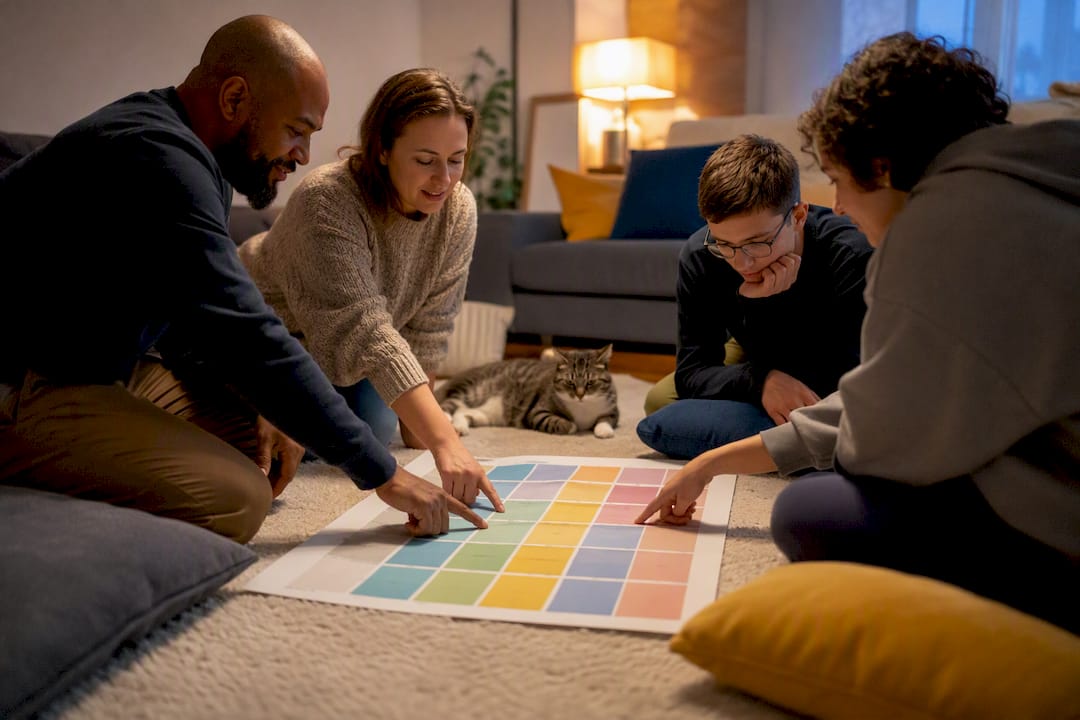
The best time to build this matrix is during a structured call shortly after a hospital discharge or diagnosis, while everyone is paying attention and motivated to help. Read each domain aloud, ask who will own it, and write the answer down in real time. A verbal "I can help with that" becomes a specific commitment: "Mark owns pharmacy pickups every Monday." Post the finished matrix somewhere every caregiver can see it, alongside the shared schedule.
Pro Tip: Revisit the matrix every time a caregiver's availability changes significantly, not just at scheduled reviews. A new job, a move, or a health issue in the caregiver's own life can quietly turn a primary owner into someone who's not actually covering the task anymore.
Setting up one shared schedule everyone actually uses
The schedule is the piece that fails fastest if you overengineer it. Some families do best with a digital calendar or app that syncs across everyone's phone and sends automatic reminders. Others do better with a paper signup sheet taped to the refrigerator, especially when one or more caregivers are older relatives who don't want another login to manage. Most families land on a hybrid: a digital master calendar for the people who use it, plus a printed version updated weekly for the home itself.
Scheduling guidance for elder care recommends documenting actual daily care needs first, then matching caregivers to slots based on their real strengths and availability, rather than dividing hours evenly for the sake of fairness. A caregiver who's a night owl should take evening coverage. Someone comfortable with medical tasks should take the shifts involving medication administration.
Format every slot with enough detail that a caregiver arriving cold knows what to do:
- Exact task for that shift (medication administration, meal prep, physical therapy assistance, companionship)
- Arrival window, not just a start time, since traffic and parking vary
- Backup contact if the assigned caregiver can't make it
- Any changes since the last shift, flagged clearly
Set recurring slots for predictable needs, like regular physical therapy runs, so they don't need re-confirming every week. Color-code by caregiver or by task type if your group responds well to visual cues. Automatic reminders sent 24 hours and 2 hours before a shift cut down on no-shows more than any amount of asking people to "just remember." Digital reminder tools built specifically for family coordination handle this without anyone having to manually text reminders every week, which tends to fall on the same overloaded person every time.
For families mixing paid home health aides with family caregivers, a dedicated scheduling system keeps the professional and family sides of the calendar from conflicting, which happens more often than families expect when both sides are working off separate calendars.
What is a good caregiver handoff protocol?
Most coordination failures happen at the moment one caregiver leaves and another arrives. A hospital hand-off protocol study found that structured shift changes, combining a short verbal exchange with a written note, cut errors that occur when critical details get lost between shifts. The same logic applies at home, just at a smaller scale.
A workable handoff takes two to three minutes and covers three things: what happened during the shift, what still needs attention, and what changed since the last update. That's it. Caregivers don't need a narrative of the whole shift, just the facts the next person needs to act on.
- What happened: meals eaten, medications given, mood or behavior notes, any incidents
- What remains: pending tasks, upcoming appointments, supplies running low
- What changed: new symptoms, new instructions from a provider, anything different from the routine
Keep these notes in two places. A physical notebook in the home covers caregivers who don't check apps mid-shift, and gives first responders something to grab in an emergency. A matching field in a shared daily log app keeps remote family members in the loop without a phone call every time. Standardize your terms across both. If one caregiver writes "restless" and another writes "agitated" for the same behavior, patterns get lost in translation.
Set escalation rules once, in writing, so nobody has to guess mid-crisis. Who gets called for a fall. Who gets called for a medication question. Who gets called if the answer to both is "nobody's picking up."
Pro Tip: Post the escalation list next to the phone or on the refrigerator, not buried in an app. In an actual emergency, nobody wants to scroll for a contact.
How often should caregivers check in and review the plan?
Even a well-built system drifts without regular review. Set a weekly check-in, five to ten minutes, where the care lead confirms the coming week's schedule is fully covered and flags any gaps early. Add a monthly review where the whole team looks at whether the responsibility matrix still matches reality. Roles that made sense at the start often stop fitting as a condition changes or a caregiver's life gets busier.
Build respite into the plan from the beginning, not as an afterthought once someone is already burned out. A caregiver who never gets a full weekend off for months is a caregiver who eventually quits without warning, and that failure hits everyone else harder than a planned absence ever would.
Watch for warning signs that the load has tipped unevenly:
- One caregiver consistently covering last-minute gaps that others decline
- Short, irritable communication replacing the detailed handoffs that used to happen
- A caregiver missing their own appointments or work commitments to cover shifts
- Complaints about the same task repeatedly, which usually signals a mismatch, not laziness
When you spot these, don't wait for the monthly review. Rotate the difficult or draining tasks (overnight shifts, medically complex care) among more than one person rather than defaulting to whoever's best at it. Being good at something is not the same as being willing to do it every week. If one person is genuinely overloaded, the fix is redistributing named tasks from the matrix, not adding vague reassurances that "everyone will pitch in more." Reassignments should get logged the same way original assignments did: resolve the conflict in writing, so the change sticks past the conversation that produced it.
How do you run a family meeting that produces real decisions?
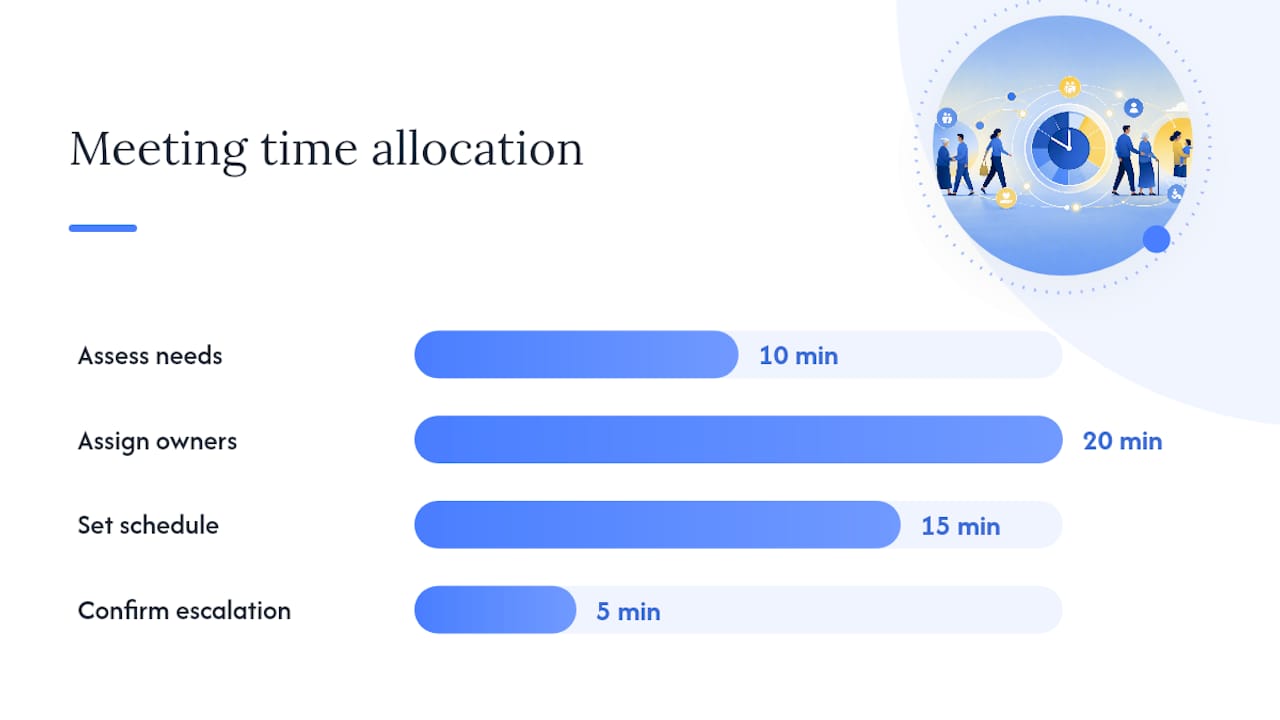
A family meeting that ends in "let's all try to help more" has failed. A good one ends with names attached to specific, recurring commitments. Structure the meeting around four steps, timeboxed to keep it from spiraling into old family arguments:
- Assess needs (10 minutes). State the current care needs plainly, using the shared care guide as the reference point, not memory or assumption.
- Assign owners (20 minutes). Go domain by domain through the responsibility matrix. Ask directly who will own each one, and write the answer down before moving to the next domain.
- Set the schedule (15 minutes). Turn ownership into actual calendar slots. "I'll help with appointments" becomes "I'll drive to every Tuesday appointment."
- Confirm escalation (5 minutes). Reconfirm who gets called first for medical issues, financial questions, and emergencies.
Facilitation matters more than most families expect. The care lead, or a neutral family member if the lead is too close to old conflicts, should redirect any drift into unrelated grievances back to the agenda. Research on family caregiver coordination shows that relational friction, not logistics, is usually what derails these arrangements, so keeping the tone collaborative matters as much as the agenda itself.
The single most useful script in the whole meeting is this: when someone says "I can help," respond with "Can you take Tuesday mornings, 8 to 10 a.m., every week?" Vague goodwill turns into sustainable coverage only when someone pins it to a specific day and time on the spot.
What should you set up in the first 48 hours?
Momentum matters more than perfection in the first two days after a diagnosis, hospital discharge, or sudden change in a relative's needs. A short checklist, tackled in order, gets the whole system running fast enough to prevent the early chaos that's hardest to walk back later.
- Name the care lead and confirm everyone agrees
- Hold the 48-hour assignment call and fill out the Family Responsibility Matrix for urgent domains first (medications, appointments, transportation)
- Set up the shared schedule, digital or paper, with the first two weeks of slots filled in
- Start the handoff notebook in the home, even if it's just a spiral notebook from a drawer
- Share the care guide draft, incomplete is fine, with every caregiver so everyone starts from the same document
Once these are running, convert them into habits rather than one-time setup tasks. The weekly check-in becomes a standing calendar event. The handoff note becomes something every caregiver does automatically at the end of a shift, the same way they'd lock the door on the way out.
| First 48 hours | Ongoing habit it becomes |
|---|---|
| Name a care lead | Weekly point of contact for schedule gaps |
| Hold assignment call | Monthly matrix review |
| Set up shared schedule | Recurring slots with automatic reminders |
| Start handoff notebook | Every shift ends with a 2 to 3 minute note |
What does the research say about caregiver coordination?
The evidence backing these systems is consistent across very different settings, from hospital units to family homes. The core finding: coordination is a relational skill as much as a logistical one, and structure works because it removes ambiguity, not because it adds bureaucracy.
Family caregivers coordinating care for older adults report that relational coordination, the quality of communication and shared understanding between caregivers, drives outcomes in high-intensity situations more than the sheer number of people involved. Structure helps not by adding more process, but by making expectations explicit enough that goodwill turns into follow-through.
That finding, drawn from research on family caregiver coordination, echoes what hospital systems learned from formal handoff protocols: a structured shift-change process combining a brief verbal exchange with a written note reduces the errors that happen when context gets lost between one caregiver and the next. Practical guidance from caregiving support networks points the same direction: visible schedules and handoff notebooks reduce missed tasks precisely because they remove reliance on memory.
Respecting different caregiving styles and family traditions
No two families run care the same way, and a coordination system that ignores that difference will get quietly abandoned. Some families expect the oldest child to lead by default. Others rotate leadership, or split it by skill rather than birth order. Neither approach is wrong, but the responsibility matrix has to reflect whichever norm the family actually operates by, or caregivers will resist it without saying why.
Language and terminology matter too. A caregiver who speaks a different first language than the person receiving care may need handoff notes and the care guide translated, or at least reviewed for terms that don't carry over cleanly. Food preferences, religious observances around meals or bathing, and comfort with physical touch during personal care all belong in the shared care guide alongside medications and appointments, not treated as side notes.
Faith practices and holidays deserve a place on the master schedule, not an exception to it. If a caregiver observes a Sabbath, fasting period, or religious holiday that affects availability, build that into the matrix from the start rather than scrambling around it later. The same goes for personal boundaries: some family members are comfortable with hands-on personal care, others are not, and forcing a mismatch usually ends in a caregiver quietly avoiding shifts rather than saying why. Ask directly, early, and put the answer in writing.
Publisher perspective: building systems instead of adding helpers
Families under strain tend to solve caregiver gaps by adding more people. That rarely fixes the actual problem, which is structural, not numerical. A named lead, a visible schedule, and a two-minute handoff habit prevent more errors than another well-meaning volunteer ever could. Thecaretracker's shared calendar, shift notes, and emergency-info fields exist precisely because families told us the paperwork, not the caregiving itself, was what wore them down.
— mercedes
How Thecaretracker supports coordinated caregiving
Thecaretracker is built for exactly the systems this guide walks through, at no cost to the caregivers using it day to day. The shared calendar shows every caregiver's shift in one place, so the master schedule you build stops living in three different group texts. Shift notes give you a digital version of the handoff notebook, timestamped and visible to the whole team instead of scribbled on a pad that gets lost. Emergency contacts, medications, and daily routines sit in one profile per care recipient, which is the shared care guide made searchable instead of a document nobody remembers to open.
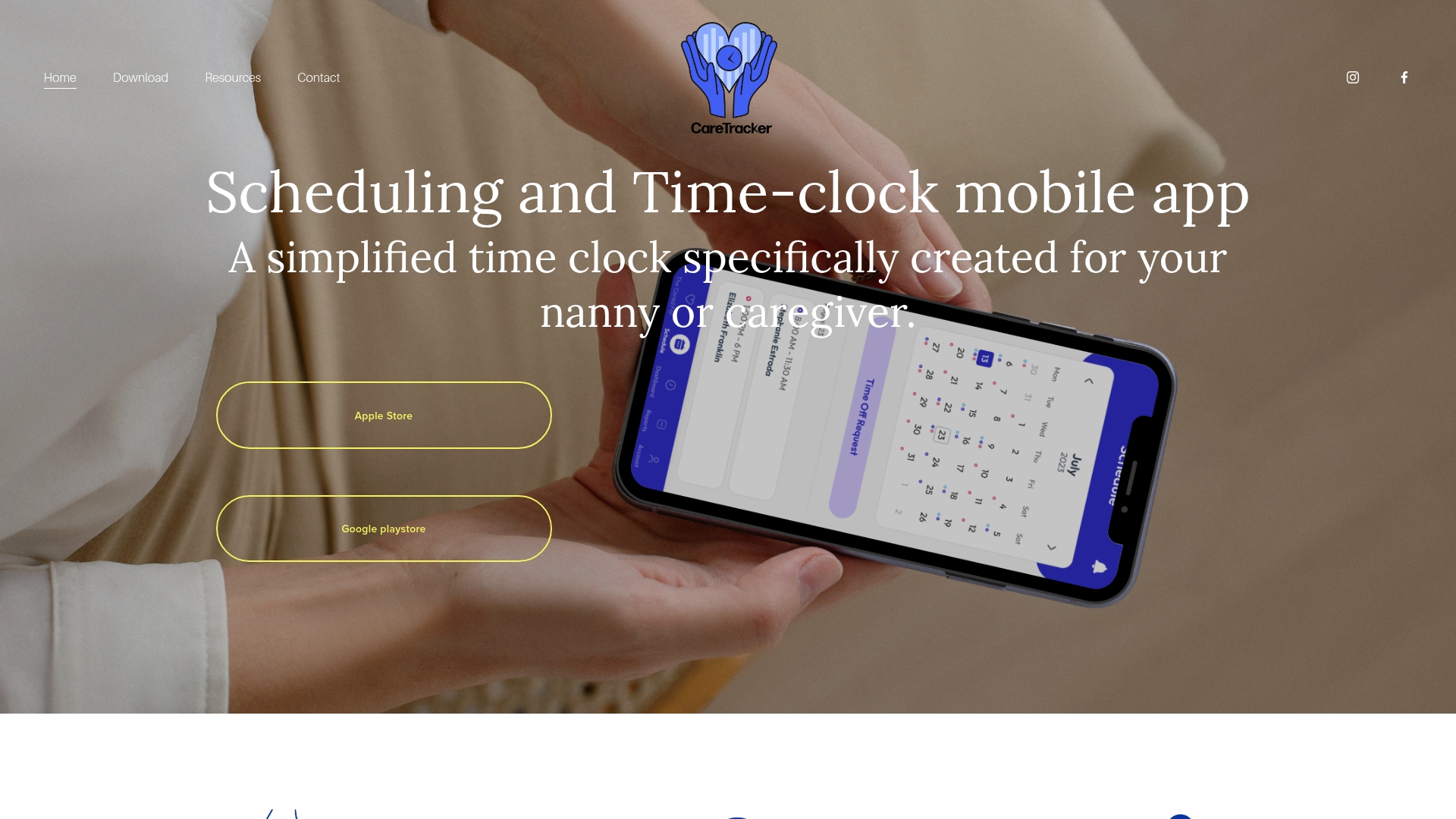
A typical workflow looks like this: add a new caregiver to the care recipient's profile, assign them a recurring weekly slot on the shared calendar, and their approved hours track automatically from there, which matters for families juggling paid aides alongside family members. Schedule requests get approved or adjusted in the app instead of over text messages that get missed. Explore the core features to see how the pieces map to your family's setup, or go straight to Thecaretracker to start building your shared schedule today.
Sources
The systems in this guide draw on established caregiving guidance rather than improvised advice. Worth reading directly if you want the fuller context:
- National Institute on Aging — Sharing caregiving responsibilities
- Family caregiver experiences coordinating care of older adults (JAMA Netw/Open PMC)
- Caregiving
- How to coordinate caregiver schedules for elder care (SignUpReady)