
Choosing the right scheduling software is the single most consequential operational decision a home health agency makes in 2026. The tools below cover every major need, from automated visit assignment and EVV compliance to mobile caregiver apps and real-time labor cost tracking. Here is how the leading platforms compare at a glance.
| Software | Key Features | Platform | Ease of Use | Best For |
|---|---|---|---|---|
| Skedulo | Intelligent scheduling, route management, analytics | Web, iOS, Android | Moderate | Large agencies needing scalable scheduling |
| ShiftCare | Caregiver assignment, payroll integration | Web, iOS, Android | Easy | Payroll-focused agencies |
| Caretap | Visit compliance, frequency management | Web, iOS, Android | Easy | Client-focused scheduling |
| WellSky | EVV, clinical compliance, data security | Web, iOS, Android | Moderate | Medium to large agencies |
| Homecare Homebase | Scheduling, billing, OASIS assessments | Web, iOS, Android | Moderate | All-in-one clinical management |
| Alora | Drag-and-drop calendar, visit pool views | Web, iOS, Android | Easy | Small to mid-sized agencies |
| CareSmartz360 | Automated workflows, HIPAA compliance | Web, iOS, Android | Moderate | Integrated workflow management |
| Axxess | EMR integration, custom workflows | Web, iOS, Android | Moderate | EMR-heavy agencies |
| Celayix | Mobile apps, automated shift filling | Web, iOS, Android | Easy | Mobile-first caregiver teams |
| Kantime | Real-time updates, payroll integration | Web, iOS, Android | Moderate | Medium to large agencies |
| CareVoyant | Billing, compliance, revenue management | Web, iOS, Android | Moderate | Senior care revenue management |
| AlayaCare | AI scheduling, clinical documentation | Web, iOS, Android | Moderate | Clinical and mobile integration |
| Aaniie | Simple interface, communication tools | Web, iOS, Android | Easy | Caregiver engagement focus |
| HHAeXchange | EVV integration, billing, compliance | Web, iOS, Android | Moderate | Compliance and billing focus |
Each platform addresses a specific operational gap. The sections below break down what separates them and how to match the right tool to your agency's actual needs.
What intelligent home health aide scheduling technology actually does for your agency
Manual scheduling does not fail all at once. It fails in small, compounding ways: a missed callout at 6:47 AM, a double-booked coordinator, an overtime authorization that did not need to happen. Caregiver turnover in home care sits at 79.2%, and the industry faces 9.7 million projected direct care job openings from 2024 to 2034. That pressure makes every unfilled shift more expensive to resolve.
Intelligent scheduling platforms address this through several interconnected features:
- Auto-scheduling algorithms that match caregivers to visits based on discipline, geography, availability, and certification periods, generating a full week's schedule in seconds rather than hours
- Predictive no-show scoring that flags high-risk visits before they become missed appointments, enabling coordinators to intervene early
- Real-time labor cost tracking against Hours Per Patient Day (HPPD) targets, so budget overruns are caught before they hit payroll
- Multi-channel automated reminders via SMS, email, and voice that reduce no-shows and free coordinator time
- Compliance enforcement that automatically applies CMS ordering rules, eval-before-routine sequencing, and certification period deadlines
Auto-scheduling software saves agencies 8–12 hours per scheduler weekly, which is enough recovered capacity to handle a significantly larger caseload without additional headcount. The operational math is straightforward: fewer manual steps mean fewer errors, and fewer errors mean fewer missed visits and lower overtime costs.
Treating scheduling as a clinical function, not just an administrative one, changes how agencies prioritize these tools. Scheduling instability, including late changes and excessive drive times, is a primary driver of clinician burnout. Reducing daily drive time substantially has a measurable impact on both caregiver satisfaction and labor costs.

How mobile apps and communication tools keep caregivers connected
A scheduling platform is only as effective as the information caregivers can access in the field. Mobile apps have become the primary channel for real-time shift management, and the best platforms treat the caregiver's phone as a core operational tool, not an afterthought.
Key mobile features that directly affect scheduling reliability include:
- Schedule access and shift notifications so caregivers see changes instantly rather than learning about them through a phone call
- One-tap shift confirmation and time-off requests that reduce the back-and-forth between coordinators and staff
- Care detail sharing, including patient allergies, medications, emergency contacts, and daily activity schedules, accessible before the caregiver arrives
- Clock-in and clock-out with GPS verification, which supports Electronic Visit Verification (EVV) compliance requirements
- Two-way messaging between coordinators and caregivers for real-time updates on schedule changes or patient needs
Mobile tools support caregiver communication and reduce errors in shift management by giving caregivers accurate, up-to-date information at every step of their day. Platforms like Celayix and AlayaCare have built their mobile apps as central features rather than companion add-ons, which shows in strong caregiver adoption. Aaniie's interface is particularly straightforward, making it a practical choice for agencies with caregivers who are less comfortable with technology.
The coordination benefit extends to families as well. When caregivers can share care details and confirm visits through an app, families receive more consistent updates and agencies field fewer inbound calls asking about arrival times or schedule changes.
Detailed comparison of top scheduling platforms for US home health agencies
The platforms below vary significantly in depth, clinical integration, and target agency size. Understanding those differences saves you from paying for features you will never use, or choosing a tool that cannot scale with your caseload.
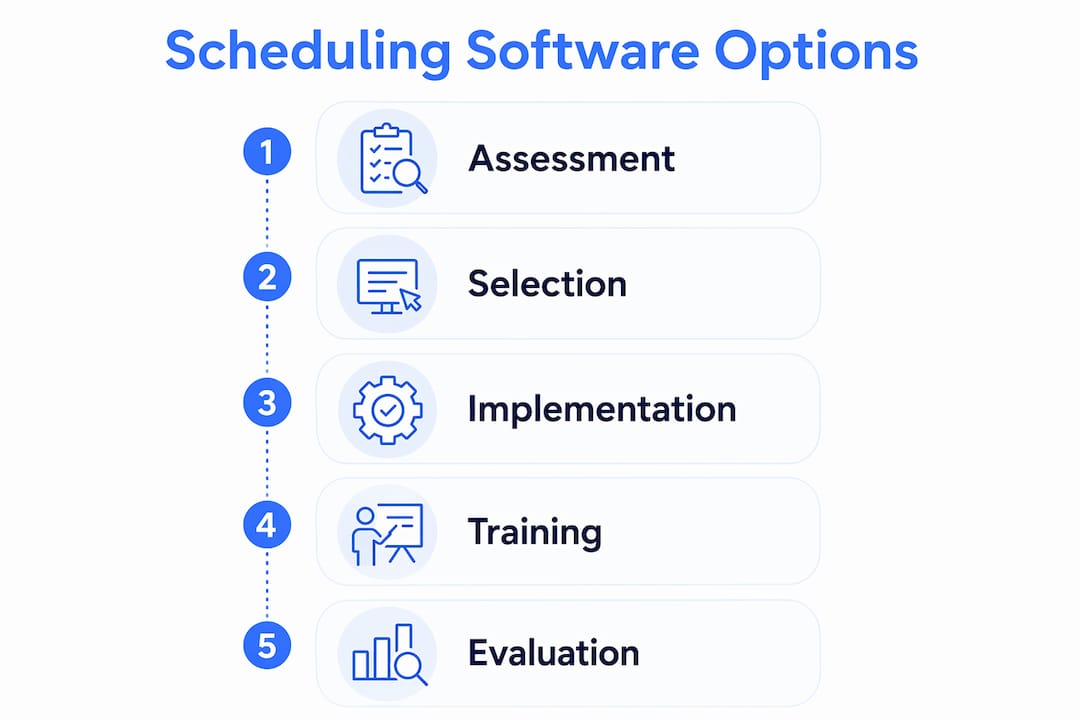
Skedulo is built for large agencies that need scheduling to function across multiple locations with real-time analytics. Its route management and labor cost tracking features are among the most detailed available, making it a strong fit when operational visibility across a large workforce is the priority.
WellSky and Homecare Homebase (HCHB) both target medium-to-large agencies that need clinical and administrative functions in one platform. WellSky's EVV integration and data security measures meet the compliance bar for agencies operating under Medicaid contracts. HCHB adds OASIS assessment automation, which reduces documentation time for skilled nursing visits.
Alora takes a different approach: a drag-and-drop calendar and visit pool view that schedulers can learn in a day. For small to mid-sized agencies that do not need deep EMR integration, Alora's usability advantage often outweighs the feature gaps.
CareSmartz360 and Axxess both emphasize workflow integration. CareSmartz360 pairs HIPAA-compliant security (AES-256 encryption at rest, TLS 1.3 in transit, role-based access, and audit trails) with automated billing workflows. Axxess goes further on interoperability, supporting custom EMR connectors for agencies already running complex clinical documentation systems.
HHAeXchange is the clearest choice for agencies whose primary compliance concern is EVV. Its billing integration and regulatory reporting tools are purpose-built for Medicaid-funded home care, where EVV accuracy directly affects reimbursement.
Kantime and CareVoyant both serve senior care agencies with a focus on revenue cycle management alongside scheduling. Kantime's real-time scheduling updates and payroll integration make it practical for agencies managing large caregiver pools across multiple payers. CareVoyant's billing and compliance features are particularly well-suited to agencies where revenue management and scheduling need to stay tightly connected.
AlayaCare stands out for agencies that want AI-assisted scheduling alongside clinical documentation and a strong mobile experience. Its caregiver app is one of the more complete in the market.
Celayix fits agencies where shift filling speed is the top priority. Its automated shift-filling and mobile notification tools reduce the time between a callout and a confirmed replacement.
ShiftCare and Aaniie both prioritize ease of use. ShiftCare's payroll integration is its clearest differentiator for agencies that want scheduling and payroll handled in the same system. Aaniie's communication features make it a practical choice for agencies where caregiver engagement and retention are the immediate concern.
Caretap focuses on visit compliance and frequency management, which matters most for agencies where care plan adherence is closely audited.
Pro Tip: Before committing to any platform, ask the vendor specifically how their system handles after-hours callouts. Agencies that automate exception handling for last-minute fill-ins and callout coverage see the largest and fastest improvements in fill rates and coordinator workload.
How to choose the right scheduling software for your agency
The right platform depends on your agency's size, payer mix, and the specific problems costing you the most time and money right now. Work through these criteria before requesting a demo:
- EMR compatibility: confirm the platform integrates with your existing clinical system. Axxess, WellSky, and AlayaCare all support direct integrations with major EMRs, which eliminates duplicate data entry.
- Automation depth: identify whether the platform handles exception scheduling (callouts, no-shows, after-hours coverage) automatically or requires coordinator intervention for every change.
- Mobile support: verify that caregivers can access schedules, confirm visits, and submit time-off requests from their phones without needing desktop access.
- Compliance features: check for EVV integration if you operate under Medicaid, and confirm the platform enforces CMS ordering rules and certification period tracking automatically.
- Security and HIPAA: every platform handling protected health information (PHI) should provide AES-256 encryption, role-based access controls, audit trails, and a signed Business Associate Agreement (BAA).
- Pricing structure: request a per-user or per-visit cost breakdown. Some platforms charge by active caregiver, others by visit volume. The right model depends on your scheduling density.
- Onboarding and support: ask how long setup takes and whether the vendor provides hands-on onboarding or only documentation. Most agencies complete setup within a week when vendors provide direct support.
- Trial period: run a parallel period alongside your current system before full cutover. This lets you measure fill rate and coordinator time improvements against a real baseline.
Involve your schedulers and caregivers in the evaluation. They will surface usability problems that do not appear in a vendor demo, and their buy-in directly affects adoption rates after launch.
Best practices and trends shaping caregiver shift management in 2026
The agencies seeing the clearest operational improvements in 2026 share one approach: they treat scheduling as a clinical function with direct consequences for patient outcomes and caregiver retention, not as a back-office administrative task.
Route optimization through geographic visit clustering reduces fuel costs and, more importantly, cuts daily drive time. That reduction in drive time has a direct effect on clinician burnout and turnover. Agencies that cluster visits by neighborhood rather than assigning by availability alone report measurably better retention.
Dynamic Plan of Care (POC) integration is the other major shift. Best-practice agencies maintain the POC as a live compliance document that triggers alerts when a caregiver deviates from ordered tasks or a patient refuses a service, rather than treating it as static paperwork reviewed at the end of a visit cycle. Platforms that surface these alerts in real time give supervisors the ability to intervene before a compliance issue becomes a regulatory problem.
After-hours scheduling automation is the highest-leverage change most agencies have not yet made. Agencies that automate callout coverage and last-minute fill-ins report notable improvement in front-office productivity. The 80/20 principle applies directly here: automating the 20% of reactive, exception-driven scheduling processes eliminates the majority of coordinator stress and overtime cost.
Pro Tip: Document your current weekly scheduling volume, including total visits, average callouts, number of coordinators, and your fill rate, before evaluating any new platform. That baseline is the only way to measure whether a tool actually improves your operation in month one.
Thecaretracker is a free scheduling and hour-tracking app for caregivers
The agency platforms above handle the operational side of scheduling. Thecaretracker addresses the caregiver side, and it does so at no cost to the caregiver.
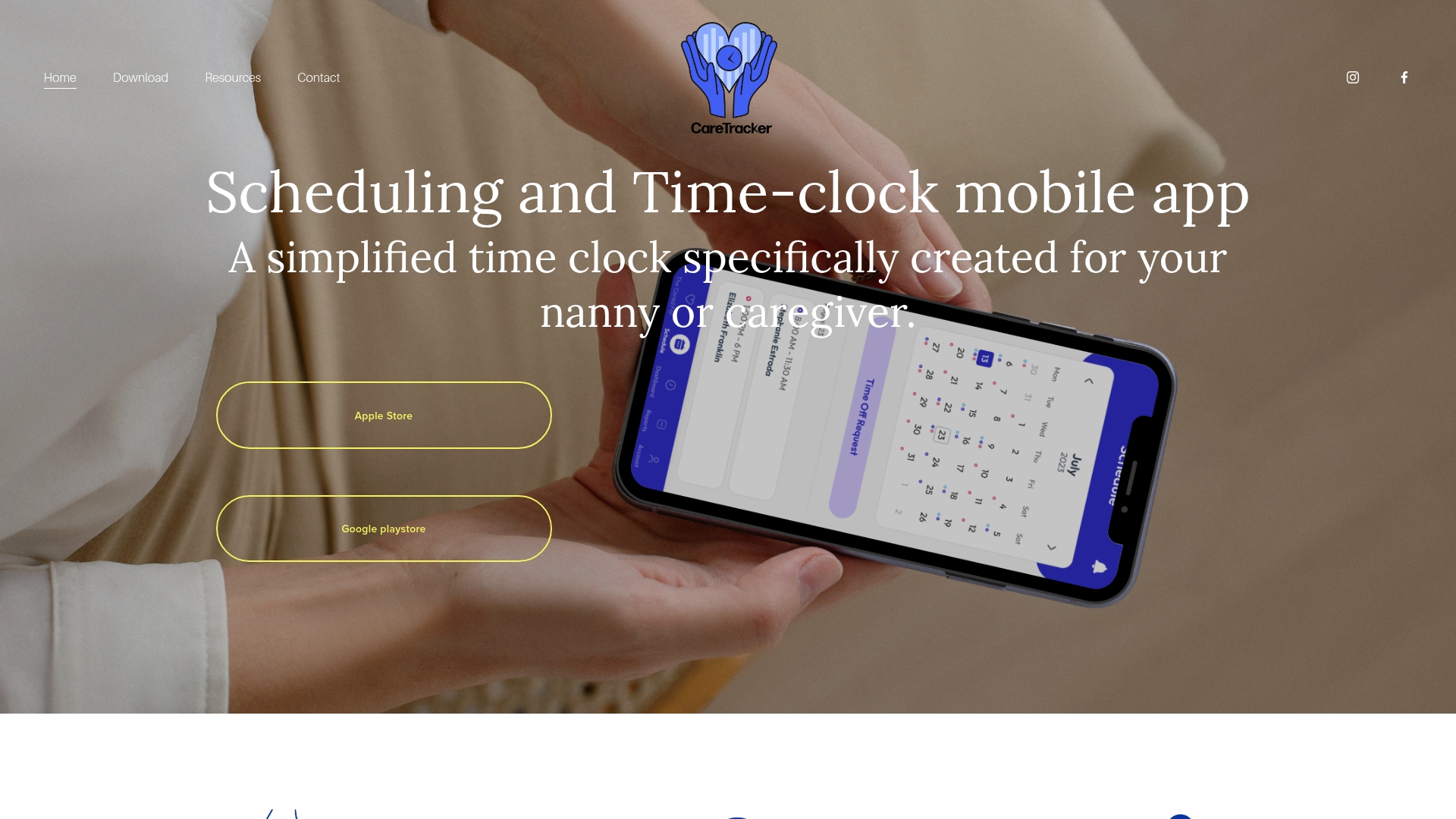
If your caregivers are still tracking hours on paper or relying on text messages to confirm schedule changes, Thecaretracker fills that gap directly. Caregivers can receive and approve schedule requests, view all their jobs in a single calendar, track weekly hours accurately, and access critical care details like allergies, medications, emergency contacts, and daily activity schedules, all from one app. For agencies that have invested in scheduling software but still see communication breakdowns at the caregiver level, Thecaretracker gives caregivers the organization tools they need without adding cost.
The app also supports payroll accuracy through precise hour tracking and wage reporting, which reduces disputes and simplifies payroll cleanup at the end of each pay period. Caregivers who use it consistently arrive better prepared, confirm shifts faster, and create fewer last-minute scheduling problems for coordinators.
Try Thecaretracker free and see how much smoother your caregiver communication becomes from day one.
Key Takeaways
The most effective home health aide scheduling approach combines automated visit assignment, real-time compliance monitoring, and mobile caregiver tools to reduce missed visits and coordinator burnout simultaneously.
| Point | Details |
|---|---|
| Automation saves real time | Auto-scheduling saves agencies 8–12 hours per scheduler weekly, enough to handle a larger caseload without new hires. |
| Turnover makes scheduling critical | With caregiver turnover at 79.2%, scheduling quality directly affects whether caregivers stay or leave. |
| Exception handling drives the biggest gains | Automating callout coverage and after-hours scheduling produces notable improvement in front-office productivity. |
| Security is non-negotiable | HIPAA-compliant platforms must provide AES-256 encryption, role-based access, audit trails, and a signed BAA. |
| Thecaretracker supports caregivers directly | The free Thecaretracker app gives caregivers schedule access, hour tracking, and care details in one place, reducing communication gaps. |