
A caregiver compliance report is the paper trail that shows a household employer paid a nanny or in-home caregiver correctly and kept the records the law requires. There is no single government form with that name. In practice it is a set of records, usually pulled together from time logs, pay records and tax filings, that proves hours, wages and withholding. If you hire a nanny, au pair or home caregiver in the United States, you can build it yourself, and it is far easier when you track hours accurately from day one.
This guide explains what goes into the report, which records are required and which are good practice, how long to keep them, and how to set up a routine that gives you peace of mind.
TL;DR
- A compliance report is not one official form. It is your organized set of hours, pay, tax and care records for a household employee.
- Under the federal Fair Labor Standards Act (FLSA), covered domestic workers need daily and weekly hours, weekly cash wages and overtime pay on file.
- The IRS expects household employers to keep tax records, such as wages paid and taxes withheld, that support Schedule H.
- Keep FLSA records for at least three years, and time cards and schedules for two.
- Accurate time tracking is the foundation. Every other part of the report depends on it.
Table of Contents
- What a caregiver compliance report actually means
- Records the law requires
- Records that are good practice, not mandatory
- What to document about hours, care and communication
- How long to keep the records
- Background checks and privacy
- A simple routine to build your report
- Our perspective
- Get your records in order with Thecaretracker
- Common mistakes to avoid
- FAQ
- Sources
What a caregiver compliance report actually means
Families search for this phrase for two different reasons. Agencies use "caregiver compliance" to mean credentials, training and screening for staff. A family that hires directly is the employer, so the meaning shifts: compliance is about whether you, the household, are meeting your duties as an employer.
For a household, a compliance report answers four plain questions:
- How many hours did the caregiver work each day and each week?
- What were they paid, and was overtime paid when it was due?
- What taxes were withheld and paid on their behalf?
- Can you show the agreement, instructions and screening paperwork behind the job?
If you can answer all four from organized files in a few minutes, you have a working compliance report. If an auditor, a payroll provider, a tax preparer or the caregiver themselves ever asks, you are ready.
Records the law requires
The federal rules come from two agencies: the Department of Labor (DOL) for wages and hours, and the IRS for taxes.
Wage and hour records (DOL)
For domestic workers covered by minimum wage and overtime, the DOL lists the records an employer must keep. According to the DOL's recordkeeping fact sheet for domestic service, these include:
- The employee's full name, Social Security number and home address
- Hours worked each day and each week
- Total cash wages paid each week
- Any sums claimed for board or lodging
- Extra pay for hours worked over 40 in a week
The DOL also says that the household employer remains responsible for FLSA recordkeeping, even though you may assign the task of recording hours and submitting them to the employee. That matters for how you set things up. Letting your caregiver log their own hours is fine, but you must review and keep those records.
Live-in caregivers and agreed exclusions
Live-in arrangements add a layer. The DOL explains that live-in domestic workers and their employers may agree to exclude certain time, such as meal and sleep periods, as long as there is an accurate written agreement and records confirming the hours actually worked. If you have a live-in caregiver or au pair, put the agreement in writing and record actual hours, not just the schedule.
Tax records (IRS)
The IRS guide for household employers, Publication 926, says you must keep tax records that support the information on forms you file, such as Schedule H. That means the date and amount of all cash and noncash wages, plus any Social Security, Medicare and income tax withheld or paid on the employee's behalf.
The same publication explains that you must record the employee's name and Social Security number exactly as they appear on the Social Security card if you pay Social Security and Medicare wages of $3,000 or more or withhold federal income tax. Getting this wrong is a common source of mismatched filings, so copy it from the card itself.
Publication 926 also tells employers to contact their state unemployment tax agency to learn whether state unemployment tax is due and whether other state employment taxes or workers' compensation insurance are required. Rules differ by state, so check your state agency's page before you finalize your setup.
Records that are good practice, not mandatory
Many items in a thorough compliance file are not required by federal law, but they protect everyone and make the report far more useful.
| Record | Required federally? | Why keep it |
|---|---|---|
| Daily and weekly hours | Yes (covered workers) | Proves pay and overtime |
| Weekly cash wages | Yes (covered workers) | Supports payroll and tax filings |
| Withholding and tax payments | Yes (IRS) | Supports Schedule H |
| Written work agreement | Not generally | Sets expectations for both sides. Required for live-in meal and sleep exclusions |
| Care instructions (allergies, medications, routines) | No | Keeps care consistent and safe |
| Emergency contacts | No | Speeds up response when it matters |
| Time-off and reimbursement requests | No | Prevents disputes about what was approved |
| Incident notes | No | Gives you a dated record if something happens |
A written agreement is worth the effort. A guide from a California child care registry notes that a contract with an in-home caregiver can give both sides a clear framework and a reference for expectations. The same guide suggests families document scheduled hours, job duties, children's routines such as nap times, allergies, house rules, and agreed contact and check-in expectations.
What to document about hours, care and communication
Think of the report in three layers.
Layer 1: Hours and pay
This is the layer regulators care about. Record the actual start and end of each shift, breaks that are unpaid by agreement, and the weekly total. Flag any week over 40 hours so overtime is paid. Many states have their own overtime and pay period rules, so a tool that follows your state's pay period settings saves guesswork.
Layer 2: Care information
This layer protects the person being cared for. Keep current details on:
- Allergies and dietary limits
- Medications, doses and timing
- Emergency contacts and the preferred hospital
- Nap and nursing schedules for infants
- Daily activities and routines
For newborns, families sometimes log routines such as skin-to-skin time. If that applies to you, this guide to tracking kangaroo care at home shows one way to keep a simple record.
Our digital care binder guide walks through setting this up in about 20 minutes.
Layer 3: Requests and communication
Schedule changes, time-off requests and reimbursements (for example, a caregiver buying groceries or art supplies) should be written down and approved. A dated approval trail turns "I thought we agreed" into a clear answer. Keep these in one place rather than scattered across text threads.
How long to keep the records
The DOL's guidance is specific. Under the FLSA, keep payroll records for at least three years, and keep records used to compute pay, such as time cards and schedules, for two years. A simple rule: keep everything related to a caregiver for at least three years after the last pay date, and longer for tax documents if your tax preparer advises it.
Pick one habit and stick to it. Many households file everything for a calendar year together, then archive it when the next year begins.
Background checks and privacy
If you order a background check on a prospective nanny through a screening company, you are dealing with the Fair Credit Reporting Act (FCRA). The FTC's guide says employers must give the applicant a clear, written, stand-alone disclosure and get written authorization. Before you take an adverse action based on the report, give the applicant a copy of the report and the Summary of Rights so they can review it and respond.
Storage matters too. The FTC's Disposal Rule applies to individuals who obtain consumer reports on prospective nannies, and it calls for reasonable measures, such as shredding paper or erasing electronic files, to guard against unauthorized access when you dispose of that information.

For everything else, apply the same care: keep Social Security numbers, medical details and contracts in a locked drawer or a password-protected account, and share care information only with the people who need it.
A simple routine to build your report
- Set the rules once. Write the agreement: pay rate, pay period, overtime, time off, how hours are submitted.
- Track hours every shift. Use a time clock or timesheet that records start, end and totals. Our nanny timesheet template is a starting point if you prefer paper.
- Review weekly. Approve or question the hours before payday, not months later.
- Log requests. Approve schedule changes, time off and reimbursements in writing.
- Pay and file. Record wages and withholding for each pay date so your Schedule H figures match.
- Archive. Save the year's records together and note the date you can discard them.
For a deeper walk-through of the federal rules, see our guide to caregiver time tracking that meets DOL and IRS rules.
Our perspective
We built Thecaretracker around one belief: most compliance trouble in a household starts with unclear hours. When a family and a caregiver both rely on memory or scattered texts, small disagreements grow into pay disputes and messy tax filings.
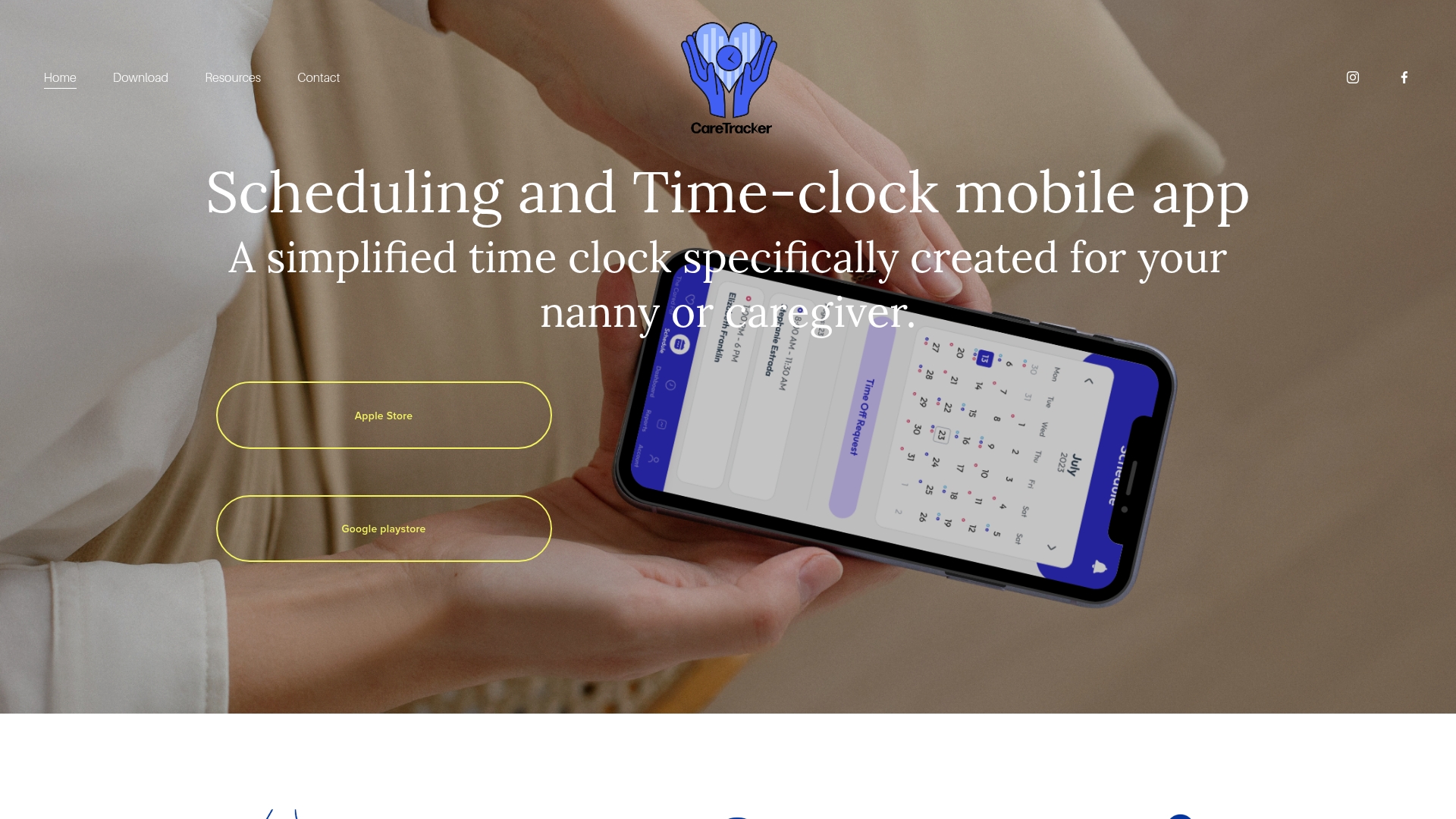
That is why our app is designed to put the caregiver's schedule, time tracking and approvals in one place. Caregivers can receive and approve schedule requests, see all their jobs in a single calendar and track weekly hours. Families get a clear record they can review. The app supports state-specific pay period and overtime tracking and flexible reports, so the information you need for a compliance file is already organized.
The care side matters just as much. Allergies, medications, emergency contacts, nap and nursing schedules and daily activities live in the same app, so a caregiver can find them quickly. It is completely free for caregivers, which removes a common barrier to adoption.
For households that have gaps in past records, we also offer one-time payroll consultations to help you sort out what to fix and how.
mercedes
Get your records in order with Thecaretracker
If you want hours, schedules and care details organized without building a system from scratch, start with the Thecaretracker app. Caregivers use it free, and it keeps the time records your compliance report depends on.
If your records already have gaps, such as missing timesheets or unclear prior wages, our Standard Payroll Consultation package is a one-time service listed at $150. For past wage reporting and household payroll cleanup, see our payroll cleanup consultation.
Common mistakes to avoid
- Estimating hours from memory. A weekly guess will not match a daily record. Track as the work happens.
- Skipping overtime review. Hours above 40 in a week need extra pay for covered workers, so check totals every week.
- Treating the schedule as the record. For live-in roles especially, record hours actually worked, not only the planned shift.
- Mixing up names and numbers. Copy the name and Social Security number exactly from the card.
- Keeping records in too many places. One calendar, one log and one folder beat five apps and a stack of notes.
- Forgetting state rules. Your state may add its own tax, insurance or overtime requirements.
FAQ
Is a caregiver compliance report a legal requirement?
No single report is required by name. What the law requires is the underlying records: hours, wages, overtime and tax information. A compliance report is simply those records organized so you can show them when asked.
Who is responsible for tracking the caregiver's hours?
You are, as the employer. The DOL says households may assign the task of recording hours to the employee, but the employer stays responsible for complying with the recordkeeping rules. Review submitted hours each week.
How long should I keep nanny pay records?
The DOL says to keep FLSA records for at least three years and time cards and schedules for two years. Many families keep everything for three years after the final pay date to keep it simple. Ask your tax preparer about tax documents.
Do I need a written agreement with my caregiver?
It is not generally required, but it is strongly advised, because it sets expectations for both sides. For live-in workers, an accurate written agreement is needed if you exclude meal and sleep periods from hours worked.
What if my past records are incomplete?
Start tracking correctly now, then gather what you can: bank records, messages and any past timesheets. A payroll professional can help you decide how to handle earlier periods and any prior wage reporting.
Sources
- DOL Fact Sheet #79C: FLSA recordkeeping for domestic service
- DOL Domestic Service Final Rule FAQ
- IRS Publication 926 (2023)
- IRS Publication 926 (2020)
- Employment information to know when hiring child care
- FTC: Background Checks, what employers need to know
- FTC: Disposing of consumer report information
- Kangaroo care at home