
Good caregiver communication comes down to a few habits. Agree early on how you will talk, keep a regular check-in, write down anything important, give feedback privately and about the situation rather than the person, and protect the privacy of the people in your care. When both sides know what is expected, trust grows and small problems stay small.
This guide is for parents who hire nannies or au pairs and for seniors and families who hire caregivers. It covers what to agree on, how to keep job notes and a message history, and how to raise a concern without damaging the relationship.
TL;DR
- Agree on channels, response times and what counts as urgent before the first shift, and put it in writing.
- Hold a short, regular check-in. Au pair programs recommend a weekly one, and the same rhythm works for any in-home caregiver.
- Keep notes factual: what was done, what was seen or heard, when, and what happens next.
- Give feedback privately, describe what happened, say how it affected you, and make one clear request.
- Treat medical, financial and family details as confidential, and agree on rules for photos and social media.
Table of Contents
- Start with ground rules, not good intentions
- Choose the channels and the urgent-call rule
- Check in on a rhythm
- Write job notes that the next person can use
- Keep a message history you can rely on
- Raise concerns without starting a fight
- Protect privacy in every message
- Put it into practice with Caretracker
- Frequently asked questions
- Sources
Start with ground rules, not good intentions
Most communication problems come from unspoken expectations. One person assumes a text is fine at 10 p.m. The other assumes anything after the shift ends can wait until morning. Neither is wrong, and neither was told.
Before the first shift, talk through four things:
- Duties. What the caregiver does each day, and what is off the list. One home-care resource notes that when you hire through an agency, caregivers can only do tasks on the care plan. If you expect something that is not on it, call the agency to clarify. If you hire independently, your written agreement plays the same role.
- Hours and changes. How far ahead schedule changes, vacation requests and time-off requests should be made, and who approves them.
- Contact method and timing. Text, call, app or shared log, and the hours when each is appropriate.
- What counts as urgent. A fever, a fall, a missed medication or a child who is not where expected is a phone call. A new food preference is a note.
Write these down. Host-family guidance for au pairs advises that families follow up verbal conversations in writing for important information such as schedule changes, vacation requests and shifts in childcare responsibility. A short message that says, Just confirming what we agreed, is enough.
The agreement is also the right place to cover professional boundaries. Guidance for people hiring in-home help points out that agencies often have policies on things like sharing meals or accepting gifts, and that families hiring independently can set their own. Say what you expect, kindly, at the start. It is much harder to bring up later.
Choose the channels and the urgent-call rule
A channel is only useful if everyone checks it. Pick one place for routine updates and one way to reach each other fast.
A workable setup looks like this:
| Type of message | Best channel | Expected response |
|---|---|---|
| Schedule change or time-off request | App or written message, so there is a record | Same day |
| Daily update or handoff | Shared log or note, plus a brief verbal handover | At the next shift |
| Question about a routine | Text | Within a few hours |
| Urgent: health, safety, emergency | Phone call, then a written note | Immediately |
| Feedback or a concern | In person or by call, followed by a written summary | Within a day or two |
Tailor the response times to your household. The point is that both people know them. If you are working out how to set expectations with a camp, school or other caregiver who is not in your home, this look at parent communication agreements shows how much a few agreed rules before drop-off can settle.
Two habits keep channels healthy:
- Keep routine and urgent separate. If every message is marked urgent, none is.
- Respect rest hours. Etiquette guidance for caregivers advises being mindful of the care recipient's rest hours. The same courtesy applies to the caregiver's off-duty time. Late messages should be rare and clearly worth it.
If you want scheduling, hours and messages in one place, our guide to caregiver scheduling for nannies walks through how a shared calendar cuts down on back-and-forth.
Check in on a rhythm
An open-door policy sounds nice, but a calendar slot works better. The host family handbook from one au pair agency says the most successful host families hold regular weekly meetings to go over the coming week's schedule, what is going well and any challenges. Another au pair program handbook gives the same advice: weekly touch-base meetings, saying when you are happy or unhappy with something, and encouraging the caregiver to raise concerns.
A 15-minute weekly check-in can follow a simple outline:
- What went well this week
- What was hard or unclear
- Next week's schedule, appointments and changes
- Anything the caregiver needs from you (supplies, information, a different routine)
- Anything you need from the caregiver
Listen more than you talk. Guidance for working with in-home providers recommends checking in regularly, asking for concerns and questions, and listening. Praise belongs in the check-in too. Caregivers who hear what is working keep doing it.
When the caregiver is with an older adult, bring that person into the conversation. Ask how they like to be addressed, when they prefer to rest and which topics are private. Communication etiquette starts with respecting the person receiving care, not only the person paid to provide it.

Write job notes that the next person can use
Job notes are the day-to-day record of what happened on a shift. They answer the question the family or the next caregiver will ask: what do I need to know right now?
What a good note contains
Whether you are a nanny writing for parents or an aide writing for a family member, a useful note covers:
- What was done. Meals, naps, medications given, activities, outings.
- What was noticed. Mood, appetite, energy, skin, pain, anything out of the ordinary.
- Open questions. What you are unsure about and who might know.
- Who does what next. Name the person and the time, not just the task.
- Anything urgent, at the very top. The next person should see it first.
Write it soon after the shift ends or in its last minutes, while details are fresh. A two-line note written right away beats a polished summary written two days later.
Stay objective
Describe what you saw or heard, and when. Avoid diagnosing, guessing or judging.
| Instead of | Write |
|---|---|
| Dad seemed grumpy and refused lunch | Refused lunch at 12:15, ate half a banana at 1:00, said his stomach hurt |
| Mom is confused today | Asked what day it was twice between 10:00 and 10:30 |
| She was fine all day | Walked to the mailbox at 2:00, no pain reported, drank three glasses of water |
The first column is opinion. The second is a record anyone can act on.
Use a structure for medical situations
For anything health-related, a structured format helps. The Agency for Healthcare Research and Quality recommends SBAR as the main method at shift-to-shift handoffs in long-term care. SBAR stands for Situation (who and what is the problem), Background (brief history, care already given, medications, allergies), Assessment (what you found and how serious it seems) and Recommendation (what should happen next, what you need, and by when). You do not need clinical training to borrow the order. It keeps a handoff short and complete.
For templates, see our guides to one-page caregiver handoff notes, daily care logs and shift report examples. If you also want a tidy place for allergies, medications and emergency contacts, a digital care binder takes about 20 minutes to set up.
One more point on chronology. Keep notes in time order, with the date and time on each. If you use a paper or digital notebook at the point of care, a stable setup helps too. This home health monitor guide covers how to arrange a workspace so shift information is easy to read and record.
Keep a message history you can rely on
Messages are easy to lose. A text thread grows, a verbal instruction fades, and three weeks later no one remembers whether the pediatrician said to give the medicine with food or after. A message history fixes this.
Use the same five fields for every entry:
- Date and time
- Who said it
- How it was said (call, text, visit, note)
- What was said, in the exact words if it was an instruction
- What happens next, and who owns it
A few rules keep the history readable:
- One event per entry. Do not combine a medication change and a schedule request.
- Facts only. Leave out guesses and emotional wording.
- Exact words for instructions. This matters most for directions from a doctor or discharge staff.
- Review it daily. Look for open actions, changes and entries too vague to help.
- Keep it short. If reading it takes more than a few minutes, it will not get read.
The history also protects both sides. If a question comes up about hours, a schedule request or an agreed change, you can point to the entry rather than to memories. If your caregiver tracks hours in the same place, the record of hours and the record of messages support each other.
Raise concerns without starting a fight
Every family eventually has something to say that is not easy. A late arrival, a skipped routine, a screen-time rule that was ignored. How you say it decides whether the caregiver hears it as help or as an attack.
A simple three-part structure works well:
- Observation. What you saw, with dates and times. A nanny conflict guide recommends specific, factual observations rather than judgments or interpretations.
- Impact. Why it matters to you or the person in care.
- Request. One clear, specific change.
For example: On Tuesday and Thursday pickup was at 3:20 instead of 3:00. The school asked us to stay on time, and I had to leave a meeting. Can we agree you will text me if you are going to be more than five minutes late?
Some habits to build around it:
- Do it privately. Not in front of the children or the person receiving care.
- Focus on what is wrong, not who is wrong. That is the advice in guidance on working with in-home service providers, along with giving timely, meaningful feedback.
- Start from shared goals. Open with what you both want, such as a calm routine or a safe day.
- Invite their side. Ask what is getting in the way. Sometimes the schedule or instructions were unclear.
- Follow up in writing. A short recap message keeps the agreement on record.
If a problem cannot be solved between the two of you and you are working through an au pair program, talk with your local childcare consultant about it. For agency-placed caregivers, call the agency.
Caregivers have their own side of etiquette. Ask questions when instructions are unclear, flag problems early instead of hoping they pass, and use the agreed channel rather than going around it. Raising a concern in the check-in is better than letting it grow.
Protect privacy in every message
A caregiver sees the inside of a family's life. That calls for clear rules about what stays private.
A solid agreement includes confidentiality. Guidance on nanny agreements says private information learned during employment, including medical, financial, legal and career information, should be kept strictly confidential and not disclosed to third parties. The same guidance gives a social media policy example: no information about the children's location or day plans, and no pictures of the children or family members, without parents' permission.
Practical rules to put in writing:
- No photos or videos of children, or of the person receiving care, posted anywhere without permission
- No sharing of the home address, routines or travel plans with outsiders
- Use a private channel for health details, not a group chat with extra people
- Ask the older adult what may go in notes and who may read them
If you want to keep memories of special days without posting them publicly, it helps to use ways of sharing photos that stay inside a chosen group. And for the security side, our guide to protecting caregiver data covers locking accounts and getting a signed HIPAA form where it applies.
Privacy works in both directions. Caregivers also deserve respect for their own personal information and their off-duty time.
Our view: clear records make for kinder relationships
Most conflicts between families and caregivers are not about character. They are about information that was never shared, or was shared somewhere nobody looked. We built our app around that idea.
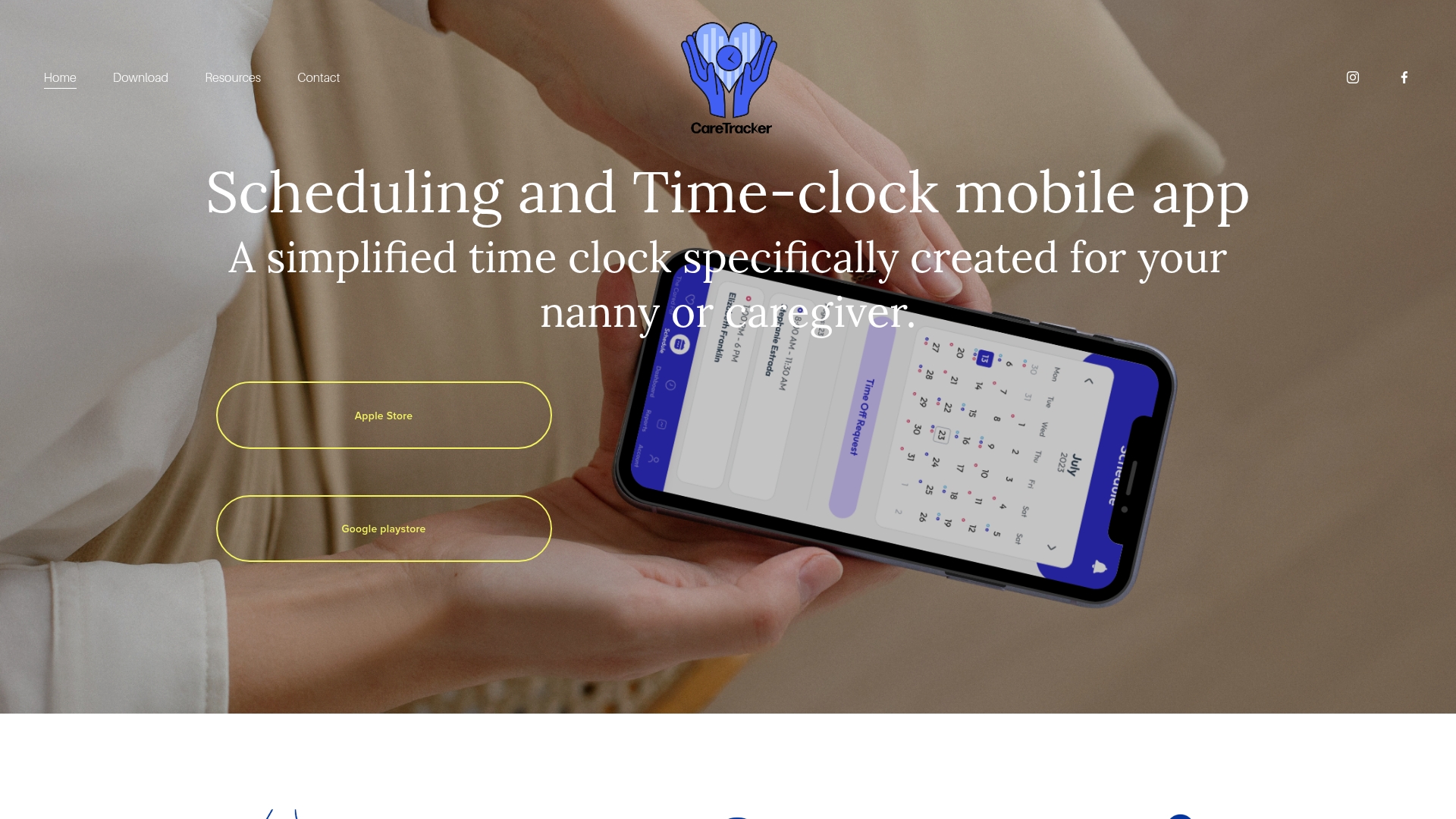
Caregivers can receive and approve schedule requests, see all their jobs in one calendar, track weekly hours and open allergies, medications, emergency contacts, nap and nursing schedules and daily activities in seconds. It is free for caregivers, because we believe a caregiver should never have to pay to keep a family's information organized.
For families, this means fewer reminders, fewer guesses and fewer awkward conversations about what was agreed. Hours match what was scheduled. Time-off and reimbursement requests are submitted and approved in the same place. Everyone works from the same facts, which is the quiet foundation of trust.
Good etiquette is mostly good systems. When the system holds the details, people can spend their energy on the relationship.
mercedes
Put it into practice with Caretracker
If you are ready to move schedules, hours and care details out of scattered texts, Caretracker gives your nanny or caregiver a free mobile app for scheduling, time tracking and shared care information. You can see how it handles hours on our nanny time tracking page.
If the hard part is payroll, back wages or household employer paperwork, we also offer a Standard Payroll Consultation package for $150 one-off, and a Premium consultation for $150 one-off. For prior wage reporting and household payroll cleanup, see the details on the consultation page.
Frequently asked questions
How often should I check in with my nanny or caregiver?
Weekly is a good default. Au pair program handbooks recommend weekly touch-base meetings, and the habit works for any in-home caregiver. Add a brief daily handover for routine updates, and call right away for anything urgent.
Is it okay to text a caregiver outside work hours?
Only for urgent matters, or if you agreed to it beforehand. Routine questions can wait for the next shift or a set time. Put your contact rules in writing so no one has to guess.
What should I write in caregiver job notes?
Write what was done, what was noticed, any open questions, who owns the next step and when. Keep it factual, with times, and put anything urgent at the top. Avoid diagnosing or guessing.
How do I give negative feedback without upsetting my caregiver?
Do it privately and describe the specific situation, with dates and times. Explain the effect and ask for one clear change. Invite their view, then send a short written recap so you both remember what you agreed.
Can a caregiver post photos of the children or the person in their care?
Not without permission. Put a rule in your written agreement that covers photos, locations, routines and travel plans, both during and after employment.
Sources
- Host Family Handbook (2022)
- Host Family Handbook, Cultural Care Au Pair
- Working Successfully with In-Home Service Providers, ALS Association
- Agreements, Contracts, and Expectations, Trustline
- SBAR handoff method, Agency for Healthcare Research and Quality
- Resolving Conflicts with Your Nanny, Beverly
- Parent communication agreements
- Sharing photos for special moments
- Home health monitor guide