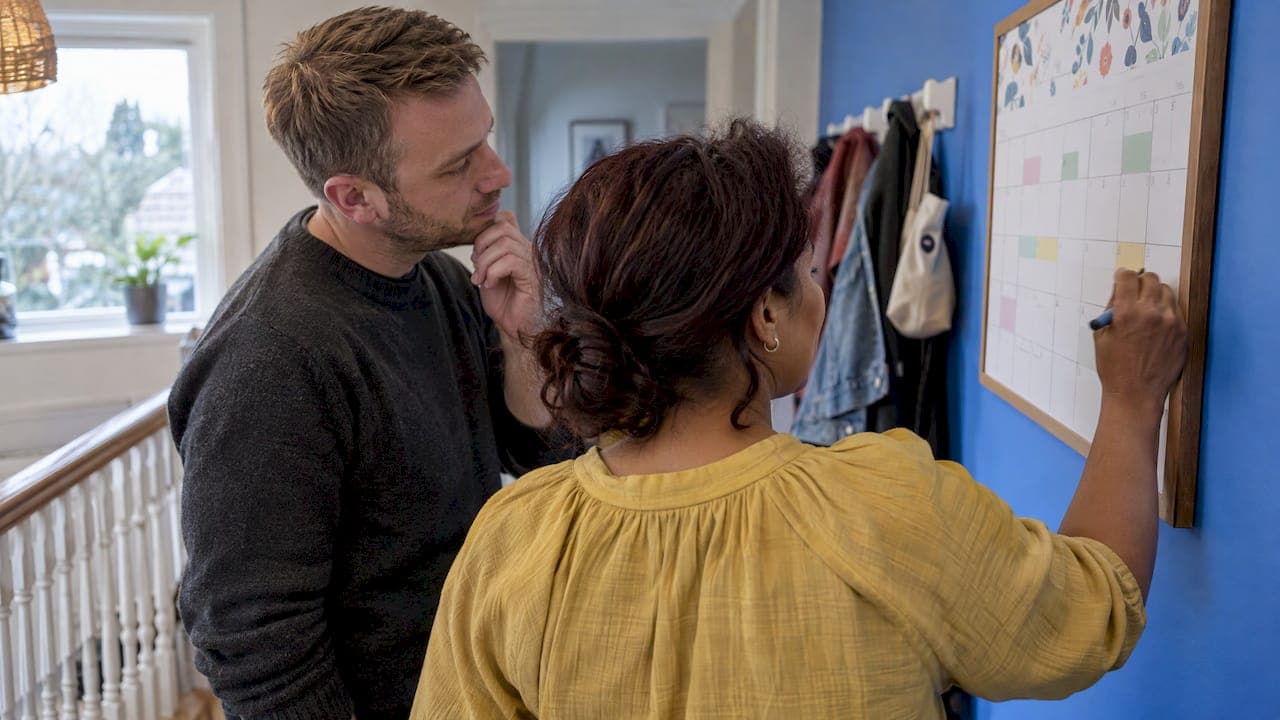
A good weekend childcare schedule is a written plan that names who is on duty, from what time to what time, what they are responsible for, and who to call if something changes. If you hire a nanny, au pair or caregiver for Saturdays and Sundays, put those four things in one shared place, agree on them before the first shift, and track the hours as they happen. That is what keeps weekends calm for your family and fair for the person caring for your child.
This guide walks through how to build that schedule, what the U.S. rules say about hours and overtime, what care information to share, and how to handle the inevitable last-minute change.
- ✓Receive and approve schedule requests
- ✓View jobs in one calendar
- ✓Track weekly hours
- ✓Access care details and emergency contacts
TL;DR
- Write down exact start and end times, the duties for each shift, and the off-duty time. Do not rely on a general understanding.
- Build shifts around your child's real routine (naps, meals, activities), then check them against the caregiver's availability.
- Know the hour limits that apply: au pairs have program caps, and nannies are generally owed minimum wage for all hours worked and overtime after 40 hours in a week.
- Put schedule changes in the shared calendar, ideally a week ahead, instead of leaving them in a text thread.
- Share allergies, medications, routines and emergency contacts in writing, and keep a backup plan.
Table of Contents
- Your weekend care options at a glance
- What a weekend schedule should include
- Build the schedule around the routine, not just availability
- A sample weekend schedule
- Hours, breaks and overtime: the U.S. rules that apply
- Requesting and confirming weekend changes
- What to share with a weekend caregiver
- Have a backup plan for the weekend
- Our perspective
- Put your weekend schedule in one place
- FAQ
- Sources
Your weekend care options at a glance
When families search for weekend childcare, they usually find drop-in centers that open on Saturdays. Those exist in some cities, but most child care programs keep weekday hours, and the ones that offer extended hours often charge extra and may cap the number of hours per week. Check availability and fees directly with each center in your area.
The other route is care in your own home, which is where a written schedule matters most. Typical arrangements include:
| Arrangement | Best for | What the schedule must settle |
|---|---|---|
| Part-time nanny | Regular Saturday or Sunday coverage, or a few weekend evenings a month | Fixed start and end times, pay for hours worked, notice for cancellations |
| Full-time nanny with some weekend shifts | Families with irregular work hours | Total weekly hours and overtime, days off |
| Au pair | Families who want a live-in cultural exchange | Program hour limits, required days off, a full weekend off each month |
| Senior caregiver (for an older adult in the home) | Weekend relief for family members | Medication times, mobility needs, handoffs between shifts |
| Family and friends as backup | Gaps and emergencies | Who is on the list and when they are available |
Whichever you choose, the schedule is what turns a verbal "can you help this weekend?" into something both sides can rely on.
What a weekend schedule should include
A weekend schedule for a nanny, au pair or caregiver should include clearly defined start and end times for every shift, a list of the specific duties, and marked off-duty time. It should also cover recurring tasks and appointments, meal and medication routines, and emergency contact information, according to the Host Family Handbook used for the U.S. au pair program. The same logic works for any household employee.
A practical checklist:
- Shift times. Exact start and end, not "Saturday morning."
- Duties. Meals, naps, outings, light tidying related to the child, transportation, bath and bedtime. Say what is included and what is not.
- Off-duty windows. If a caregiver lives with you, mark the hours they are free, not just the hours they work.
- Recurring items. Weekend sports, birthday parties, religious services, therapy or medical visits.
- Routines. Nap and feeding times for babies, meal and medication times for older adults.
- Contacts. Parents, backup adults, pediatrician or doctor, and emergency numbers.
- Change process. How a request is made and how it is confirmed (more on this below).
For senior care, one useful habit is to map the full 24-hour day: wake-up, meals, medications and bedtime. Mapping those routines shows exactly when support is needed, which is easier than guessing from a list of tasks.
If you want a ready-made format, our nanny schedule template is built to be used on a phone, and our guide to caregiver scheduling covers how to keep it current.
Build the schedule around the routine, not just availability
It is tempting to start with the question "when can the caregiver work?" A better starting point is "when does my child or parent actually need someone?" Shifts should be built around the person's real routine, risks and instructions, while accounting for when family support is available, as this guide to organizing caregiver shifts explains. Medication timing and mobility challenges, for example, should drive a senior's schedule rather than convenience.
For a young child, the same idea applies:
- Mark nap windows and avoid scheduling an outing across them.
- Put mealtimes in the schedule, with any allergy notes next to them.
- Cluster activities in the child's best hours. Many children are at their best in the morning.
- Leave a buffer at the start and end of the shift for updates.
If your child's days still feel unpredictable, it helps to build a daily routine first, then place the caregiver's shift on top of it. A caregiver who walks into a predictable rhythm settles in faster than one who has to guess.
Availability still matters, of course. Au pair host families are encouraged to talk through the requested weekend rhythm during hiring, so the caregiver is comfortable with it from day one, as Go Au Pair notes. The same is true for nannies: raise weekend work in the interview, not after the offer.
A sample weekend schedule
Here is an example for a nanny covering a Saturday for a toddler. Adjust the times to your own child.
| Time | Task | Notes |
|---|---|---|
| 8:00 a.m. | Shift starts, quick handoff with parent | Review any changes since Friday |
| 8:15 a.m. | Breakfast | Note allergies on the care sheet |
| 9:30 a.m. | Playground or library trip | Car seat in the family car |
| 11:30 a.m. | Lunch | |
| 12:30 p.m. | Nap | Quiet time for the caregiver, still on duty |
| 2:30 p.m. | Snack, indoor play | |
| 4:00 p.m. | Soccer practice | Recurring weekly |
| 5:30 p.m. | Dinner and bath | |
| 6:30 p.m. | Parent returns, handoff, shift ends | Log actual end time |
Notice the first and last lines. A short handoff at each end matters. For multiple caregivers, a 15 to 30 minute overlap lets the incoming person hear about changes or incidents from the previous shift, a practice recommended for caregiver rotations. Our caregiver report templates show how to make that handoff short and consistent, and a daily log gives parents a record of the day.
Hours, breaks and overtime: the U.S. rules that apply
Weekend work is still work, and it counts toward the weekly total. A few federal rules matter most.
Nannies and other household employees
Domestic service workers, including nannies, must generally be paid at least the federal minimum wage for all hours worked, plus overtime at one and a half times their regular rate for hours over 40 in a workweek. According to the U.S. Department of Labor, live-in workers employed directly by a household may be exempt from overtime but must still receive minimum wage. Third-party employers, such as home care agencies, cannot claim that live-in exemption and must pay overtime past 40 hours.
This is why weekend shifts need care. A nanny who works 36 hours Monday through Friday and then picks up a 8-hour Saturday has crossed 40 hours, and the extra hours are overtime pay. State rules may add their own requirements, so check your state labor department's guidance too.
The Department of Labor's sample agreement for home care workers is a helpful model. It provides for recording all hours worked, with daily start and end times, and for keeping records under applicable law. It also covers meal and rest breaks, with short breaks of 20 minutes or less generally paid.
Overnight and live-in coverage
If the weekend includes an overnight, the rules get more specific. An employer and a live-in domestic worker may agree to exclude bona fide meal, sleep and off-duty time from hours worked, but any time interrupted by a call to duty must be counted as work, per the Department of Labor fact sheet. Put that agreement in writing, and note any overnight interruptions.

Au pairs
Au pairs follow program rules. According to the Host Family Handbook, an au pair may provide no more than 45 hours of childcare per week and no more than 10 hours in any 24-hour period. Au pairs must also receive at least 1.5 consecutive days off each week and at least one full weekend off, from Friday evening to Monday morning, each month. When you plan weekends, put that monthly weekend off on the calendar first, then fill in the rest.

Tracking the hours
The simplest way to stay accurate is to record start and end times every shift, as they happen, not at the end of the month. Our nanny timesheet template shows what to capture. If you would rather not do it by hand, the caregiver can track their hours in the app and you can see them in one place.
Requesting and confirming weekend changes
Most weekend friction comes from changes: a work trip, an event that runs late, a cancelled plan. Families should formalize changes in the master calendar or schedule document rather than relying only on texts or verbal updates, and changes should ideally be discussed at least a week ahead so the caregiver can protect their personal time, according to the Host Family Handbook.
A simple process:
- Ask early. Send the request as soon as you know.
- Put it in one place. Use the shared calendar, not three separate threads.
- Get a yes. The change is not final until the caregiver approves it.
- Tell everyone affected. The shared care plan guidance from the National Parenting Foundation says the plan should specify how a change is confirmed and who needs to hear about it.
- Agree on notice for cancellations. The Department of Labor's sample agreement lets both parties spell out notice for schedule changes or cancellations, and it is better to decide that before it happens.
Regular check-ins help too. Scheduled conversations between families and caregivers are a chance to address challenges, change care requirements or adjust schedules, as the Domestic Employers Association points out. Ten minutes on Friday can save a confusing Saturday.
Why not just use a family calendar? Shared calendars show events, but they do not record approvals or hours. We compare the options in our guides to family calendar apps and using Google Calendar for nanny work.
What to share with a weekend caregiver
Weekend caregivers often have less context than weekday ones. They may see your child less often, or they may be covering for someone else. Give them a written care plan. According to the Host Family Handbook, it should cover daily routines, medications, allergies, mobility requirements and emergency contacts, plus the names of backup caregivers and where important documents are kept. A written care plan should be accessible to every caregiver, and it should include safety needs as well as routines, as this scheduling guide puts it.
A one-page version covers:
- Allergies, with what to do if there is a reaction. If you are still introducing foods to a baby, an allergen introduction schedule can help you tell the caregiver which foods are new and which are established.
- Medications, with dose, time and where they are stored.
- Emergency contacts, including a second adult who can be reached if you cannot.
- Nap and feeding or nursing schedules.
- Daily activities the child enjoys and rules about screens, snacks and outings.
- Mobility and safety notes for older adults, such as fall risks.
Specific medical questions, such as a medication change or a new food allergy, belong with your child's pediatrician or your parent's doctor. Put their instructions in the plan rather than relying on memory.
Have a backup plan for the weekend
Weekend coverage has less slack than weekdays. If the caregiver is ill, there may be no easy substitute. Keep a simple dependency map of the weekly supports your household relies on, such as meal delivery, cleaning or pharmacy pickups, so you can see what happens if one is interrupted and who might step in, as ElderHonor recommends. The same source advises testing a backup plan now and then, because one that has never been used may fail in a real emergency.
For a family with a nanny, that can be as simple as:
- Two named backup adults, with phone numbers in the care plan.
- One local drop-in or weekend program you have already visited.
- A standing agreement with the nanny about whether they will take extra shifts, and at what pay.
Our perspective
We built Caretracker because the weekend is where informal arrangements most often fall apart. A text on Thursday, a different understanding on Saturday, and by Monday nobody is sure how many hours were worked.
Our view is simple: the caregiver and the family should look at the same schedule, the same care information and the same hours. When a nanny can see every job in one calendar, approve or decline a schedule request, and open the allergies, medications, emergency contacts and nap schedules in seconds, weekends feel less rushed. When a family can see hours recorded as they happen, there is less to reconcile later.
The app is free for caregivers, because we believe the person doing the work should not pay to keep the record. For households, we also help with the paperwork side: pay periods, overtime and cleaning up past payroll. Trust and transparency are what make a household employment relationship last, and a clear weekend schedule is where they start.
mercedes
Put your weekend schedule in one place
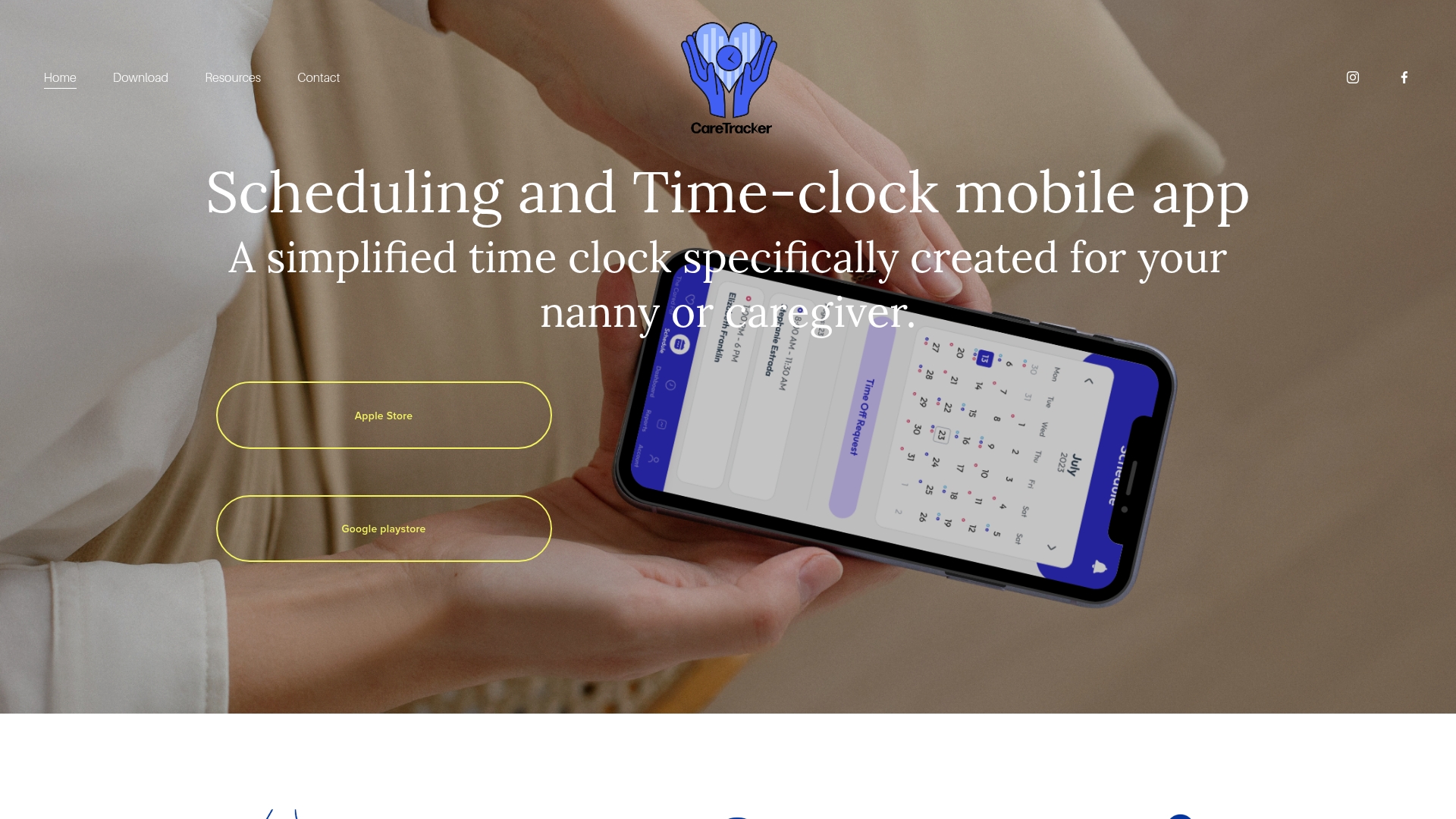
Caretracker is a free mobile app for nannies and caregivers. They can receive and approve schedule requests, see all their jobs in one calendar, track weekly hours and open care details like allergies, medications and nap schedules. You can see the details on our home page.
If the question is payroll rather than scheduling, we offer a Standard Payroll Consultation package for $150 one-time, and a Premium consultation for $150 one-time that also covers prior wage reporting and household payroll cleanup. Both are meant for household employers who want weekend hours, overtime and pay periods handled correctly.
FAQ
Are daycares open on weekends?
Some are, but most child care programs keep Monday to Friday hours. Centers that offer weekend care often charge an additional fee or limit the hours per week, so call ahead for availability and rates in your area. A nanny or au pair gives you more control over the schedule.
How many hours can an au pair work on a weekend?
Au pairs can provide no more than 10 hours of childcare in any 24-hour period and 45 hours in a week, according to the Host Family Handbook. They also need at least one full weekend off, Friday evening to Monday morning, each month. Plan that weekend first.
Do I owe a nanny overtime for weekend work?
Generally, yes, if total hours in the workweek go past 40. The Department of Labor says nannies must be paid at least minimum wage for all hours worked and overtime at one and a half times the regular rate over 40 hours, with a possible overtime exemption for live-in workers employed directly by a household. Check your state's rules as well.
How far ahead should I ask for a schedule change?
At least a week ahead whenever possible, and in the shared calendar rather than only by text. That gives the caregiver time to protect their personal plans. Wait for their approval before treating the change as final.
What should I tell a weekend caregiver before the first shift?
Give them a written care plan with routines, medications, allergies, emergency contacts, backup adults and where key documents are. Walk through it together once, in person if you can, and keep it where they can open it quickly.
Sources
- Host Family Handbook (2022)
- Fact Sheet #79B: Live-in Domestic Service Workers Under the FLSA, U.S. Department of Labor
- Domestic Service Final Rule FAQ, U.S. Department of Labor
- Employment Sample Agreement for Home Care Workers, U.S. Department of Labor
- Hiring and Managing Caregivers for Yourself and Loved Ones, Domestic Employers Association
- Weekly Shared Care Plan, National Parenting Foundation
- How to Organize Caregiver Shifts Without Gaps
- 5 Steps to Create a Backup Plan for Home Care Emergencies
- Weekend Childcare Duties for Au Pairs