
The best way to share a nap and feeding schedule is to put it in one place your caregiver can open at any time, written as a simple framework: last nap, last feed, what comes next, and what to do when the day goes off plan. A paper note on the fridge works for a day or two. A shared, always-current record works for months, because babies change faster than notes do.
This guide covers what to include, how to hand it over, how to keep it updated, and how to handle outings and changed routines. It is written for parents who hire nannies or au pairs, and for seniors who hire caregivers and want care details handled clearly.
- ✓Access nap schedules
- ✓View jobs in one calendar
- ✓Track weekly hours
- ✓Access important care information
TL;DR
- Share a framework, not a rigid clock: typical nap counts and feeding gaps, plus the cues your child shows when tired or hungry.
- Include the last nap, the last feed, amounts, diaper notes and anything unusual, so the caregiver starts from the real state of the day.
- Write down safe-sleep rules for every nap and make sure the caregiver follows them every time.
- Keep one version only, and update it whenever the child's pattern shifts, rather than sending corrections by text.
- Use an app the caregiver already checks for schedules, so care details sit next to the calendar and hours.
Table of Contents
- Why a shared schedule matters more than a verbal briefing
- What a nap schedule for a caregiver should include
- What to share about feeding
- Safe sleep belongs in every nap schedule
- How to share the schedule step by step
- Keeping the schedule current as your child grows
- When a nap or feed does not go as planned
- Our perspective
- Put your care details and hours in one place
- FAQ
- Sources
Why a shared schedule matters more than a verbal briefing
Most families start with a conversation on the first morning. You explain that the baby naps around ten, eats about every three hours, and hates the stroller. That conversation is useful, but it fades. By week three the caregiver remembers half of it, and you remember changes you never mentioned.
A written, shared schedule fixes three common problems:
- Missed details. Allergies, bottle instructions and nap rituals get lost when they live only in your head.
- Conflicting updates. Three text messages with three versions of the nap plan leave the caregiver guessing.
- Awkward handoffs. When you walk in at the end of the day, you want to know what happened without an interrogation. The caregiver wants to give that update without feeling watched.
Transparency works in both directions. A clear schedule gives the caregiver what they need to do the job well, and it gives you peace of mind that the day went the way you planned. For a deeper look at the end-of-shift conversation, see this one-page caregiver handoff checklist.
What a nap schedule for a caregiver should include
A nap schedule is mostly about three things: how many naps happen each day, when they happen, and how long they last. A nap routine is the set of steps before sleep. Caregivers need both, and they need them in plain words.
The framework for your child's age
Start with the typical pattern so you and your caregiver share the same expectations. These are general ranges, not rules for your child:
| Age | Typical pattern |
|---|---|
| Birth to 3 months | Waking every 1 to 3 hours, 11 to 19 hours of sleep over 24 hours |
| 3 to 6 months | Commonly 2 to 3 naps |
| 6 to 12 months | Daytime sleep commonly 2 to 4 hours, more predictable patterns |
| After 12 months | One daytime nap of 1 to 2 hours is common |
Those ranges come from the Pregnancy, Birth and Baby sleep patterns guide. Other health services report similar shifts. Ireland's HSE says babies generally nap less as they grow, with about four naps at 2 months, two at 6 to 9 months and one around 12 to 15 months, and it advises judging timing by how long the child has been awake. Tresillian's 3 to 6 month guide gives example patterns of three daytime naps at 3 to 4 months and two to three at 5 to 6 months, and stresses that patterns vary.
If you want sample routines by age to adapt, our infant nap schedule guide is a good starting point.
The details that are specific to your child
General ranges tell a caregiver what is normal. Your notes tell them what is true in your house. For each nap, record:
- Usual nap times, and a rough window rather than an exact minute
- How long the child usually sleeps, and when to wake them if needed
- Where the child sleeps, and any approved sleep product you use
- The ritual: sleep sack, white noise, a song, lights, a pacifier
- Signs of tiredness your child shows, such as rubbing eyes or fussing
- What to do if the nap is short or refused
The sleep section of a handoff note should also capture the last nap or sleep, how long it lasted, and anything unusual. That structure comes from a co-parenting handoff template that works just as well between parent and nanny.
What to share about feeding
Feeding details are where a vague note causes the most stress. A caregiver who knows exactly how you prepare a bottle and how your child signals hunger will feel confident, and so will you.
The essentials
The UNC School of Public Health infant feeding plan form lists what parents should give caregivers. Adapted for a nanny, your shared schedule should cover:
- What the baby drinks at home: breast milk, formula, cow's milk or something else
- How your child shows hunger
- How often the child usually feeds
- How much milk or formula the child usually drinks in one feeding
- Whether solid foods have started, which foods, how often and how much
- What to do if the baby is crying or seems hungry shortly before you get home
Add the practical items too: how to prepare and warm a bottle, where supplies are kept, and how to store expressed milk. And list allergies and medications in the same place, since they affect every meal.
Hunger cues, not just the clock
The American Academy of Pediatrics notes in its 1-month visit handout that a breastfed baby is fed on demand, generally every 1 to 3 hours during the day and every 3 hours at night. It describes hunger cues such as a hand to the mouth, sucking or rooting, or fussing, and fullness cues such as turning away, closing the mouth or relaxing the arms and hands. Putting your own child's cues in the schedule helps your nanny respond to the baby in front of her, not just the time on the wall.

What the caregiver should log
Ask your caregiver to record each feeding with its time, the amount for a bottle or the starting side for breastfeeding, and any wet or dirty diapers. The feeding section of a handoff note also benefits from a line on anything different from usual, plus diaper notes such as a rash or an unusual bowel movement, as the handoff template suggests. With a newborn, be precise. With an older baby, a lighter log is fine.

For ideas on how detailed a daily record should be, see our guide to the nanny daily log.
Safe sleep belongs in every nap schedule
A nap plan is not complete without safe-sleep rules. Put them in writing, even if your nanny is experienced. The American Academy of Pediatrics says babies up to 1 year should be placed on their backs for every nap and nighttime sleep. Its guidance also covers the sleep space:
- A firm, flat, safety-approved crib, bassinet, portable crib or play yard
- A fitted sheet only
- No pillows, blankets, bumpers, stuffed toys or other loose objects
- No inclined or non-approved sleep products
- A baby who falls asleep in a car seat, stroller, swing, carrier or sling is moved to a firm sleep surface, on the back, as soon as possible
If you have questions about your own baby's sleep, such as a medical condition or reflux, ask your pediatrician before you write the plan, and put their instructions in the schedule.
How to share the schedule step by step
Here is a simple process that works for nannies, au pairs and other in-home caregivers.
- Write the first version together. Sit down with your caregiver on or before day one. Ask what she has seen work with babies the same age. Her input makes the plan more realistic.
- Use a consistent format. Keep the same sections every time: sleep, feeding, diapers, activities, health notes, emergency contacts.
- Put it where she will look. A document buried in email gets missed. Care details are most useful when they sit beside the work schedule, so the caregiver sees them when she opens her day.
- Mark what is fixed and what is flexible. Allergies and safe-sleep rules are fixed. Nap times are a range.
- Agree on how updates travel. Decide that changes go in the shared schedule first, and a text only points to it.
- Review it regularly. Set a short check-in when the baby hits a new age or drops a nap.
If you are building the work schedule too, our nanny schedule template and caregiver scheduling guide show how to keep hours and care notes organized together.
Why a calendar alone falls short
Many families begin with a shared calendar. It handles shifts well but not nap rituals, bottle instructions or allergy lists. We explain the gap in why a purpose-built app beats a general calendar, and compare options in our roundup of family calendar apps.
Keeping the schedule current as your child grows
Babies do not stay on one pattern. A schedule that was perfect in month four may be wrong in month seven. Plan for change:
- Update after each shift in pattern. When a nap disappears or lengthens, edit the plan the same day.
- Note why. "Dropped the third nap, bedtime now earlier" tells the caregiver what to expect.
- Ask for observations. Your caregiver sees the baby for hours. Her notes on mood, sleep length and appetite are the best early signal that the schedule needs to change.
- Keep a record of changes. If you also coordinate sleep tracking with a partner or other relatives, a dated journal helps everyone see the same timeline. A daily parenting journal template shows how short, dated entries keep that record simple.
When a nap or feed does not go as planned
Outings, travel, teething and a missed morning nap will all happen. The most helpful instruction you can give is permission to adapt.
Treat the schedule as a framework
Sleep expert Meg O'Leary, quoted by Today's Parent, advises parents to watch individual cues, adjust nap timing and length, and stay flexible as wake windows change. Responsive feeding follows the same idea: offer a feed when early hunger cues appear and stop when the baby shows fullness. Tell your nanny that a nap 30 minutes late is not a failure.
Write an outing plan
Before a long outing, agree on a few points:
- Which nap is most important to protect, and where it should happen
- What to bring: bottles, formula, snacks, sleep sack, a portable approved sleep space if needed
- What to do if the baby dozes off in the stroller or car seat: move them to a firm, flat surface on their back as soon as possible, per the AAP guidance above
- When to head home, and how to message you
Handle a changed routine
When a routine shifts because of illness, travel or a new sibling, give the caregiver a short, specific note in the shared schedule: what changed, for how long, and what to do differently. Avoid a long list of new rules. One or two clear changes are easier to follow.
Our perspective
We built Caretracker around a simple observation: caregivers do their best work when they have the right information at the right moment. Nap schedules, nursing schedules, allergies, medications and emergency contacts should not live in a text thread from three weeks ago.
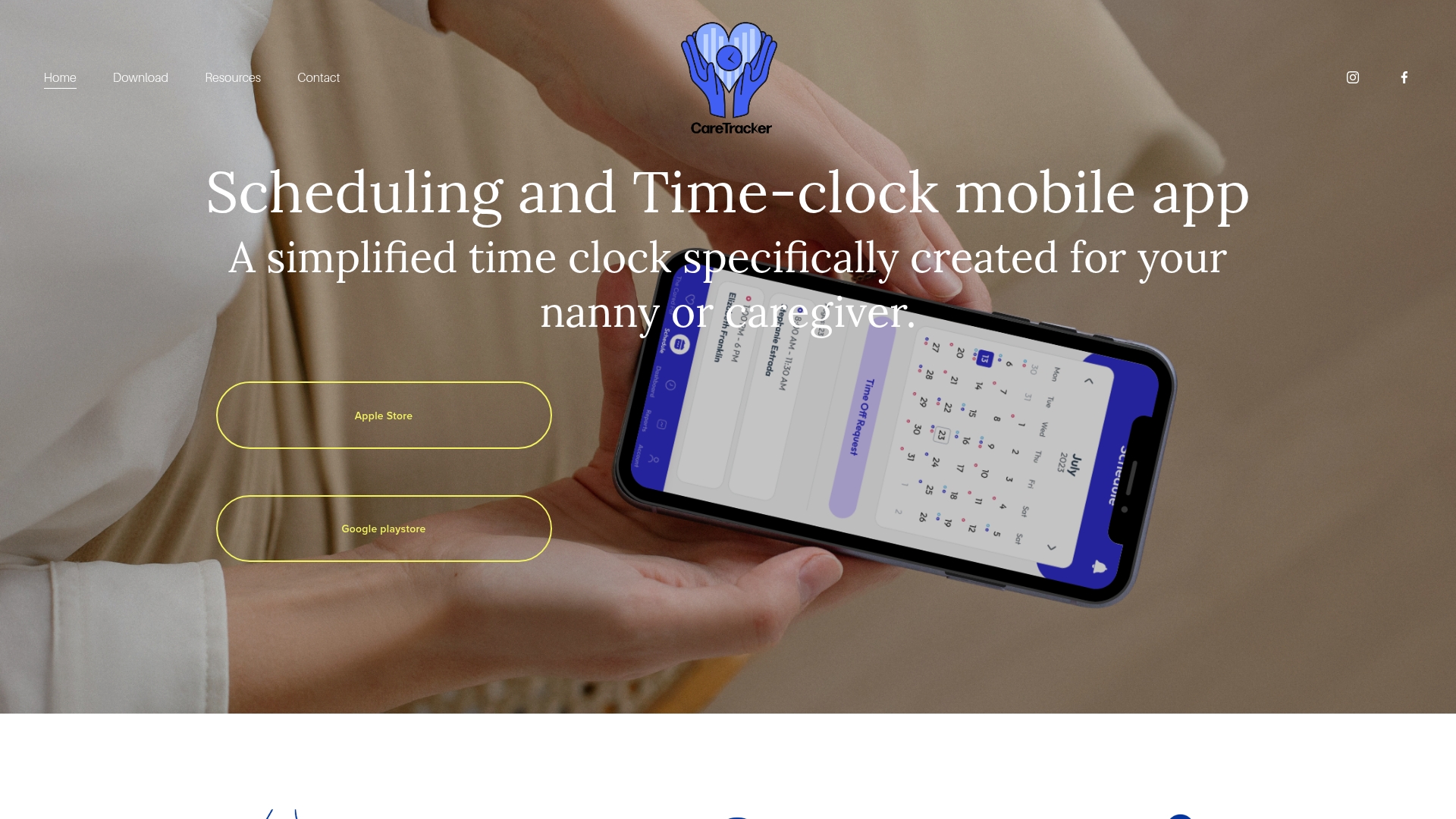
That is why the app puts care information next to the calendar and the hours. A caregiver can see all her jobs in one calendar, receive and approve schedule requests, track weekly hours and open the care details for the child in front of her. For families, that means fewer repeated explanations and more trust.
The app is completely free for caregivers. We think that matters, because a tool only works when the person doing the daily care actually uses it. Our approach is to make it easy for caregivers to stay organized and for families to share what matters, so everyone shares the same picture.
mercedes
Put your care details and hours in one place
If you are ready to stop juggling notes, texts and spreadsheets, the Caretracker app lets caregivers view schedules, track hours and access key care information such as allergies, medications, emergency contacts and nap and nursing schedules. It is free for caregivers.
Hiring a nanny also brings payroll questions. If you want help with household payroll, we offer a Standard Payroll Consultation package for $150 one-off, and a Premium consultation for $150 one-off. For prior wage reporting and household payroll cleanup, see our payroll cleanup services.
FAQ
How detailed should a shared nap schedule be?
Include usual nap times as a window, typical length, the sleep location, your child's tired signs and the nap ritual. Add what to do if a nap is short or skipped. Keep the language plain so a new caregiver can follow it on the first day.
How often should I update the schedule?
Update it whenever the pattern changes, such as a dropped nap or a new feeding amount. Also review it each time your child reaches a new age range, since nap counts commonly decrease as babies grow. Edit the shared version first so there is only one current plan.
What feeding details does a nanny need?
She needs to know what the baby drinks, how often and how much, how hunger shows, whether solids have started, and how to prepare bottles. Add allergies and what to do if the baby is hungry shortly before you return. A feeding log with times and amounts helps you see the whole day.
Can I share the schedule with more than one caregiver?
Yes. A shared record is especially useful when several caregivers, such as a nanny, an au pair and grandparents, care for the same child. Everyone sees the same plan and the same updates, which prevents mixed messages.
What if my nanny's approach differs from mine?
Talk through the reasons and agree on a plan for the shared schedule. Safe-sleep rules and allergy instructions are fixed. For nap timing and routines, listen to her observations, since she sees the child for many hours each day.
Sources
- Baby sleep patterns by age, Pregnancy, Birth and Baby
- Naps for babies and toddlers, HSE
- 3-6 Month Baby Sleep, Tresillian
- A Co-Parenting Handoff Template for the First Six Months
- Infant Feeding Plan form, UNC School of Public Health
- Bright Futures Information for Parents: 1 Month Visit, AAP
- How to Keep Your Sleeping Baby Safe, HealthyChildren.org
- Sometimes it's OK to wake a baby from a nap, Today's Parent
- Daily Parenting Journal Template