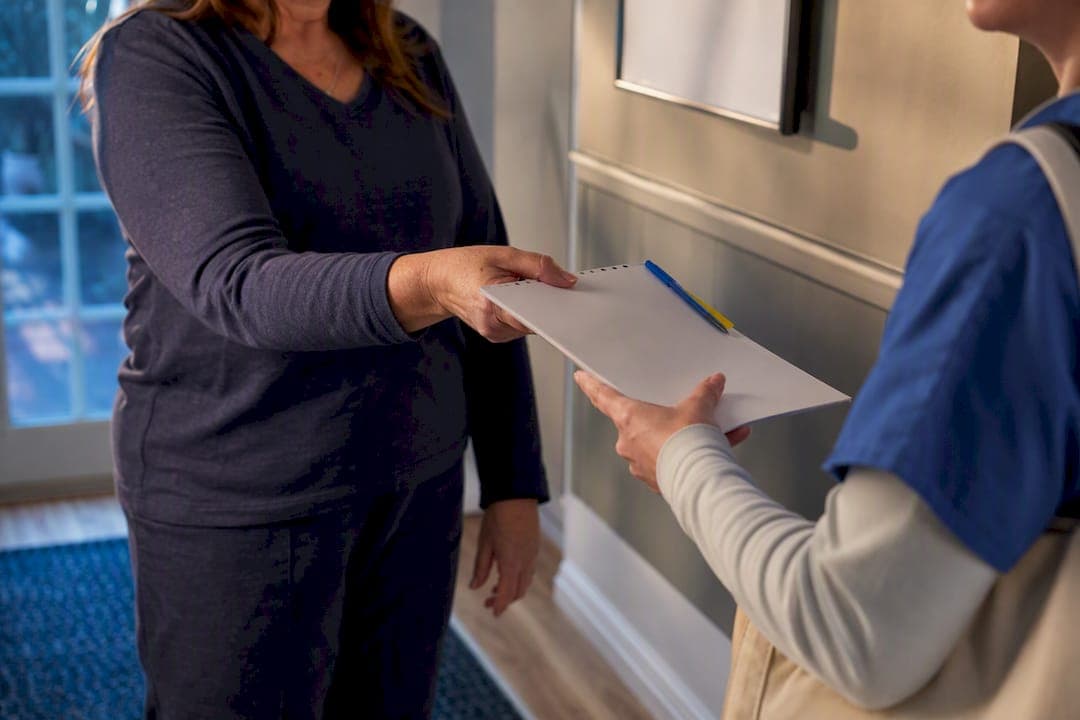
A one-page checklist covering meds, meals, mood, and pending tasks, paired with a 3 to 5 minute handoff read or a 5 to 15 minute overlap, catches nearly everything that normally slips through the cracks at shift change. Paper works. So does a shared note or an app. There are free options for families and caregivers who want the profile and daily log pre-filled and ready to share.
TL;DR:
- Providing a scheduled overlap of 5 to 15 minutes greatly improves the accuracy and completeness of caregiver handoffs compared to brief or no overlap.
- Using a standardized, one-page record with pre-filled static information and only updated during shifts ensures consistency and encourages regular usage.
- Writing clear, concise notes in shorthand about feeds, naps, medications, and behaviors allows caregivers to quickly scan critical information and reduces misunderstandings.
- Confirming medication doses verbally during handoff prevents errors and reinforces accurate administration before caregivers proceed with duties.
- Digital systems like care apps offer real-time logging and instant access, which are more reliable long-term than paper sheets that can be misplaced or outdated.
Table of Contents
- What Belongs on a Caregiver Handoff Checklist?
- How Do You Run a Caregiver Handoff Without Missing Anything?
- Paper, Shared Doc, or App: Which Handoff System Fits Your Household?
- What Does a Filled-In Handoff Sheet Actually Look Like?
- Why the Simplest Handoff System Beats the Most Detailed One
- Put the Checklist Somewhere Everyone Can Actually Find It
- Templates and Guides Worth Bookmarking
- Sources
- FAQ
What Belongs on a Caregiver Handoff Checklist?
A good handoff sheet fits on one page. That's not a style preference. It's the difference between a form caregivers actually fill out and one that gets skipped after week two. Free, short templates increase the odds a caregiver will actually use the handoff, and a one-page format keeps the whole exercise under five minutes.
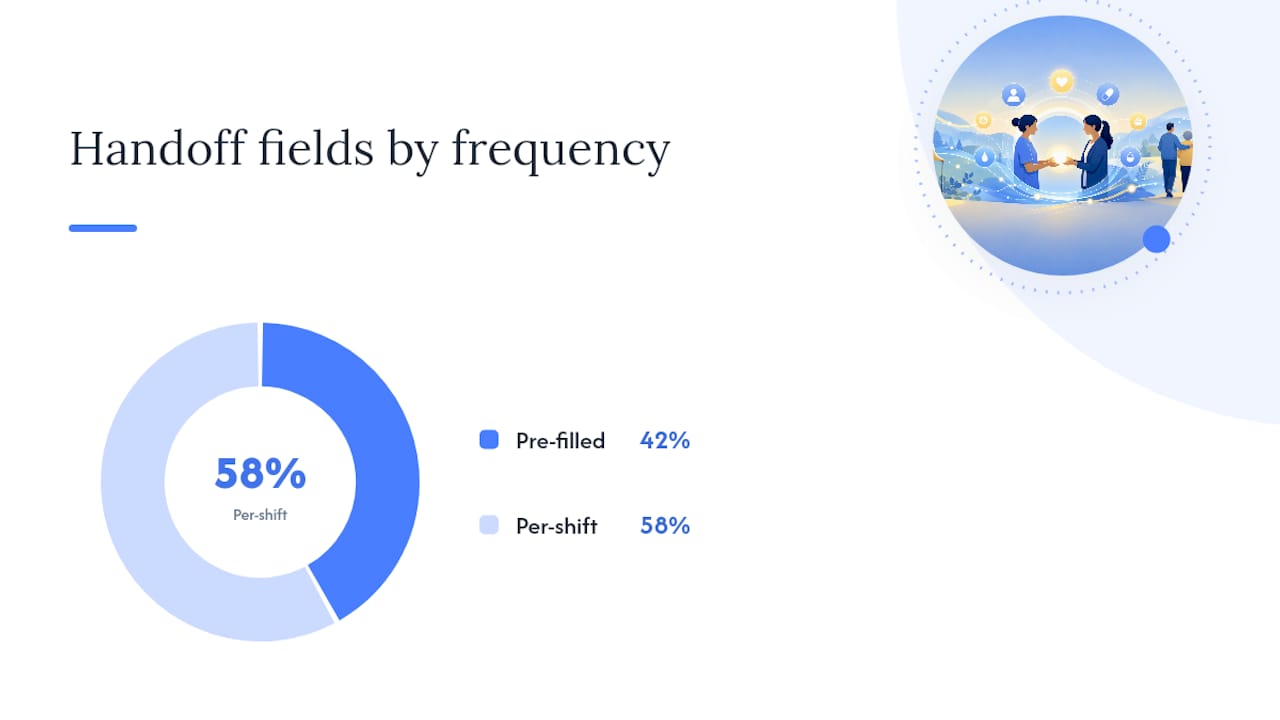
Split the sheet into two kinds of fields: things that rarely change, and things that change every shift.
Pre-filled once, updated rarely:
- Child's name, date of birth, and known allergies
- Emergency contacts, including the pediatrician's name and phone number
- Standing medication list (name, dose, and schedule)
- House rules and safety notes (locked cabinets, pool rules, pets)
Filled in fresh, every shift:
- Last feed (time and amount)
- Last nap (start time and duration)
- Medications given today (name, dose, time given, next dose due)
- Mood and behavior notes, including any incidents
- Pending tasks or upcoming appointments
- Supplies running low (diapers, formula, wipes)
- Outgoing and incoming caregiver initials with the handoff time
A printed information sheet with contacts, medical details, feeding instructions, and routines covers the same territory professional nanny agencies recommend, and it works whether the sheet lives in a kitchen binder or inside a caregiving app.
Use shorthand to keep entries fast: "10:15a, 4oz, ate well" tells the next caregiver everything they need in six words. For medications, write out the full name, exact dose, and exact time, never abbreviations that could be misread.
Pro Tip: Never write "gave meds" without the drug name, dose, and time. If two caregivers each think the other gave the 2 p.m. dose, that ambiguity is exactly what a handoff checklist exists to prevent.
How Do You Run a Caregiver Handoff Without Missing Anything?
The routine matters as much as the template. A checklist nobody reads at the right moment is just paper.
- Schedule the overlap first. Build 5 to 15 minutes of paid overlap into the schedule whenever two caregivers' shifts meet. A planned time overlap between outgoing and incoming caregivers turns handoffs from a rushed afterthought into a normal part of the job, and families that pay for those minutes get far more reliable notes in return.
- No overlap? Do the minimum. A 3 to 5 minute written read of the sheet, followed by a quick phone call for anything unclear, covers most of the same ground.
- Outgoing caregiver's checklist: tidy the main play or feeding area, update the sheet with today's entries, circle or highlight anything urgent (a fever, a new allergy reaction, a medication due soon), and leave the sheet in the agreed spot.
- Incoming caregiver's checklist: read the sheet before touching anything else, confirm the last medication dose and time out loud, ask one or two clarifying questions, then acknowledge the outgoing caregiver so they know the handoff is complete.
- For households with a rotating team, standardize the format across every caregiver, pre-fill the static fields once, and make reading the note a non-negotiable first step of every shift.
A structured sequence like SBAR, used in clinical handoffs to state situation, background, observations, and next steps, adapts well here too: what's happening right now, what happened this shift, what you noticed, and what needs to happen next.
Pro Tip: Treat the overlap as paid work time, not a favor. Caregivers who feel rushed during handoff skip details. Caregivers who know the minutes are compensated slow down and actually read the sheet.
Paper, Shared Doc, or App: Which Handoff System Fits Your Household?
The format matters less than consistency. Pick one and stick with it.
- A paper binder or clipboard left on the kitchen counter is the lowest-friction option. Anyone can read it or write on it without a login, but it's useless if a caregiver is remote or a parent wants updates during the day.
- A shared document or note app is searchable and easy to pre-fill with the standing fields. The catch is that it only works if every caregiver in the household actually opens it.
- A dedicated caregiving app logs feeds, naps, and meds in real time and gives parents a shared timeline they can check from anywhere. Caregiver-facing apps can offer temporary access through QR codes or invite links, which solves the awkward problem of pulling access cleanly when a caregiver's contract ends.
Whichever system you choose, the rule stays the same: standardize the location or the login, pre-fill everything that doesn't change day to day, and keep the shift note itself to one page. A nanny scheduling app that already tracks hours and calendar details makes it easy to attach the handoff note to the same place caregivers already check for their shifts.
What Does a Filled-In Handoff Sheet Actually Look Like?
Two short examples show the right level of detail. Neither takes more than a minute to write.
Infant handoff:
- Last feed: 11:40 a.m., 5 oz, took it slowly
- Last nap: 9:15 to 10:00 a.m.
- Meds given: none today
- Diapers: 2 wet, 1 dirty, normal
- Mood: fussy before nap, settled after
Toddler handoff:
- Naps: skipped afternoon nap, may be cranky by dinner
- Meals: ate lunch well, snack refused
- Potty: one accident around 2 p.m., otherwise dry
- Behavior: happy and cooperative most of the day
- Supplies low: wipes, almost out
- Reminder: dentist appointment Thursday at 3 p.m.
Each line stays short because most shifts are routine. Timestamped entries for feeds, diapers, and naps beat a vague paragraph summary because the next caregiver can scan them in seconds. Save the longer explanations for anything unusual: an allergic reaction, a fall, a new symptom. A printable sheet built around observation and what to watch for is the right model for those situations, though it's not a substitute for calling a pediatrician when something looks wrong.
Why the Simplest Handoff System Beats the Most Detailed One
Families often assume a more thorough handoff form produces better care. It usually produces the opposite. The longer the form, the more likely a tired caregiver skips it entirely after a hard shift, and a skipped form protects nobody.
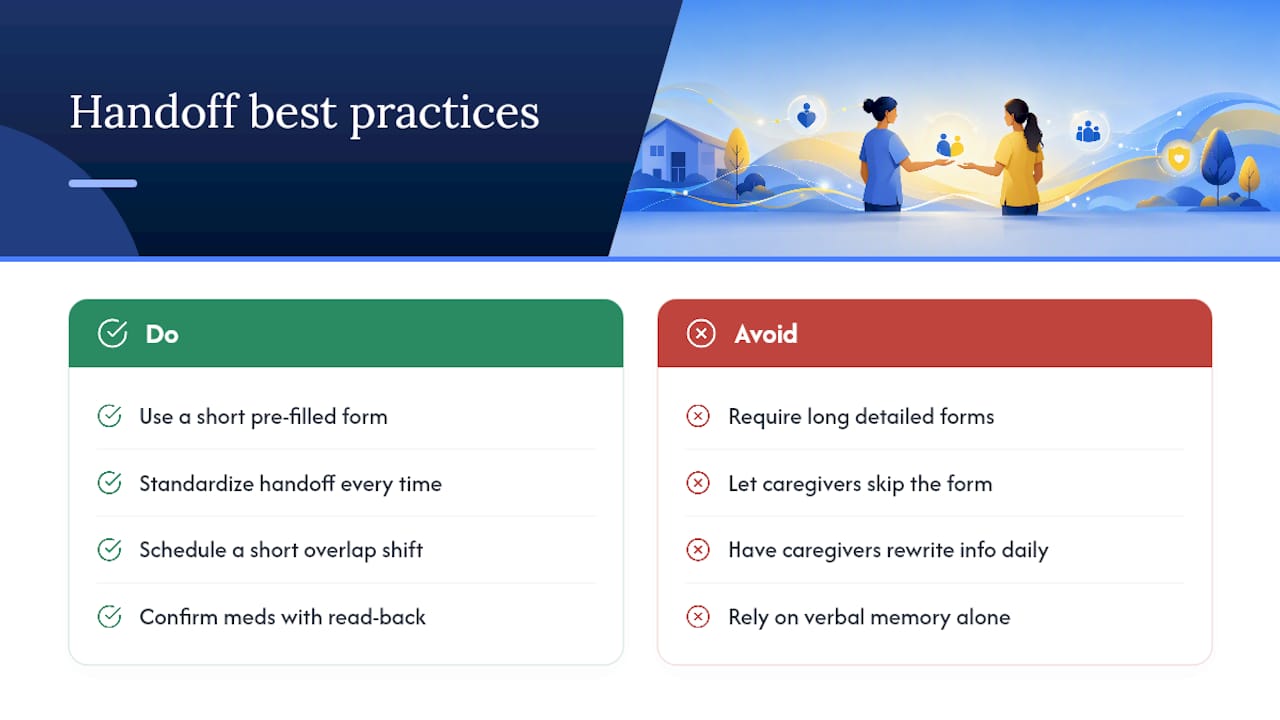
The households that get this right treat the handoff the same way they'd treat a house key: pre-filled, standardized, and handed over the same way every time. The overlap minutes matter more than most families realize. Paying for a short scheduled overlap costs less than the stress caused by a missed medication dose. A pre-filled child profile that never changes shift to shift removes the biggest source of friction: caregivers rewriting the same allergy list every single day.
The other undersold habit is confirmation. Incoming caregivers who repeat the medication dose and time back out loud catch errors before they happen, not after. It costs ten seconds and it's the single easiest habit to adopt from clinical handoff practice without adopting any of the clinical paperwork.
— mercedes
Put the Checklist Somewhere Everyone Can Actually Find It
A paper sheet works until someone forgets to update it or it gets left at the wrong house. Thecaretracker gives caregivers a free place to keep the same information always current and always accessible, without retyping allergy lists or emergency contacts every shift.
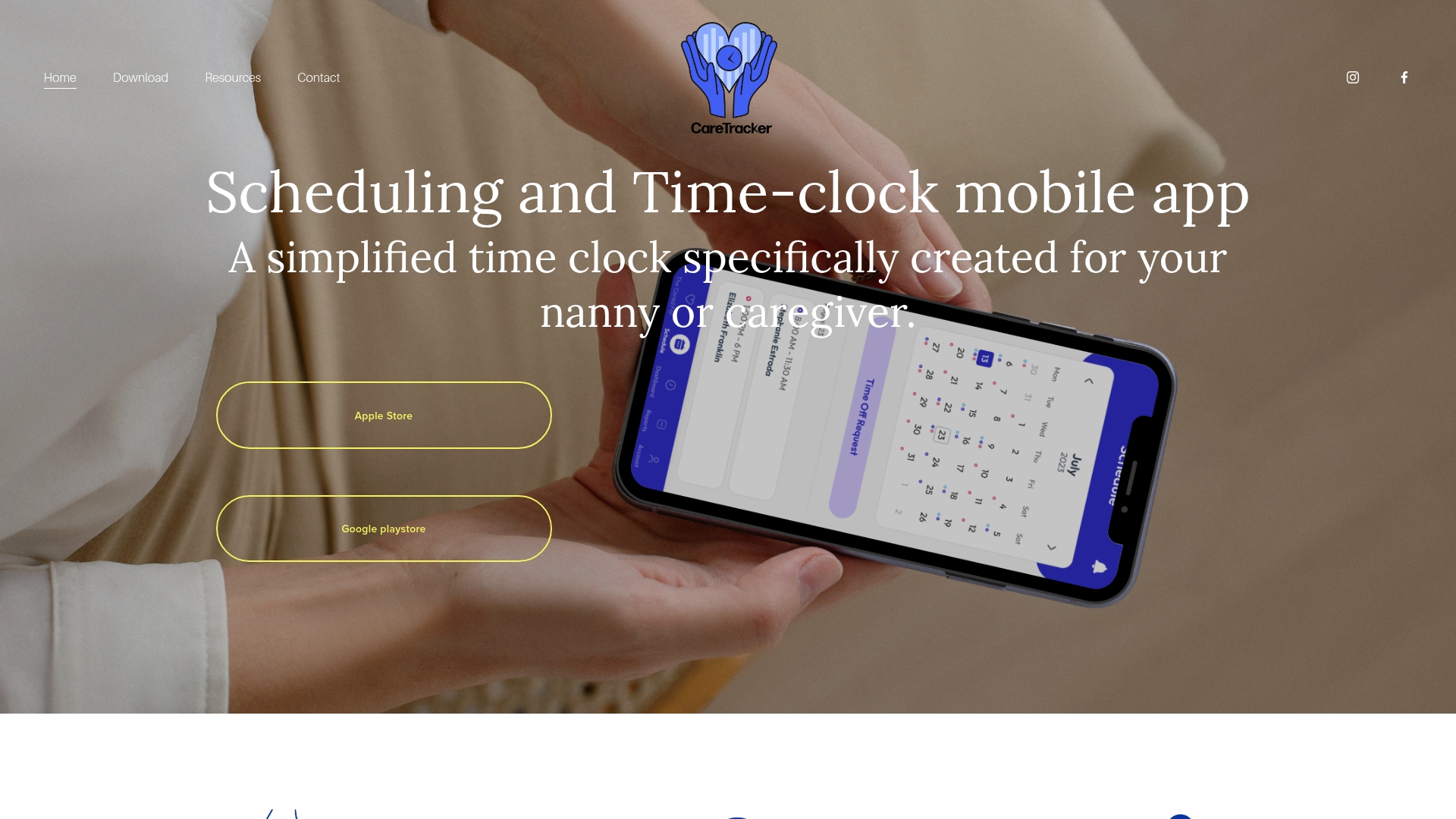
The app lets you build a care profile once with allergies, medications, emergency contacts, and nap or feeding schedules, then share it instantly with any caregiver on the schedule. Caregivers log daily activities in real time, request and approve schedule changes, and track hours accurately without a separate timesheet. To get started, create a profile for the child or care recipient, pre-fill the standing fields, and invite a caregiver to log their first shift. Anyone who wants to see how the hour tracking fits into the same workflow can check out the time tracking feature directly.
Templates and Guides Worth Bookmarking
- Caregiver Daily Log: Templates and App Guide: a template for daily logging plus app setup steps.
- Babysitter Information Sheet: What Parents Must Include: a one-page sitter sheet families can copy directly.
- Build a Daily Routine as a New Mom: flexible routine planning for infant schedules.
Sources
- Adventure Nannies — Mastering the nanny handoff
- Averyn Care — Caregiver shift handoff guide
- PediaPulse — Caregiver handoff sheet
FAQ
What Must a Caregiver Handoff Checklist Include?
At minimum, it needs emergency contacts, allergies, a medication log with times and doses, last feed and nap times, mood or behavior notes, and any pending tasks or appointments.
How Long Should a Handoff Take?
A written read takes 3 to 5 minutes; a scheduled overlap between caregivers works best at 5 to 15 minutes.
Should the Handoff Note Be Paper or Digital?
Either works if everyone in the household uses it consistently; apps like Thecaretracker add real-time logging and shared access that paper can't.
How Do You Keep Handoff Notes Private When a Caregiver Leaves?
Apps that use QR codes or invite links let families remove a departing caregiver's access instantly without changing passwords or reprinting sheets.
What's the Biggest Mistake Families Make With Handoffs?
Skipping the overlap entirely and relying on a rushed verbal update, which is exactly the gap a one-page fill-in-the-blank template is designed to close.