
What does a good infant nap schedule actually look like?
Every baby is different, but the general pattern is consistent: the younger the infant, the more naps they need and the shorter each wake window is. Newborns sleep 14–17 hours across 24 hours, spread over five to seven or more irregular naps. By 12 months, most babies have consolidated to one or two naps each day, with a total nap time that decreases as they grow. The shift happens gradually, driven by developmental milestones rather than a calendar date.
The most practical tool for timing naps at any age is the wake window: the amount of time a baby can comfortably stay awake before needing sleep again. Wake windows are more reliable than clock-based schedules during the first six to eight months, because a baby's circadian rhythm is still developing. Watching your baby's cues, not the clock, is what makes a routine actually work.
Here is a quick reference for nap patterns by age:
| Age | Naps per day | Wake windows | Total daily sleep |
|---|---|---|---|
| 0–2 months | five to seven or more naps | 30–45 min (0–4 weeks), 45–60 min (5–8 weeks) | 14–17 hours |
| 3–5 months | three to five naps | moderately increasing wake windows | high total daily sleep |
| 6–8 months | two to three naps | 2–3 hours | 12–15 hours |
| 9–12 months | one to two naps | longer wake windows | moderately reduced total daily sleep |
| 13+ months | usually one nap | longest wake windows | lower total daily sleep |
A sample day for a four-month-old might look like this: wake at 7:00 AM, first nap at 8:30 AM, second nap at 12:00 PM, third nap at 3:30 PM, and bedtime around 7:30 PM. The exact times shift as your baby grows, but the rhythm of wake, feed, and sleep stays consistent. Flexible routines built around your baby's cues outperform rigid clock schedules, especially in the early months.
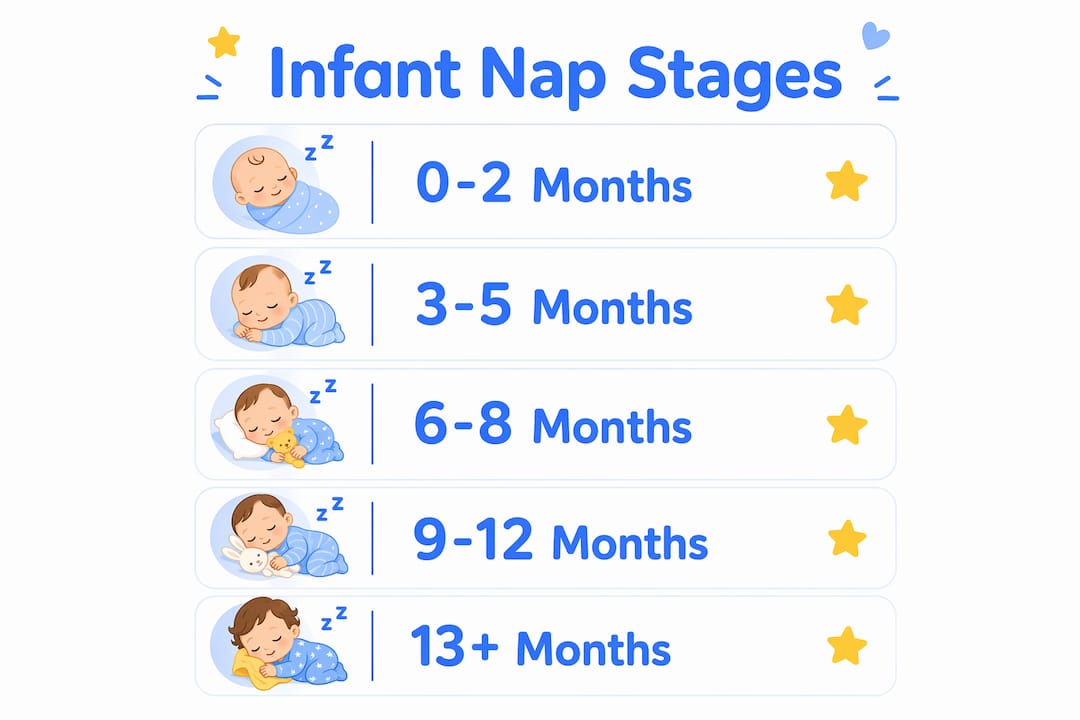
Newborn nap patterns: what to expect from birth to 2 months
Newborn sleep is unpredictable by design. Newborns sleep 14–17 hours per day across five to seven or more naps, with wake windows of just 30–45 minutes in the first four weeks, extending slightly to 45–60 minutes by weeks five through eight. There is no set schedule at this stage, and trying to impose one typically creates more stress than it solves.
Short naps of 20–30 minutes are completely normal for newborns. Their sleep cycles are shorter than an adult's, so waking after one cycle is expected. Total daily sleep matters far more than how long any single nap lasts.
Common sleepiness cues to watch for include:
- Yawning (often the earliest signal)
- Gaze aversion or staring blankly
- Slowing of movement or becoming less active
- Rubbing eyes or ears
- Fussiness that escalates quickly
Day-night confusion is another normal newborn challenge. Exposure to natural light during daytime hours and a quiet, dark environment at night helps the baby's circadian rhythm develop over the first few months. Most babies do not begin sleeping six to eight hours at night without waking until at least three months of age.
Pro Tip: Feed your newborn when they wake rather than on a strict schedule, and let sleep follow naturally. A loose feed-play-sleep rhythm is far gentler on both baby and caregiver than watching the clock.
Safe sleep is non-negotiable at every nap. The American Academy of Pediatrics recommends placing babies on their back on a firm, flat mattress for every sleep, including naps. Avoid using infant seats, swings, strollers, and car seats for routine napping due to risks of airway obstruction.
3 to 5 months: building a more predictable nap routine
Around three months, something shifts. Babies start staying awake longer between naps, sleep cycles lengthen slightly, and you may notice the first hints of a pattern forming. Wake windows grow longer, and most babies settle into fewer naps per day, typically around three to five. This is the stage where a gentle routine starts to feel possible.

The key word is gentle. Pediatric sleep experts recommend building routines around a baby's cues rather than strict clock times, especially before the four-to-six-month mark when circadian rhythms begin to mature. Watching for early sleepiness signals, not waiting for a meltdown, is what keeps naps on track.
A typical day at four months might look like this:
| Time | Activity |
|---|---|
| 7:00 AM | Wake and feed |
| 8:30 AM | Nap 1 (45–60 min) |
| 8:30 AM | Wake, feed, play |
| 12:00 PM | Nap 2 (45–60 min) |
| 1:00 PM | Wake, feed, play |
| 2:30 PM | Nap 3 (30–45 min) |
| 4:00 PM | Wake, feed, play |
| 5:30 PM | Catnap if needed (20–30 min) |
| 7:30 PM | Bedtime routine and sleep |
The four-month sleep regression catches many parents off guard. Around this age, sleep architecture matures, meaning babies cycle through lighter and deeper sleep more like adults do. Naps that were predictable may suddenly shorten or become harder to initiate. This is temporary, and staying consistent with your routine helps you get through it faster.
Pro Tip: Watch for the first yawn. That early cue gives you a five-to-ten-minute window to start the nap routine before your baby tips into overtiredness and becomes harder to settle.
6 to 8 months: nap consolidation and the shift to fewer, longer naps
By six months, most babies need a slightly reduced total amount of sleep in 24 hours, with longer overnight sleep stretches and daytime naps totaling several hours. Wake windows extend, allowing for two or three naps per day instead of more.

The transition from three naps to two typically starts around six and a half to seven months. Signs your baby is ready include consistently fighting the third nap, taking longer to fall asleep at bedtime, or waking earlier in the morning. Pushing through that third nap when a baby no longer needs it often backfires, shifting bedtime later without adding sleep.
Sample 3-nap schedule (6 months):
| Time | Activity |
|---|---|
| 7:00 AM | Wake and feed |
| 9:00 AM | Nap 1 (60 min) |
| 12:00 PM | Wake, feed, play |
| 1:30 PM | Nap 2 (60 min) |
| 3:30 PM | Wake, feed, play |
| 5:00 PM | Short catnap (20–30 min) |
| 7:30 PM | Bedtime |
Sample 2-nap schedule (7–8 months):
| Time | Activity |
|---|---|
| 7:00 AM | Wake and feed |
| 9:30 AM | Nap 1 (90 min) |
| 12:00 PM | Wake, feed, play |
| 2:30 PM | Nap 2 (60–90 min) |
| 4:30 PM | Wake, feed, play |
| 7:30 PM | Bedtime |
Tips for supporting the nap transition at this stage:
- Keep the first nap of the day at a consistent time to anchor the schedule.
- Cap naps at 90 minutes to protect nighttime sleep.
- Move bedtime earlier (by 15–30 minutes) on days when the third nap is dropped.
- Avoid letting the last nap end too close to bedtime; aim for at least a two-hour gap.
- Stay consistent for at least a week before deciding a new schedule is not working.
Overtired babies produce cortisol, which stimulates wakefulness and makes naps harder to start. Catching your baby at the right wake window, before that cortisol spike, is the single most effective thing you can do to improve nap success at this age.
9 to 12 months: adjusting routines as your baby approaches toddlerhood
Most babies between nine and twelve months are either on two naps or actively transitioning to one. The morning nap tends to shorten first, and by around twelve months, many babies drop it entirely in favor of a single, longer afternoon nap. This transition rarely happens overnight; expect a few weeks of inconsistency.
A sample schedule for a ten-to-twelve-month-old on two naps:
| Time | Activity |
|---|---|
| 7:00 AM | Wake and feed |
| 9:30 AM | Nap 1 (45–60 min) |
| 8:30 AM | Wake, feed, play |
| 2:00 PM | Nap 2 (60–90 min) |
| 4:00 PM | Wake, feed, play |
| 7:30 PM | Bedtime |
Feeding schedules play a real role in nap timing at this age. Babies eating solid foods three times a day often do better with naps scheduled after meals, since a full stomach supports settling. Avoid putting a very hungry baby down for a nap; hunger will cut the nap short every time.
Pro Tip: If your baby resists the morning nap but is clearly tired by mid-afternoon, try pushing the morning nap 15–30 minutes later every few days. A gradual shift is easier on the baby than a sudden schedule change.
Nap skipping and shortened naps are common at this stage. Teething, developmental leaps, and increased mobility all disrupt sleep temporarily. When a nap is skipped, move bedtime earlier by 30–45 minutes to prevent overtiredness from compounding overnight.
13 months and older: toddler nap schedules and what changes
Once a toddler consolidates to one nap, the daily schedule becomes much simpler. Most toddlers take a single afternoon nap lasting one to three hours, usually starting between 12:00 PM and 1:00 PM. The rest of the day divides cleanly into a morning activity block and an afternoon activity block after the nap.
A typical toddler daily schedule:
| Time | Activity |
|---|---|
| 7:00 AM | Wake and breakfast |
| 12:00 PM | Lunch |
| 12:30 PM | Nap (1–3 hours) |
| 3:00 PM | Wake, snack, play |
| 7:00 PM | Bedtime routine |
| 7:30 PM | Sleep |
Active toddlers often resist naps even when they clearly need them. Nap resistance does not always mean nap readiness to drop. A child who becomes irritable by late afternoon, has meltdowns before dinner, or falls asleep in the car is still benefiting from a nap. Most children do not fully drop their afternoon nap until age three or four.
Pro Tip: If your toddler refuses to sleep during nap time, offer "quiet time" instead. Thirty to forty-five minutes of calm, low-stimulation activity in their room gives their body the rest it needs, even without sleep.
Keeping nap timing consistent matters more at this stage than it did in infancy. A toddler's internal clock is well established, and shifting nap time by more than an hour regularly tends to disrupt both the nap and nighttime sleep. Pair the nap with a consistent pre-nap routine, like a short book and a song, to signal that sleep is coming.
Expert tips and safe sleep advice every caregiver should know
The most consistent message from pediatric sleep experts is this: responsive routines built around a baby's natural cues produce better sleep outcomes than rigid clock-based schedules, particularly in the first four to six months. Babies whose caregivers respond to early sleepiness signals fall asleep faster and stay asleep longer.
Circadian rhythms develop progressively over the first months of life, which is why regular night sleep of six to eight hours typically does not appear until three to six months. Before that window, expecting a predictable schedule is setting yourself up for frustration. After it, a consistent routine becomes both realistic and genuinely helpful.
Safe sleep practices apply to every nap, not just overnight sleep. Key guidelines from the American Academy of Pediatrics:
- Always place babies on their back for sleep.
- Use a firm, flat mattress with a fitted sheet and nothing else in the sleep space.
- Never use infant seats, swings, car seats, or strollers for routine napping, as these create airway obstruction risks.
- Keep the sleep environment free of soft items, loose bedding, and pillows.
- Avoid overheating; dress the baby in one more layer than you would wear.
Pro Tip: Establish a short, consistent pre-nap routine starting as early as six to eight weeks. Even two minutes of dimming the lights, a brief rock, and a white noise machine signals to the baby that sleep is coming and reduces the time it takes to settle.
Wake windows remain the most practical scheduling tool across all of infancy. Catching early sleep cues like yawning, gaze aversion, and decreased activity lets caregivers initiate nap time before overtiredness sets in. Once a baby crosses into overtired territory, the cortisol response makes settling significantly harder.
For families working with nannies or professional caregivers, keeping nap schedules documented and accessible makes a real difference in consistency. Thecaretracker lets caregivers view nap schedules, nursing schedules, and daily activity notes all in one place, so nothing gets missed between handoffs. When everyone caring for a baby follows the same routine, the baby sleeps better and the whole household runs more smoothly.

Thecaretracker is completely free for caregivers. Download the app to track nap schedules and stay in sync with families, all in one place.
Key Takeaways
A consistent infant nap schedule built around age-appropriate wake windows and early sleepiness cues produces better sleep outcomes than any rigid clock-based routine.
| Point | Details |
|---|---|
| Newborns need the most sleep | Newborns sleep 14–17 hours daily across five to seven or more irregular naps. |
| Wake windows beat the clock | Wake windows are more reliable than fixed times, especially in the first six to eight months. |
| Nap count drops with age | Babies transition from five-plus naps at birth to a single afternoon nap by around twelve months. |
| Safe sleep applies to naps too | Always use a firm, flat surface; never use swings, car seats, or infant seats for routine naps. |
| Consistency supports the routine | A short, repeatable pre-nap routine helps babies settle faster at every age. |