
Good medication instructions for a nanny are written, specific and signed. They name the medicine, the exact dose in milliliters, the time, the method and what to do if something goes wrong. Keep them where your nanny can see them on every shift, and make sure no medicine is given without your clear direction. This guide shows what to put in them, how to word them, and how to keep one current version in one place.
TL;DR
- Give your nanny written directions for every medicine: name, purpose, dose, time, route, duration and side effects to watch for.
- Write liquid doses in mL only, state clock times or "morning" and "evening", and avoid spoon units and abbreviations.
- Sign a dated permission note for each medicine, and keep it in the original labeled container.
- Record every dose given, missed or refused, and tell your nanny exactly when to call you, the doctor or 911.
- Keep allergies, medicines and emergency contacts in one shared place so a change reaches everyone at once.
Table of Contents
- What to tell your nanny before the first shift
- The one rule: no medicine without your instruction
- How to write instructions for each medicine
- Written permission your nanny can point to
- The six checks before every dose
- Storage, labels and expiration dates
- Tracking every dose
- If a dose is missed, refused or wrong
- When the person in your care is an older adult
- Keeping everyone on the same page
- Put it in one place with CareTracker
- FAQ
- Sources
What to tell your nanny before the first shift
Start with the basics that apply even if your child takes no daily medicine. Vanderbilt Children's Hospital recommends giving a sitter the child's allergies, health history and daily medicines, plus contacts for parents or guardians, a neighbor, a local relative and the child's healthcare provider. It also lists insurance information and Poison Control details.
In practice, that becomes a short profile your nanny can read in two minutes:
- The child's full name, date of birth and current weight if any medicine is dosed by weight
- Every allergy, with what the reaction looks like and what to do
- Every medicine, including over-the-counter products such as fever reducers and allergy medicine
- Your phone numbers, a backup adult, the pediatrician and the pharmacy
- Poison Control and your insurance details
The weight matters. Children's Healthcare of Atlanta says caregivers should know the child's weight when dosing is weight-based, along with each medicine's purpose, important side effects, storage needs, expiration date, dose, route, frequency and how long it should be given.
The one rule: no medicine without your instruction
Say it out loud on day one and put it in writing. Nemours KidsHealth advises parents to give a babysitter specific written directions when a child needs medicine, and says the sitter should never give medicine without the parent's specific instruction.
That covers the "harmless" items too. A nanny who sees a child with a fever, a rash or a cough should call you before reaching for anything in the cabinet. The same rule protects your nanny: if every dose follows a written instruction, nobody has to guess later what was agreed.
How to write instructions for each medicine
Vague instructions cause errors. "Give a little at bedtime" or "two spoonfuls twice a day" leaves room for a wrong dose. The American Academy of Pediatrics, in its paper on preventing home medication administration errors, recommends plain-language instructions that list the medication name, purpose, dose, frequency, duration, route and side effects.
Use a fixed format for every medicine
Copy this structure for each one, so your nanny always finds the same information in the same place:
| Field | Example of what to write |
|---|---|
| Medicine and purpose | Amoxicillin, for an ear infection |
| Dose | 5 mL, measured with the syringe from the pharmacy |
| Times | 8:00 a.m. and 8:00 p.m. |
| Route | By mouth |
| Duration | Through the last dose on the label's end date |
| With food? | Yes, with breakfast and dinner |
| Side effects to watch | Rash, vomiting, diarrhea |
| If the child refuses or spits it up | Do not repeat the dose. Call a parent. |
| Who to call | Mom first, then Dad, then the pediatrician |
The example is only an illustration of the layout. Fill in the details from your child's own prescription label, never from this page.
Wording rules that prevent mistakes
The AAP's supplementary guidance is specific, and easy to follow:
- Express liquid doses in milliliters, and use the same unit every time.
- Avoid teaspoon and tablespoon abbreviations, and avoid cubic centimeters.
- Avoid confusing abbreviations such as QD.
- State timing explicitly, such as morning or evening, instead of only "twice a day."
Add the how, not only the what. Vanderbilt suggests writing the medicine name, the specific amount, the method of giving it and any advice for getting the child to cooperate. If your child takes liquid medicine best with a favorite cup of water afterward, or sitting on a lap, write that down. St. Jude Children's Research Hospital adds that instructions should cover how to measure the dose, what to do about a missed dose, whether food is required and any preparation steps.
Show it once in person
Written instructions work best with a demonstration. The AAP recommends demonstrations along with teach-back or show-back, where the caregiver explains the steps in their own words or measures a dose while you watch. Do this at the first handoff and again whenever a medicine changes. It takes five minutes and catches misunderstandings early.
Vanderbilt also names pre-measuring the medicine and keeping it out of children's reach as the safest approach. If you are leaving a dose for later in the day, measure it in advance, label it with the time and keep it where your nanny, but not your child, can reach it.
Written permission your nanny can point to
A note on the fridge is not the same as clear authorization. Child-care guidance gives a good model. The University of North Carolina's Healthy Child Care guidance says parents or guardians must complete and sign permission forms for prescribed, emergency and over-the-counter medicines. Utah's Division of Licensing and Background Checks lists what the written permission should contain:
- The child's name
- The medication name
- The condition being treated
- The dates or times to give it
- The dose or amount
- The method of administration
- The parent's signature
- The date of the signature
These rules are written for licensed child-care settings, not private homes, but they make a sound template for a household. Utah's guidance also says the parent's instructions must align with the manufacturer's or pharmacist's instructions, and that the caregiver should consult the original medication instructions as well as the parent's directions.
If the label and your note disagree, your nanny should not choose between them. Tell your nanny to pause and call you. Then call the pharmacist or doctor to settle it, and rewrite the note.
We have a ready-to-adapt layout for this in our guide to a medication authorization form for your nanny.
The six checks before every dose
Give your nanny a short routine to run each time. UNC's guidance identifies six checks:
- Right child
- Right medication
- Right date and time
- Right dose
- Right route
- Right documentation
This matters most in homes with more than one child, or when a nanny covers siblings who take similar-looking medicines. Put each child's medicines in separately labeled containers.
UNC also advises washing hands before giving any medicine and using gloves for topical, eye or ear medicines. Liquid medicines should be measured precisely with a graduated medicine cup or syringe. St. Jude says to use the measuring device that comes from the pharmacy rather than a kitchen spoon, since household spoons vary in size.
Storage, labels and expiration dates
Before you leave instructions, check the medicine itself. According to UNC, medication accepted in a child-care setting should be in its original container, carry the prescription label and the child's name, match the permission form and not be expired. Apply the same standard at home:
- Keep medicines in the original container, never in a sandwich bag or unlabeled bottle.
- Check the expiration date when you write the instructions, and again when you refill.
- Store each medicine as the label directs, and out of children's reach.
- Tell your nanny exactly where each one lives, including anything that needs the refrigerator.
While you are thinking about household hazards, a kitchen safety checklist for kids is a good companion to the storage review, since the kitchen is where many families keep daily medicines.
Tracking every dose
Once a medicine starts, the record matters as much as the instruction. UNC says the caregiver should document the date, time, dose and route after giving a medicine, watch for reactions or side effects, and report and record them. St. Jude advises tracking each dose to prevent missed or extra doses and keeping a current medication list.
This is the most common failure point in two-adult households. A dose is given at 8:00, the other parent does not know, and a second dose follows at 9:00. A single shared log prevents that. Whether it is on paper by the medicine or on your phone, it should show who gave what, at what time, and how the child responded. For layouts, see our guides to a medication log for caregivers and the caregiver medication log.
Our guide on the five medication items to share with nannies covers the list that should sit next to that log.
If a dose is missed, refused or wrong
Tell your nanny in advance what to do, because stress is a bad time to improvise. Children's Healthcare of Atlanta gives this guidance for a forgotten dose: give it as soon as you remember, but if it is almost time for the next dose, skip it. Never give two doses together. If your nanny is unsure whether to give or skip, the next call goes to the doctor or pharmacist.
For errors and reactions, Utah's guidance is clear:
- Document immediately: date, time, dose, any error or adverse reaction, and the initials or signature of the person who gave it.
- Notify the parent immediately about any medication error or adverse reaction.
- Call emergency services for a life-threatening reaction.
Write those three lines into your instructions, with phone numbers. Add Poison Control as well, since Vanderbilt lists it among the details a sitter should have. Tell your nanny plainly: a mistake that is reported right away is far easier to handle than one discovered later.
When the person in your care is an older adult
Much of this applies to a caregiver for a parent or grandparent, with a few differences. Adults often take several medicines, so the list is longer and the chance of confusion is higher. A review of safe medicines management for older adults says medication lists, written information adapted to the caregiver's understanding, and coordination among physicians, pharmacists, nurses, patients and family caregivers support safer home management. It also says a home medication review should cover prescription and over-the-counter medicines, dosage, effects, side effects and storage.
AARP advises caregivers to ask about side effects, adverse reactions, precautions, warnings, whether a pill may be crushed or split, and proper storage. If the dose, strength, amount or directions on a refill differ from the earlier record, the caregiver should call the doctor. AARP also suggests a compartmentalized medication box, so a caregiver or substitute can tell whether a day's dose was taken.
For seniors who hire caregivers, write the same fields as in the table above, and add the swallowing and crushing notes the pharmacist gives you.
Keeping everyone on the same page

The hardest part is not writing the first set of instructions. It is keeping them current. A dose changes after a checkup, a course of antibiotics ends, a new allergy shows up, and the paper copy on the fridge still shows last month's plan. When two parents and a backup caregiver all hold different versions, errors follow.
The fix is one shared source. Your nanny should open the same profile you update, with allergies, medicines, emergency contacts, nap and nursing schedules in one place. Our guides on allergy information for your nanny, a one-page caregiver handoff checklist and sharing a nap and feeding schedule show how to build each piece.
Our view: one profile, not five papers
We built CareTracker around a simple idea: the person caring for your child should see the important information without asking for it. Allergies, medications, emergency contacts, nap schedules, nursing schedules and daily activities sit in the care recipient's profile, and the caregiver can view them instantly on a phone.
We think this matters most at handoffs. When a family employs more than one caregiver, or a grandparent steps in for a day, a shared profile means everyone reads the same thing. You can create profiles for the people being cared for and manage multiple caregivers in one place.
The app is completely free for caregivers, so your nanny never pays to see your instructions. Write the instructions carefully, as this article describes, and keep them where the people who need them can find them.
mercedes
Put it in one place with CareTracker
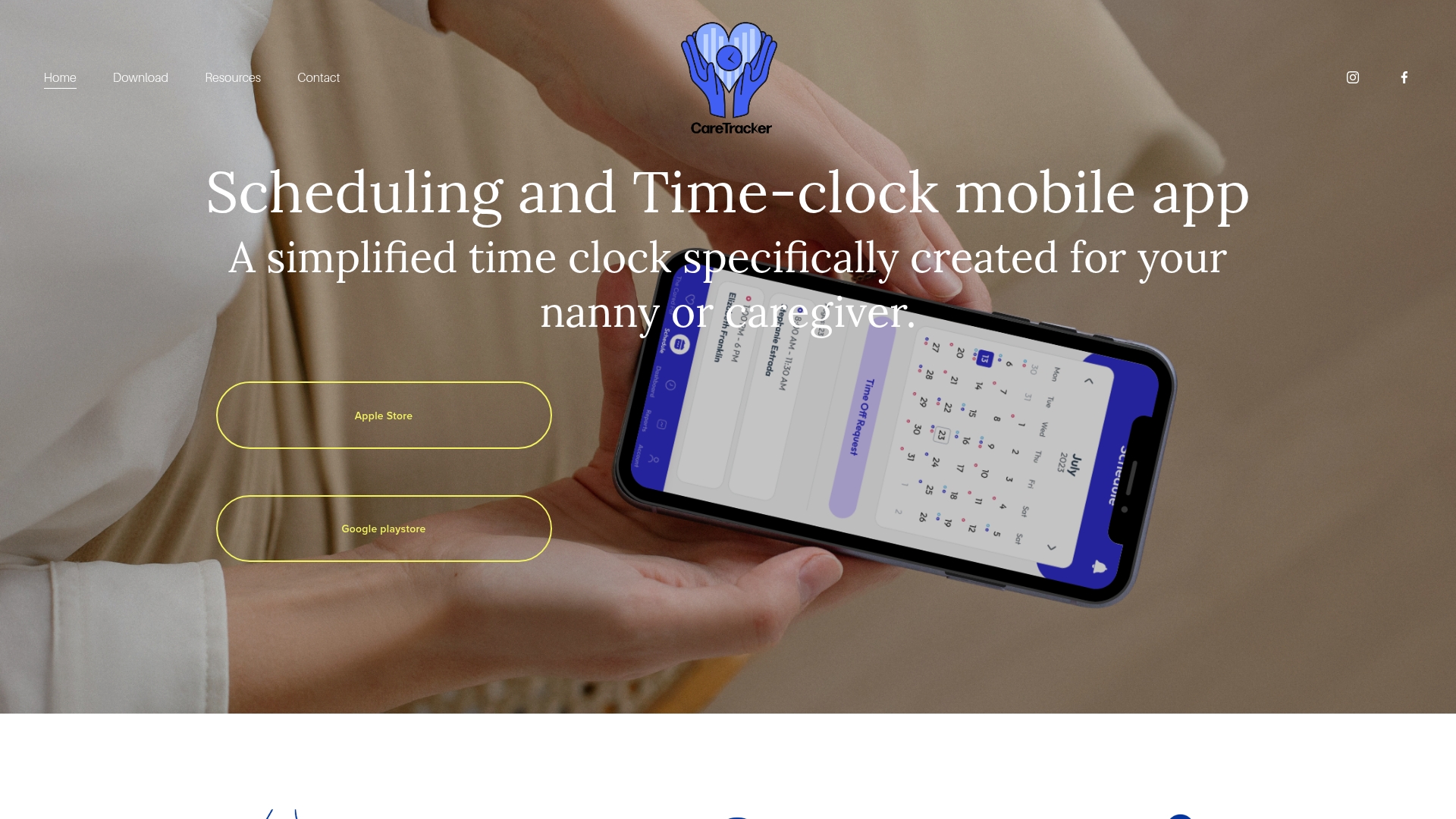
CareTracker is a mobile app that gives nannies and caregivers one place for their schedule, hours and the care information a family shares. Caregivers see allergies, medications, emergency contacts and nap schedules, receive schedule requests for approval, view all their jobs in one calendar and track weekly hours. It is free for caregivers. Get started with the CareTracker app.
If you are also sorting out household payroll for your nanny, we offer a Standard Payroll Consultation package at $150 one-off, and a Premium consultation at $150 one-off. See the Standard Payroll Consultation package or the Premium consultation for details.
FAQ
What medication information should I give my nanny?
Give the name, purpose, dose, time, route and duration of every medicine, plus side effects to watch for and what to do if a dose is missed. Add allergies, your contacts, the pediatrician, the pharmacy and Poison Control. Written instructions with a quick demonstration work best.
Can my nanny give my child medicine without asking me?
No. Nemours KidsHealth says a sitter should never give medicine without the parent's specific instruction. Tell your nanny to call you first about any new symptom, and put that rule in writing alongside your signed permission note for each medicine.
How should I write a dose for a liquid medicine?
Write it in milliliters, such as 5 mL, and say which measuring syringe or cup to use. The AAP advises against teaspoon and tablespoon abbreviations and against cubic centimeters. State the time explicitly, such as 8:00 a.m. and 8:00 p.m.
What should my nanny do if she misses a dose?
Give it as soon as she remembers, unless it is nearly time for the next dose, in which case she skips it. She should never give two doses together. If she is unsure, she should call the doctor or pharmacist, and tell you.
Sources
- Help Your Babysitter Prepare for Anything, Vanderbilt Children's Hospital
- Safety with medicines, Children's Healthcare of Atlanta
- Choosing and Instructing a Babysitter, Nemours KidsHealth
- Preventing Home Medication Administration Errors, Pediatrics (AAP)
- Preventing Home Medication Administration Errors, supplementary data (AAP)
- How to Manage Medicines Safely, St. Jude Children's Research Hospital
- Administering Medication, UNC Healthy Child Care
- Medication management, Utah Division of Licensing and Background Checks
- Needs Assessment of Safe Medicines Management for Older Adults, NCBI
- How to Be An Effective Health Care Advocate, AARP
- Kitchen Safety for Kids checklist