
A signed, written medication authorization is what allows a nanny to give your child medicine outside your presence, and the single most important detail on it is the exact dose and schedule. Without that clarity, you risk confusion, missed doses, or dosing errors. The form needs your child's full name, the medication name, precise dose, route, timing, start and end dates, allergies, and your signature. Once it's complete, sign it, date it, and give copies to your nanny and your child's prescriber.
TL;DR:
- A medication authorization must specify the child's full name, exact medication name, precise dose, route, timing, and start and end dates to prevent dosing errors.
- Regular documentation is necessary for routine care, travel, or daycare, but emergency treatment consent differs from medication authorization, which is more specific.
- Filling out the form requires matching it to pharmacy instructions, signing, and providing copies for caregiver, child's file, and clinician to ensure clarity and safety.
- Using a single form per medication, conducting a dose demonstration, and storing medication properly significantly reduce the risk of mistakes.
- The CareTracker app facilitates storing allergy data, logging doses, and sharing updates, but it does not replace the importance of signed legal authorization documents.
Table of Contents
- What to include on a medication authorization for a nanny
- When you need a medication authorization and what it actually allows
- How to fill, sign, and deliver the form
- A sample template and printable checklist you can use today
- Safe handling, labeling, and recordkeeping that prevent errors
- Questions to ask your nanny and warning signs to watch for
- How The CareTracker app makes authorization and logging easier
- Why standardizing the process matters
- Use The CareTracker alongside your signed authorization
- Sources
- FAQ
What to include on a medication authorization for a nanny
A medication authorization only works if it removes every possible question a caregiver might have in the moment. That means spelling out details that feel obvious to you but aren't obvious to someone else holding a bottle of medicine at 2 p.m. on a Tuesday.
Start with your child's identity: full legal name, date of birth, and any known allergies or reactions to medications. Then move into the specifics of the medication itself, because vague language is where most mistakes begin.
- Medication name and form: the exact product name, whether it's a liquid, chewable, or inhaler, and the concentration if it's a liquid.
- Dose and route: the precise amount in milliliters or milligrams and how it's given, such as by mouth or by inhaler.
- Timing: specific times of day and the maximum amount allowed in a day.
- Start and end dates: when the medication begins and when it should stop, even for short courses like antibiotics.
- As-needed instructions: the exact condition that triggers a dose (a fever above a certain temperature, for example) and the maximum frequency allowed.
- Prescriber and pharmacy information: name and contact details, plus a prescriber signature if the receiving clinic or care setting requires one.
- Parent or guardian block: printed name, signature, date, phone number, and relationship to the child.
- Caregiver acknowledgment: a line for the nanny to sign confirming they received and understood the instructions, with an optional witness or notary line if needed.
Pro Tip: Write liquid doses in milliliters, not teaspoons, and match the number on the form to the markings on the dosing syringe your pharmacist provides.
Background best-practice templates used across schools and clinics consistently ask for these same fields because ambiguity, not bad intentions, is what causes dosing errors. A form that skips the allergy line or leaves timing vague puts the burden of guessing on the person least equipped to guess safely.
When you need a medication authorization and what it actually allows
Not every hour with a nanny requires paperwork, but medication does. Regular nanny shifts, occasional babysitters, daycare drop-offs, travel with a temporary caregiver, and even a routine doctor's visit where someone other than you is present all call for a written authorization if medicine might be involved.
It helps to separate two different documents that often get confused:
- Emergency treatment consent allows a caregiver or clinic to treat your child in a true emergency when you can't be reached.
- Medication authorization is narrower: it permits a specific caregiver to give a specific medication, at a specific dose, on a specific schedule.
Having both covers more situations, since an emergency consent doesn't tell a nanny how much ibuprofen to give for a fever, and a medication authorization doesn't cover a broken arm at the playground.
Clinics and care settings generally treat a signed parental authorization as proof of permission, not as a substitute for a prescription. Federal consumer guidance on choosing child care recommends that parents put authorized adults and medication handling into a written agreement with any provider, and keep signed copies on file. If a school, clinic, or daycare has its own policy about notarization or requires a prescriber's signature, it's worth a quick call to confirm before you fill out your own version.
How to fill, sign, and deliver the form
Getting the paperwork right takes less time than most parents expect once you have the prescription bottle and instructions in front of you.
- Gather the pharmacy label and prescriber instructions before you start writing anything down, so the dose and timing on the form match the bottle exactly.
- Write liquid doses in milliliters and ask the pharmacist for an oral syringe if one wasn't included with the prescription.
- Sign and date the form, and check whether the receiving clinic, school, or care setting also wants a witness or prescriber signature.
- Make clear copies: one for the nanny to keep on hand, one in your child's file at home, and one for the clinician if they've asked for it.
- Spell out as-needed instructions precisely, including the exact trigger (a temperature above a stated number, for instance) and the maximum doses allowed per day.
Pro Tip: Do a test dose at home while you're present the first time your child takes a new medication, so any reaction shows up before your nanny is the one giving it.
This process takes ten minutes once you've done it a first time, and it eliminates the back-and-forth texting that happens when a caregiver isn't sure whether "as needed" means every four hours or once a day.
A sample template and printable checklist you can use today
A single-medication template keeps things simple: one form, one medicine, no ambiguity about which instructions apply to which bottle.
A basic layout looks like this: child's name and date of birth, medication name and form, dose in milliliters or milligrams, route, times of day, start date, end date, known allergies, and a signature block for both parent and caregiver. For an as-needed entry, an example might read: "Give 5 mL acetaminophen by mouth if temperature is above 100.4°F, no more than every 6 hours, maximum 4 doses in 24 hours."

Many child-care and school-based templates require a separate form per medication rather than one combined sheet, since combining medications on a single form increases the chance a caregiver misreads which dose belongs to which drug according to guidance on administering medication at child care or school. That single habit, filling out one form per medicine, prevents a surprising number of avoidable mix-ups.
Before your nanny's first day with a new medication on file, run through this short list:
- Show a quick dosing demo so the nanny sees exactly how much medicine looks like in the syringe.
- Scan and upload a copy of the signed form somewhere both of you can access it.
- Confirm emergency contacts are current and visible.
- Confirm where the medication is stored and who else in the home might have access.
| Item | Why it matters |
|---|---|
| One form per medication | Reduces the chance of dosing confusion between drugs |
| Dosing demo on day one | Confirms the caregiver measures correctly before you're not there |
| Scanned copy on file | Gives both parent and nanny quick access during the day |
| Confirmed storage location | Prevents delays or errors when a dose is due |
For a longer walkthrough with more sample fields, this dedicated guide on medication authorization for caregivers covers additional edge cases like split custody and multiple caregivers.
Safe handling, labeling, and recordkeeping that prevent errors
The paperwork sets the rules, but the day-to-day habits are what actually prevent mistakes. Keep every medication in its original pharmacy-labeled container whenever possible, since that label carries the dose, timing, and prescriber information a caregiver might need to double-check mid-day.
When a nanny needs to carry medicine outside the home or between rooms, ask the pharmacist for a second labeled container instead of transferring pills or liquid into an unmarked one. Pharmacy dispensing practices allow for duplicate, pre-labeled containers when a parent or prescriber requests them, which cuts down on transfer errors and lost doses.
- Always measure liquid doses with an oral syringe marked in milliliters, never a kitchen spoon.
- Keep a short log with date, time, dose, who gave it, and any reaction, accessible to both parent and caregiver.
- Store medications in a locked box away from heat or direct sunlight, following any temperature note on the label.
- Dispose of expired medication rather than keeping it in the same cabinet as active prescriptions.
The American Academy of Pediatrics recommends simplifying medication regimens and standardizing dosing tools to cut down on home medication errors, specifically favoring milliliter dosing and oral syringes over teaspoon or tablespoon measures. That single change, swapping a spoon for a syringe, closes one of the most common gaps between what a form says and what actually gets measured out.
A detailed medication log guide walks through exactly what to record and how to keep it consistent across shifts.
Questions to ask your nanny and warning signs to watch for
Before you hand over any medication, a short conversation tells you more than the form ever will.
- Ask your nanny to walk through how they'd measure a liquid dose, step by step, using the actual syringe you've provided.
- Confirm whether they have CPR or first-aid training, and if not, whether they're willing to complete it.
- Ask how they'll log each dose and how they'll tell you about a missed dose or an unexpected reaction.
A few responses should give you pause. If a nanny brushes off the written instructions, logs doses inconsistently, seems unsure how to read the syringe markings, or resists using the labeled container you've provided, treat it as a reason to slow down. If any of that happens after medication has already started, stop administration and call the prescriber or come home yourself before the next dose is due.
How The CareTracker app makes authorization and logging easier
A signed form covers the legal side, but daily tracking is where most families lose the thread. The CareTracker lets you store allergy notes, medication details, and emergency contacts in one place your nanny can check instantly, alongside the job calendar she already uses to track hours.
A simple workflow works well: sign the paper authorization, scan and upload it into the app, have your nanny log each dose as it's given, and review the entries yourself each night with the help of Naluna – Baby Tracker & Sleep Guidance. It takes the guesswork out of "did she give it at noon or one" without replacing the legal document itself. The signed form is still what makes the authorization valid; the app just makes sure both of you can see what happened after you signed it.
Why standardizing the process matters
The families who run into trouble aren't careless, they just improvise under time pressure. A consistent template catches the details a rushed note leaves out, and a quick check-in with your child's prescriber before a new medication starts closes the rest of the gap.
— mercedes
Use The CareTracker alongside your signed authorization
A signed medication authorization tells your nanny what to give and when. Keeping that information current and visible during a busy week is a separate problem, and it's the one The CareTracker was built to solve.
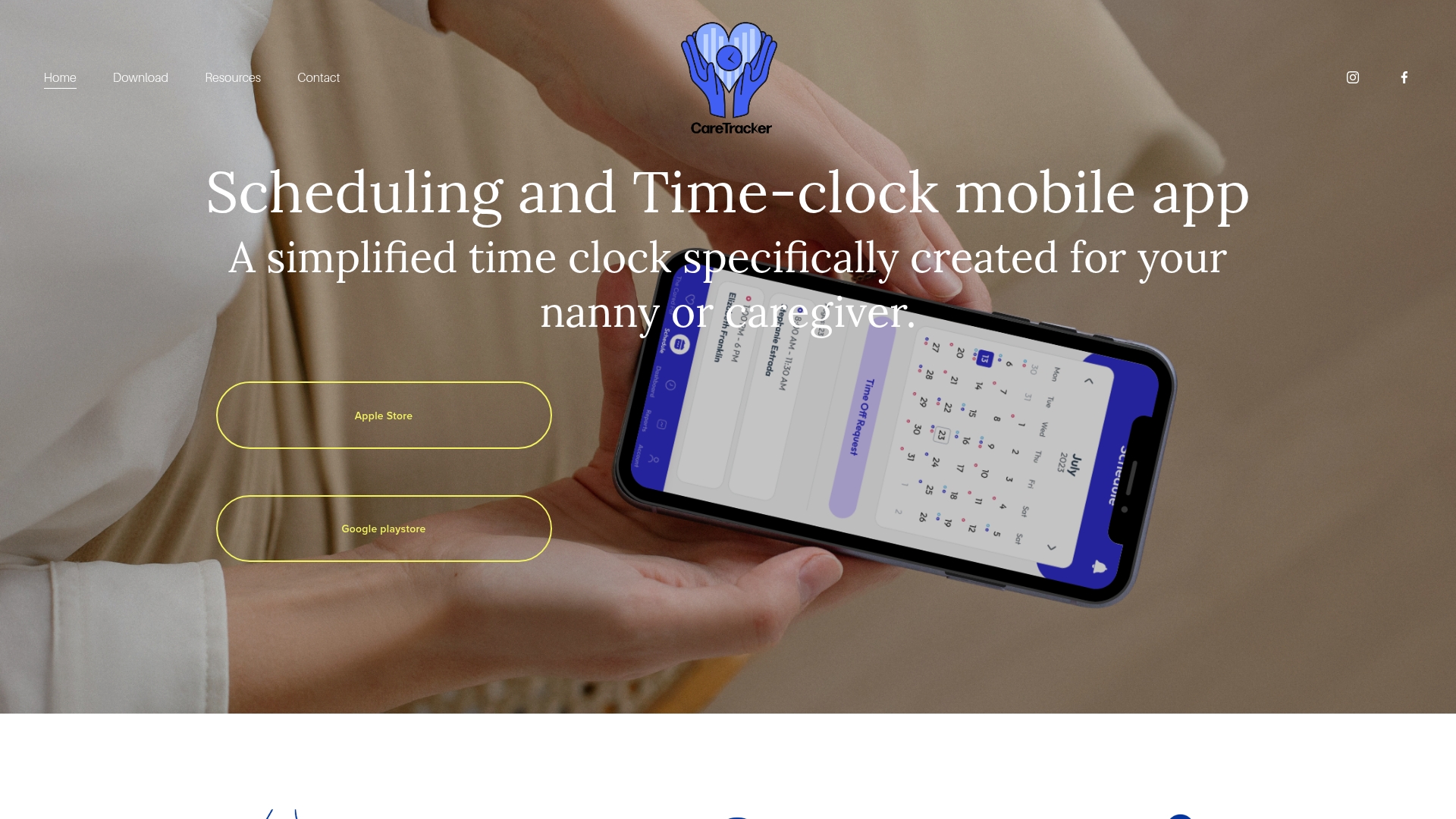
The app is free for caregivers and lets you:
- Store allergies, medications, and emergency contacts where your nanny can check them instantly.
- Log each dose given, with time and caregiver name, so you have a running record without a text thread.
- Share updates across multiple caregivers if more than one person helps with your child's care.
- Keep everything tied to the same calendar your nanny already uses for hours and schedule requests.
The digital record doesn't replace your signed paper form, it backs it up, so if a pediatrician or school ever asks what happened on a given day, you have an answer in seconds instead of a memory. If your household also needs help sorting out nanny payroll or back wages, The CareTracker's payroll consultation services are worth a look. Visit Thecaretracker to set up your first care profile.
Sources
For the fullest picture, these sources go deeper on medication safety and proxy care.
This article is general information, not a substitute for advice from a qualified doctor. Consult a qualified healthcare professional about your own circumstances before acting on anything here.
FAQ
How do you write a letter to give permission for medical treatment for a child?
State your child's full name and date of birth, name the caregiver you're authorizing, and describe exactly what you're permitting, whether that's emergency treatment, a specific medication, or both. Include your signature, the date, and your contact information, and keep a copy for your own records alongside one for the caregiver.
What is a good medical release form for parents on vacation?
A solid travel release names the temporary caregiver, states what medical decisions or medications they're authorized to handle, and includes your child's allergies and current prescriptions. It should also list your emergency contact information and, ideally, a way to reach your child's regular prescriber if a question comes up while you're away.
Does a child medical consent form need to be notarized?
Notarization isn't automatically required everywhere, but some schools, clinics, or care providers do ask for it as an added layer of verification. The safest approach is to check directly with the specific school, clinic, or provider that will be relying on the form, since requirements vary by institution.
What is a medical authorization letter?
A medical authorization letter is a written document where a parent or legal guardian grants a specific person permission to make medical decisions or administer medication for their child under stated conditions. It typically includes the child's information, the scope of what's authorized, and a signature, and it's often paired with a separate medication authorization when specific drugs are involved.