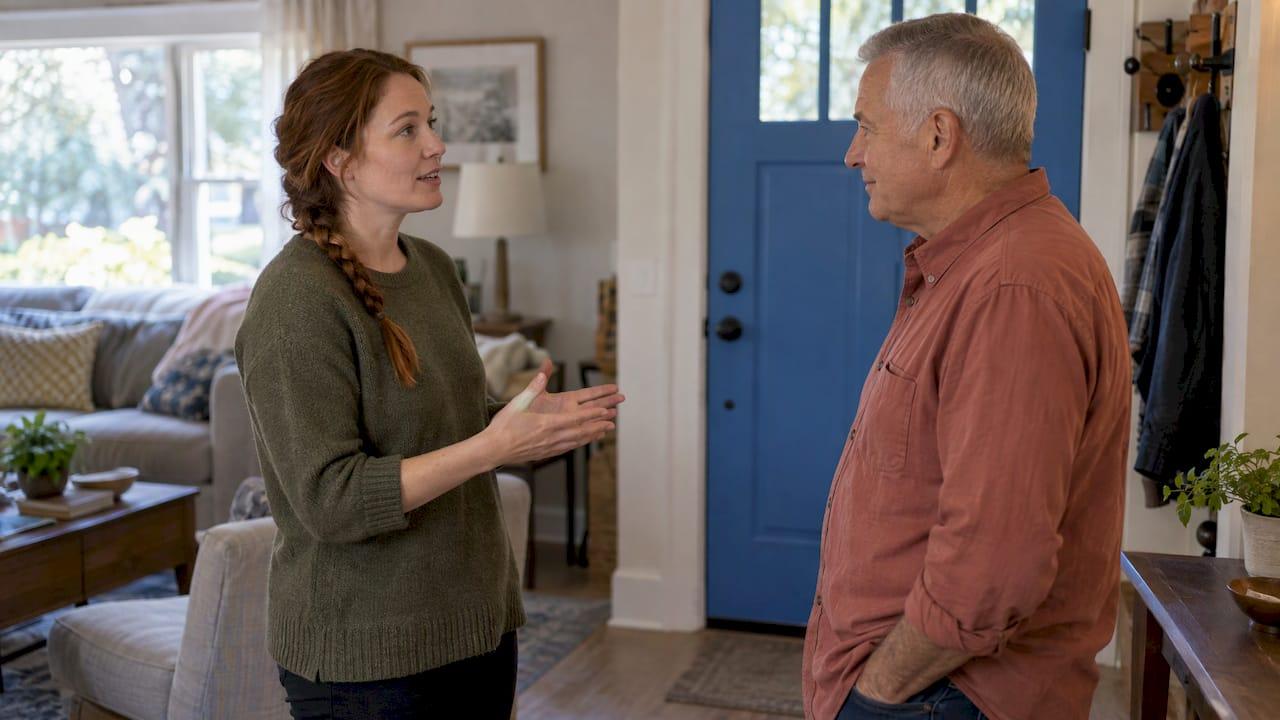
A caregiver shift handoff is the moment one caregiver passes responsibility for your child or parent to the next, along with everything the next person needs to know. A good one is short, specific and confirmed out loud. It covers how the person is doing now, what happened, what is still open and who to call. When you hire the caregiver yourself, you set the routine, and a one-page format your caregivers use every time keeps the details from living in anyone's memory. Our free app for caregivers puts allergies, medications, emergency contacts and schedules in one place, so the next caregiver starts from the same facts.
TL;DR
- A handoff transfers information and responsibility. The caregiver going off shift stays responsible until the next one confirms they understand and accept.
- Cover the basics every time: how the person is now, what changed, care already done, medications and safety risks, open tasks and who to call.
- Keep it to a few minutes. Point to the daily log or an incident report for the long version instead of retelling it.
- Speak the important parts and write them down. Never assume a message was read.
- Use one shared place for profiles, schedules and hours, so every caregiver sees the same thing.
Table of Contents
- What a caregiver shift handoff is and why it matters at home
- What to include in a handoff
- How to say it: speak and write
- Be factual, not diagnostic
- Handoff, daily log and incident report: three different records
- A handoff routine you can set up this week
- Keep hours and schedules in the same place
- Where the app and a payroll consultation fit
- Common mistakes to avoid
- FAQ
- Sources
What a caregiver shift handoff is and why it matters at home
Hospitals have used structured handoffs for years. The U.S. Agency for Healthcare Research and Quality (AHRQ), a federal health research agency, defines a handoff as a standardized method of transferring information, authority and responsibility during a transition in care. Two parts of that definition matter for a household.
First, a handoff is more than note-taking. Responsibility moves from one person to another, and AHRQ says the person handing off remains accountable until the receiver understands and accepts. Second, the receiver gets to ask questions. A fresh pair of eyes often catches something the outgoing caregiver stopped noticing.
At home this happens in ordinary situations:
- A nanny leaves at 3:00 and an evening sitter or the other parent takes over.
- An au pair covers mornings and a part-time nanny covers afternoons.
- A daytime aide for your mother hands off to an evening aide or to a family member.
- A weekend caregiver replaces the weekday one.
In each case the incoming person was not there for the last several hours. If the nap ran late, the fever started at noon, or a new medication began, they cannot guess it.
A U.S. study on home respite care, "Can I Take a Break?", found that gaps in communication between caregivers led to misunderstanding, lower trust and less effective care. The authors recommended shared communication tools, task checklists and simple post-visit logs. That is the case for a routine rather than ad hoc texts.
What to include in a handoff
The best handoffs follow the same order every time. That way the caregiver giving it does not forget a step, and the one receiving it knows where to listen for each item.
A senior-care checklist from Mitra Home Care names the person, date, shift, both caregivers and the exact transfer time. It then covers how the person is compared with their usual self, recent events, care completed, medication information, safety risks, unfinished tasks, what to do if something goes wrong, and confirmation from the receiver. Adapt that skeleton to the person you care for.
For a child with a nanny or au pair
| Item | What to pass on |
|---|---|
| Mood and health | Temperature, cough, how the child seemed, anything unusual |
| Sleep | When naps started and ended, how long, how they went |
| Food and drink | What was eaten, what was refused, bottles or feeds, new foods |
| Diapers or toileting | Times and anything out of the ordinary |
| Activities | Where they went, who they saw, outings still planned |
| Medications and allergies | Anything given, with time and dose, and any allergy reminder |
| Next steps | Next nap or feed, pickups, tasks for the next caregiver |
| Contacts | Parent phone numbers and the emergency contact |
The National Parenting Foundation's caregiver handoff sheet is built around a similar list: contacts, pickup expectations, meals, sleep, activities, comfort preferences, allergy information and urgent-help numbers.
For a senior who hires a caregiver
Older adults need more detail on mobility and health. Cover these in every handoff:
- Status compared with usual. Is the person better, the same or worse than their baseline?
- Falls and near-falls. Also report pain, dizziness or new symptoms.
- Care completed. Meals, fluids, bathing, mobility help, exercises, toileting and repositioning.
- Medication information. What was given, refused or skipped, and when, according to the care plan.
- Changes in routine. Calls, visitors, appointments and refusals.
- Safety needs. Whether the person needs a walker, wheelchair, gait belt, two-person help or reminders.
- Unfinished tasks and contingencies. What the next caregiver must do, and whom to call if it goes wrong.
One distinction prevents a lot of confusion. Senior-care guidance from We Care Home Care separates standing instructions, such as stable preferences, from today's update. Without that split, a one-day change, like skipping breakfast because of an early appointment, can turn into a permanent rule.
How to say it: speak and write
A written note is useful, but it does not replace a conversation. A 2026 guide from Trinity Hills Estates recommends pairing accurate documentation with a brief, person-centered conversation, particularly when something important has changed or the person has an immediate need.
AHRQ makes a related point: do not assume an electronic message was read or understood. If a nanny texts you that the baby "wasn't herself," you still need the detail, and she still needs to know you got it.
A four-step spoken routine
Accessum Health describes a four-step handoff that fits a household well:
- Explain. The outgoing caregiver gives the update in the usual order.
- Check. The incoming caregiver says back what they understood and names anything they cannot do.
- Accept. Record what the receiver agreed to take on. Nobody should be assigned a task they never agreed to.
- Close. Confirm who owns each open item and what happens if the plan falls apart.
The check step takes less than a minute and catches most misunderstandings. If you are the parent or adult child receiving the handoff, ask the question yourself: "What are you planning to do about the 4:00 medication?"
Be factual, not diagnostic
The most helpful notes describe what the caregiver saw and did. The least helpful ones state an opinion.
Mitra Home Care's guidance asks caregivers to record observable facts, including time, what triggered it, how long it lasted, what they did, how the person responded and who was notified. Its example: "needed two rest breaks" is better than "seemed weaker." The first can be acted on. The second makes the next caregiver guess.
Trinity Hills Estates gives the same advice: say what was observed, when, what may have contributed, how the person responded and whether anyone was told.
Here is what that looks like in two homes.
| Unhelpful | Useful |
|---|---|
| "Maya was fussy all afternoon." | "Maya refused her 1:30 bottle, took 2 oz at 2:15. Slept 40 minutes instead of her usual 90. Temp 99.1 at 3:00." |
| "Dad seemed off today." | "Dad needed help standing twice after lunch, which he usually does alone. No fall. I told Linda at 2:45 and he drank a full glass of water at 3:00." |
| "Everything's fine." | "Ate half of lunch, took afternoon medication at 1:00 per the chart, walked to the mailbox with the walker. Nothing to flag." |
Caregivers who are not clinicians should observe, report and follow the care plan. They should not diagnose, and they should not change a treatment on their own. Put that in writing when you hire so no one is unsure where the line sits. If a symptom worries you, such as a fever in an infant or a fall in an older adult, call the child's pediatrician or your parent's doctor, or 911 in an emergency.
Privacy counts too. Mitra recommends secure, authorized records instead of a public notebook or a large group chat. A health detail about your mother does not belong in a thread with ten people.
Handoff, daily log and incident report: three different records
Families often mix these up, and the confusion makes handoffs long and hard to scan.
- The handoff is action-oriented. It covers what the next caregiver needs now.
- The daily log is a running record of the day. It is the place for detail.
- The incident report is the formal record of an unexpected event, such as a fall, a medication error or an emergency.
As Burnie's Way puts it, the handoff is for what the incoming caregiver needs now, while the log is chronological. A children's-home guide from ARC in England adds a useful rule: the handoff points to the incident report for details rather than retelling the event, and it leaves out gossip and speculation. Brevity is a safety feature. When a handoff repeats everything, the one thing that matters gets buried.
So if your father fell on Tuesday, the handoff says: "Fall at 10:15 in the bathroom, no injury found, Linda was told, report filed. Watch his balance this afternoon." The full story goes in the report. For templates, see our guides to a caregiver daily log and caregiver report examples.
A handoff routine you can set up this week
You do not need a long protocol. Five decisions are enough.
- Decide who gives and who receives. Usually it is the outgoing caregiver to the incoming one, or to you. Say so in writing.
- Fix the time. Build in five overlapping minutes so nobody is handing off at the door with a coat on.
- Use one format. Same order, same headings, every day. Our one-page caregiver handoff checklist and handoff notes guide show a three-to-five-minute version.
- Keep standing information separate. Allergies, medications, emergency contacts, routines and preferences belong in a profile that does not change from day to day. The shift update covers only today. Our care profile checklist can help you build one.
- Agree on tone and channels. What goes by phone, what goes in writing and what waits for the handoff. Our communication etiquette guide covers this for families.
The "Can I Take a Break?" study also suggests a simple post-visit note answering four questions: what went well, what did not, any advice, and any concerns. Four lines are enough.
Keep hours and schedules in the same place

Handoffs only work if everyone knows who is on shift and when. Late arrivals, swapped days and extra hours create gaps, and gaps cause missed handoffs. They also create pay questions. If you employ a nanny, an au pair or a home caregiver, accurate time records protect both of you, and the rules on overtime and pay periods differ by state.
That is why we keep the schedule, the hours and the care information together. In our app, caregivers receive and approve schedule requests, see all their jobs in one calendar and track weekly hours. We also support state-specific pay period and overtime tracking, plus time-off and reimbursement requests. If several caregivers work in your home, you can manage them in one place. For a deeper look at scheduling, read our caregiver scheduling guide for nannies or the home health aide scheduling guide.
We talk to families about hours and pay. The same pattern keeps appearing: the handoff problem and the timekeeping problem are really one problem, which is that nobody has a single, shared record. Our app is designed around that.
For the caregiver, it is free. They see the schedule, the hours and the care information, such as allergies, medications, emergency contacts, nap and nursing schedules and daily activities, in the same app. For you, the family, it means you set up a care recipient profile once, and every caregiver you add starts from it.
The handoff itself is still a human moment. We built the app so the facts are already there when the two caregivers meet, and the conversation can be the confirmation and the questions.
mercedes
Where the app and a payroll consultation fit
Our app is free for caregivers. It gives your nanny, au pair or aide one calendar of jobs, accurate weekly hours and instant access to the care details you share, such as allergies, medications and emergency contacts. You can create profiles for the people being cared for, share information with the whole care team and generate flexible reports.
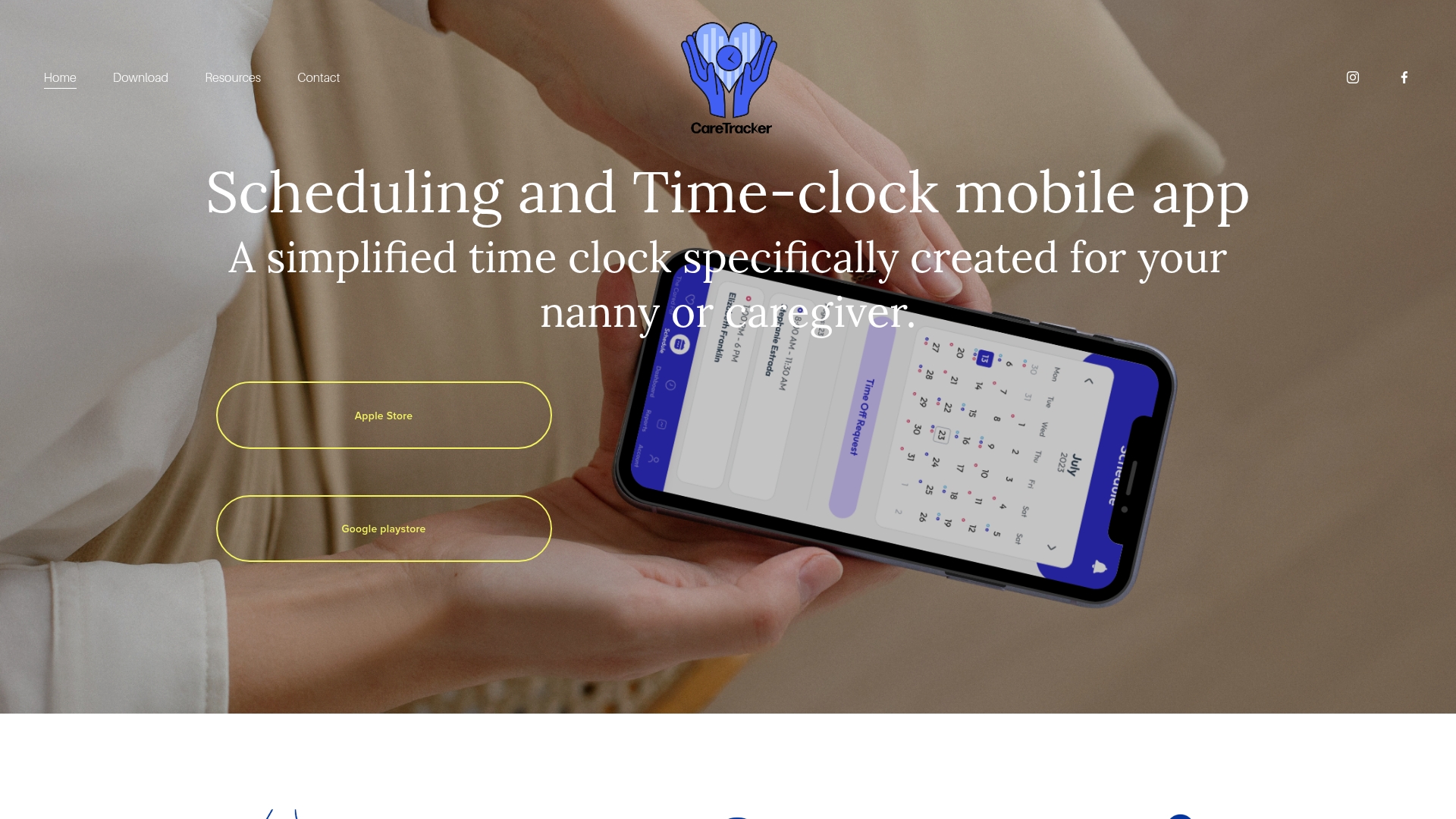
If you hire household help, you may also have payroll or compliance questions. We offer a Standard Payroll Consultation package for $150 one-off, and a Premium consultation for $150 one-off. We also offer Prior Wage Reporting and Household Payroll Cleanup Services, which have no published price; see the payroll consultation page for details. To start with the scheduling and time-clock app, go to thecaretracker.com.
Common mistakes to avoid
- Handing off by text only. Nobody confirms they read it, and details get lost.
- Writing opinions as facts. Replace "seemed sick" with what was seen, when and for how long.
- Retelling everything. Move the long version to the log or incident report.
- Mixing permanent rules with today's news. Keep standing instructions in one profile.
- Skipping the questions. The receiver should always have a chance to ask and to say back what they heard.
- Sharing in the wrong place. Use a secure, shared record instead of a public notebook or a large group chat.
- Not saying who is responsible. An open task with no owner will not get done.
FAQ
What should be included in a caregiver handoff?
Include how the person is now compared with usual, what happened during the shift, care already completed, medication information, safety risks, open tasks and who to call. Add the date, the shift and the transfer time. Finish by having the incoming caregiver say back what they understood.
How long should a caregiver handoff take?
For most households, three to five minutes is enough. If the handoff is running longer, the detail probably belongs in the daily log or an incident report, with the handoff pointing to it.
Is a handoff the same as a daily log?
No. A handoff tells the next caregiver what to do now. A daily log is a chronological record of the day, and an incident report is the formal record of an event such as a fall. Use the handoff to point to the others when needed.
Should caregivers hand off in person or in writing?
Both, when you can. Written notes keep the facts accurate, and a short conversation makes sure they were understood. AHRQ advises not to assume that an electronic message was read or understood, so confirm important changes out loud.
How do I keep track of my caregiver's hours?
Use one shared record that shows the schedule and the hours worked, and review it every pay period. Pay and overtime rules vary by state, so our app supports state-specific pay period and overtime tracking, and a payroll consultation can help if you are unsure about your own setup.
Sources
- AHRQ TeamSTEPPS: Tool: Handoff
- Can I Take a Break? Facilitating In-Home Respite Care (PMC)
- How to Create a Safer Home Care Shift Handoff (Mitra Home Care)
- Caregiver Handoff Sheet (National Parenting Foundation)
- Caregiver Handoff Checklist for Families (We Care Home Care)
- A Guide to Caregiver Shift Handoffs for Safer Senior Care (Trinity Hills Estates)
- Handing home support from one person to the next (Accessum Health)
- Passing the Baton: How to Master the Caregiver Shift Report (Burnie's Way)
- Children's home handovers: what to include (ARC)