
A nanny incident report is a short written record of one unusual event: an injury, a fall, a medication mix-up, a behavior problem or a safety scare. Your nanny or caregiver writes it the same day, sticks to what they saw and did, and gives you a copy. As the employer, you decide up front that reports will happen, what counts as reportable, and where they are kept. That is what protects the child or the older adult, and it protects you and your caregiver if questions come later.
This guide is written for parents who hire nannies or au pairs and for seniors who hire in-home caregivers. It covers what goes in a report, how to keep it factual, who must be notified, and how to store it.
TL;DR
- Write the report the same day, after the person is safe and any first aid or 911 call is done. Record facts only: who, what, when, where, what was done.
- Include date and time, location, people present, a plain description, first aid given, who was notified and when, and signatures.
- Tell the parent or the senior's family right away for serious events. Suspected abuse or neglect is a separate duty and goes to the authorities, not just to the family.
- Never edit or backdate an original report. Add a dated correction instead.
- Keep reports next to your caregiver's hours and care information so everything lives in one place.
Table of Contents
- What a nanny incident report is, and when to write one
- What to include in the report
- How to keep the report factual
- An older adult's version
- What to do first, and who to notify
- Suspected abuse or neglect is a separate duty
- Keeping, correcting and sharing the report
- How incident reports fit with hours, schedules and care information
- Our perspective
- Get the household paperwork right
- FAQ
- Sources
What a nanny incident report is, and when to write one
An incident report documents a single event. It is different from a daily log, which records the ordinary day: meals, naps, activities. If you want help with routine notes, our guides to the nanny daily log and the caregiver daily log cover that side. The incident report is for the moment something goes off script.
A good rule for a household: write one whenever you would want to be told about it. That usually means:
- An injury, even a small one that left a mark, such as a bump to the head, a bad scrape, or a fall from a chair
- An illness that came on during the shift, such as vomiting or a fever
- A medication error: a missed dose, a wrong dose, or the wrong time
- A choking episode, an allergic reaction, or any call to 911 or poison control
- A behavior incident, such as a child running off, hitting, or an older adult becoming confused or wandering
- A safety concern or property damage, such as a broken stair gate or a kitchen fire scare
A written rule helps. Put it in your work agreement or on a page in your home: "Any injury, medication error or emergency call gets a written report the same day." Your caregiver then never has to guess whether something is "big enough."
Licensed child care programs work under formal rules, and a private nanny usually does not. Still, those rules show what good practice looks like. Tennessee's regulation for child care agencies, for example, requires incidents, accidents, injuries and signs of serious illness to be documented immediately, and your household can borrow that standard even if no regulation applies to you.
What to include in the report
State agencies publish sample forms that show what a complete report looks like. Pulling from several of them, a household report should capture the following.
| Section | What goes in it |
|---|---|
| Basics | Name and date of birth of the child or older adult, name of the person writing, date and time of the event, date and time the report was finished |
| Location | The address and the exact spot: kitchen, backyard, car, playground |
| People | Everyone present, with their location at the moment it happened, and any witnesses |
| Description | What happened, in order, including what was going on just before |
| Injury or concern | Body part, what it looked like, any symptoms that followed |
| Response | First aid given, whether 911 or a doctor was contacted, who examined the person |
| Notifications | Who was told (parent, adult child, doctor), when, and how |
| Follow-up | What changes will prevent a repeat, and who is responsible |
| Signatures | Caregiver and employer, with dates |
These fields match what official forms ask for. The Massachusetts family child care forms packet asks for a specific description of how and where the incident occurred, first aid given, whether the child was examined and by whom, the adults present and where they were, and the dates parents were notified. It also has the educator certify that the report is complete and accurate. A caregiver incident form for in-home care, such as the Guardian Angels form, adds the activity just before the incident, a description of the injury by body part, ideas for preventing a repeat, and who the incident was reported to and when.
You do not need a long form. One page with these headings is enough, as long as your caregiver fills in every line.
How to keep the report factual
The most common mistake is writing a conclusion instead of an observation. "She was being careless and fell" is a judgment. "Her foot caught the edge of the rug and she fell forward onto both hands and her right knee" is something a reader can picture and check.
A Michigan law firm's guidance on incident reports makes the same point: care for the injured person first, then record facts rather than conclusions, including who compiled the report, when and where it happened, the people involved, any witness statements, treatment given, and photos or video where appropriate.
Tell your caregiver to follow these habits:
- Write what you saw, not why it happened. If you were in the kitchen when the cup fell, write "I heard a crash and found the cup on the floor," not "he knocked it over."
- Use the words people actually said. Put quotation marks around a quote only if you remember the exact words.
- Skip labels and blame. Words like "clumsy," "naughty" or "aggressive" describe your opinion. Describe the action instead.
- Leave gaps honest. "I did not see how the fall began" is better than a confident guess.
- Record times. When it happened, when you called, when the parent arrived.
- Write it soon. Details fade within hours. Same-day entries are also what formal rules expect: Virginia's child care rule calls for entries made the day of the occurrence, including when parents were notified.
A short worked example
Here is what a clear entry looks like for a minor fall.
Date/time: Tuesday, 3:40 p.m. Location: Backyard, near the slide. Child: Maya, age 4. Present: Maya, her brother Leo (age 7), and me. What happened: Maya climbed the slide ladder. I was about six feet away. She slipped on the third rung and landed on her bottom and left hand. She cried for about two minutes. What I saw: A red scrape on the palm of her left hand, no bleeding, no swelling. She moved the wrist normally. Response: I cleaned the scrape with water, applied a bandage, and gave her an ice pack for five minutes. Notified: Texted her mother at 3:55 p.m.; she replied at 4:02 p.m. Follow-up: I will check the hand again at dinner and mention it at pickup.
It is short, it has times, and it contains no opinion. That is the target.
An older adult's version
If you are a senior hiring a caregiver, the form is nearly the same, with a few additions. Ask your caregiver to record the activity right before the event (walking to the bathroom, getting out of a chair), any medication taken that day, the condition of the floor and lighting, whether you hit your head, and whether any family member or doctor was told. Falls and medication errors are the events most worth writing down, because your doctor can use the details to adjust your care.
If you want a family member to receive these reports, name that person in the agreement and make sure the caregiver has their phone number. Keeping emergency contacts, allergies and medications where the caregiver can see them instantly also helps, because the first minutes of a response depend on that information.
What to do first, and who to notify
The report comes after the response, never before. The order is:
- Make the person safe.
- Give first aid, and call 911 for anything serious.
- Tell the parent or family.
- Write the report.
- Review it together and sign it.
Telling the family
Speed should depend on seriousness. Virginia's child care rule is a useful benchmark: a parent is to be told immediately if a child is lost, needs emergency medical treatment or is seriously injured, and by the end of the day for minor injuries. Connecticut's sample form asks that parents be told immediately of a child's illness or injury. For your household, agree on this in advance: a call for anything serious, a text with a photo or description for anything minor, and the written report at the end of the shift.

Rules for licensed programs, and what they mean for you
Licensed child care programs must also report some incidents to the state. In Connecticut, a diagnosed fracture, a second- or third-degree burn, a diagnosed concussion or a hospital admission must be reported to the state by the next business day. Montana requires that accidents causing hospitalization, ambulance transport or physician treatment be reported to the local office within 24 hours. Massachusetts directs that serious incidents be reported immediately and the form mailed within 48 hours.
Those rules apply to licensed providers, not to a nanny working in your home. They are worth knowing because they show which injuries professionals treat as serious. If your child has a broken bone, a burn or a head injury, treat it as serious: get medical care, then write the report in full.
Suspected abuse or neglect is a separate duty
An incident report is not the place to handle suspected abuse. That goes to the authorities. The federal Child Care Technical Assistance Network states that caregivers and teachers are mandated reporters, meaning the law requires them to report suspected child maltreatment. Every state has its own system. Childcare.gov lists state toll-free numbers and online options, and the Childhelp National Child Abuse Hotline at 800-422-4453, by call or text.
Who is covered differs by state. Some examples:
- Indiana: any person who has reason to believe a child is a victim of abuse or neglect must report to the state child services department or local law enforcement, according to a summary of the state's law.
- Virginia: mandated reporters must report immediately through the hotline at 1-800-552-7096 or the local department, and the state's manual sets a 24-hour limit before a fine applies.
- Oklahoma: a rule effective September 14, 2025 requires prompt reports to the state hotline for children and, for a vulnerable adult, reports to the state human services department or local police.
If you are a senior, note that Oklahoma's rule covers vulnerable adults too, and most states run an adult protective services system for older adults who are abused, neglected or exploited. If you ever suspect a problem with a caregiver, or your caregiver suspects one involving someone else, call your state's reporting line or local police. In an emergency, call 911. Because laws differ by state, check your state's current rules on the official child welfare or aging services site, and ask an employment attorney if you need advice on your obligations as an employer.
Keeping, correcting and sharing the report
Keep it. Store the signed report where both you and your caregiver can reach it. Connecticut's sample form calls for a copy to parents and a copy kept on file for at least two years for reportable injuries. Two years is a reasonable minimum for a household too, and longer for anything involving a medical visit.
Do not alter it. If something is wrong, never overwrite, backdate or discard the original. Keep the original and add a dated note: "Correction added on [date]: the time of the fall was 3:35, not 3:40." This protects everyone, because a report that later gets reviewed by a doctor, insurer or attorney is only credible if it was never changed after the fact.
Review it together. Sit down with your caregiver, read it, and ask what would prevent a repeat. A gate that was left open, a rug that slides, a medication kept within reach: the follow-up line is where a report turns into a safer home.
How incident reports fit with hours, schedules and care information
Incidents rarely happen in isolation. When you look back, you will want to know who was on shift, what the schedule was, whether it was an overnight, and what care information was on file. Keeping all of that in one place saves time when you need it. Our guides on shift handoff report templates and the nanny weekly report show how to link routine notes to the bigger picture. For long days, sleep time rules for overnight logs help you keep hours accurate.
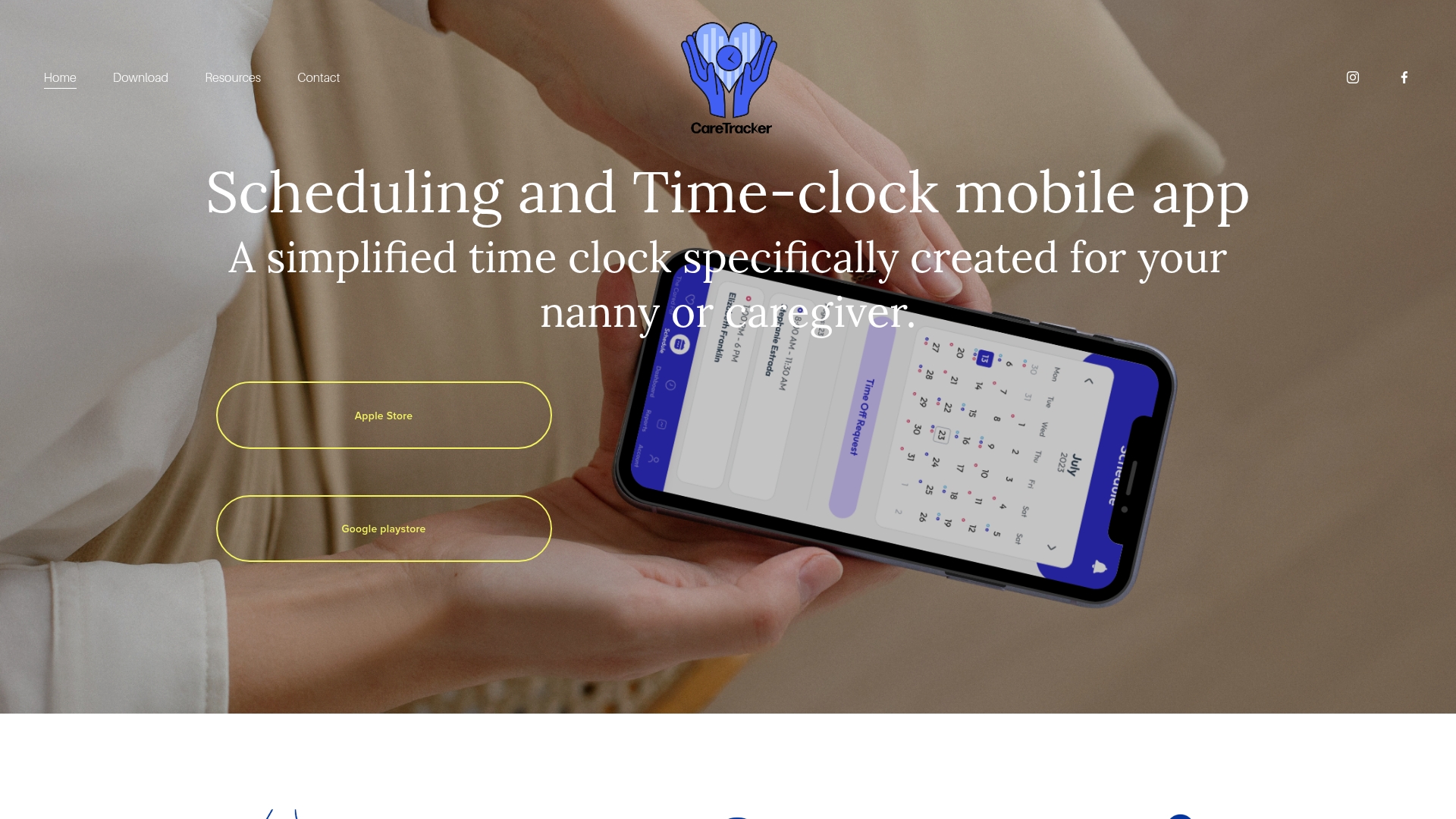
The Thecaretracker app is free for caregivers. It lets them track hours, see all their jobs in one calendar, and view allergies, medications, emergency contacts, nap schedules and daily activities at a glance. That means the facts a caregiver needs in an emergency, and the hours record that shows when they were working, sit in the same place. For timesheets, our nanny timesheet template is a good starting point.
We build for the household that wants things clear on paper.
Our perspective
Families usually think about incident reports after something has gone wrong. We think the better time is the day you hire.
Our view is that a report works when three things already exist: a written record of the care information your caregiver needs, a clear record of who worked when, and a shared habit of writing things down plainly. The Thecaretracker app is built around exactly those records. Caregivers use it free to track hours, see all their jobs in one calendar and get instant access to allergies, medications, emergency contacts and schedules, and families can coordinate with them in the same place.
When a household has that foundation, an incident report is just one more clear page, not a scramble. It also supports the trust between you and your caregiver. A caregiver who knows that facts are welcome, and that nobody is hunting for blame, is more likely to tell you about the small stumble before it becomes a big one.
That is the peace of mind we want for families: accurate records, open communication, and nothing left to memory.
mercedes
Get the household paperwork right
If your nanny or caregiver is your employee, the hours record, pay periods and payroll are part of the same paper trail as an incident report. If you have questions about household payroll, taxes or past wage reporting, our Standard Payroll Consultation package is a one-off $150 and our Premium consultation is also $150 one-off. The same page covers Prior Wage Reporting and Household Payroll Cleanup Services. To start with the free app for your caregiver, visit Thecaretracker.
FAQ
Does a nanny have to write an incident report?
No single federal rule requires a private nanny to write one. But it is best practice, and you can require it in your work agreement. Licensed child care programs follow state rules that call for written documentation of incidents, and your household can use the same standard.
How long should a nanny incident report be?
One page is usually enough. It should cover the date, time, place, people present, a plain description, first aid given, who was notified and when, and signatures. Add more detail only when the event was serious or involved a medical visit.
Should the parent sign the report?
Yes. A parent or employer signature, with a date, shows that the family received the report and when. Virginia's child care rule, for example, calls for caregiver and parent signatures on the written record. Your caregiver keeps a copy, and you keep one.
What if my nanny suspects abuse?
They should call the state's child abuse reporting line or local police at once, or 911 in an emergency. Federal guidance says that caregivers are mandated reporters, and the Childhelp hotline is 800-422-4453. An incident report can come after, but it does not replace the call.
Can a caregiver fix a mistake in a report?
They should never erase or rewrite the original. Add a dated correction beneath it that explains what changed and why. The original stays as written, which keeps the record trustworthy.
Sources
- Tenn. Comp. R. & Regs. 1240-04-01-.09, Incident Reporting
- Massachusetts Family Child Care Sample Forms Packet
- Guardian Angels Caregiver Incident Report
- Wagenmaker Law: Incident Reports, Responding Promptly and Properly
- Virginia 8VAC20-790-350, Parental involvement and notifications
- Connecticut OEC Injury/Illness/Incident/Accident Report Sample Form
- Montana DPHHS Accident/Injury Report
- Child Care Technical Assistance Network: Reporting Suspected Child Maltreatment
- Childcare.gov: Report Child Abuse and Neglect
- Indiana summary, Ind. Code 31-33-5
- Virginia VDSS Complaints and Reports manual
- Okla. Admin. Code 310:678-3-2