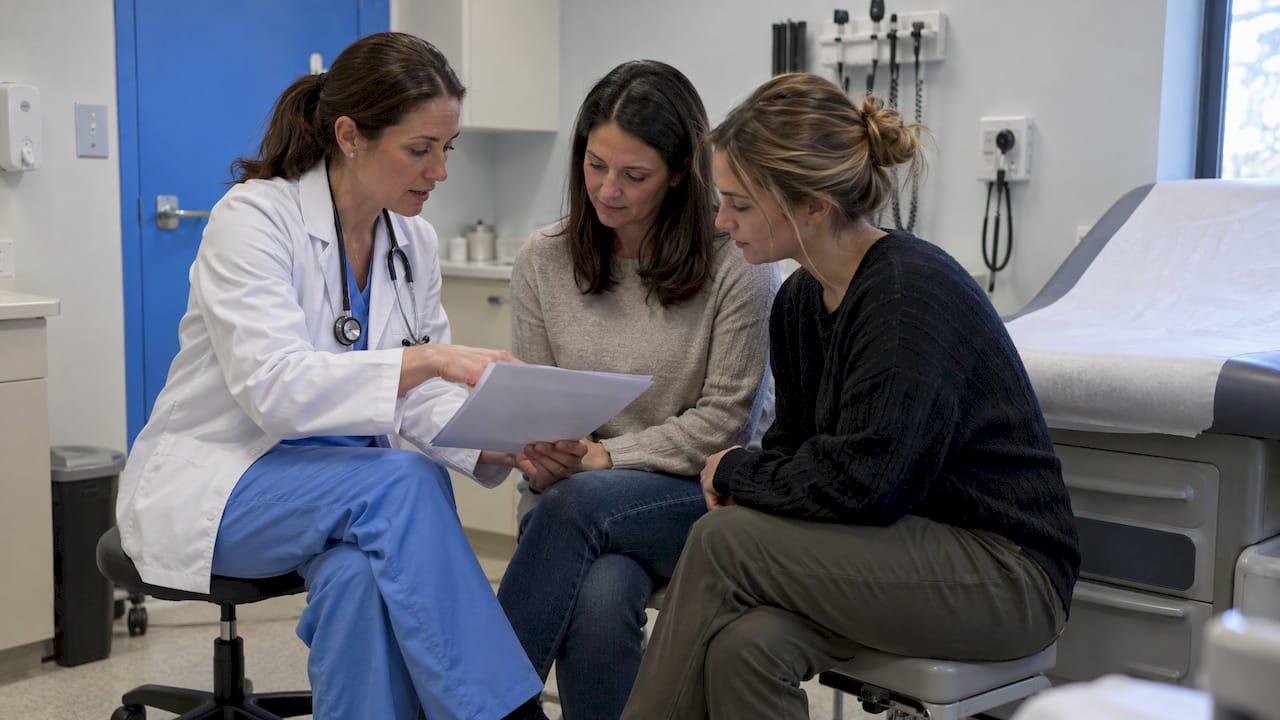
An allergy action plan for your nanny is a written, one-to-two-page emergency document that tells a non-family caregiver which allergens to avoid, which symptoms to watch for, which medicine to give and when, and who to call. Your child's health care provider should write or sign it, in plain language. You then train your nanny on it, put a copy where it can be found in seconds, and update it whenever treatment changes.
This guide walks you through what belongs on the plan, how to prepare a new caregiver, and how to keep everything current. It is written for parents hiring nannies or au pairs, and it also applies to seniors who hire in-home caregivers.
TL;DR
- Ask your child's health care provider for a written, signed plan in simple terms. Do not write the medical steps yourself.
- The plan should list allergens, symptoms, medications with dose and method, emergency contacts, and be dated.
- For severe symptoms, the standard guidance is to inject epinephrine right away and call 911. Your nanny should be told to act first and call you after.
- Meet with your nanny before the first shift, review the plan together, and practice with a trainer device.
- Keep the plan in a known spot and in your nanny's phone, and review it at least every six months.
Table of Contents
- Why a written plan matters more than a verbal briefing
- Who should write the plan
- What to include in the plan
- Know the common allergens
- Prevent exposure at home
- Teach your nanny to recognize a reaction
- What your nanny should do in an emergency
- Train your nanny before the first shift
- Keep the plan easy to find and up to date
- If a senior hires the caregiver
- Put the plan where your nanny already looks
- FAQ
- Sources
Why a written plan matters more than a verbal briefing
Health care providers are rarely in the room when a reaction starts. The American Academy of Pediatrics describes an emergency action plan as a practical guide that helps caregivers and school staff decide how to treat a reaction safely. A nanny is exactly that kind of caregiver: capable and caring, but not a clinician.
A verbal rundown on day one is easy to forget under stress. A reaction can be frightening, and people who are panicking do not recall a conversation from three weeks ago. A written plan removes the guesswork. Your nanny reads the symptoms, finds the matching row, and does what it says.
The plan also protects the relationship. When expectations are written down, your nanny knows you trust them with the details, and you know they have what they need when you cannot be reached.
Who should write the plan
The medical part of the plan comes from your child's health care provider, not from you and not from a template alone. U.S. guidance says the plan should be developed by the provider in simple lay terms for non-family caregivers. FoodAllergy.org also notes that the emergency care plan outlines recommended treatment and is signed by a physician.
Your role is to bring the plan to the appointment, ask the provider to confirm it is clear enough for a babysitter, and then add the household details only you know: your address, the location of the medicine, your phone numbers, and your preferred hospital.
What to include in the plan
The AAP guidance gives a useful checklist. Here is how it translates into a plan for a nanny.
| Section | What to write | Why your nanny needs it |
|---|---|---|
| Child details | Name, date of birth, age, and a recent photo | Quick identification for emergency responders and substitutes |
| Date | The date the plan was written or last updated | Shows whether it is current |
| Weight | Your child's current weight, if the provider includes it | Medication dosing depends on it, and the AAP advises including it |
| Triggers | Every known allergen, in plain words | Prevents exposure in the first place |
| Symptoms | The specific signs that mean give medicine | Removes the "is this bad enough?" hesitation |
| Medications | Name, dose, and how to give it | Your nanny should never have to guess |
| Contacts | Parents, backup adult, health care provider, 911 reminder | Fast communication after the emergency steps |
| Signatures | Parent and provider agreement | Confirms the plan is approved |
The details in that table follow the AAP guidance on written allergy and anaphylaxis plans, which calls for triggers, a treatment plan, contact information, demographic details, a date, weight for dosing, the medications to use, the symptoms that call for them, and space for parent and provider agreement.
A simple outline you can copy
Ask your provider to fill in the medical lines. You can fill in the household lines.
- Child's name, date of birth, weight, photo
- Allergens: all foods and other triggers
- Mild symptoms and what to do
- Severe symptoms and what to do (epinephrine, 911)
- Medication name, dose, and how to give it
- Where the medicine is stored at home and in the diaper bag or backpack
- Parent contacts and a backup adult
- Health care provider and preferred hospital
- Date written and signatures
If you want help deciding how to word the allergen section, our guide on what to put on an allergy list for nanny care goes line by line. For a longer set of copyable examples, see allergy info for your nanny.
Know the common allergens
Your plan lists your child's allergens, but your nanny will benefit from knowing the bigger picture. FoodAllergy.org lists nine major food allergens that account for about 90% of reactions: crustacean shellfish, egg, finned fish, milk, peanuts, tree nuts, sesame, soy, and wheat. A person can be allergic to any food, so your plan should name your child's exact triggers even if they are not on that list.
Tell your nanny that small amounts can matter. HealthyChildren.org notes that small amounts of an allergen can cause serious reactions, and that exposure can happen through hidden allergens in materials, a finger going to the mouth after touching an allergen, and sometimes allergens in the air.
Prevent exposure at home
Prevention is the first line of any plan. Add a short "daily routine" section so your nanny knows the house rules.
- Read every food label. Do this each time, even for foods you have bought before.
- Prevent cross-contact. FARE advises washing utensils, cutting boards, and pans with soap and water, using separate utensils and dishes, cooking allergy-safe foods first, and keeping safe foods covered and away from others, per its cross-contact guide.
- Wash hands with soap and water. The same guide says hand sanitizer or water alone will not remove allergens.
- Clean surfaces properly. Use soap and water or a disinfectant with single-use towels, and wash dishes in a dishwasher or with hot soapy water, then air-dry.
- Set a food rule for visitors. Kids With Food Allergies suggests explaining a "no outside food" rule and asking caregivers to wash hands with soap right before they arrive.
Also decide who supplies the food. Some families provide all meals and snacks from home, which is the approach shown in the Canadian Paediatric Society's sample plan. Whatever you choose, write it down so there is no ambiguity about snacks at the park or a playdate.
Teach your nanny to recognize a reaction
Symptoms usually appear between a few minutes and two hours after exposure, can involve one body area or several, and range from mild to life-threatening. Your plan should split them into two groups so your nanny does not have to interpret.
Mild symptoms
FARE lists itchy or runny nose, sneezing, an itchy mouth, a few hives or mild itching, and mild nausea or discomfort as mild symptoms. Your provider will tell you what the plan should say to do for these, and your nanny should contact you right away when they appear.

Severe symptoms
The same page says a reaction involving any severe symptom is treated as a severe reaction. HealthyChildren.org lists signs that can include:
- Shortness of breath, wheezing, coughing, or chest tightness
- Trouble breathing or swallowing
- Hives, redness, or pale or bluish skin
- Swelling of the lips or tongue
- A tight throat or hoarse voice
- A weak pulse or signs of shock
- Severe vomiting or diarrhea, or vomiting combined with other symptoms
- Dizziness or fainting
- A sense of doom, confusion, drowsiness, or agitation
Put the symptoms in your child's plan in the words your provider uses. For infants and toddlers who cannot describe how they feel, add behavior changes you would notice, such as sudden unusual sleepiness or fussiness, and ask your provider whether those belong on the plan.
What your nanny should do in an emergency
This is the part your nanny must be able to recite. Your provider's plan governs, but the major U.S. sources agree on the core.
- Inject epinephrine immediately for severe symptoms. FARE's emergency care plan says to inject epinephrine right away and call 911 for any severe symptom or combination of symptoms.
- Call 911. The AAP guidance says epinephrine is followed by activating emergency medical services and monitoring.
- Position the child. The FARE plan says to lay the person flat, raise their legs, and keep them warm. If breathing is difficult or they are vomiting, they can sit up or lie on their side.
- Call the parents. FARE's guidance for caregivers is to act first and call parents later, because in a severe reaction the most important steps are epinephrine and 911.
- Stay for the ambulance, even if the child looks better. CFOC guidance says caregivers should contact emergency services whenever epinephrine is given, even if the child appears to have recovered, and tell the family right away about any suspected reaction.
Say this out loud to your nanny: you will never be upset that they used the medicine and called 911. Many caregivers hesitate because they fear overreacting. Your plan and your words should remove that fear.
Train your nanny before the first shift
A document alone is not training. CFOC says caregivers should receive training and demonstrate competence in preventing exposure, recognizing reactions, and treating them. Here is a practical way to do it.
- Schedule a meeting ahead of time. FARE recommends giving the caregiver time to absorb the information, including a meeting days or a week before the first shift.
- Read the plan together. Have your nanny read it aloud, then discuss it and answer questions.
- Show the supplies. Kids With Food Allergies suggests showing the medicine pack, first aid supplies, and emergency contact information.
- Practice with a trainer device. The same source advises practicing with the child's auto-injector trainer, which has no needle or medicine, and holding it against the thigh for 10 seconds.
- Rehearse the 911 call. Go over a short script: the child's name, age, the allergy, that epinephrine was given, and your address.
FARE frames allergy management as a team effort, and preparing caregivers ahead of time helps keep your child safe and included. If your nanny works for more than one family or you share one with another household, the same preparation applies each time.
Keep the plan easy to find and up to date
A perfect plan in a drawer is not helpful. Make it accessible in three places.
- At home: FARE suggests putting everything in writing in an easily accessible place, such as a brightly colored binder in the kitchen. CFOC advises keeping a copy of the plan with the emergency medication in an unlocked, out-of-reach location.
- On outings: CFOC says caregivers should carry the written plan, a mobile phone, and the proper medications on trips.
- On your nanny's phone: A photo or a shared digital copy means the plan travels even when the diaper bag does not.
Then keep it fresh. The Canadian Paediatric Society's sample plan suggests recording the date it was written and reviewing it with parents every six months or whenever treatment changes. It also lists replacing epinephrine devices every six months or before expiry, whichever comes first. Check the label on your own devices and ask your provider what schedule fits your child's prescription.
A handy habit: tie the review to something that already happens, such as each check-up or the start of the school year. If you also need a handoff routine for the start of each shift, our one-page caregiver handoff checklist fits in a few minutes. Your medication details can live alongside the plan using our guides to a medication list for your nanny and a medication authorization form. Emergency numbers should also be quick to open, as described in our walkthrough on accessing emergency contacts.
If a senior hires the caregiver

Everything above has an adult equivalent. Seniors who hire in-home caregivers face food, drug, and insect-sting allergies too, and the caregiver needs the same four things: the allergens, the warning signs, the medicine and how to use it, and who to call. The plan should again come from the person's own doctor, with the date and signatures.
For seniors, add a current medication list, since allergies often sit alongside other conditions. Families who live far away may also add home technology to the routine, from shared apps to camera systems that monitor elderly parents at home. Technology supports the plan, but the written, signed document and a trained caregiver remain the foundation.
Our perspective: clear information is a safety tool
We built CareTracker because caregivers do their best work when they have the right information at the right moment. An allergy plan only helps if the person on shift can open it in seconds, not if it is buried in a text thread from last spring.
That is why our app lets caregivers view care information instantly, including allergies, medications, emergency contacts, nap schedules, nursing schedules, and daily activities, and why families can create care recipient profiles that keep it all in one place. The app is completely free for caregivers, so a nanny or caregiver never has to pay to see what they need to keep your child safe.
Our view is simple: trust grows when expectations are written down and shared. When the plan, the contacts, and the schedule live together, families gain peace of mind and caregivers gain confidence.
mercedes
Put the plan where your nanny already looks
Our free mobile app gives caregivers one place to see their schedule, track weekly hours, and open key care details such as allergies, medications, and emergency contacts. Families can set up profiles for each care recipient and coordinate with caregivers in the same app. You can start at CareTracker.
If you employ a nanny or caregiver at home and also need help with household payroll, we offer a Standard Payroll Consultation package for a one-off $150 on our store page. We also offer a premium consultation at $150 one-off, as well as prior wage reporting and household payroll cleanup services, described on our payroll consultation page.
FAQ
Does a nanny need an allergy action plan if my child's allergy is mild?
Ask your child's health care provider. Reactions can range from mild to severe, and FARE notes that a reaction involving any severe symptom is a severe reaction. A written plan from your provider tells your nanny exactly what counts as mild, what counts as severe, and what to do for each.
Who signs an allergy action plan?
Your child's health care provider completes and signs the medical portions, and parents sign to confirm agreement. AAP guidance describes space for both signatures. Your nanny does not sign the medical plan, but it is good practice to have them confirm in writing that they read it and were trained.
Should my nanny call me or 911 first?
For severe symptoms, the guidance is to inject epinephrine and call 911 first, then contact the parents. FARE advises telling caregivers to act first and call parents later. Say this explicitly during training so your nanny does not wait for your reply.
How often should we update the plan?
Update it whenever your provider changes the treatment, your child's weight changes enough to affect dosing, or contacts change. The Canadian Paediatric Society's sample plan suggests a review every six months. Write the date on each new version and replace old copies everywhere.
Can I just download a free template?
A template is a good starting format, but the medical content should come from your provider. Bring the form to your next appointment, have it completed and signed, and then add your household details such as address and backup contacts.
Sources
- AAP Pediatrics: Guidance on Completing a Written Allergy and Anaphylaxis Emergency Plan
- FoodAllergy.org: Food Allergy & Anaphylaxis Emergency Care Plan
- FARE: How to Avoid Cross-Contact With Food Allergens
- HealthyChildren.org: Managing Food Allergies at School
- Kids With Food Allergies: Babysitters and Caregivers
- Canadian Paediatric Society: Anaphylaxis sample action plan
- FoodAllergy.org: Recognizing and Treating Reaction Symptoms
- HealthyChildren.org: Anaphylaxis in Infants & Children
- FARE: Food Allergy & Anaphylaxis Emergency Care Plan
- FARE: Preparing Others to Care for Your Child
- CFOC: Emergencies due to Food and Allergic Reactions
- CFOC: 4.2.0.10 Care for Children with Food Allergies
- How Camera Systems Monitor Elderly Parents at Home