
If you pay a nanny, au pair or caregiver to work in your home, you are a household employer, and your homeowners policy almost certainly does not cover that job. The insurance that does is mainly workers' compensation, sometimes joined by employment practices liability and umbrella coverage. Whether workers' comp is required depends on your state, and in many states on how many hours your employee works. That is why accurate hours records matter as much as the policy itself.
TL;DR
- You are a household employer if you hire someone to work in or around your home and control what they do and how they do it. That includes nannies, babysitters, health aides and housekeepers, per the IRS.
- Standard homeowners insurance typically does not cover household employees, so a work injury can fall outside it.
- Workers' comp rules differ by state: some require it from the first dollar, some at an hours or wage threshold, and some leave it optional.
- Hours-based thresholds only work if you can prove the hours. A clean time record protects you at renewal, at audit and after an injury.
- Employment practices liability (EPLI) and umbrella coverage are worth discussing with a licensed insurance agent.
Table of Contents
- What "household employer insurance" actually means
- Why your homeowners policy usually is not enough
- What workers' compensation covers
- Do you have to carry it? It depends on your state
- Why hours records sit at the center of coverage
- What it costs and how to get it
- A short checklist before the first shift
- Getting the payroll side right
- FAQ
- Sources
What "household employer insurance" actually means
No single policy carries this name. The phrase covers the group of protections a family may need once someone works in the home on a regular schedule.
The IRS says you have a household employee when you hire someone for household work and can control what is done and how. Nannies, babysitters, caretakers, health aides and housekeepers all qualify, full or part time, even if you found the person through an agency. If an agency supplies and controls the worker, the worker is generally not your employee (IRS Publication 926). Our guide to classifying household employees walks through the pay threshold that makes someone a household employee for tax purposes.
Once you are an employer, insurance for the role can cover four areas:
- Personal liability for an on-the-job injury.
- Employment-related claims, such as discrimination, wrongful termination or harassment.
- Accidental property damage.
- Workers' compensation: medical care, lost wages and death benefits.
For most families, the fourth item is the one with a legal requirement attached. The others are protections you choose.
Why your homeowners policy usually is not enough
Many families assume the home policy handles any injury on the property. It handles visitors. It is generally not built for employees.
The standard ISO HO-3 homeowners form shows why. Its personal liability section does not apply to an injury to anyone eligible for workers' comp benefits that you must or voluntarily provide, and its medical payments section excludes those people as well (4HomeownersInsurance explains the form). In plain terms: where your state requires workers' comp, the home policy does not stand in for it. Some insurers do offer endorsements that add household employee coverage, so ask your agent exactly what your policy says.
The gap matters because of what an uninsured injury can cost. Without coverage, a family can face personal liability for a work-related injury. Even in states that do not require workers' comp, an injured household employee can sue the employer personally.

What workers' compensation covers
Workers' comp is a no-fault system. The employee does not have to prove you did anything wrong, and in exchange the employee generally gives up the right to sue you for the injury. USAGov says most programs provide cash payments for lost wages during recovery, payment of medical expenses, and benefits to dependents if a worker dies from a work-related injury or illness.
Benefits differ by state. In California, for example, the Department of Insurance lists five benefit types: medical care, temporary disability, permanent disability, supplemental job displacement and death benefits. Temporary disability replaces two-thirds of lost wages up to a statutory maximum.
Workers' comp is separate from the employee's personal health insurance. A nanny who hurts her back lifting a toddler should have that treated through your work injury coverage, not her own plan.
For seniors who hire caregivers, the stakes are similar. Lifting, transfers and stairs are everyday parts of care work, and the injury risk is real. The employer is usually the older adult or a family member managing the arrangement.

Do you have to carry it? It depends on your state
This is where families get caught. The rule is set state by state, and the triggers are different: hours per week, wages per quarter, a live-in arrangement, or no minimum at all.
Here is a sample from official sources:
| State | What the official source says |
|---|---|
| New Jersey | Private households must carry workers' comp for domestic employees under the Domestic Workers' Bill of Rights, effective July 1, 2024 (NJ My Work Rights). |
| New York | Required for household employees working 40 or more hours per week, counting all hours of required presence, including sleeping and meals (NY tax department). |
| California | Covered employment for most household workers, with narrow exclusions for very low hours or wages in the 90 days before an injury (California Department of Insurance explains the system). |
| Wisconsin | The Worker's Compensation Act does not cover domestic servants or home-care providers unless the employer elects coverage (Wisconsin DWD). |
Three things stand out.
Hours count in surprising ways. New York counts every hour the employee must be present, not just hours of active work. A live-in or overnight arrangement can cross a threshold faster than the paycheck suggests.
Optional is not the same as safe. Wisconsin says an uninsured employer outside the Act can be sued in civil court by an employee hurt at work. Voluntary coverage buys the protection that comes with the no-fault system.
Rules change. New Jersey's no-minimum rule is recent. The state says households that fail to insure are personally liable and face penalties, and must give written notice of coverage and any cancellation (NJ model contract). Check your own state's workers' compensation agency for the current rule, and see our state-by-state workers' comp guide and the piece on verifying the 20-hour threshold.
If you live in a state where the answer is not obvious, your state workers' compensation board or a licensed insurance agent can confirm it for your situation.
Why hours records sit at the center of coverage
Most of the triggers above are built on time. Forty hours a week in New York. A weekly hour threshold sustained over a number of weeks in other states. Wage totals per quarter elsewhere. If your nanny works 38 hours one week and 44 the next, you need to know which side of the line you are on.
Records matter in three more places:
- Premium audits. Household workers' comp premiums are priced per $100 of payroll, and an end-of-policy audit can bill extra premium if actual payroll exceeded your estimate, or credit you if it was lower. Real numbers keep that audit uneventful.
- Claims. After an injury, the claim sequence starts with medical care, then documenting what, when and where, then reporting to the carrier. In most states the employee must notify the employer within 30 days, per the same source. Having the schedule on record for that day settles the question of whether the injury happened during work hours.
- Overtime and wages. Hours that creep past 40 raise overtime questions. See our guide to nanny overtime rules and time tracking.
A nanny who tracks hours in the free Thecaretracker app gives you a weekly record in one place, with a calendar of jobs and schedule requests you approve. Our app also supports state-specific pay period and overtime tracking. That record is the same one an insurer, an auditor or a state agency will ask for.
What it costs and how to get it
Premiums vary with state, wages, hours and claims history. Published ranges give a sense of scale. One consumer guide puts typical annual premiums for a full-time nanny at $700 to $1,000, while a Texas-focused guide cites $300 to $800 per year for voluntary coverage in a state where domestic workers are excluded from the act. Treat these as ranges, not quotes. Your actual price comes from a carrier.
Families typically buy through one of three routes: a state fund (in a few states it is the only source), a private carrier through a licensed agent, or an online marketplace. An agent can also tell you whether your homeowners policy offers an endorsement and whether you should add employment practices coverage.
Employment practices liability and umbrella coverage
EPLI covers claims such as wrongful termination, discrimination and harassment. Brown & Brown explains it can be added to a homeowners or umbrella policy when staff numbers are low, or bought on its own, and that it should be in place before hiring because even a rejected applicant could file a claim. Ask your agent whether an umbrella policy would respond to a household employee suit, since some do not.
Put it in writing
The U.S. Department of Labor's sample nanny agreement includes a health and safety section where the employer states whether it will obtain workers' comp or the equivalent where the law requires it. Agree on this before the first day, along with pay rate, schedule and how hours are recorded.
A short checklist before the first shift
- Confirm you are a household employer under the IRS test.
- Look up your state's workers' comp rule and its threshold.
- Ask your agent what your homeowners policy does and does not cover for employees.
- Decide on EPLI and umbrella coverage.
- Set up payroll and a time record before the first paycheck. Our nanny payroll setup guide covers the steps.
- Write the insurance and hours arrangements into the work agreement.
Getting the payroll side right
Insurance is one half of being a compliant household employer. The other half is wages, withholding, overtime and records. Families who paid informally in the past often find the two problems arrive together: no payroll history, and no hours to show an insurer.
We offer a Standard Payroll Consultation package for household employers at $150 one-off, and a Premium consultation at $150 one-off. We also provide Prior Wage Reporting & Household Payroll Cleanup Services for families who need to correct earlier years. The Standard Payroll Consultation package is where to start if you are setting up payroll correctly for the first time. If your history needs fixing, see the Premium consultation and cleanup services.
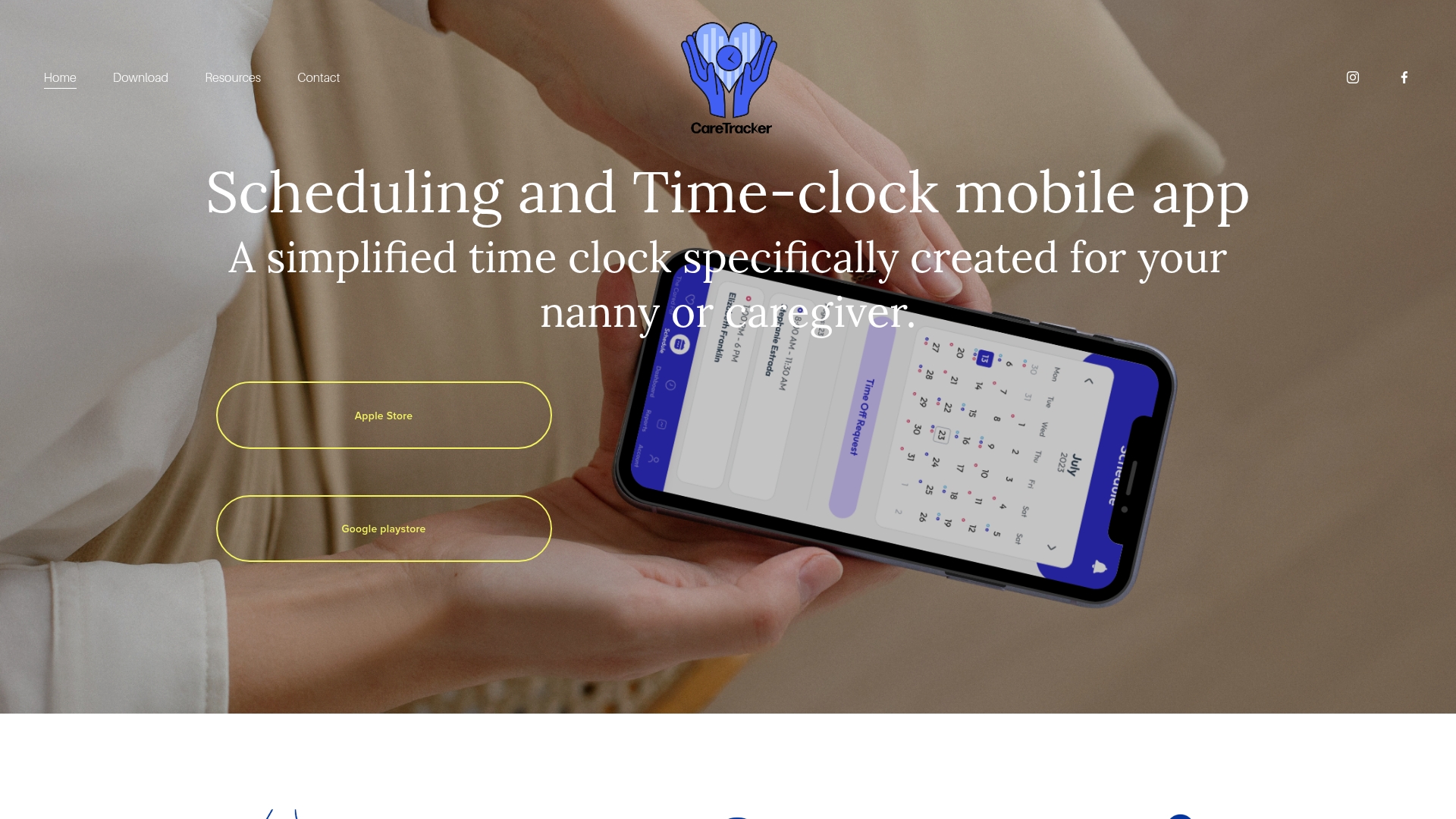
Your caregiver can use the Thecaretracker app at no cost to track hours, view all jobs in one calendar and see care details such as allergies, medications and emergency contacts.
Our view
We built Thecaretracker around a simple observation: most household employment problems begin with missing information. Nobody wrote down the hours. Nobody agreed on the schedule. Nobody knew which threshold applied.
Insurance rules for household employers are hours-based in many states, so a family that records hours accurately from week one is already ahead. That is why the app is free for caregivers: the people doing the work should have an easy way to log it, and families get a clear record they can trust.
For the payroll questions that come with hiring, our one-off consultation is designed to give household employers a clear, correct starting point, so you can hire with peace of mind.
mercedes
FAQ
Do I need workers' comp for a part-time nanny?
It depends on your state. Some states require coverage from the first dollar paid, others only above an hours or wage threshold, and a few leave it optional. Check your state's workers' compensation agency, and keep a record of weekly hours so you know where you stand.
Does homeowners insurance cover my nanny if she is hurt at work?
Usually not. Standard homeowners forms exclude people eligible for workers' comp benefits from liability and medical payments coverage. Ask your insurance agent whether an endorsement is available and whether it satisfies your state's law.
What is the difference between workers' comp and EPLI?
Workers' comp pays medical costs and lost wages for work injuries or illness. EPLI responds to employment claims such as wrongful termination or discrimination. They protect against different risks, and families with household staff often consider both.
Does a senior who hires a caregiver need this insurance too?
Yes, the same employer rules apply when an older adult directly hires and directs a caregiver. Workers' comp requirements follow your state's thresholds. A licensed insurance agent or your state workers' compensation agency can confirm what applies to you.
Sources
- IRS Publication 926, Household Employer's Tax Guide
- Insurance for household employees, Liberty Mutual
- Household employees and workers' comp, 4HomeownersInsurance
- Domestic employee workers' compensation, Grit Insurance Group
- Workers' compensation, USAGov
- Workers Compensation, California Department of Insurance
- Domestic Workers' Bill of Rights, NJ My Work Rights
- New Jersey Domestic Workers' Bill of Rights Model Contract
- Hiring Household Help, New York State Department of Taxation and Finance
- Worker's Compensation and Domestic Servants, Wisconsin DWD
- Workers' Comp for a Nanny: Requirements and Costs, LegalClarity
- Nanny Workers' Comp in Texas, Modern Household Staffing
- Domestic Workers Compensation and EPLI, Brown & Brown
- Employment Sample Agreement for Nannies, U.S. Department of Labor