
Most nannies fall under workers' compensation Code 0913, the classification for full-time domestic workers whose duties happen mainly inside the home. Part-time or occasional help often falls under a separate part-time domestic worker code. The quick rule of thumb: where the work happens and how many hours a week it takes usually decide the code, but you still need to confirm the exact number with your state's Department of Insurance or your insurance agent.
TL;DR:
- Many classification guides treat roughly 20 weekly hours as full time, while live in arrangements commonly qualify regardless of clock hours; state thresholds can differ.
- Nursing duties may require a nurse specific code, while chauffeurs and outdoor tasks use separate classifications; even occasional lawn care can add another code.
- Coverage rules vary by state: New Jersey requires coverage from the first day, while Florida treats domestic worker coverage as voluntary.
- Insurers often rate domestic workers per person rather than by payroll, and they may prorate midterm hires, so retain exact hire dates and weekly hours.
- Confirm the classification with your state insurance department and insurer, then request the assigned code in writing and keep duty and hour records for audits.
Table of Contents
- What Common Workers' Comp Class Codes Mean for Nannies and Domestic Workers
- How Hours, Live-In Status, and Employment Patterns Change the Code
- State Variation and Special Cases You Must Check
- How Premiums, Audits, and Billing Work for Domestic Worker Codes
- Step-by-Step: Confirm the Right Code and Secure Coverage
- Practical Compliance With The CareTracker: Tracking Hours, Duties, and Exporting Reports
- Author Perspective: Prioritize State Confirmation and Good Records
- Get Help Classifying Your Nanny and Cleaning Up Payroll
- FAQ
- Sources
- Authoritative Links to Check
What Common Workers' Comp Class Codes Mean for Nannies and Domestic Workers
Code 0913 covers full-time domestic workers who perform their duties principally inside the residence. A nanny who cooks, cleans, does laundry, and cares for children during a standard workweek typically fits here, alongside housekeepers and cooks doing similar inside work.
A separate code generally applies to part-time or occasional domestic workers, those who come in for a few hours a week rather than carrying a full household schedule. The line between the two codes usually comes down to hours and consistency, not job title.
A few related classifications are worth watching for, since they change the picture:
- Companion or personal care roles involving nursing duties may fall under nurse-specific codes rather than a standard domestic worker code.
- Private chauffeurs usually carry their own classification separate from inside household work.
- Gardeners and other outdoor workers fall under outside-labor codes, even if the same person also helps inside.
A nanny who only cooks and cares for children stays squarely in the inside domestic category. A nanny who also mows the lawn or washes the family car on the side may trigger a second code for that outside work, so it helps to separate duties by location and time spent on each.
How Hours, Live-In Status, and Employment Patterns Change the Code
Hours worked per week are often the deciding factor between full-time and part-time domestic worker codes. NCCI's scope notes describe 0913 as applying to full-time domestic workers, and many classification digests use roughly 20 or more hours a week as the threshold that pushes a worker into full-time territory, though your state may set its own cutoff.

Live-in nannies, including those compensated partly through room and board, are commonly treated as full-time regardless of exact clock hours, since the arrangement itself signals a full-time relationship. When a family uses several part-time or occasional workers, insurers may look at aggregate hours across all of them, and some use per-capita counts rather than payroll totals to set the rate.
A short checklist helps keep this straight:
- Log actual hours worked each week, not just scheduled hours.
- Note in writing whether room and board is part of the compensation.
- Keep records for every household worker, not only the nanny, since aggregate hours can matter.
- Update your insurer whenever a worker's schedule changes meaningfully.
Pro Tip: Treat a schedule change of more than a few hours a week as a trigger to double-check your classification with your insurer, not just a scheduling note.
State Variation and Special Cases You Must Check
There is no federal workers' compensation law for household employers. Coverage requirements come entirely from state statute, and they vary widely from one state to the next, as New Jersey's Department of Labor guidance for domestic worker employers makes clear.
Some examples of how far that variation goes:
- New Jersey requires workers' compensation coverage for domestic workers starting from day one of employment, with no waiting period.
- Some states set specific hour or wage triggers before coverage becomes mandatory.
- Florida's basic manual rule excerpt shows that the state does not statutorily require coverage for domestic workers, treating it as voluntary through endorsement instead.
- Monopolistic fund states require employers to buy coverage directly through a state-run fund rather than a private insurer, which changes how you shop for and bind a policy.
Because these rules shift by state, the safest step is calling your state's Department of Insurance or workers' comp board directly, then cross-checking against NCCI scope notes when your state follows NCCI classifications.
How Premiums, Audits, and Billing Work for Domestic Worker Codes
Many insurers bill domestic worker coverage on a per-capita basis, charging per person rather than strictly by payroll, according to NCCI's data tips on domestic worker rating. Some states and carriers do use payroll-based rating instead, so the billing method itself varies alongside the classification rules.
Per-capita rating is common for domestic workers, and premiums for mid-term hires are typically prorated based on the portion of the policy period they actually worked, which means an incomplete hire date can throw off your bill.
When your policy comes up for audit, expect the insurer to ask for:
- Exact hire and termination dates for each household worker.
- Weekly hours worked, not estimated averages.
- Documentation of any room-and-board or live-in arrangements.
Clean timesheets and accurate dates are the simplest way to avoid a surprise adjustment after the fact.
Step-by-Step: Confirm the Right Code and Secure Coverage
Before you call your agent, pull together a short packet of information:
- A duty list covering everything the worker actually does, inside and outside the home.
- A weekly hour log, ideally several weeks' worth, not a single snapshot.
- Any live-in or room-and-board terms in writing.
- Notes on whether the role includes nursing or medical assistance.
With that in hand, check your state's Department of Insurance or workers' comp board page for domestic worker rules, then call your insurer and ask directly which code applies, requesting the assigned code in writing for your file. If your state excludes domestic workers from mandatory coverage, ask about voluntary endorsements anyway, since a workplace injury without coverage can become a significant out-of-pocket liability.
Pro Tip: Save every email or letter that confirms your assigned class code. It becomes your best defense if an audit later disputes the classification.
Practical Compliance With The CareTracker: Tracking Hours, Duties, and Exporting Reports
Accurate records are the common thread running through every classification and audit question above. Our time-tracking app lets caregivers log hours in a unified calendar, note room-and-board arrangements, and keep duty details in one place. When audit time comes, you can export reports that line up with exactly what insurers ask for: hours by week, hire dates, and live-in notes, all in a format ready to hand to your agent.
Author Perspective: Prioritize State Confirmation and Good Records
If there's one thing worth repeating, it's this: don't skip the state-level check. National codes give you a starting point, but your state's rules decide what actually applies to your household. Pair that confirmation with consistent hour and duty logs, and you avoid the kind of audit adjustment that catches families off guard months after a policy is written.
— mercedes
Get Help Classifying Your Nanny and Cleaning Up Payroll
Figuring out the right class code is only half the compliance picture. Household employers also need accurate wage reporting, and that's where our paid services come in. Our Premium consultation walks you through classification questions, W-2 reporting, and prior wage cleanup for $150 one-off, and our Standard Payroll Consultation package covers the same ground for $150 one-off if you're starting fresh.
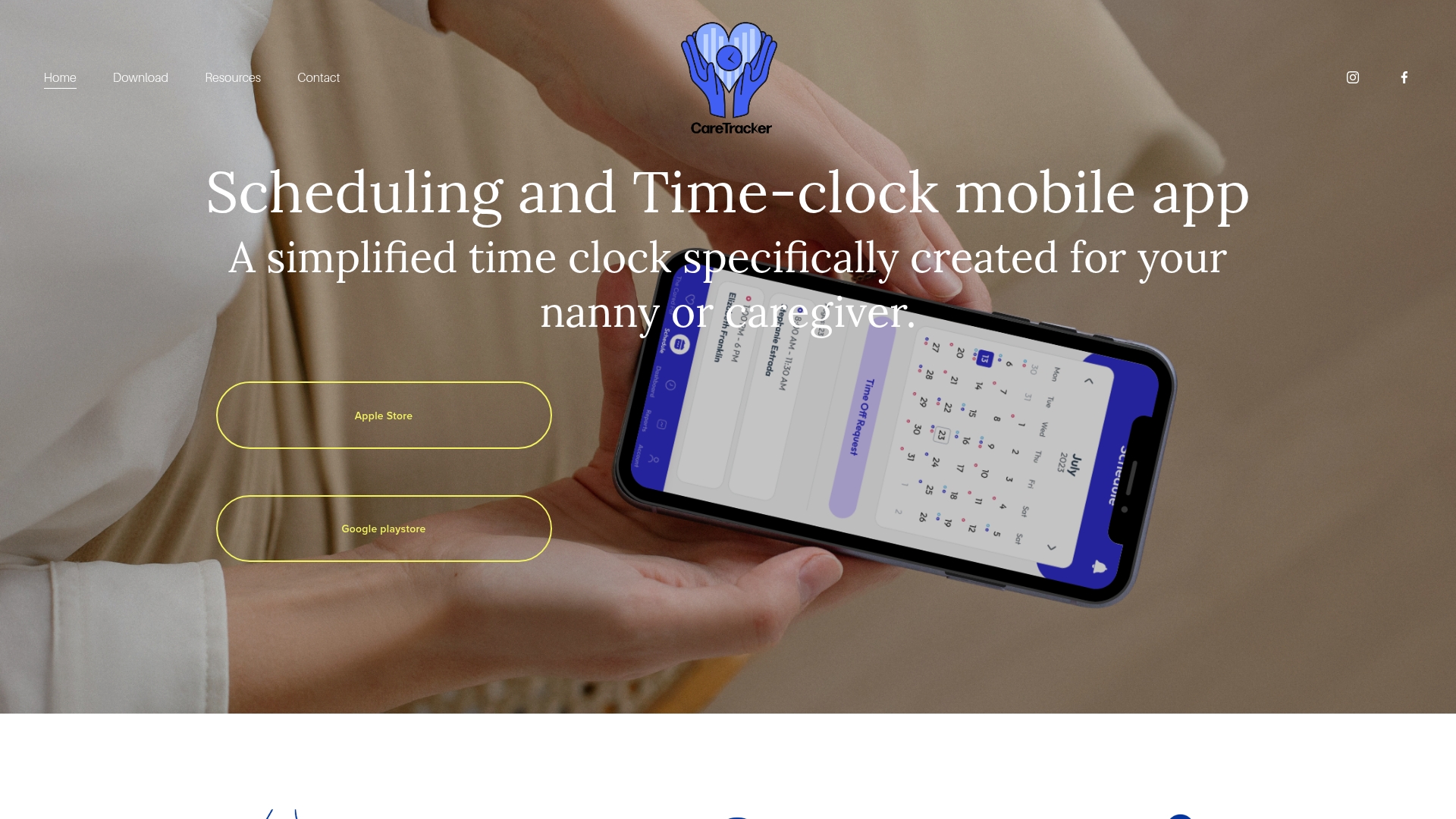
Meanwhile, the time-tracking side of the work stays free. Caregivers using our scheduling and time-clock app can log hours, track live-in arrangements, and export the records that support accurate classification, at no cost to them.
- Free time tracking and duty logs for caregivers, with no subscription required.
- Paid payroll consultation for parents handling prior wage reporting or W-2 corrections.
- Exportable reports built to match what insurers request during an audit.
Visit our payroll consultation page to get started on classification and cleanup, or head to the app landing page to set up free time tracking today.
This article is general information, not a substitute for advice from a qualified lawyer. Consult a qualified legal professional about your own circumstances before acting on anything here.
FAQ
What is a 8810 workers' comp code?
Code 8810 generally covers clerical office workers, not domestic employees, so it does not apply to a nanny's duties. Nannies performing inside household work typically fall under Code 0913 instead.
Do I need workers' comp insurance for a nanny?
Requirements depend entirely on your state, since there is no federal law covering household employers. New Jersey requires coverage from day one, while other states set different thresholds or treat it as voluntary, so check your state's Department of Insurance for your exact obligation.
What is WC class code 5645?
The classification code commonly applies to carpentry work on residential structures, not for domestic household staff. It has no bearing on how you classify a nanny or housekeeper.
What is WC class code 5183?
The classification code is typically associated with plumbing work, a trade unrelated to domestic household employment. A nanny's duties would not fall under such a code.
How do I know if my nanny is full-time or part-time for coverage purposes?
Full-time domestic worker classification generally applies around 20 or more hours a week, though the exact threshold can vary by state and insurer. Live-in arrangements, even with fewer clock hours, are commonly treated as full-time due to the ongoing nature of the role.
Sources
- Domestic Worker Employer guidance — New Jersey Department of Labor
- National Scopes — Code 0913 (NCCI)
- Publication 503, Child and Dependent Care Expenses — IRS
Authoritative Links to Check
Before finalizing your classification, confirm directly with NCCI's scope notes, your state workers' comp board, and IRS household employer guidance for tax-side obligations. Always follow up with your insurer or agent after reviewing these primary sources.