
If you control what work gets done and how it gets done, the IRS considers that worker your household employee, not an independent contractor. That single fact triggers payroll tax withholding once wages cross the annual threshold, W-2 and Schedule H reporting duties, and federal wage-and-hour protections under the FLSA. Check IRS and DOL guidance before you assume otherwise.
TL;DR:
- Household workers who are controlled in how and when they perform work are considered employees, triggering payroll taxes once wages exceed $2,800 in 2025.
- A worker supplied by an agency may not be your employee if the agency controls work details; if you direct the work, you become the employer regardless of agency involvement.
- Employers must register for an EIN, withhold Social Security and Medicare taxes on wages above the threshold, and issue W-2 forms by January 31 annually to stay compliant.
- Federal minimum wage and overtime rules apply to household staff, but exemptions exist for live-in workers and companionship services unless tasks involve substantial hands-on care.
- Proper documentation of work control, hours, and schedules is essential to defend classification and avoid penalties, with professional guidance recommended once thresholds are crossed.
Table of Contents
- Who Counts as a Household Employee?
- How the IRS Control Test Works in Practice
- Tax and Payroll Responsibilities for Household Employers
- FLSA Wage and Overtime Rules for Household Staff
- Common Classification Pitfalls and a Compliance Checklist
- Step by Step: Reporting and Compliance Actions
- Recordkeeping That Prevents Classification Disputes
- A Cautious, Practical Approach for Household Employers
- Get Help With Payroll Setup and Cleanup
- Official Guidance and Primary Sources
- Sources
- FAQ
Who Counts as a Household Employee?
Household work is any service performed in or around your private residence, and the IRS cares far more about the setting and control than the job title. A nanny, housekeeper, private cook, driver, caregiver, or yard worker who takes direction from you on how to do the job typically qualifies. Someone who runs their own established business, sets their own hours across multiple clients, and brings their own equipment usually does not.
Two situations trip up families constantly:
- A babysitter who runs childcare out of her own home, on her own schedule, is generally not your household employee.
- A worker supplied by an agency may be the agency's employee, not yours, but only if the agency actually controls who does the work and how it gets done. If you're the one setting the schedule and giving instructions, that agency relationship doesn't erase your obligations.
How the IRS Control Test Works in Practice
The control test asks one question: who decides what gets done and how it gets done? If you assign specific tasks, set the schedule, provide the tools, and supervise the work directly, you're the employer regardless of what you call the arrangement.
Practical indicators the IRS and tax professionals look at include:
- Who sets working hours and days
- Who provides supplies, a car, or cleaning equipment
- Whether you can direct the specific method used to complete a task
- Whether the worker also serves other clients independently
A nanny who works your hours, in your home, using your rules for the kids, is an employee. A landscaping company that sends a different crew each week, on its own schedule, using its own mowers, is not. Job titles and how often you pay someone don't determine anything here. Control does.
Pro Tip: Don't lean on a written "contractor agreement" to settle the question. The IRS looks at actual working conditions, not paperwork you drafted to avoid payroll taxes.

Tax and Payroll Responsibilities for Household Employers
Once you've confirmed employee status, several obligations kick in automatically.
- Social Security and Medicare withholding. You owe these once cash wages hit the Schedule H threshold, which was $2,800 for the 2025 tax year. Below that amount, you generally skip withholding entirely.
- Federal unemployment tax (FUTA). This typically applies once you pay $1,000 or more in cash wages in any calendar quarter, and it's a separate calculation from Social Security and Medicare.
- Reporting method. Most families use Schedule H, filed with their personal Form 1040. Some households with multiple employees or a home business instead use standard business payroll forms like Form 941. Either way, you must issue a W-2 to any employee you withhold taxes for or pay above the threshold.
- EIN and deposits. You need an Employer Identification Number to report wages, and you'll set up a system for withholding and remitting the right amounts throughout the year.
Missing any of these steps doesn't just create a paperwork gap. It creates a tax liability that grows the longer it sits unaddressed.
FLSA Wage and Overtime Rules for Household Staff
Domestic service workers are covered by federal minimum wage and overtime rules under the FLSA, with two notable carve-outs families often misunderstand.
- Companionship services exemption. Workers who primarily provide fellowship and protection for someone who can't care for themselves, rather than hands on health care, may be exempt from overtime. The duties test matters here: if more than 20 percent of the worker's time goes to hands on care tasks like bathing or feeding, the exemption generally doesn't apply.
- Live-in exemption. Workers who reside permanently in your home, or stay for extended periods (commonly defined as five consecutive days or more), can be exempt from overtime, though minimum wage still applies. A caregiver who works a single 24-hour shift and goes home doesn't meet this residency test just because she slept over once.
- State law override. Many states set stricter minimum wage, overtime, and even paid sick leave rules for domestic workers than federal law requires. Always check your state labor department's guidance before assuming federal rules are the final word.
Common Classification Pitfalls and a Compliance Checklist
Three mistakes show up again and again in household employment: treating a controlled worker as a 1099 contractor to skip payroll taxes, assuming an agency placement removes all employer duties, and ignoring overtime accrual for a live-in caregiver who doesn't actually qualify for the exemption.
Special cases deserve their own thought. Paying a spouse wages generally doesn't create the same Social Security and Medicare tax obligations as paying an unrelated employee, though rules vary by situation and are worth confirming directly with the IRS. Occasional babysitters who work a handful of hours a month typically fall below reporting thresholds. Live-in arrangements need documented residency to support any overtime exemption you're claiming.
A short compliance checklist covers most families:
- Document who controls the work and how
- Track hours worked every week, not just at tax time
- Get an EIN before you need to file anything
- Withhold Social Security and Medicare once wages cross the threshold
- Issue a W-2 by the January deadline
- Consult a payroll professional if anything feels uncertain
Pro Tip: Save your documentation as you go, not in April. A dated record showing you set the schedule and gave instructions is worth far more than a memory of how things worked six months ago.
Step by Step: Reporting and Compliance Actions
Getting compliant follows a predictable sequence, whether you're setting up payroll for the first time or catching up after months of informal cash payments.
- Apply for an EIN through the IRS website, and complete Form I-9 to verify the worker's eligibility to work in the U.S.
- Set up withholding for Social Security, Medicare, and any state taxes that apply to your situation.
- Issue Form W-2 to your employee by January 31 each year, and file Schedule H with your personal tax return, or use business payroll forms if that fits your situation better.
- Deposit payroll taxes on the schedule the IRS assigns you, and keep wage records for at least four years in case of audit.
- Correct past gaps if you've been paying informally. Prior wage reporting and payroll cleanup services exist specifically to help families catch up without guessing at back taxes owed.
Recordkeeping That Prevents Classification Disputes
Most classification arguments come down to a missing record, not a legal gray area. If you can show exactly when a caregiver worked, what tasks she performed, and how her schedule was set, you've already answered most of the control test.
A dependable time-tracking system should give you:
- A time clock that logs actual hours worked, not estimated ones
- Exportable reports for tax filing or a payroll consultation
- Overtime alerts before hours quietly cross a threshold
- A shared calendar so scheduling changes don't get lost in text messages
A scheduling and time tracking app is available free for caregivers to use, providing families with documentation that supports correct classification decisions when questions come up.
A Cautious, Practical Approach for Household Employers
When in doubt, classify as an employee and document why. Track hours from day one, and bring in a payroll professional once you cross the withholding threshold rather than waiting for a notice to force the question.
— mercedes
Get Help With Payroll Setup and Cleanup
A practical next step once you know a worker qualifies as your household employee is to get direct payroll guidance built for families in this situation, instead of guessing at withholding math or hunting for the right form.
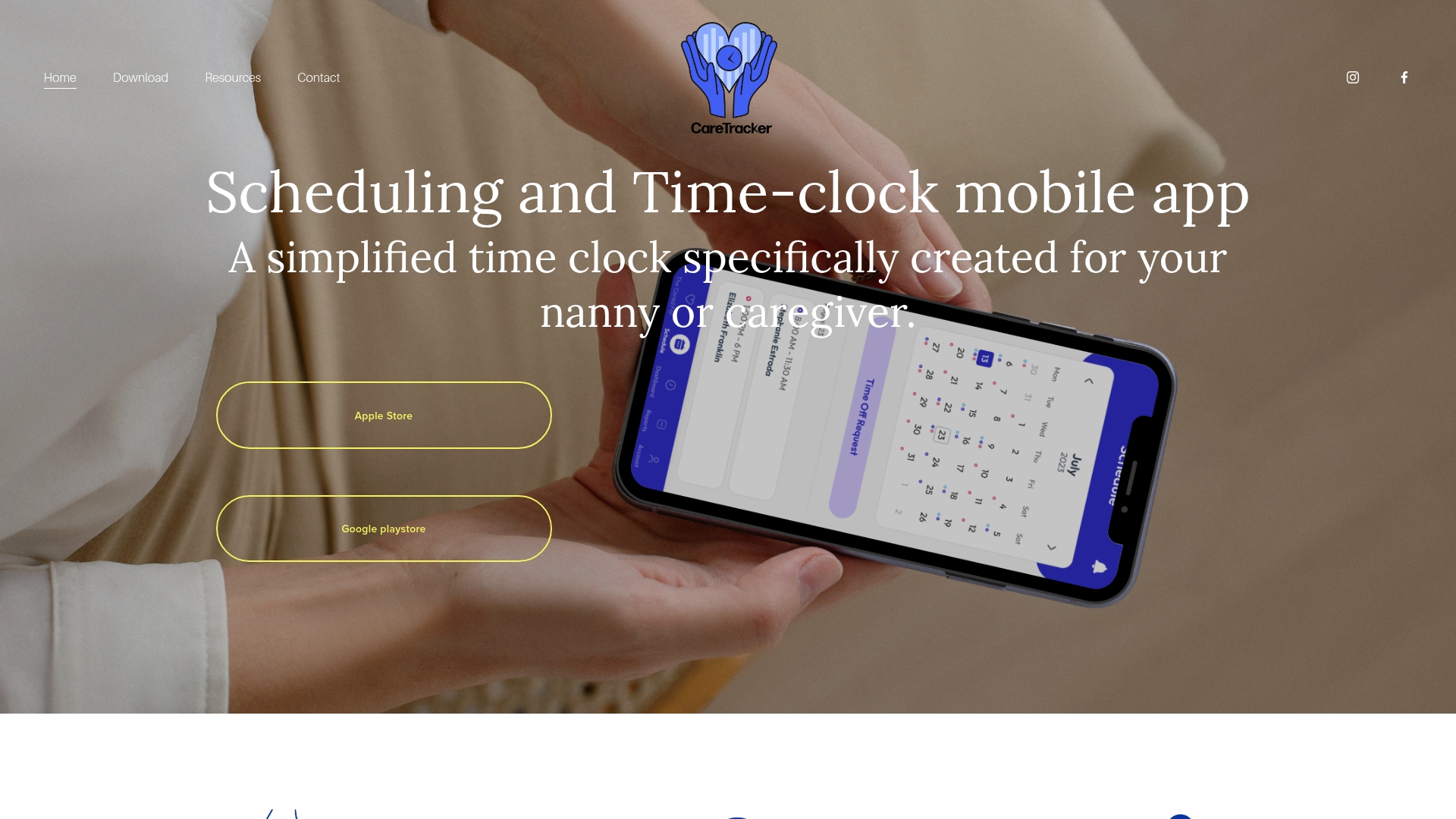
The Premium Consultation walks you through EIN setup, withholding, and Schedule H filing for $150, one time, no ongoing commitment. If you've been paying a caregiver informally and need to catch up, the Prior Wage Reporting & Household Payroll Cleanup Services help you report back wages correctly instead of leaving a growing liability unaddressed. And if hour tracking and scheduling communication are the real gap, Thecaretracker's scheduling and time clock app is free for caregivers to use every day, right alongside the Standard Payroll Consultation package if you want a broader payroll setup. Start with the consultation that matches where you are, and get your paperwork square before tax season decides it for you.
Official Guidance and Primary Sources
- Hiring Household Employees | IRS
- Instructions for Schedule H (2025) | IRS
- Publication 926 (2026) | IRS
- Fact Sheet #79B: Live-in Domestic Service Workers | DOL
- Domestic Service Final Rule FAQs | DOL
- Caregiver wellbeing also matters during a stressful hiring or payroll transition; therapy support for caregivers addresses burnout that often goes unspoken.
Sources
- Instructions for Schedule H (2025) | Internal Revenue Service
- Hiring household employees | Internal Revenue Service
- Publication 926 (2026)
- Fact Sheet #79B: Live-in Domestic Service Workers Under FLSA | U.S. Department of Labor
- Domestic Service Final Rule Frequently Asked Questions (FAQs) | U.S. Department of Labor
FAQ
Who Qualifies as a Household Employee?
Anyone who performs work in or around your home, such as a nanny, housekeeper, or caregiver, qualifies as your household employee if you control what work is done and how it's done. Job title and pay frequency don't matter; the control test does.
What Is the Household Employee Withholding Threshold?
For the 2025 tax year, the Social Security and Medicare withholding threshold was $2,800 in cash wages paid to a single household employee. Below that amount, you generally don't need to withhold these taxes, though other obligations like FUTA may still apply depending on quarterly wages.
What Are the IRS Rules for Household Employees?
The IRS determines status using the control test: if you decide what work gets done and how, that worker is your employee, not a contractor. Publication 926 walks through examples, reporting thresholds, and the forms you'll need, including Schedule H and Form W-2.
Can I Pay My Wife as a Household Employee?
Wage payments between spouses generally don't create the same Social Security and Medicare withholding requirements that apply to unrelated household employees, but the details depend on your specific situation. It's worth confirming directly with the IRS or a payroll professional before assuming either way.
Does Hiring Through an Agency Remove My Employer Duties?
Not automatically. You're only off the hook if the agency genuinely controls the worker's schedule and methods; if you're the one directing the work, you're still the employer for tax and wage purposes.