
If you're withholding Social Security or Medicare taxes for a nanny, caregiver, or housekeeper, you need a household employer EIN, and you can get one in minutes. Apply online at Irs rather than waiting on the mail or a callback. This is the nine-digit number the IRS uses to identify you as an employer, separate from your Social Security number, and it's required to file Schedule H and Form W-2 once you're paying wages that trigger withholding.
While you wait for your confirmation, you don't have to stall your paperwork:
- Write "Applied For" plus the date you submitted the application in the EIN field on any form that asks for it.
- Save your online confirmation the moment you get it. Print it or screenshot it.
- Don't reach for your personal Social Security number as a stand in. The Instructions for Schedule H specifically warn against this.
- Keep the application date handy. You'll need it for the "Applied For" notation and for your own records.
Key Takeaways
Getting a household employer EIN takes minutes online, but staying compliant depends on consistent recordkeeping that starts the day you hire.
| Point | Details |
|---|---|
| Apply online first | IRS.gov/EIN issues your number immediately; fax and mail take days to weeks longer. |
| Use "Applied For" if needed | Write "Applied For" plus your application date on Schedule H or W-2 while you wait. |
| Never substitute your SSN | The IRS requires an EIN, not your personal Social Security number, on employer forms. |
| Keep records several years | DOL requires several years for wage records; IRS recommends keeping tax-related documents accordingly. |
| Track hours from day one | Thecaretracker lets caregivers log hours and schedules for free, giving you an audit-ready record automatically. |
Table of Contents
- What Triggers a Household Employer EIN Requirement?
- How Do You Apply for an EIN as a Household Employer?
- What Do You File Once You Have Your EIN?
- How Long Should You Keep Household Employee Records?
- What Mistakes Cost Household Employers the Most?
- Why the Real Risk Isn't the EIN Application
- Let CareTracker Handle the Hours So You Can Handle the Paperwork
- Sources
What Triggers a Household Employer EIN Requirement?
The IRS uses a simple test to decide whether someone working in your home is your employee: do you control what work gets done and how it gets done? If you're telling your nanny when to arrive, what the daily routine looks like, and how meals get handled, that's an employer relationship, regardless of whether you call it a "job" or a favor between neighbors.
Common roles that fall under this test include nannies, housekeepers, live-in caregivers, and personal aides for an elderly parent. A part-time arrangement counts too. The DOL's guidance on domestic service recordkeeping makes clear that even informal or occasional work can create real obligations once you control the details.
You need an EIN once you're required to:
- Withhold and pay Social Security and Medicare taxes (this kicks in when you pay wages exceeding the current IRS threshold).
- Pay federal unemployment tax (FUTA) on cash wages.
- Withhold federal income tax at the employee's request, which is optional but common.
State unemployment tax is a separate animal. Requirements and thresholds vary by state, so check with your state's labor or unemployment agency directly rather than assuming federal rules cover everything.
How Do You Apply for an EIN as a Household Employer?
Getting your EIN is faster than most people expect. Here's the order to try:
- Apply online at IRS.gov/EIN. This is available during IRS business hours, and it's the only method that issues your EIN immediately upon completion. You'll answer questions about your household, confirm your identity, and walk away with your number the same session.
- Fax Form SS-4 if you can't complete the online application. Processing by fax typically takes about four business days, according to the IRS's guidance for household employers, which also details where to send the form based on your location.
- Mail Form SS-4 as a last resort. This route takes several weeks, so it's not ideal if you're already paying wages or approaching a filing deadline.
- Call the IRS if you're applying from outside the United States. This phone option exists specifically for international applicants and doesn't apply to most household employers filing domestically.
Before you start, have this ready: your legal name and address, the date you started paying wages, and the number of employees you expect to have. When the application asks for "type of entity," select "Household employer." This is the detail people most often get wrong, and choosing the correct category keeps your account correctly classified from day one.
Pro Tip: Apply for your EIN before your first payroll, not after. If you wait until tax season to realize you need one, you'll be filling out Schedule H with "Applied For" and scrambling to match up dates, which is avoidable friction.
What Do You File Once You Have Your EIN?
Your EIN goes on two main forms: Schedule H, which you attach to your personal Form 1040, and Form W-2 (with its summary, Form W-3), which reports wages to your employee and the Social Security Administration.
Deadlines matter here. Schedule H is due with your tax return, generally April 15. W-2s need to reach your employee and the SSA by early February, per the filing timelines laid out in Publication 926. Missing that window creates a mismatch between what your employee reports and what the government has on file, which is exactly the kind of discrepancy that draws IRS attention.
A few operational notes:
- Withhold Social Security and Medicare taxes from wages once you cross the applicable wage threshold. Federal income tax withholding is optional and only happens if your employee requests it in writing.
- FUTA and state unemployment tax are calculated and paid separately from Social Security and Medicare. Check your state agency for its specific rate and filing schedule.
- File W-2s electronically when you can. It's faster, reduces transcription errors, and the IRS actively encourages it for exactly that reason.
How Long Should You Keep Household Employee Records?
Two clocks run simultaneously here, and they don't match. The Department of Labor requires you to keep wage and hour records for at least three years under the Fair Labor Standards Act. The IRS generally expects tax-related records, including your Schedule H and W-2 copies, kept for four years. When in doubt, keep everything for four years and you'll satisfy both.
What actually needs to be in that file:
- Employee name, Social Security number, and address.
- Daily and weekly hours worked, recorded consistently, not reconstructed from memory later.
- Cash and noncash wages paid, plus how you calculated them.
- Any claimed credit for board or lodging provided to a live-in employee.
- Written agreements covering live-in arrangements, since these often carry different overtime rules.
- A copy of Form I-9 confirming employment eligibility.
The DOL's own checklist for domestic service employers lists hours, wages, and pay calculations as the core categories investigators look for first. A digital time-tracking tool that logs hours as they happen, rather than relying on a notepad by the door, builds this record automatically and gives you a report you can hand over without reconstructing months of history from memory.
Pro Tip: If you have a live-in caregiver, document any board or lodging arrangement in writing right away. These agreements matter both for wage calculations and for proving compliance if a dispute ever comes up.
What Mistakes Cost Household Employers the Most?
Most penalties trace back to a handful of avoidable errors, not deliberate noncompliance.
The biggest one: using your personal Social Security number where an EIN belongs. The Schedule H instructions specifically flag this as incorrect, and it can delay processing or trigger a mismatch notice.
- If you're still waiting on your EIN when a form is due, write "Applied For" plus your application date. Don't leave the field blank and don't guess at a number.
- Already have an EIN from a prior business or side venture? Use that existing number instead of requesting a second one. Duplicate EINs create reporting confusion the IRS has to untangle later.
- Start tracking hours from the very first day of the arrangement, even if it feels informal. Once the control test applies, so do the recordkeeping rules, and a thin paper trail is the hardest thing to fix retroactively.
- Discovered you've had unreported wages for months, or longer? A payroll cleanup consultation can help you catch up correctly rather than guessing at back taxes on your own.
Why the Real Risk Isn't the EIN Application
The EIN itself is the easy part. Ten minutes online, and you have your number. What actually trips up household employers is what happens in the months after, when the paperwork isn't due yet and it's tempting to let recordkeeping slide until tax season forces the issue.
Conventional advice treats getting an EIN as the finish line. It's closer to the starting gun. The harder discipline is logging hours consistently every week, saving pay calculations as you go, and keeping a copy of every W-2 you file, because that's the record the DOL and IRS actually ask to see during a dispute or audit, not the EIN confirmation itself.
If you're prioritizing one thing first, prioritize building a habit of daily recordkeeping over perfecting your tax filing on paper. A household employer with sloppy hours but a filed Schedule H is in a weaker position than one with meticulous weekly logs, even if a form here or there needs correcting later. Documentation is your defense. Everything else is paperwork that follows from it.
Let CareTracker Handle the Hours So You Can Handle the Paperwork
Thecaretracker gives household employers something most payroll advice skips: a free, always-on way to capture the exact hours and pay details the IRS and DOL expect you to have on hand. Your caregiver logs hours directly in the app, you approve schedule requests and view every job on one calendar, and the weekly hour totals you need for Schedule H and W-2 prep are already sitting there instead of scattered across texts and sticky notes.
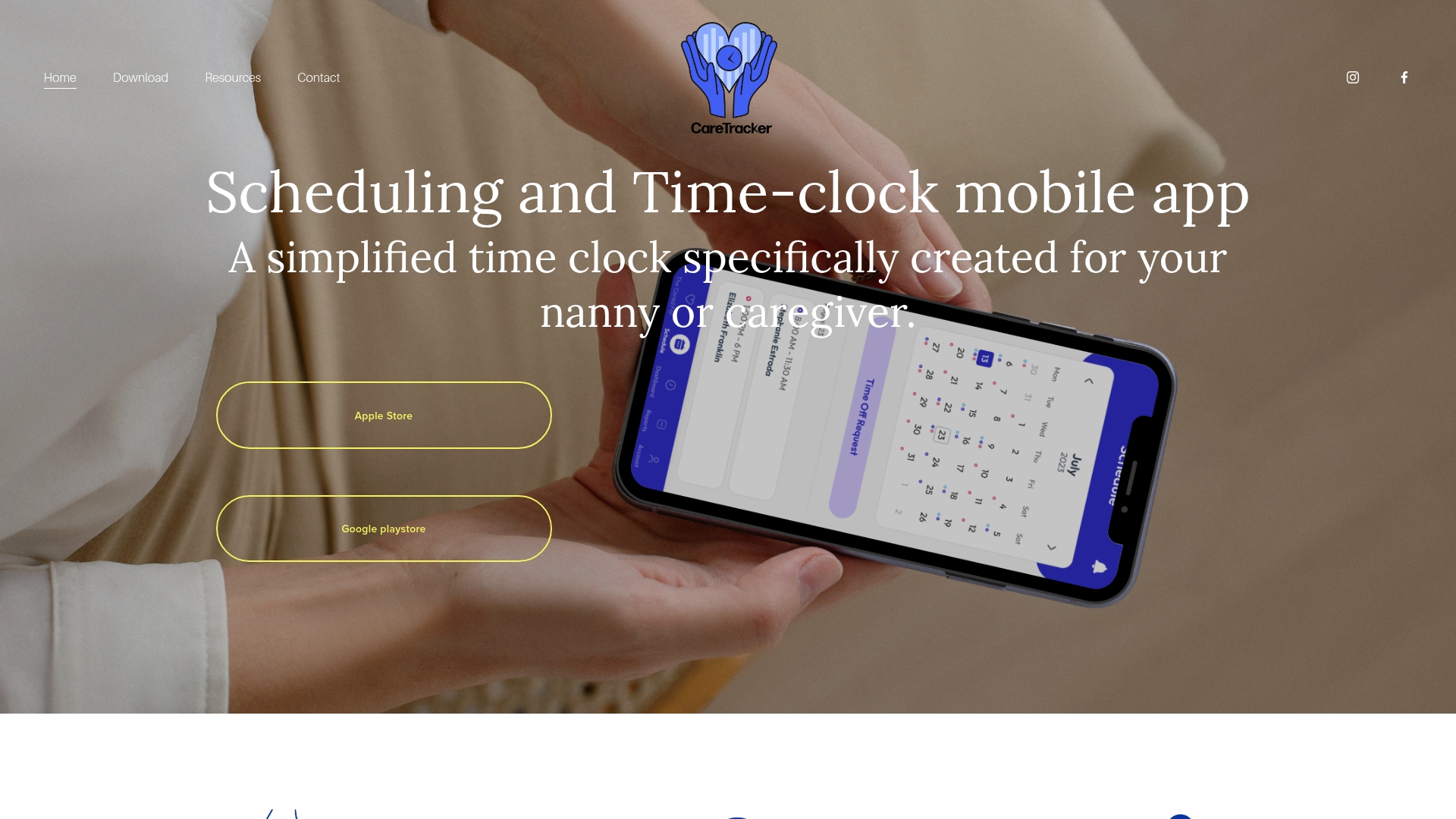
The app also centralizes care notes, allergies, medications, and emergency contacts, which matters for day-to-day peace of mind even though it's separate from your tax obligations. And if you discover you're behind on reporting wages, or you just want a professional set of eyes on your Schedule H before you file, Thecaretracker connects you with a payroll consultation service built specifically for household employers untangling back pay or first-time filings. Start logging hours today at Thecaretracker and book a consultation if you need help catching your paperwork up to your payroll.
Sources
- Fact Sheet #79C: Recordkeeping Requirements for Individuals, Families, or Households Who Employ Domestic Service Workers Under the Fair Labor Standards Act (FLSA) | U.S. Department of Labor
- Topic no. 756, Employment taxes for household employees | Internal Revenue Service