A good emergency plan for a caregiver fits on a few pages and answers four questions: who to call, what the person in care needs, where to go, and who steps in if the caregiver can't get there. If you hire a nanny, an au pair or a caregiver for a parent, you write this plan once, put it where the caregiver can reach it in seconds, and review it at least once a year. Our app, which is free for caregivers, lets a caregiver see allergies, medications, emergency contacts and nap or nursing schedules on their phone, so the plan travels with them.
- ✓Allergies and medications
- ✓Emergency contacts
- ✓Nap and nursing schedules
- ✓Daily activities
TL;DR
- Cover five things: emergency contacts, medical details, an evacuation plan, a shelter-in-place plan and a backup caregiver.
- Keep a go-kit with at least three days of supplies and a stay-at-home kit with at least two weeks, as the American Red Cross advises.
- Put medications, allergies, doctors and routines on one sheet. Keep a printed copy in the kit and a digital copy on the caregiver's phone.
- Agree on two meeting places and a text-first way to reach each other, because texts often go through when calls don't.
- Walk through the plan with the caregiver, and review it once a year or whenever something changes.
Table of Contents
- Why the caregiver needs a plan too
- What the plan should cover
- Evacuation: decide the route before you need it
- Sheltering in place: pick the room and stock it
- Supplies: two kits, different jobs
- The care information sheet: the part caregivers use most
- Communication and backup care
- Practice it and keep it current
- Put the plan in your caregiver's pocket
- FAQ
- Sources
Why the caregiver needs a plan too
Most emergency guides are written for the family member who lives in the home. When you hire help, the person who is with your child or parent at 2 p.m. on a Tuesday is the caregiver. If a storm warning, a fire alarm or a medical event happens then, they decide what to do first.
That is why a plan has to be written down and shared. FEMA's Disaster Preparedness Guide for Caregivers is built around three kinds of caregivers: those who can involve the person they care for in planning, those who can draw on a support network, and those who work alone. A hired nanny or home caregiver often sits in the third group on a given day. You, the employer, are the support network. Your job is to hand them everything they need before they need it.
FEMA and the Rosalynn Carter Institute for Caregivers also point out that an individualized plan is the best way to reduce anxiety about disasters. The same holds for the caregiver: someone who knows exactly where the flashlight is and which door to use is calmer and quicker.
What the plan should cover
Use this as your outline. Each part is explained in the sections below.
- Contacts: parents or adult children, a second family contact, the doctor, the pharmacy, a neighbor and the backup caregiver.
- Care information: allergies, medications and doses, medical conditions, equipment, routines and any documents the caregiver may need.
- Evacuation: the route, the meeting places, where you will stay and what to bring.
- Sheltering in place: the safest room, the kit, how updates arrive and what to do if the power goes out.
- Communication: how everyone reaches everyone else if phones are limited.
- Backup care: who steps in if the caregiver can't get to the home, and how they get in.
The Red Cross Caregivers Preparedness Checklist suggests starting with a conversation: how do the care recipient's medical, physical and cognitive needs affect their ability to respond to a disaster, and what can each person in the household do? It recommends assigning responsibilities ahead of time for different situations. In a home with a nanny or caregiver, that means deciding who grabs the kit, who carries or guides the child or older adult, and who makes the calls.
Evacuation: decide the route before you need it
Evacuation is the scenario where a missing detail costs the most time. FEMA advises caregivers to plan evacuation routes in advance, practice the route with the care recipient, pick a meet-up spot and name an alternative contact in case of separation. It also advises working with a support network to find routes that suit the person's needs. For a stroller, a wheelchair or a walker, the best route may not be the shortest one.
Write down:
- The exit routes from the home, ideally on a simple sketch with the meeting point marked.
- Two places to reunite. The CDC recommends at least two emergency meeting places, for example one near the home and one outside the neighborhood.
- Where the caregiver and the person in care will stay, including a place that accepts pets. FEMA notes that most public shelters allow only service animals.
- What the caregiver takes: the go-kit, the care information sheet, medications and chargers.
- Who the caregiver tells when they leave, and how.
If the person you care for has dementia, add identification. The Alzheimer's Association's disaster preparedness guide suggests carrying ID with photos of both the caregiver and the person in care in case of separation, plus comfort items such as games or a stuffed toy. The Emergency Preparedness Toolkit from the National Alliance for Dementia Resources also lists an identification bracelet, a playlist of favorite music and puzzles.
Sheltering in place: pick the room and stock it
Sometimes the safest choice is to stay home. FEMA's guide says to identify the safest place to shelter based on the disasters your community may face, make sure that room has an emergency kit, and plan how updates will arrive. It also recommends keeping phones and medical devices fully charged whenever electricity is available, and having comfort items and stress strategies ready for the care recipient.
A simple if-then format helps a caregiver act without thinking. For example:
- If the smoke alarm sounds, everyone leaves by the nearest exit and meets at the agreed spot outside.
- If a tornado or severe storm warning is issued, everyone goes to the designated room with the kit.
- If the power goes out, the caregiver checks any medical device battery and calls the family contact by text first.
- If an evacuation order is issued, the caregiver follows the written route and takes the go-kit and the care sheet.
Sign up for local alerts at the same time. The Red Cross checklist advises signing up for local government emergency alerts, following National Weather Service watches and warnings, and downloading the Red Cross Emergency app. A battery-powered radio is a sensible backup. Give the caregiver's phone number to your local alert system if it allows multiple recipients, so the warning reaches the person who is actually in the house.
Power-dependent medical equipment
If the person in care uses a device that needs electricity, FEMA and the Rosalynn Carter Institute suggest asking the electric utility about a priority restoration list or battery backups for people with a qualifying need and diagnosis. Talk to the person's doctor about the paperwork. The Red Cross also lists backup batteries and chargers for items such as CPAP machines and wheelchairs in its kit advice.
Supplies: two kits, different jobs
The Red Cross checklist recommends two kits. A go-kit holds at least three days of essentials for leaving fast. A stay-at-home kit holds at least two weeks of supplies. The same checklist suggests talking with the doctor about access to at least a one-month supply of essential medications.
The Administration on Aging's Just In Case guide for older adults gives a practical base list for three to six days:
- One gallon of water per person per day
- Nonperishable food and a hand-operated can opener
- Flashlight, portable radio and spare batteries
- First aid kit, light sticks and waterproof matches
- Prescription medications with an up-to-date list
- A cell phone, cash and an emergency contact list
The guide is from 2006, so treat it as a base list and add what today's household needs, such as phone chargers and power banks. For a child, children's hospital guidelines suggest extras like diapers, wipes, formula, bottles, pediatric-sized clothing and distraction items. The same guidelines suggest families of children with special health care needs build a 96-hour stockpile of medications, supplies and nutrition.
A quick tip for employers: put a label inside the kit listing what it holds and when you last checked it. Caregivers shouldn't have to open every bag to learn what's there.
The care information sheet: the part caregivers use most
Supplies get used rarely. The care information gets used in every emergency, including small ones like a fall or an allergic reaction. This is the page the caregiver, a paramedic or a backup caregiver needs in under a minute.
For a child, include:
- Full name, birth date and weight
- Allergies and what to do about them
- Medications, doses and times
- Pediatrician, specialists and preferred hospital
- Both parents' phone numbers and one more adult who can pick up the child
- Nap, feeding and comfort routines
For an older adult, include:
- Name, birth date and primary diagnoses
- Allergies, medications and doses
- Equipment such as oxygen, a CPAP or a wheelchair
- Doctors, pharmacy and insurance information
- Documents the caregiver may need to find, such as a DNR, living will or power of attorney. The VA's disaster toolkit for caregivers lists these along with where to find them.
- Mobility needs, communication needs and what calms them
The Lurie Children's Hospital guidance describes the Emergency Information Form, developed by the American College of Emergency Physicians and the American Academy of Pediatrics. It suggests keeping a current copy at home, in the go bag, in each parent's vehicle and wallet, on phones, with the child's emergency contact, at the school or child care center, and at the doctor's offices. Even if you do not use that exact form, the idea of many copies in many places is sound.
If prescriptions run low in a disaster, rules vary. FEMA and the Rosalynn Carter Institute note that each state has its own laws on early refills during a declared emergency, and they point caregivers to resources from Healthcare Ready and the CDC. Check your state's rule and tell the caregiver which pharmacy to call.
Share it so it can be found
A sheet in a drawer helps only if the caregiver knows the drawer. FEMA's communication plan guidance suggests posting a copy in a central place at home, giving copies to each household member to carry, and storing contacts in every phone, with at least one saved under ICE, for In Case of Emergency. FEMA and the Rosalynn Carter Institute also suggest creating a profile in Smart911 or RapidSOS Home so first responders can see the care recipient's needs, and keeping a hard-copy needs list in the kit.
A digital copy matters too. In our app, caregivers can view allergies, medications, emergency contacts, nap and nursing schedules and daily activities in one place, and families can create care recipient profiles. Our guide to accessing emergency contacts in two minutes walks through the steps for nannies, and our guide to a digital care binder shows how to gather the rest. If you want a one-pager for a sitter, there is a single-page family emergency plan you can print.

Because these sheets hold health details, protect them. Our article on caregiver data privacy covers locking accounts and getting a signed HIPAA form.
Communication and backup care
In a disaster, phone networks get crowded. The CDC advises having several ways to reach friends, family and caretakers, and notes that text messages often go through when calls do not. The San Diego County caregivers plan makes the same point and suggests texting or using a landline instead of cell calls. Agree on this before an event: the caregiver texts the family first, then calls.
The California Department of Aging suggests a communication plan covering how to reach each other if phone service is limited, where to meet if separated, who else can help if the primary caregiver can't be there, and how relatives and neighbors stay informed. Turn each into a line on your plan.
Then build the backup plan. California's guidance on backup caregiving recommends naming at least one person who could step in, trusted neighbors who can check in, alternate transportation, who has house keys or entry codes, and how care continues if services are interrupted. For a household with a nanny or caregiver, ask yourself:
- If the caregiver can't reach the home, who covers the shift and how do they get in?
- Is the backup person already on the contact list and familiar with the care sheet?
- Does a neighbor know the caregiver's name and have your number?
- If you are traveling, does your support network have your travel dates? The San Diego plan advises this.
If you live far from a parent who has a caregiver, FEMA and the Rosalynn Carter Institute suggest signing up for emergency alerts for the care recipient's zip code, getting updates from the county and the power company, and connecting with a neighbor who can check in.
With more than one caregiver, such as a weekday aide and a weekend nanny, consistency is the risk. Our 48-hour care plan for coordinating multiple caregivers helps keep everyone working from the same instructions.
Practice it and keep it current
A plan nobody has rehearsed is a guess. Walk through it with the caregiver on their first day: where the kit is, which exit to use, which room is the shelter, how to shut off water, gas and electricity if it is safe, and who to text. Then do a short drill, such as leaving the house for the meeting spot or finding the care sheet on the phone.

FEMA's communication planning document says to review, update and practice the plan at least once a year or whenever information changes. Triggers worth noting: a new medication, a new doctor, a new caregiver, a move, a birth, or a change in mobility. After a change, update the sheet and the kit, and tell the backup.
FEMA's Ready.gov publications page states that its publications are up to date as of September 30, 2025 and will not be updated regularly after that date. So check your local emergency management office for current alert systems and shelter locations, and visit the nearest shelter if you can.
What we recommend
We build our app around one idea: the person with your child or parent should never have to hunt for information. Allergies, medications, emergency contacts and nap or nursing schedules belong on the caregiver's phone, next to their schedule and hours, not in a drawer or a text thread from last spring.
Our advice to families is to write the plan first and then make it easy to reach. A printed sheet in the kit, a copy on the fridge and a digital copy in the app mean the information is there whether the caregiver is at home, at the park or at an appointment. When more than one caregiver is involved, it also means everyone sees the same instructions.
Trust and transparency make care work better for everyone. A caregiver who knows the plan feels prepared, and a family who has shared it has peace of mind.
mercedes
Put the plan in your caregiver's pocket
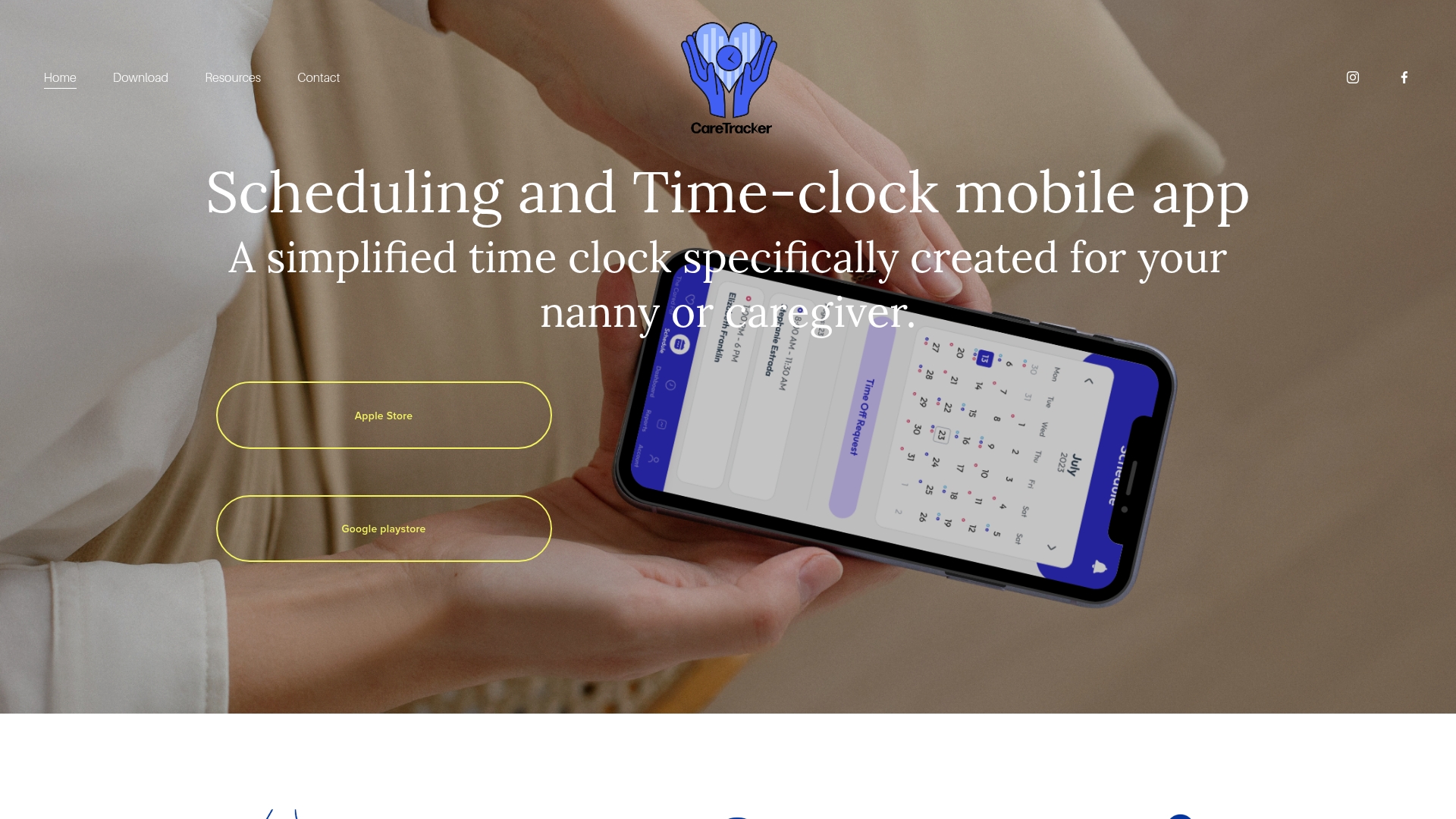
Our Scheduling and Time-clock mobile app is free for caregivers. They can view all their jobs in one calendar, receive and approve schedule requests, track weekly hours and see care details such as allergies, medications, emergency contacts, nap schedules and nursing schedules. Families can create care recipient profiles and manage multiple caregivers. See the app and set up the profile before the next busy week.
If your household also needs help with payroll and tax questions, our Standard Payroll Consultation package is a one-off $150, and you can find it in our store.
FAQ
What is the first thing to put in an emergency plan for a nanny or home caregiver?
Start with contacts and medical details: two family phone numbers, the doctor, the pharmacy, a neighbor, plus allergies and medications. These cover the most common emergencies, from a fall to an allergic reaction. Add evacuation and shelter details once that page is done.
How many days of supplies should we keep?
The Red Cross checklist recommends a go-kit with at least three days of essentials and a stay-at-home kit with at least two weeks. It also suggests asking the doctor about a one-month supply of essential medications. Water is one gallon per person per day, according to the Administration on Aging guide.
How should a caregiver reach the family if phones are down?
Texting first is the best habit, because the CDC notes that texts often go through when calls do not. Agree on two meeting places and a backup contact outside your area. A landline can also work when cell service is limited.
How often should we update the plan?
Review it at least once a year, as FEMA advises, and any time something changes: a new medication, caregiver, doctor or address. Walk through it with the caregiver each time so the updates are remembered, not just written.
Sources
- FEMA Disaster Preparedness Guide for Caregivers
- FEMA and RCI Talk Disaster Preparedness for Caregivers
- American Red Cross Caregivers Preparedness Checklist
- CDC: Stay Connected
- Alzheimer's Association Disaster Preparedness Guide
- Emergency Preparedness Toolkit for People Living with Dementia
- Just In Case: Emergency Readiness for Older Adults and Caregivers
- Preparedness Guidelines for Hospitals, Lurie Children's
- VA Toolkit for Caregivers of Veterans for Disaster Preparedness
- California Department of Aging: Emergency Planning for Caregivers
- Ready.gov Free Publications