
Federal law does not require you to give a nanny or caregiver rest breaks or meal breaks. But a handful of states do, and the federal rules on when break time must be paid apply to every household employer. If you hire a nanny, au pair, home health aide or senior caregiver, the safest approach is to know your state's rule, put your break policy in writing and keep accurate records of the hours worked.
This guide explains the federal baseline, the states that require paid rest periods, how California and New Jersey treat household workers, what changes for live-in caregivers, and how to keep a clear record so everyone is protected.
TL;DR
- No federal law requires rest or meal breaks for caregivers. Short breaks you do offer (typically 5 to 20 minutes) count as paid work time.
- A meal period of 30 minutes or more can be unpaid only when the caregiver is truly free of duties. A nanny who stays responsible for a child is still on the clock.
- California, Colorado, Kentucky, Nevada, Oregon and Washington require paid rest periods, generally 10 minutes per four hours, and New Jersey has its own domestic worker break rules. Some of these laws carve out certain household roles.
- Live-in caregivers can have sleep, meal and off-duty time excluded by agreement, but interrupted time must be paid.
- Written break policies and accurate time records protect both the family and the caregiver.
Table of Contents
- What federal law says about caregiver breaks
- When a break must be paid
- Can a nanny take an unpaid meal break while watching a child?
- States that require rest breaks
- California: rest and meal rules for household employees
- New Jersey: a domestic workers' break rule
- Live-in caregivers: sleep, meals and off-duty time
- Common shift questions, answered
- Our perspective
- How to put break rules in writing and keep records
- Rest matters for the caregiver too
- Get your break and payroll setup right
- FAQ
- Sources
What federal law says about caregiver breaks
The Fair Labor Standards Act (FLSA) is the main federal wage law. According to the Department of Labor's FLSA guidance, federal law does not require employers to provide rest or meal breaks. That is true for a factory, an office and a private home.
Federal regulations define domestic service broadly, covering roles from nannies to home health aides. These workers are generally entitled to at least minimum wage for hours worked. So even without a required break, the clock matters: every hour the caregiver is working must be counted and paid.
A few points families often miss:
- The absence of a federal break rule does not mean your state has none.
- Offering a break is your choice, but once you offer it, federal rules decide whether it is paid.
- Whether the person is an employee or an independent contractor affects which wage and hour rules apply. The Department of Labor uses the economic realities test to decide that, not the label you put on the arrangement.
When a break must be paid
The federal line is about length and freedom from duty. The Department of Labor explains that when an employer offers short rest breaks, usually 5 to 20 minutes, the time is compensable and counts as hours worked. A caregiver who takes a 10-minute break to sit down and have a drink stays on paid time.
Meal periods work differently. Meal periods, typically at least 30 minutes, are not work time and are not compensable under federal law. The key word is "bona fide": the caregiver has to be genuinely off duty.
| Type of break | Typical length | Paid under federal law? |
|---|---|---|
| Short rest break | 5 to 20 minutes | Yes, counts as hours worked |
| Bona fide meal period | 30 minutes or more | No, if fully relieved of duty |
| Meal period with duties (watching a child, monitoring a senior) | Any | Yes, the caregiver is still working |
State law can be stricter than this table. If your state requires paid or on-duty meal periods, follow the state rule.
Can a nanny take an unpaid meal break while watching a child?
This is the question that causes the most confusion in households. The Department of Labor's guidance for domestic service says that if an employee is not free and clear of duties during a meal break, that time is compensable, even if the employee stays on the employer's premises.
Think about what that means in a real home:
- A nanny eating lunch while the toddler plays beside her. She is still responsible for the child. This is paid time.
- A caregiver who sits with a senior at lunch and must watch for choking or falls. Paid time.
- A nanny whose child naps, who is free to leave the house for 30 minutes while a parent is home. This can qualify as a genuine unpaid meal period, provided she is truly relieved of all duties.
- A caregiver who is told to "take lunch" but gets called for every diaper change or medication reminder. The interruptions make the time work time.
If your household cannot give the caregiver a fully duty-free meal period, the simplest fix is to pay for it. It removes the risk of a wage dispute and it avoids arguments about what counted as a break.
States that require rest breaks
The Department of Labor tracks state rest period laws. Its table, last updated with January 1, 2023 information, lists California, Colorado, Kentucky, Nevada, Oregon and Washington as states requiring paid rest periods, generally 10 minutes per four hours worked. The details vary by shift length and industry, and some states exempt certain categories of workers.
| State | Paid rest period (general rule) | Household caregiver note |
|---|---|---|
| California | 10 minutes net rest per four hours or major fraction | Personal attendants are excluded from the rest-period provision |
| Colorado | Paid rest periods for adult employees | Check the state's current rules for household work |
| Kentucky | Paid rest periods for adult employees | Check the state's current rules for household work |
| Nevada | Paid rest periods for adult employees | Check the state's current rules for household work |
| Oregon | Paid rest periods for adult employees | Check the state's current rules for household work |
| Washington | Paid rest periods for adult employees | Check the state's current rules for household work |
| New Jersey | 10-minute paid breaks every 4 hours for domestic workers | Covered by the Domestic Workers' Bill of Rights |
These laws change, so treat the table as a starting point and confirm the current rule with your state labor department before you set a schedule. Many other states have meal period laws even where they have no rest break law, so a state missing from this list may still have a requirement. Your state labor agency's website is the place to confirm.
California: rest and meal rules for household employees
California is the state most families ask about, and the wage order for household occupations is specific. Under California's household occupations wage order:
- Covered household employees get 10 minutes of net rest time per four hours worked or major fraction of four hours.
- Personal attendants are excluded from the rest-period provision.
- A 30-minute meal period is required when the work period exceeds 5 hours. If the employee is not fully relieved of all duty, it is an on-duty meal period and must be counted and paid as time worked.
The personal attendant exclusion is the part that needs care. Whether your caregiver fits that category depends on the actual duties, so read the wage order itself or ask the California Department of Industrial Relations before you assume the rest-period rule does not apply to you. If you are unsure, giving the 10-minute paid break costs little and keeps you on the safe side.
New Jersey: a domestic workers' break rule
New Jersey spells out break rules in its Domestic Workers' Bill of Rights. According to the state's guidance for employers of domestic workers:
- Employers must provide a 30-minute meal break after more than 5 hours of consecutive work. It must be paid unless the worker is completely relieved of all duties and allowed to leave the worksite.
- Workers get 10-minute paid rest breaks every 4 hours, and they cannot be discouraged from taking them.
- "On-duty" meal and rest breaks are allowed only when the worker cares for someone who cannot be left alone. They need a written agreement, and the worker is paid the normal rate.
The third point is especially relevant to families of seniors or young children. If your caregiver cannot step away because the person in their care cannot be left alone, New Jersey allows an on-duty break, but only in writing and with pay. The state page notes the rules took effect July 1, 2024, with a rule proposal filed in 2025, so confirm the current text before relying on it.
Live-in caregivers: sleep, meals and off-duty time
Live-in arrangements follow different math. Under the Department of Labor's domestic service rules, employers and live-in workers may agree to exclude bona fide meal periods, sleep time and other periods of complete freedom from duties from hours worked, as long as that time is genuinely off duty. If the caregiver is interrupted, that time is work time, and hours beyond the agreement must be paid.
Live-in domestic service employees are exempt from the FLSA's overtime requirements, but they must still be paid at least the federal minimum wage for all hours worked. State laws may add overtime or rest requirements on top of that.
Two state examples show how much it can differ:
- California: live-in employees must have 12 consecutive hours free of duty per workday. When the span is longer than 12 hours, at least 3 off-duty hours must fall within it, by mutual agreement.
- New Jersey: live-in employees cannot be required to work more than 6 days in a row without a 24-hour rest period, which may be unpaid.
For any live-in role, a written agreement that says which hours are off duty, and a record of nights or meals that were interrupted, is what turns a vague understanding into something both sides can trust.
Common shift questions, answered
Is a 7-hour shift with no break legal?
Under federal law, yes. The FLSA does not require breaks, so a 7-hour shift with none is not a federal violation. State law is a different matter: in California, for example, a worker covered by the household order who works more than 5 hours is entitled to a meal period, and covered workers get paid rest time. Check your state first.

Is a 12-hour shift with no break legal?
Again, federal law contains no break requirement, so it is not a federal issue. State rules may impose their own requirements for longer shifts, and long days raise practical concerns about safety for the caregiver and the person in their care. Overtime is the larger legal question: in most states, hours beyond the overtime threshold must be paid at the higher rate for non-live-in workers.
Are 15-minute breaks required?
No. The Department of Labor says the FLSA does not set a specific duration for breaks, though many employers offer them voluntarily. If you offer a 15-minute break, it is paid.
Our perspective
Most of the break disputes we see between families and caregivers are not about bad intentions. They come from unclear expectations. A parent assumes the nanny eats lunch when the baby naps. The nanny assumes that time is paid because she can't leave the house. Nobody wrote it down, and by the time someone asks, nobody remembers.
We built Thecaretracker around the idea that clear records simplify things for everyone. Our app is designed to let caregivers track weekly hours accurately, see all their jobs in one calendar, and receive and approve schedule requests, so a family and a caregiver can look at the same information instead of relying on memory. We also support state-specific pay period and overtime tracking, because the rules your household follows depend heavily on where you live.
Our advice to household employers is simple. Decide on a break policy before the first day, write it down, and pay for any time the caregiver is not fully free of duties. That is the arrangement that builds trust, gives you peace of mind and keeps you on solid ground if a question ever comes up. And if your payroll history is messy, it is fixable. That is exactly what our consultations are for.
mercedes
How to put break rules in writing and keep records
A written policy does not need to be long. A page in your household employee handbook is enough. If you want a template to start from, our household employee handbook guide walks through what to include.
A workable break policy covers these points:
- Which breaks are offered. For example, a paid 10-minute break in the morning and afternoon, and a lunch period.
- Which breaks are paid. Short breaks are paid. A meal period is unpaid only if the caregiver is fully relieved of duty and your state allows it.
- What happens when a break is interrupted. Say plainly that interrupted time is paid time.
- How breaks are recorded. Clock in and out for the shift, and note any unpaid meal period with start and end times.
- Live-in specifics. List the off-duty hours, sleep hours and any agreed exclusions, in writing.
For the record-keeping itself, it helps to use a tool that both sides can see. Our guide to caregiver time tracking for families covers how to meet Department of Labor and IRS expectations in five steps, and the nanny time tracking tool shows how a caregiver can log weekly hours accurately. If you manage more than one caregiver, such as a nanny plus a weekend sitter, our guide to caregiver scheduling shows how a shared calendar keeps coverage and breaks from colliding. Agencies and families who schedule aides can also read about home health aide scheduling software.
If long days are common in your home, track overtime too. Our piece on nanny vs daycare cost and overtime tracking explains how extra hours change what a nanny really costs.
Rest matters for the caregiver too
Breaks are not only a legal question. Caregiving, whether for a baby or an aging parent, is demanding work, and a caregiver who gets a real pause is better able to pay attention and stay patient. Family caregivers who feel stretched sometimes find comfort in reflection as well, and a collection of Bible verses for caregivers can be one small way to take a quiet moment during a long day.
For paid caregivers, the practical version is to schedule the break rather than hope for one. Build it into the daily routine around naps, school pickups or a senior's appointments, and treat it as part of the job, not a favor.
Get your break and payroll setup right
If you are a household employer and you are not sure whether your breaks, overtime or past wage reporting are in order, we can help. Our Standard Payroll Consultation package is $150 one-off, and our Premium consultation is also $150 one-off. If you need to fix earlier years, our Prior Wage Reporting and Household Payroll Cleanup Services are available too, with no published price. You can see all the options on our payroll consultation page or in the store.
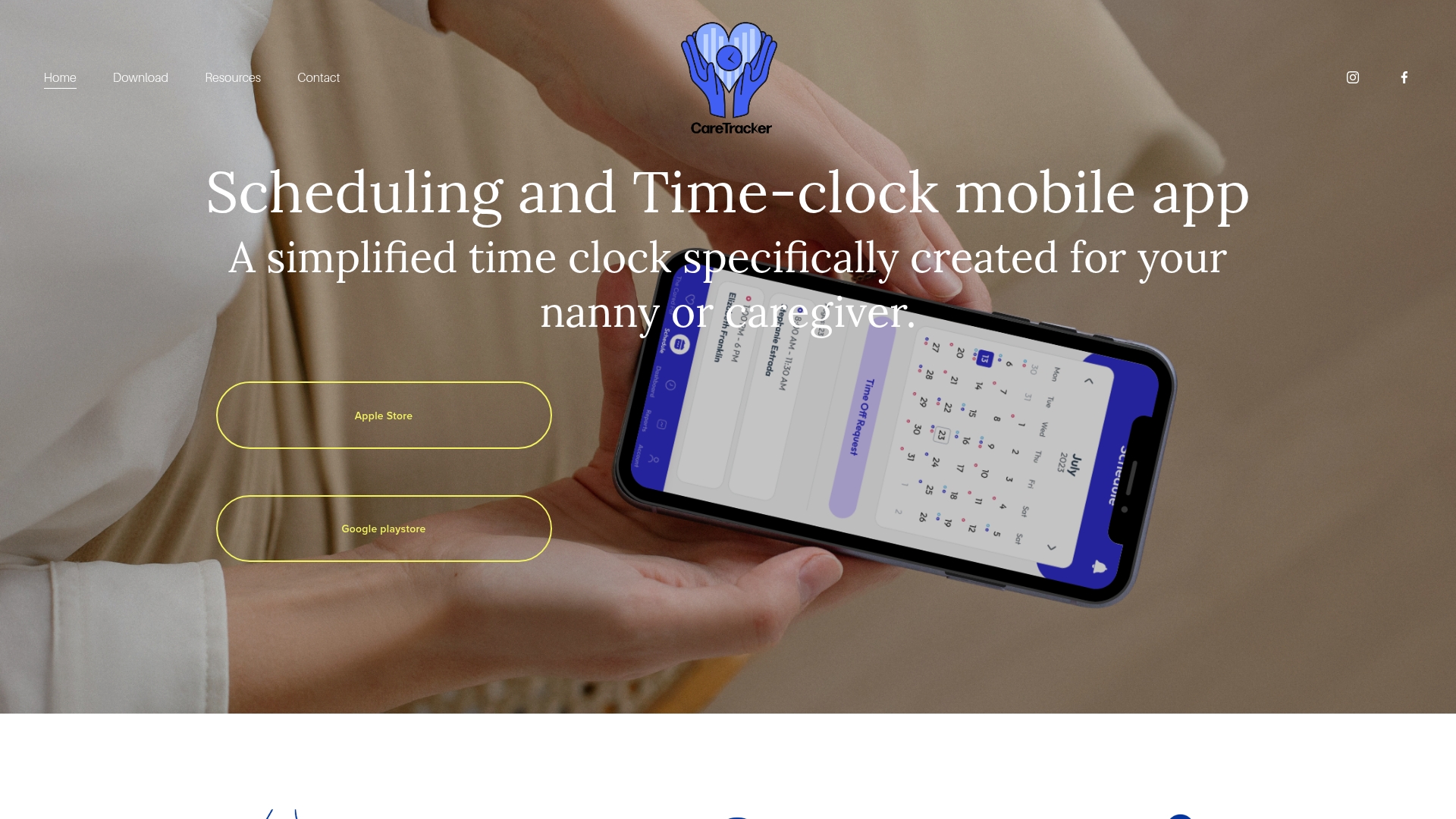
Caregivers use the Thecaretracker app for free to track hours, view every job in one calendar and get care details such as allergies, medications and emergency contacts. Families can start at Thecaretracker.
FAQ
Do nannies have to get a lunch break?
Not under federal law, which has no meal or rest break requirement. Some states do require meal periods, and New Jersey spells them out for domestic workers. If the nanny is not completely free of duties during lunch, the time must be paid.
What states mandate rest breaks?
The Department of Labor's state table lists California, Colorado, Kentucky, Nevada, Oregon and Washington as requiring paid rest periods, generally 10 minutes per four hours. New Jersey has separate rules for domestic workers. Exemptions for certain household roles exist, so check your state labor department for the current rule.
Is a 10-minute break paid?
Yes. Short breaks of about 5 to 20 minutes are counted as hours worked under federal guidance, so they must be paid. This applies whether the break is required by your state or simply offered by your household.
Can a live-in caregiver have unpaid time?
Yes, in some cases. Employer and live-in worker can agree to exclude genuine sleep, meal and off-duty time from hours worked. Anything interrupted by care duties, and any hours beyond the agreement, must be paid.
Sources
- Questions and Answers About the Fair Labor Standards Act (U.S. Department of Labor)
- Breaks and Meal Periods (U.S. Department of Labor)
- Domestic Service Final Rule Frequently Asked Questions (U.S. Department of Labor)
- 29 CFR Part 552, Application of the Fair Labor Standards Act to Domestic Service (eCFR)
- Minimum Paid Rest Period Requirements Under State Law (U.S. Department of Labor)
- California Code of Regulations, Title 8, Section 11150
- Domestic Workers' Bill of Rights for employers (New Jersey Department of Labor)
- Bible verses for caregivers (BibleManna)