
Sometimes, but not automatically. Whether you can legally use GPS to track a nanny, au pair, or home caregiver depends on your state, what device you use, who owns it, and whether the caregiver knows and agrees. Some states carve out exceptions for employers tracking work-related activity. Others broadly prohibit using an electronic device to follow a person's movements without consent. The safest path is the same everywhere: tell the caregiver in writing, track only what you need for the job, and keep a clear record of hours another way.
This guide explains how the rules differ, where tracking a caregiver is different from tracking a care recipient with dementia, what to avoid, and how to get the accuracy you want without surveillance. It is general information, not legal advice. For a specific situation, talk to an employment attorney in your state.
TL;DR
- There is no single U.S. law on tracking caregivers. At least 26 states and the District of Columbia have addressed tracking others without their knowledge, and the rules vary widely.
- Never hide a tracker on or in a caregiver's belongings or vehicle. Secret tracking is the fastest way to turn a household dispute into a legal problem.
- Tracking a person with dementia is a different question from tracking an employee. Florida, for example, ties it to a physician's certification, and privacy rights still apply.
- Most families do not need GPS to verify hours. A clock-in record, a shared calendar, and written agreements solve the real problem.
Table of Contents
- Why families ask this question
- How U.S. law treats electronic tracking
- Tracking a caregiver as an employee
- Tracking a care recipient who may wander
- What about AirTags and other Bluetooth trackers?
- Protect the data you collect
- What you risk if you track without consent
- What most families really need: accurate hours without GPS
- Our perspective: transparency beats surveillance
- Get your household payroll and records in order
- Practical checklist before you track anything
- FAQ
- Sources
Why families ask this question
Most parents and adult children who ask about GPS are not trying to spy. They want to know the caregiver arrived on time, that a child is safe on an outing, or that a parent with memory loss will not wander off. Others worry about hours: they are paying wages and want the numbers to be right.
Those are fair concerns. They are also three separate problems, and the law treats them differently:
- Verifying work hours for an employee you pay.
- Knowing where a child or older adult is during care.
- Locating a person who may wander, such as someone living with dementia.
Mixing them up is where families get into trouble. A tool that makes sense for the second or third problem, such as a wearable locator on a care recipient, may be a poor or even unlawful way to handle the first if it ends up following the caregiver without their knowledge.
How U.S. law treats electronic tracking
There is no federal statute written specifically for household employers tracking a nanny or caregiver. The rules come mostly from the states, and they do not match.
The National Conference of State Legislatures reports that some state laws focus on vehicle tracking, while others more broadly prohibit electronic tracking of people. The same source notes that 11 states and D.C. include tracking prohibitions in their stalking laws. Some statutes include exceptions for employers who track in connection with an employee's work. Others are written around consent, so what matters is whether the person knew and agreed.
What this means in practice:
- A vehicle-only law may not cover everything. Rules about tracking devices on motor vehicles may not reach a tracker dropped into a bag, but that can still run afoul of broader stalking or harassment laws. This is background, not a loophole to rely on.
- Exceptions are narrow. An employer exception, where one exists, typically concerns work-related tracking. It is not a license to follow a caregiver's personal time.
- Your state may be stricter than the one your friend lives in. Advice from a neighbor or a national blog may be wrong for you.
If you are a household employer, check your state statute on electronic tracking devices, and ask an employment attorney before you track anything, especially anything installed on a caregiver's own phone or car.
Tracking a caregiver as an employee
A nanny, au pair, or home health aide is a person with privacy rights who also happens to work in your home. Three principles keep you on safer ground.
Get informed, written consent
Consent is the thread running through nearly every tracking statute. If a caregiver knows about a tracking method, understands what it records and when, and agrees in writing, you have removed the most serious legal risk. If the caregiver refuses, you should not track them. A refusal is a conversation to have, not an obstacle to work around.
Put it in your work agreement. State what is tracked (for example, clock-in and clock-out times), when it is active, who can see it, and how long you keep it.

Limit tracking to work, and to work time
A caregiver's phone or car goes home with them. Location data from a personal device can reveal where they live, worship, see a doctor, or spend a day off. Even with consent to track during work hours, a broad, always-on setting captures far more than you need. Keep any location feature limited to the shift, and do not ask a caregiver to install something on a personal device that runs all day.
Never track in secret
Hidden trackers are the clearest line. Apple's own guidance says its AirTag and compatible Find My accessories should not be used to track people, and that using them to track people without consent is a crime in many countries and regions. Apple's guidance is not a substitute for your state's law, but it shows how seriously manufacturers take the issue. If you are tempted to slip a tracker into a stroller, a bag, or a car, do not. Tracking someone without their knowledge can bring criminal charges, civil claims, or both, and it will end the working relationship and your credibility with it.
Tracking a care recipient who may wander
This is a different situation, and a more sympathetic one. Dementia can make a loved one wander, and families reasonably look at wearable GPS devices or phone location sharing.
The law here is also state-specific. Florida is a useful example because its statute speaks directly to it: a caregiver may use a tracking device for an elderly person or disabled adult if the treating physician certifies it is necessary for the person's safety. Other states may have no equivalent provision, or may approach the topic through general consent and privacy rules.
Whatever your state, a few habits apply:
- Involve the person. Adults keep their privacy rights even when they need help. Where the person can understand, discuss it and get their agreement. Where they cannot, involve whoever holds legal authority to decide for them, such as a healthcare agent, and a physician.
- Do not treat consent as unlimited. Wisconsin's long-term care ombudsman guidance says that when a resident or legal representative agrees to a monitoring device, that consent should not be viewed as blanket authorization to record or monitor all personal activities or private conversations. The guidance is written for long-term care settings, but the principle of proportionate monitoring fits at home too.
- Try less invasive options first. The same Wisconsin program recommends exploring less invasive interventions first and requesting a care conference to discuss whether the device is necessary and what impact it has.
- Do not over-rely on it. The Alzheimer's Association says location-sharing apps and wearable GPS trackers can support safety, but no location system is 100% accurate and tracking is not the same as 24-hour supervision.
Researchers also point out the human cost of over-monitoring. Yang and Kels note that remote surveillance may erode privacy and may be overused as a replacement for human contact. A tracker should add to good care, not stand in for it.
What about AirTags and other Bluetooth trackers?
They are not GPS, and that matters for accuracy and for expectations. MedicAlert explains that AirTag and similar Bluetooth trackers report the tracker's most recent connection to nearby devices and do not provide continuous real-time tracking. MedicAlert advises using them only with the wearer's full consent.
So a Bluetooth tag is a weak safety tool for someone who wanders in an area with few nearby devices, and it carries the same consent problem as any other tracker if used on a person who does not know about it. If wandering is a real risk, talk to the person's physician about options built for it.
Protect the data you collect
Location data is sensitive. If you track anyone, you become responsible for keeping that information safe. The Wisconsin guidance flags unauthorized third-party access to device data or feeds as a significant concern and advises people to research manufacturers' security features and limit who can see tracking information.
The federal government has also treated careless handling of location data as a consumer protection issue. In a 2017 complaint, the FTC alleged that a ride company failed to reasonably secure consumer personal information, including geolocation data. That case involved a company, not a household, but it shows why location data deserves care.
Practical steps:
- Choose devices with strong account security, and turn on every protection offered. Comparing worldwide GPS tracker options and their security features before you buy is worth the time.
- Share location access with as few people as possible.
- Delete history you no longer need.
- Keep caregiver and care recipient information locked down. Our guide to protecting caregiver data walks through account locking and a signed HIPAA form.
What you risk if you track without consent
The exposure comes in several forms, and none is worth it:
- Criminal. Where tracking is written into stalking or harassment statutes, secret tracking can be charged as a crime.
- Civil. A caregiver may bring a privacy claim. Whether it succeeds depends on state law and the facts, which is a question for an attorney.
- Employment. A caregiver who finds a hidden device will likely leave, and may report it.
- Practical. Trust is the foundation of in-home care. Surveillance damages it even when it is legal.
Scholars describe lawmakers as still working through the tension between protecting residents from abuse and respecting their right to personal privacy. If the law is still evolving, the careful choice is the one that is transparent and proportionate.
What most families really need: accurate hours without GPS
If your worry is whether hours are correct, you do not need a map. You need a record both sides trust. Here is a simple approach.
- Agree on the schedule in writing. Include start times, end times, and how changes are requested and approved.
- Use a shared clock-in record. The caregiver logs start and end times themselves, and you can see them. Nobody has to guess.
- Handle changes through requests. Schedule swaps, time off, and reimbursements go through an approval step instead of text threads.
- Review weekly. Compare hours to the agreement before payday, not after a disagreement.
- Keep records. Accurate time records matter for payroll, overtime, and tax compliance. Our guide to caregiver time tracking for families covers meeting DOL and IRS rules in five steps.
This gives you the transparency you wanted from GPS, and the caregiver stays in control of their own data. If you are also weighing tools, our look at nanny payroll services and caregiver app alternatives explains what to look for.
Our perspective: transparency beats surveillance
We build a free app for nannies and caregivers, so we talk with both sides of the relationship. What we hear is consistent. Families do not want to watch their caregiver. They want to feel sure the hours are right and that the person caring for their child or parent has the information they need.
We think the better answer is shared, visible records. When a caregiver sees their own schedule, logs their own hours, and approves requests in the open, there is little left to suspect. Allergies, medications, emergency contacts, nap and nursing schedules, and daily activities sit in one place that the caregiver can reach instantly. That kind of information sharing makes care safer in ways a dot on a map cannot.
We are also clear about what we are not: we are not a legal firm, and nothing here replaces an attorney's advice on your state's tracking laws. Our advice is simple. Ask for consent, track as little as possible, and choose tools that treat the caregiver as a partner. Trust and accurate records go together.
— mercedes
Get your household payroll and records in order
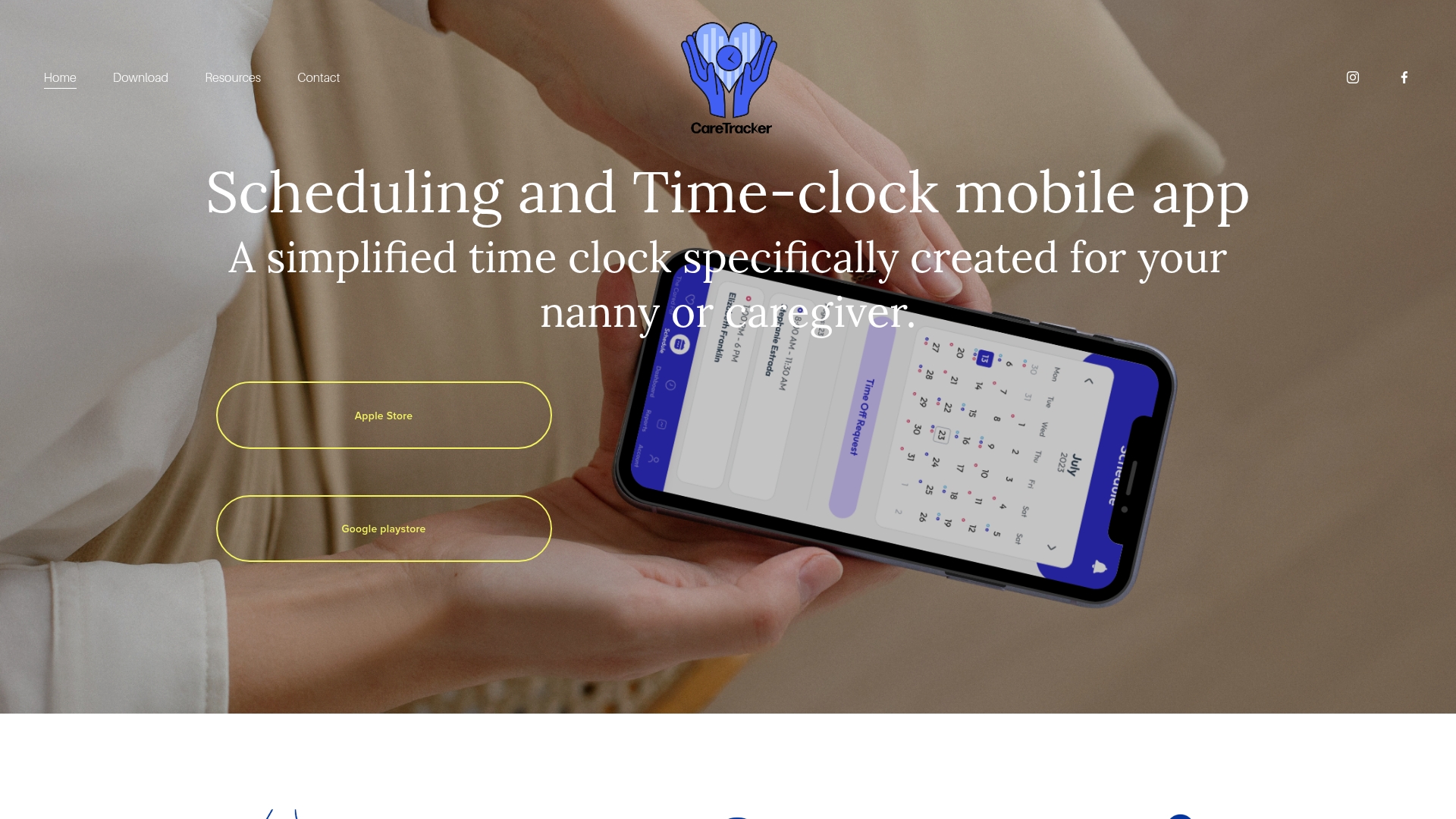
If the real issue behind your GPS question is hours, wages, or compliance, we can help. Caregivers use the CareTracker app for free to track hours, view all their jobs in one calendar, and receive and approve schedule requests. For families, our Standard Payroll Consultation package is a one-time $150, and our Premium consultation is also $150 one-off. For families with past hours to untangle, we offer Prior Wage Reporting and Household Payroll Cleanup Services, which have no published price. See the nanny time tracking page for how it works.
Practical checklist before you track anything
- Look up your state's law on electronic tracking devices, and ask an employment attorney if you plan to track an employee.
- Decide what problem you are solving: hours, safety on outings, or wandering.
- Choose the least invasive method that solves it.
- Get written consent from the caregiver, and from the care recipient or their legal representative where relevant.
- Never place a hidden tracker on a person, a bag, or a personal vehicle.
- Limit tracking to work time and work purposes.
- Secure the data, restrict access, and delete what you do not need.
- For a person with dementia, involve the treating physician and think about a care conference.
Keep the medical side of care organized too. A shared digital care binder and a daily log keep important details in one place for everyone on the care team.
FAQ
Is it illegal to track someone with a GPS?
It can be. Laws differ by state, and at least 26 states and D.C. have addressed tracking others without their knowledge. Tracking someone who has not consented is the highest-risk situation. Ask an attorney in your state before tracking anyone.
Can I use an AirTag to track someone with dementia?
Only with the person's full consent, and it is a poor safety tool. MedicAlert notes that AirTags are not GPS and do not give continuous real-time tracking. Apple also says AirTag should not be used to track people. Talk to the person's physician about options designed for wandering.
Can I require my nanny to share her phone location?
You should not make it a hidden or unlimited requirement. Some states treat tracking as lawful in connection with work, but a personal phone shows far more than work activity. Use written consent, limit it to shifts, or skip it and use a clock-in record instead. An employment attorney can tell you what your state allows.
Is GPS tracking an invasion of privacy?
It can be when it is secret, constant, or broader than needed. Researchers note that remote monitoring may erode privacy. Consent, a clear purpose, and limited access reduce that risk considerably.
What is a better way to verify a caregiver's hours?
Use a shared time record that the caregiver controls and you can review. Pair it with a written schedule and an approval process for changes. It is transparent, and it creates the documentation you need for payroll.
Sources
- Private Use of Location Tracking Devices: State Statutes (NCSL)
- Chapter 934, Section 425, 2025 Florida Statutes
- Use of Electronic Monitoring and Recording Devices (Wisconsin Board on Aging and Long Term Care)
- Technology Safety for Older Adults (Alzheimer's Association)
- Location Tracker IDs (MedicAlert Foundation)
- What to do if you get an alert that an AirTag is with you (Apple Support)
- Ethical Considerations in Electronic Monitoring of the Elderly (JABFM)
- The Current State of U.S. Regulation of Electronic Monitoring to Combat Elder Abuse (Journal of Law, Medicine & Ethics)
- FTC complaint on geolocation data security