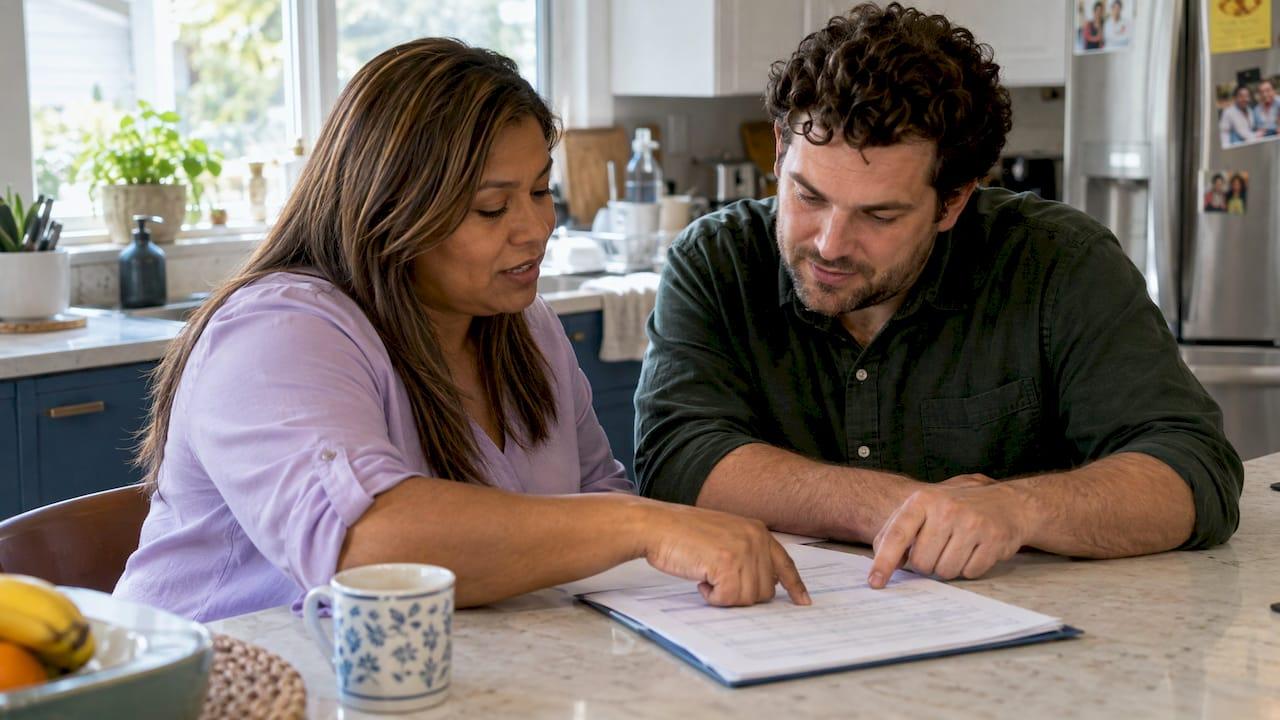
The most reliable way to prevent nanny time theft is not surveillance. It is a written agreement, a daily record of start and stop times that both of you can see, and a quick routine for fixing mismatches. Most hour disputes between families and caregivers come from unclear expectations, not bad intentions. When both sides can see the same numbers, trust goes up and the problem mostly disappears.
This guide is for parents who hire nannies or au pairs and for seniors who hire caregivers. It explains what counts as paid time under U.S. rules, how to set expectations, how to track hours respectfully, what to do when the numbers do not match, and where cameras and monitoring fit.
TL;DR
- Under federal rules, time spent working or "engaged to wait" is paid time, so many suspected cases of time theft are actually normal paid hours.
- Put schedules, breaks, phone use and schedule-change notice in a written work agreement before the first shift.
- Use one shared, accurate record of start, stop and meal times. Any method works if it is accurate and both people can see it.
- When recorded hours differ from the schedule, compare records and talk the same day. Pay for all hours actually worked.
- Check privacy and wiretap rules before using any camera, and never record audio without clear consent.
Table of Contents
- What time theft means in a nanny or caregiver job
- Set clear expectations in writing first
- Track hours accurately and respectfully
- Common situations and how to handle them
- What to do when recorded hours do not match the schedule
- Cameras and monitoring: privacy comes first
- Overtime, records and why accuracy protects you
- Our perspective: transparency beats suspicion
- Put a shared record in place
- FAQ
- Sources
What time theft means in a nanny or caregiver job
In an office, time theft usually means being paid for time not worked: padding a timesheet, clocking in early without working, or leaving early and recording a full shift. In a household the picture is different, because the work is flexible and the home is also a workplace.
The U.S. Department of Labor draws the line this way: the question is whether the worker is working or engaged to wait for work, or completely relieved from duty and free to use the time for their own purposes. That test matters because many moments families call "idle" are paid.
Two examples from the same Department of Labor fact sheet:
- A nanny who must watch over a child even while the child sleeps is on duty, and that time must be paid.
- A worker who reads a book or knits while waiting for the next task is "engaged to wait", and that time is paid too.
So a nanny sitting on the couch during nap time is usually not stealing time. If you are responsible for deciding what counts, the first step is understanding this rule, because it protects you from accusing a good caregiver and from underpaying one.
What real time theft can look like
Genuine problems exist, and a fair approach names them clearly in advance:
- Recording hours that were not worked, such as a full shift on a day the family came home early.
- Regularly arriving late or leaving early while logging the scheduled times.
- Extended personal calls or errands during paid hours that were not agreed to.
- Adding unapproved extra hours, especially near the overtime threshold.
Notice that every item on this list is easier to prevent with a shared record and clear rules than with suspicion.
Set clear expectations in writing first
The strongest prevention happens before anything goes wrong. The National Domestic Workers Alliance recommends that a written agreement with a nanny cover job responsibilities, schedules with work hours and time off, wages and overtime, working conditions, communication, privacy, and length of employment with termination terms.
For hours specifically, add these items:
- Start and end times. State the usual schedule and what counts as a late arrival.
- Schedule changes. The Department of Labor's sample agreement for nannies includes a provision that the employer gives notice of a schedule change or cancellation a set time before the shift. Pick a number that works for your household and write it down.
- Breaks and meals. Say whether the caregiver is fully off duty at a given time. If a break is not truly free of duty, it is paid.
- Personal phone use. Describe what is fine (a quick text, a call about the child) and what is not (long personal calls during active care). Keep it realistic, because rules nobody can follow are rules nobody follows.
- Extra hours. Require approval before any hours beyond the schedule, so overtime is never a surprise on either side.
- Reporting. Agree on how and when hours are recorded and reviewed.
The same NDWA guide suggests regular brief check-ins, weekly or monthly, plus a longer review once or twice a year. A five-minute weekly conversation about the schedule catches most problems while they are still small.
Track hours accurately and respectfully
You do not need special equipment. The Department of Labor's home care guide says families can use any timekeeping method that accurately tracks work time each day, including a calendar recording start, stop and meal times, or a timesheet.
What matters is that the record is:
- Made at the time of the work, not reconstructed on Friday from memory.
- Visible to both people, so nobody is surprised at payday.
- Complete, including late arrivals, early departures, meal breaks and approved extra hours.
The Department of Labor's sample agreement says the employer or the employee records all hours worked and keeps records in line with the Fair Labor Standards Act (FLSA). It also says that any additional time worked in a workweek is paid at the appropriate rate.
Some states go further. Massachusetts requires employers of domestic workers who work 16 or more hours a week to provide a timesheet at least every two weeks, showing hours for each day and signed or acknowledged by both worker and employer. A worker who disagrees can note the hours they believe they worked, and signing does not stop them from later claiming additional wages. Even if you live elsewhere, that model is a good habit: a shared record with room for a note.
If you want a paper option, our nanny timesheet template shows what to record. If you would rather skip the spreadsheet, the Caretracker app lets caregivers track weekly hours, view all their jobs in one calendar and receive and approve schedule requests, free for the caregiver.
Common situations and how to handle them
Most disputes follow a few patterns. This table shows a fair way to approach each one.
| Situation | Is it paid time? | A fair way to handle it |
|---|---|---|
| Child naps, nanny stays in the home | Yes, if the nanny must watch over the child | Agree on what the nanny does during naps and record the time as worked |
| Nanny waits for you to return home | Usually yes, as engaged-to-wait time | Record the actual end time, and confirm late returns in advance when possible |
| You come home early | The shift is what the agreement says about notice | Use the schedule-change notice you agreed on, and put the early end time in writing |
| Quick personal text during care | Part of normal paid time | Set a simple phone expectation instead of deducting minutes |
| Long personal call or errand on the clock | Not an agreed use of paid time | Raise it at a check-in, refer to the written agreement and adjust expectations |
| Hours logged do not match your memory | Pay for hours actually worked | Compare records the same day, then correct the log if needed |
A caution on deductions: do not quietly shorten pay because you believe a caregiver was less busy. Under the DOL rule, time spent on duty is paid, so a deduction based on a guess can create a wage problem for you. Talk first, and for a state-specific question, check your state labor department or speak with a household payroll professional.
What to do when recorded hours do not match the schedule
A mismatch is a normal event, not an accusation. A consistent routine keeps it calm. Here is a simple five-step process.
- Compare the two records. Put the logged hours next to the agreed schedule and your own calendar or notes. Often the cause is a late return, a schedule swap or an approved extra hour that never made it onto the schedule.
- Talk the same day or the next. Ask open questions, such as "I see you logged 6:15 pm on Tuesday, can you walk me through it?" Fresh memories fix most differences quickly.
- Check the agreement. Did you give notice of a change? Was extra time approved? The written agreement settles most questions without an argument.
- Correct the record and pay for the hours actually worked. If the caregiver worked the time, it is owed. If the log was wrong, fix it and note the change so both of you can see it.
- Adjust the process, not just the person. If the same issue keeps happening, tighten the routine: approve extra hours in advance, review the week every Friday or send changes through one place.
If you notice a pattern that stays unresolved after a clear conversation, return to your written expectations and have a follow-up meeting. Keep notes of what you agreed. A pattern of incorrect pay in either direction is something to fix quickly, and our household payroll consultation is designed to help families clean up past records.
Cameras and monitoring: privacy comes first
Many parents wonder whether a nanny cam is the answer. The NDWA advises families to avoid nanny cams unless they are explicitly discussed and agreed with the nanny, noting that respecting privacy builds trust and professionalism. That is the safest foundation: if you use any camera, say so in writing and show the nanny where it is.
The legal picture is also detailed:
- In most states, a video-only camera in shared areas of the home is legal. Audio is where families run into trouble: recording a nanny's conversations can violate federal and state wiretap laws, and a camera in a bathroom or the caregiver's own bedroom can be a crime.
- Federal law (18 U.S.C. 2511) makes it a crime to intentionally intercept an oral communication. The same source says a parent who is not part of the conversation generally cannot consent for the nanny, so the safe path is to turn the microphone off or obtain written consent.
- State rules differ. In Florida, for example, audio-capable cameras require all-party consent, and hidden cameras where a caregiver changes clothes can violate state law.
- In Pennsylvania, the state Supreme Court held in Commonwealth v. Mason (2021) that a recording from a camera in the children's bedroom did not violate that state's Wiretap Act. That is one state's ruling on specific facts, not a general permission.
If you do decide on a camera, read how installers think about cameras in a daycare facility to understand placement and privacy considerations. Then talk to your nanny before anything goes up, and confirm your state's rules with a local attorney.
Note that a camera shows what happens in a room. It does not show when a shift started, whether a schedule change was approved or how many hours were worked in the week. For hours, a shared time record is the better tool.

Overtime, records and why accuracy protects you
Accurate hours are also a legal matter. Under the FLSA, domestic service employees such as nannies, babysitters, housekeepers and home health aides must be paid at least the federal minimum wage for all hours worked and overtime at time and a half for hours over 40 in a workweek. There are narrow exemptions, including for casual babysitters and certain companionship services, and for overtime for live-in domestic workers. State rules can be stricter, so check yours.
A few points worth knowing:
- The Department of Labor's home care guide lists the basic records employers keep: name, Social Security number, address, hours worked each day, total weekly hours and cash wages paid. Payroll records are kept at least three years, and time cards at least two years.
- For live-in workers, the employer and employee can agree on meal, sleep and other off-duty time. The employer keeps a copy of that agreement and accurate records of time actually worked to confirm it matches.
- State rules differ widely. New York sets overtime after 40 hours for live-out staff and 44 for live-in staff, while California distinguishes personal attendants from other household employees, according to one summary. Our nanny overtime by state guide goes through the details.
- An insurer's household employment guide notes that unpaid overtime is a popular claim from former employees, which is why tracking hours deserves special attention.
Overtime is where small timekeeping errors cost the most. Catching 40 hours early lets you adjust the schedule before extra pay surprises anyone, and our guide to overtime alerts for nannies explains how. Once hours are accurate, you can estimate paychecks too, and a walkthrough of net salary calculation steps shows how gross pay becomes take-home pay. For a wider look at the rules, read our caregiver time tracking guide.
Our perspective: transparency beats suspicion
We built Caretracker around one belief: when hours are visible to everyone, the question of time theft rarely comes up.
Most families who worry about hours are not dealing with dishonest caregivers. They are dealing with a schedule that lives in text messages, a memory of who said what, and no shared record. A caregiver who has to defend their hours from memory feels distrusted, and a parent who has to guess feels anxious. Neither is a good way to run a household that depends on trust.
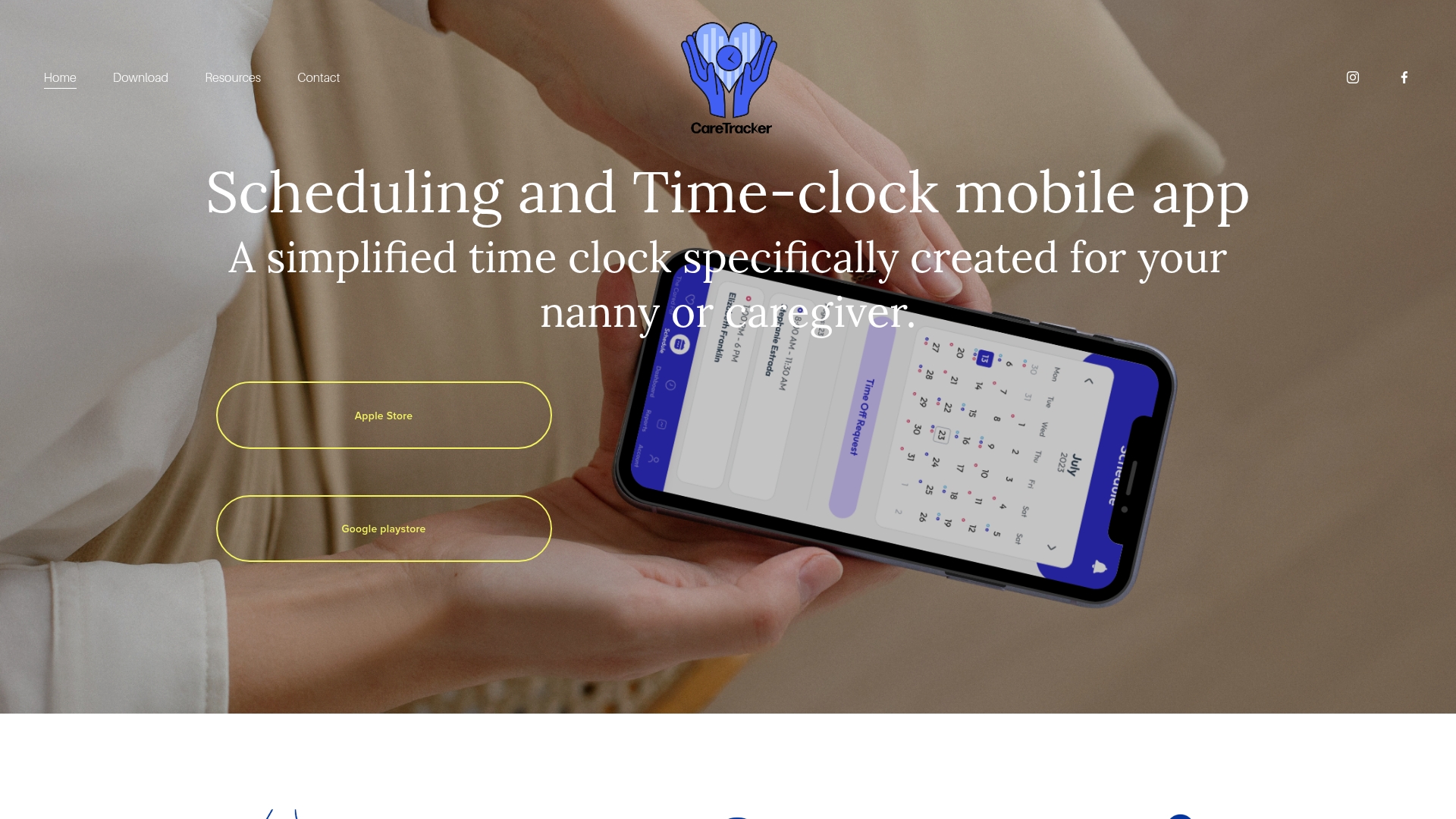
That is why our app is free for caregivers. They can see their jobs in one calendar, track weekly hours, receive and approve schedule requests, and see care details like allergies, medications, emergency contacts and nap schedules in the same place. Families get the same clear record, so a question about a Tuesday shift becomes a quick look at the log instead of an argument.
Our app also supports state-specific pay period and overtime tracking, and time-off and reimbursement requests, so the routine pieces of the job are written down when they happen. We designed it to simplify the process for both sides and give everyone peace of mind.
mercedes
Put a shared record in place
If you are ready to replace guesswork with an accurate record, start with the Caretracker app. It is free for nannies and caregivers, and it lets you manage schedule requests and see hours in one place.
If your records are already messy, or you are unsure how overtime, pay periods or past wages should be handled, we offer one-time payroll help for household employers. The Standard Payroll Consultation package is $150 one-off, and the Premium consultation is also $150 one-off. For back wage questions, our Prior Wage Reporting & Household Payroll Cleanup Services are described on the same page.
FAQ
Is it time theft if my nanny rests while the baby naps?
Usually not. The Department of Labor says a nanny who must watch over a child while the child sleeps is on duty and must be paid for that time. If you want specific tasks done during naps, write them into the agreement.
Can I deduct pay if I think my nanny wasted time?
It is risky to deduct based on a hunch. Time spent working or engaged to wait is paid under federal rules. Raise the concern at a check-in, point to your written agreement and keep a clear record. For a specific state question, contact your state labor department or a household payroll professional.
Is it legal to record my nanny with a camera?
In most states, video-only cameras in shared areas are legal, but audio recording can violate wiretap laws and cameras in bathrooms or bedrooms can be a crime. Rules vary by state, so confirm yours with an attorney. The NDWA recommends discussing any camera openly with your nanny first.
What is the best way to track a nanny's hours?
Any method that accurately records start, stop and meal times each day works, according to the Department of Labor. A shared calendar, a timesheet or an app all qualify. Choose one that both of you can see so there are no surprises on payday.
How long should I keep my nanny's time records?
The Department of Labor's home care guide says payroll records should be kept at least three years and time cards at least two years. Some states have their own rules, so check with your state labor department.
Sources
- Fact Sheet #79D: Hours Worked Applicable to Domestic Service Employees (U.S. Department of Labor)
- Employment Sample Agreement for Nannies (U.S. Department of Labor)
- Paying Minimum Wage and Overtime to Home Care Workers (U.S. Department of Labor)
- Home Care Guide: records and overtime (advancingstates.org)
- Nanny Employment Guide (National Domestic Workers Alliance)
- Domestic workers (Mass.gov)
- Nanny Cam Laws (Recording Law)
- Florida Security Camera Laws (Recording Law)
- Pennsylvania Surveillance Camera Laws (Recording Law)
- Nanny & Household Employment Agreement Template (Captain Legal)
- Overview for Families: Household and Domestic Employees (Chubb)
- Secure daycare facility with cameras
- Net salary calculation for U.S. paychecks