
On your first day, collect and record essential must-haves: emergency contacts, allergies and medications with instructions and consent, the exact daily schedule, start and end times with pay terms, the location of first-aid and emergency supplies, and your agreed communication method. Store all of it in one place, a free app or a printed care card, and confirm it with the family before you take over any care duties.
TL;DR:
- Emergency contacts, allergy details, medications, schedules, and first-aid locations must be collected, confirmed, and stored in a quick-access format before starting care.
- Accurate, real-time documentation of clock-in, clock-out, breaks, and reimbursable expenses is essential for payroll and dispute prevention under IRS rules.
- Hands-on verification of safety supplies, emergency plans, medication storage, and household rules is critical for effective emergency response preparation.
- Establish clear communication channels and daily routines with the family, including preferred update formats and incident reporting procedures.
- Using a caregiver app like The Care Tracker helps organize profiles, schedules, and logs, providing a clean, dispute-proof record for IRS compliance and family transparency.
- ✓Receive and approve schedule requests
- ✓View jobs in one calendar
- ✓Track weekly hours accurately
- ✓Access allergies and medications
Table of Contents
- Immediate Must-Knows to Collect and Confirm
- Documentation to Gather, Keep, and Share
- Track Hours, Breaks, and Pay Correctly
- Health, Safety, and Emergency Procedures to Confirm
- Set Up Daily Communication and Routines With the Family
- Tools and Quick Setup for Time Tracking and Care Profiles
- Why This Checklist Exists and How to Use It
- Building Rapport and Setting Expectations Early
- Developmental Milestones Worth Noting at the Start
- Household Rules and Cultural Norms That Shape Care
- Special Needs and Accommodations Beyond Medical Care
- Clarifying Your Role Versus Other Household Staff
- Why I Treat This Checklist as Non-Negotiable
- Get Set Up With The Care Tracker Before Your Next Shift
- FAQ
- Sources
Immediate Must-Knows to Collect and Confirm
The first 10 to 20 minutes on a new job set the tone for everything that follows. Before you pick up a bottle or buckle a car seat, get these details in writing or saved somewhere you can reach fast.
- Emergency contacts, pediatrician information, and the names of anyone authorized for pickup.
- A clear answer on who to call for a scraped knee versus who to call for a real emergency.
- Allergies, the signs of a reaction, where the EpiPen lives, and a written allergy action plan.
- Exact medication instructions: who gets what, what dose, what time, where it is stored, and how you log each dose.
- Feeding and nap schedules, the sleep location, and safe-sleep rules for anyone under one year.
- Home access codes or keys, the evacuation route, the outdoor meeting spot, and where the first-aid kit and fire extinguisher are kept.
Childcare lists these same categories: medication administration, allergic-reaction response, emergency preparedness, and illness procedures as core health-and-safety topics that licensed caregivers are trained to track. A nanny working in a private home does not have a supervisor checking these boxes, so you are the one who has to ask.
Pro Tip: Take a phone photo of the allergy plan and medication labels on day one. A photo is faster to pull up in a panic than a memory.
Documentation to Gather, Keep, and Share
A few documents protect both you and the family, and gathering them early avoids confusion later.
- Get a copy or clear confirmation of work-eligibility paperwork the employer handles on their end, a signed care agreement or written job summary, written medication consent, and emergency treatment authorization.
- Keep your own signed timesheets, expense receipts, and short contemporaneous notes for each shift in a folder or app you control.
- Store anything with a child's medical or personal details somewhere password-protected, and never leave printed copies where visitors can see them.
- Understand that exact clock-in and clock-out times aren't just for your records. They connect directly to household payroll obligations under IRS Publication 926, which governs how families report wages for household employees.
- If an employer asks you not to keep your own time or pay records, treat that as a warning sign. You're entitled to document your own hours, and a reasonable employer will not object.
Track Hours, Breaks, and Pay Correctly
Accurate, same-day records protect you if a pay dispute ever comes up, and they give the family what they need for tax filing.
- Clock-in and clock-out time for every shift, noted the moment it happens.
- Unpaid breaks, logged separately from worked time.
- Mileage or other reimbursable expenses, with a one-line note of what each was for.
- Any correction to a previous entry, with the reason written next to it.
- A simple sign-off method, a text reply or an app approval, so the employer confirms the hours match their memory.
IRS Publication 926 treats household employment as something that depends on contemporaneous records, not recollection weeks later. A one-line entry like "Monday 8:02 AM to 5:47 PM, 30-min unpaid lunch" is far more useful in a dispute than a vague monthly estimate. Build the habit of logging the instant you arrive and the instant you leave, then ask for a quick confirmation before the week ends.
Health, Safety, and Emergency Procedures to Confirm
Reading a policy is not the same as being ready to act on it. Ask to see the actual supplies and walk through at least one scenario before you're on your own with a child.
- Confirm whether an adult on-site is trained in pediatric first aid and CPR, and ask where any certificates are kept.
- Check medication labels against the right child, confirm storage location, and ask how doses get logged.
- Confirm the safe-sleep setup for any infant in your care and ask about the household's illness or isolation policy.
- Ask to see the written emergency plan, then walk the evacuation route and locate the outdoor meeting spot yourself.
ChildCare.gov's full checklist recommends exactly this kind of hands-on review rather than a quick read-through, and a partner guide to infant choking response lays out the five steps in a format worth bookmarking before your first shift.
Pro Tip: Ask the family to physically show you the first-aid kit and the fire extinguisher. If you can't find them in under a minute during a calm moment, you won't find them fast during an emergency.

Set Up Daily Communication and Routines With the Family
A clear agreement on how and when you'll talk prevents small misunderstandings from turning into bigger ones.
- Agree on what a daily update looks like: a photo with a one-line summary, an end-of-day note, or a log inside an app.
- Decide which channel you'll use, text, email, or app message, and what hours are fair game for non-urgent questions.
- Write down behavior and discipline preferences, screen-time limits, visitor policies, and anything that varies by day of the week.
- Agree on how incidents get reported and who the designated point of contact is if the primary parent is unreachable.
Getting this in writing on day one, even informally, saves both sides from guessing later.
Tools and Quick Setup for Time Tracking and Care Profiles
Writing everything on paper works for a shift or two, but a dedicated caregiver app keeps the checklist accessible and time-stamped automatically. An app like The Care Tracker can store allergies, medications, emergency contacts, nap and nursing schedules, and daily activity notes in one profile, and caregiver accounts may cost nothing to use.
Quick setup takes a few minutes:
- Create a care profile for the child or children you're working with.
- Enter emergency contacts and medication details before your first paid minute.
- Turn on time tracking at the start of your first shift so clock-in and clock-out are automatic.
- Set sharing permissions so the family can see schedule and care updates without you repeating yourself by text.
A reminder worth keeping in view: time-stamped digital records double as the kind of contemporaneous evidence IRS Publication 926 points to for household payroll recordkeeping. Keep a printed backup of your first week's hours just in case your phone dies on day one.
Why This Checklist Exists and How to Use It
A nanny orientation checklist is not paperwork for its own sake. It's a filter that separates the handful of things you truly cannot start work without from the dozens of smaller details you'll pick up naturally over the first week. Used well, it turns a chaotic first morning into a short, specific conversation with the parent: here is what I need before you walk out the door.
The most effective way to use it is sequentially, not all at once. Emergency and medical information comes first, because that's the information you'd need in the first five minutes if something went wrong. Schedule and pay terms come second, because those shape your whole day. Everything else, household rules, developmental notes, communication style, fills in over the following days as you settle in.

Treat the checklist as a living document rather than a one-time form. Children's medication changes, schedules shift with the school year, and new allergies surface. Revisit the key sections every few weeks, especially after any change in the child's health or routine, and update whatever record you're keeping, whether that's a printed card or a profile inside an app.
Building Rapport and Setting Expectations Early
The working relationship between a nanny and a family runs smoother when expectations are spoken out loud instead of assumed. A short, honest conversation in the first hour, covering how you communicate, how you want feedback, and what a typical day looks like, prevents a lot of friction later.
Ask directly what matters most to the parents: consistency in routine, specific discipline approaches, or simply peace of mind that someone capable is in charge. In turn, tell them clearly how you prefer feedback, whether that's a quick text midday or a conversation at pickup. Nannies who ask these questions early tend to build trust faster than those who wait for problems to surface first.
Setting expectations also means being upfront about your own limits. If a task falls outside what you agreed to, such as heavy housecleaning unrelated to childcare, say so early rather than letting resentment build. A family that understands your role clearly from day one is far less likely to expand it without discussion later.
Developmental Milestones Worth Noting at the Start
Knowing roughly where a child stands developmentally helps you set age-appropriate expectations for behavior, activities, and supervision from the very first day. A toddler just learning to climb needs a different kind of watchfulness than a school-age child who can follow multi-step instructions.
Ask the parents directly about recent milestones: is the baby rolling but not yet crawling, is the toddler saying single words or full sentences, is the preschooler potty-trained or still in diapers during the day. These details shape your supervision level and the activities you plan.
Also ask about anything atypical in the child's development that the family is tracking with a pediatrician. You don't need a clinical understanding, just enough context to know what's expected and what would be worth mentioning if you noticed something different.
Household Rules and Cultural Norms That Shape Care
Every household runs on its own set of unwritten rules, and learning them early prevents awkward missteps. Ask about shoes on or off indoors, screen-time limits, food restrictions beyond allergies, and whether there are religious or cultural practices that shape meals, holidays, or daily routines.
Language matters too. If the family speaks a language other than English at home, ask whether they want you reinforcing it with the children or whether English-only interaction is preferred during your hours. Clarify any customs around greetings, discipline, or gender-specific caregiving expectations that differ from what you're used to.
None of this needs to be confrontational. A simple "is there anything about how your family does things that I should know before we start" usually opens the door to everything that matters.
Special Needs and Accommodations Beyond Medical Care
Medical needs get documented through allergies and medication instructions, but accommodations often extend further. A child with sensory sensitivities might need a quiet transition before meals. A child with a learning difference might need instructions broken into smaller steps. A child in speech therapy might use specific communication tools or signs at home.
Ask the family directly whether any accommodation plans exist, whether through a school, a therapist, or an early intervention program, and whether there are specific strategies they want you to use consistently. Consistency across caregivers tends to matter more for these accommodations than it does for typical routines, since mixed signals can undo progress made elsewhere.
If equipment is involved, such as a specific feeding tool, a hearing device, or mobility support, ask for a hands-on demonstration rather than relying on a verbal description alone.
Clarifying Your Role Versus Other Household Staff
In homes with multiple staff members, a housekeeper, a part-time chef, or another caregiver, unclear boundaries create friction fast. Ask directly what falls under your role and what doesn't. Your responsibility is the children's care: feeding, activities, safety, and routine. Tasks like general house cleaning, laundry unrelated to the children, or meal prep for adults typically belong to someone else, unless your agreement says otherwise.
If you share caregiving duties with another nanny or a part-time sitter, clarify who handles which days, how handoffs work, and how you'll coordinate on things like medication logs or schedule changes so nothing falls through the cracks between shifts.
Getting this sorted on day one avoids the slow scope creep that leaves many nannies doing far more than their original job description, with no corresponding change in pay or hours.
Why I Treat This Checklist as Non-Negotiable
Emergency details and time-stamped records are the two things that cause the most stress when they're missing, not when things go wrong, but in the hours right before, when you're guessing. Enter the essentials before your first paid minute, every time, no exceptions. We cover related hiring and compliance topics regularly on the Care Tracker blog for readers who want to go deeper.
— mercedes
Get Set Up With The Care Tracker Before Your Next Shift
We built our app so this entire checklist lives in one place instead of scattered across texts and sticky notes.
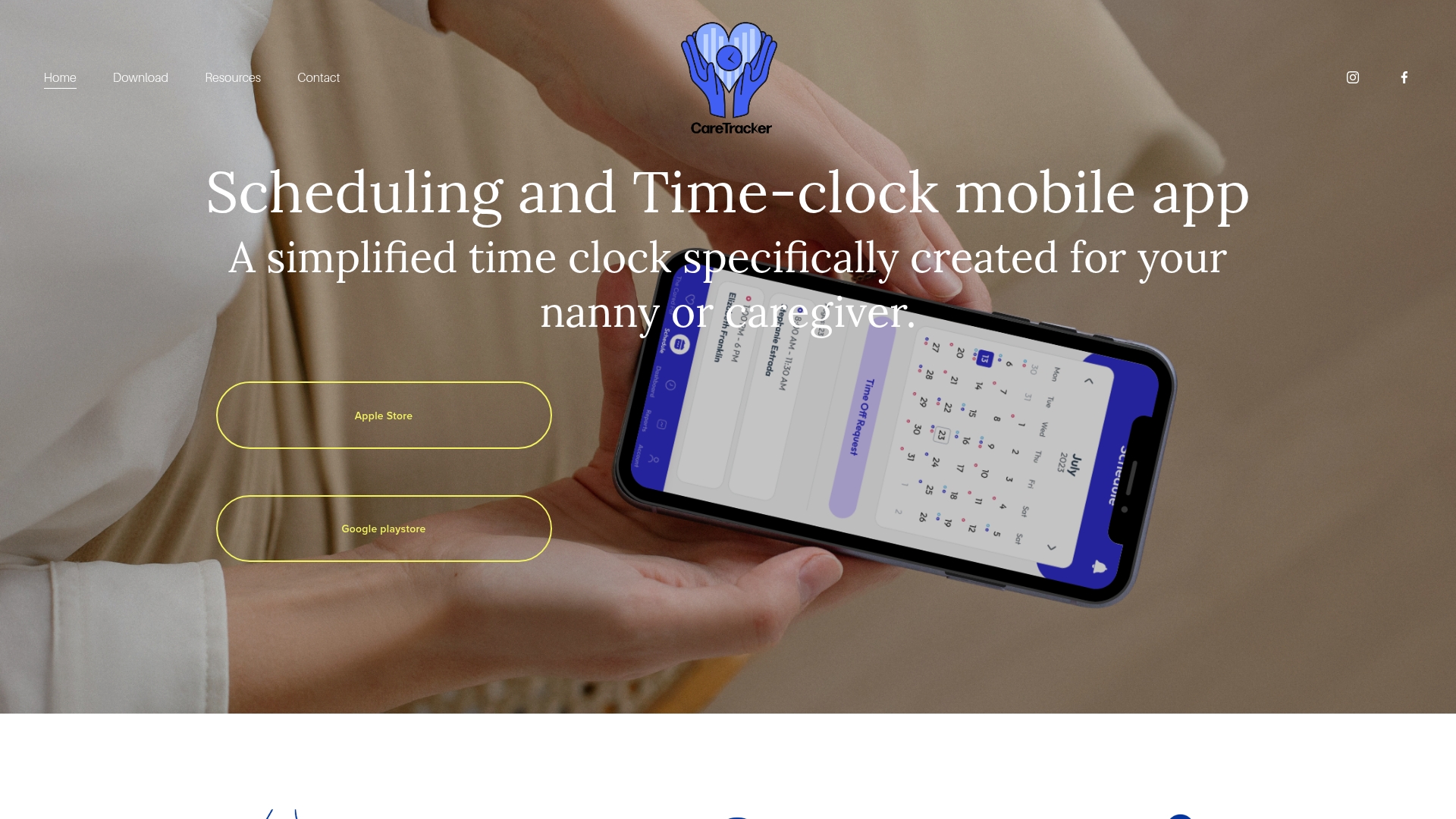
- Emergency contacts, allergies, and medication instructions saved in a care profile you can pull up in seconds.
- Nap and feeding schedules stored alongside daily activity notes the family can see too.
- Time tracking that starts with your first shift and exports into a clean, dispute-proof report.
Creating a caregiver profile costs nothing, and we'd rather you enter your first week's hours there than lose them to a forgotten text thread. Set up your profile and start tracking your very next shift with Nanny Time Tracking.
FAQ
What should a nanny collect on the first day of a new job?
Prioritize emergency contacts, allergy and medication details with written instructions, the exact daily schedule, pay terms, and the location of first-aid supplies. Record all of it in one place, whether that's a printed card or a free app, and confirm the details with the family before you begin unsupervised care.
How should a nanny track hours for household payroll purposes?
Log clock-in and clock-out times the moment they happen, along with unpaid breaks and any reimbursable expenses, rather than relying on memory at the end of the week. Contemporaneous records support household payroll determinations under IRS Publication 926.
What documents does a nanny need before starting a new placement?
A signed care agreement or written job summary, documented medication consent, and emergency treatment authorization are the core items to confirm, alongside whatever work-eligibility paperwork the employer handles. Keeping your own copies of signed timesheets protects you if questions come up later.
Does The Care Tracker app cost anything for nannies?
No. Caregiver accounts on The Care Tracker are free, and the app stores care profiles, emergency contacts, medication instructions, and schedules while tracking hours automatically.
What safety items should a nanny verify in person rather than just read about?
Ask to physically see the first-aid kit, the fire extinguisher, and the evacuation route rather than taking a verbal description at face value. ChildCare.gov's health and safety guidance recommends this kind of hands-on verification over a quick read-through of policies.