
Prepare seven question categories, bring proof of your skills with current certifications, and practice STAR-style examples out loud. That combination is what actually wins nanny interviews, more than any single "perfect" answer. Families ask about your background, your childcare philosophy, tricky scenarios, your schedule, your strengths and weaknesses, your references, and they expect you to ask questions back.
Use one method for every answer: state the situation, your action, and the result, in under 90 seconds. Two things build instant credibility while you talk: a current CPR/First Aid certification and a one-page sample schedule or portfolio link you can reference.
- Background and experience
- Childcare philosophy and discipline
- Scenario-based questions (injuries, tantrums, conflicts)
- Schedule and availability
- Strengths and weaknesses
- References and verification
- Questions you ask the family
Pro Tip: Rehearse your answers out loud, not just in your head. Hearing yourself catch a rambling sentence is the fastest way to tighten it before the real interview.
Key Takeaways
Nannies who prepare STAR-style examples across seven core question categories and bring outcome-focused proof consistently outperform candidates who rely on memorized scripts.
| Point | Details |
|---|---|
| Use one answer method | Structure every response with STAR: situation, action, result, in under 90 seconds. |
| Prepare for scenario questions | Practice injury, tantrum, and conflicting-rules scripts using a safety-first, then-communicate structure. |
| Bring outcome-focused proof | Pack a one-page schedule, CPR/First Aid certification, and two or three specific reference quotes. |
| Time your compensation questions | Ask about routine and parenting style first, and save pay specifics for a follow-up conversation. |
| Show organization digitally | Use a free tool like The Care Tracker to share a care profile, sample schedule, and hours log with families. |
Table of Contents
- Common Nanny Interview Questions and What Families Are Really Asking
- How to Structure Every Answer So It Sticks
- Smart Questions to Ask the Family During Your Interview
- What to Bring: Portfolio Items That Actually Convince Families
- Handling Scenario-Based and Tricky Interview Questions
- Showing Organization Through Schedules, Timesheets, and Tools
- Your Pre-Interview Practice Checklist
- A Note From Mercedes
- Turning Interview Prep Into a Lasting System With The Care Tracker
- Helpful Resources for Nanny Interview Prep
- Frequently Asked Questions
- Sources
Common Nanny Interview Questions and What Families Are Really Asking
Every question in a nanny interview is really asking one of three things: can you keep my kids safe, will you fit our family, and can you communicate when something goes wrong. Understanding that intent matters more than memorizing scripted lines, according to nanny-coaching guidance from Seaside Nannies, which stresses authenticity and concrete examples over rehearsed phrases.
- "Tell me about your experience." Lead with years and age ranges, then one specific accomplishment. Skip the full job history. Example: "I've cared for infants and toddlers for four years, and last year I helped a 2 year old transition from two naps to one without a single meltdown week."
- "What's your childcare philosophy?" Frame discipline around redirection and consistency, not punishment. Example: "I use positive redirection first, and I always follow the family's house rules on screen time and consequences."
- "What's your availability?" State your hours clearly, then show flexibility. Example: "I'm available Monday through Friday, 7 AM to 6 PM, and I can occasionally cover an evening with 48 hours' notice."
- "Can you provide references?" Offer two or three names with context, not a long list. Example: "I have three families who'll speak to my reliability and how I handled their kids' allergies."
How to Structure Every Answer So It Sticks
The STAR method (Situation, Task, Action, Result) turns a vague memory into a story a family can actually evaluate. For quick rapid-fire questions, use a 30-second version: one sentence of context, one sentence of what you did, one sentence of the outcome.
- Newborn care: "I cared for a newborn through the fourth trimester, tracked feeding and sleep windows, and helped the parents establish a consistent bedtime routine by week six."
- Public tantrum: "My charge melted down at a grocery store. I got down to her eye level, acknowledged her frustration, and offered two calm choices. She calmed down within a minute, and I texted the parents a quick update afterward."
- Multiple children, competing needs: "With a toddler and a school-age kid, I run parallel activities: quiet independent play for the older one while I do hands-on time with the toddler, then we swap."
Scenario answers that open with "I ensured safety, notified the parents, and followed up with a plan" reassure families faster than a long, technical explanation of what happened.
Keep every answer child-focused and outcome-focused. Cut anything that centers on you rather than the kids' well-being.
Smart Questions to Ask the Family During Your Interview
Interviews run both directions. Asking sharp questions signals professionalism and helps you avoid a bad fit before you accept the job.
- Daily routine: Ask about meal times, nap windows, and screen time rules first. This tells you more about day-to-day compatibility than anything else.
- Parenting style and discipline: Ask how they handle tantrums or rule breaking so your approach lines up with theirs.
- Logistics: Ask about backup care, holiday schedules, and how last-minute changes get communicated.
- Health and safety: Ask about allergies, medications, and emergency contacts, and how they prefer you document incidents.
- Pay and benefits: Save compensation details for a follow-up conversation after establishing fit and routine. Care recommends prioritizing routine and fit questions first, then circling back to compensation.
- Communication: Ask how often they want updates and through what channel.
What to Bring: Portfolio Items That Actually Convince Families
A focused, one-page portfolio outperforms a thick binder every time. Bring a printed page plus a digital link families can revisit later.
- Current CPR/First Aid certification card or copy
- A sample daily schedule showing nap windows, meals, and learning activities
- Two or three reference quotes, ideally outcome-focused rather than generic
- Photo-free activity examples (a craft, a lesson plan, a sensory bin setup)
- A short list of certifications relevant to the role (infant care, special needs training)
Frame portfolio entries around results, not tasks. "Helped a 3 year old sleep through the night within two weeks" lands harder than "provided bedtime care." Guidance on building a nanny portfolio notes this outcome framing is what shifts perceived value and supports stronger pay negotiations.
Pro Tip: Keep your printed portfolio to one page. Families remember one strong page far better than five scattered ones.
Handling Scenario-Based and Tricky Interview Questions
Families lean on scenario questions to see how you think under pressure, not just what you know. Practical guidance from Adventure Nannies recommends a calm, process-based structure: immediate care, notify the parents, then document and follow up.
- Injury script: "I'd assess the injury, apply first aid if needed, call the parents immediately, and write up what happened once the child was calm and safe."
- Public tantrum script: Stay low-key, offer choices, and avoid escalating in front of strangers.
- Conflicting parenting rules: "I'd follow the house rules as given, and if I saw something concerning, I'd raise it privately with the parents rather than improvising."
Watch for red flags on the family's side, too. Evasive answers about why a previous nanny left, discomfort discussing pay at all, or expectations that sound unrealistic for the hours offered are all worth a follow-up question before you accept.
Showing Organization Through Schedules, Timesheets, and Tools
Say your availability plainly: "I'm available 40 hours a week, Monday through Friday, and I'd like overtime discussed in advance." Clear boundaries read as professionalism, not inflexibility.
Bring up pay after routine and fit are established, and anchor your number to local rates and your experience rather than apologizing for it.
- Share a sample schedule or timesheet template to show how you structure a day
- Use a shareable nanny schedule template so families can see transitions, nap windows, and activities at a glance
- A free tool like The Care Tracker lets caregivers build a care profile, log hours, and share schedule details, which gives families a concrete look at how organized you already are
Your Pre-Interview Practice Checklist
Run through this the night before, not the morning of.
- Print your portfolio page and confirm your digital link works
- Pack certifications, a photo ID, and two reference contacts
- Plan your travel route with 15 minutes of buffer
- Charge your phone and silence notifications before you walk in
- Practice these seven prompts aloud, timing each to 30 to 90 seconds: your experience, your philosophy, a tantrum scenario, an injury scenario, your availability, your biggest weakness, and one question you'll ask them
- Run a mock interview with a friend and note where you rambled
- Trim any answer that runs past 90 seconds
A Note From Mercedes
Families remember the nanny who showed up with a real schedule, not the one who talked the longest. Print a one-page sample day with transitions, nap windows, and one learning activity. It says more about your competence than any answer you could give. Practice your STAR answers until they feel like conversation, not recitation. Fit matters as much as skill, so ask your questions with the same confidence you bring to theirs.
Turning Interview Prep Into a Lasting System With The Care Tracker
Landing the job is only step one. The Care Tracker is the free tool that carries your interview prep straight into the job itself, so the schedule and certifications you brought to the interview become the system you actually run on. It's built specifically for nannies and caregivers, with no cost to you.
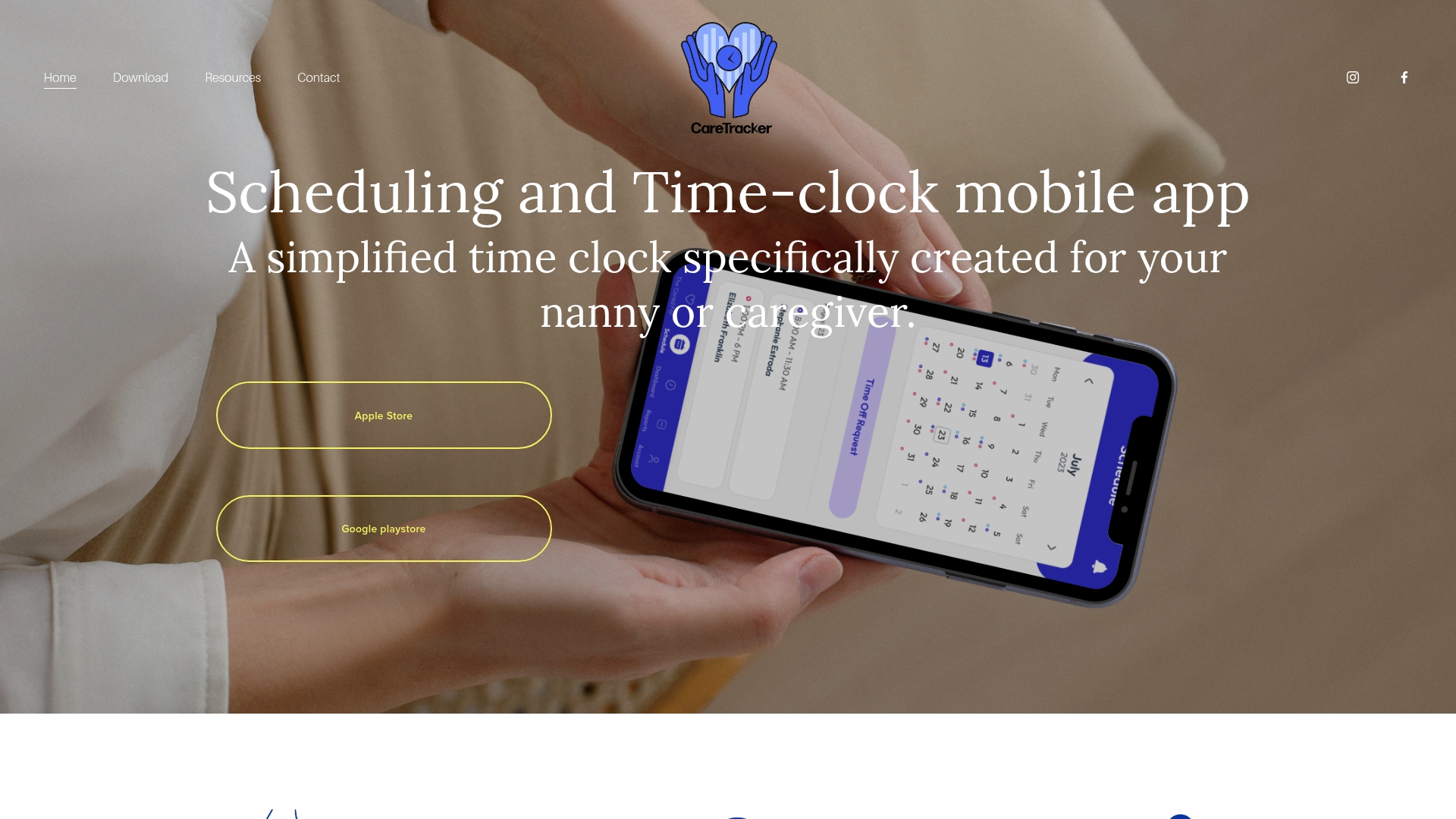
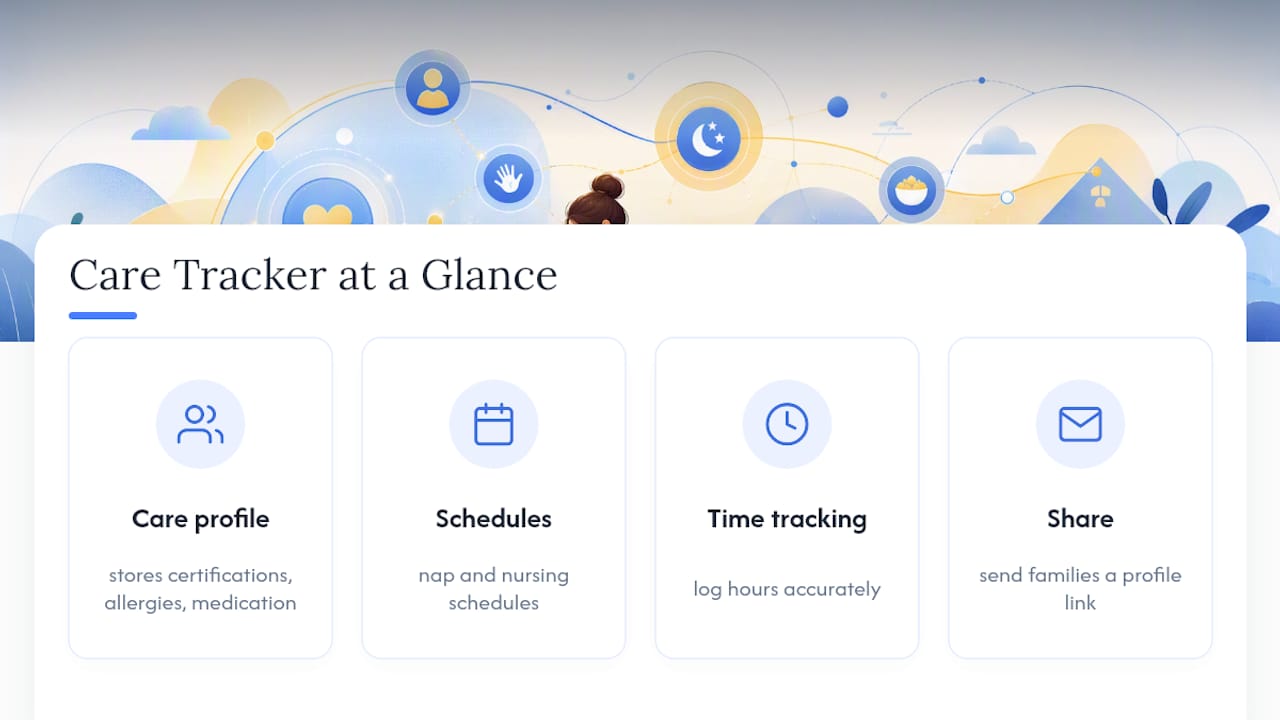
Inside the app, you can build a shareable care profile that stores your certifications, allergies and medication details for the kids in your care, emergency contacts, and nap or nursing schedules in one place. You can track your hours accurately instead of relying on a notebook, and you can share a sample schedule the same way you presented it in the interview. A simple follow-up move: after your interview, send the family a link to your care profile so they can see exactly how you'll organize their child's day before you've even started.
Explore what the full app offers caregivers, then set up your free profile and bring the same organization that impressed them in the interview into your first week on the job.
Helpful Resources for Nanny Interview Prep
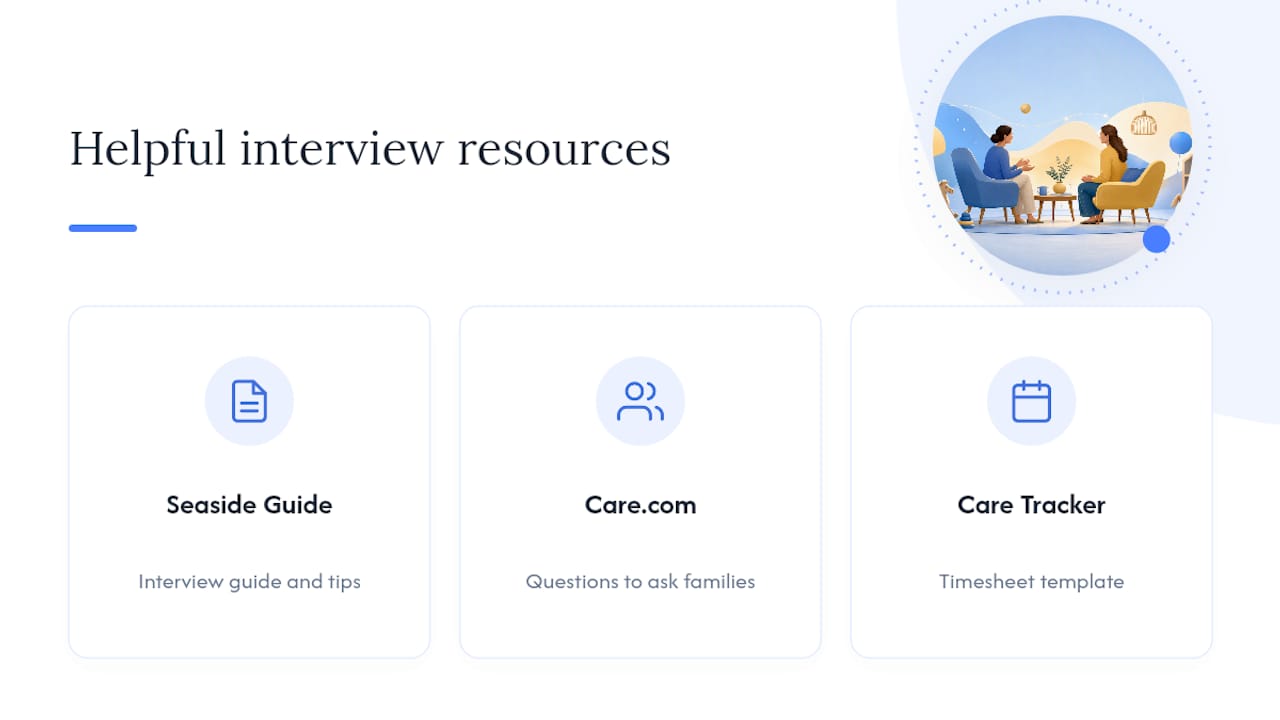
For deeper reading, see Seaside Nannies' interview guide, Care.com's questions to ask, and The Care Tracker's timesheet template.
Frequently Asked Questions
What are the most common nanny interview questions? Expect questions about your experience, childcare philosophy, availability, strengths and weaknesses, and how you'd handle scenarios like injuries or tantrums. Most families also ask for references.
How should I answer nanny interview questions about weaknesses? Name a real, minor weakness and pair it with how you manage it. Example: "I used to overplan activities, so now I build in flex time for the kids' moods."
What questions should I ask during a nanny interview? Ask about daily routine, discipline style, backup care logistics, and communication preferences first. Save detailed pay negotiations for a follow-up conversation once both sides show interest.
Should I bring documents to a nanny interview? Yes. Bring your CPR/First Aid certification, a one-page sample schedule, and two or three reference contacts. A digital portfolio link adds a professional touch without cluttering your printed materials.
How do I answer tricky scenario-based nanny interview questions? Use a calm, three-step structure: immediate safety action, notify the parents, then document and follow up with a plan. This shows composure without over-explaining.
Sources
- Common Nanny Interview Questions and How to Answer Them
- Nanny Interview Tips: Answering Tough Questions with Confidence
- Essential Questions a Nanny Should Ask During an Interview
- Crafting a Nanny Portfolio that Commands Top Tier Salaries