
What is a nanny performance review, and why does it matter?
A nanny performance review is a structured, intentional conversation held to reflect on the past period of care, clarify expectations, and set goals for the months ahead. Unlike the quick feedback exchanged at the end of a busy day, a formal review creates documented clarity for both the caregiver and the family.
Formal reviews do something informal daily feedback simply cannot: they create a clear roadmap and a written record that protects everyone involved. When expectations shift quietly over months, a scheduled review brings those changes into the open before small frustrations grow into bigger problems.
Every thorough nanny evaluation covers:
- Child safety and supervision — attentiveness, emergency preparedness, and protocol adherence
- Communication — daily updates, responsiveness, and professional tone with the family
- Reliability and punctuality — consistent on-time arrival and advance notice for absences
- Job responsibilities — whether duties have expanded and whether compensation reflects that
- Goals for the year ahead — specific, agreed-upon targets for professional growth
Table of Contents
- How often should you conduct a nanny performance review?
- What are the key performance areas in a nanny evaluation?
- How to conduct, document, and follow up on a review meeting
- How do performance reviews support career growth and employment decisions?
- How Thecaretracker supports your review preparation
- How to gather feedback from family members and children
- Sample questions and a template for conducting the review
- Key Takeaways
How often should you conduct a nanny performance review?
Industry guidance recommends a formal evaluation at the end of the 90-day probation period and annually thereafter. Some families also add a preliminary check-in early on, which gives both sides a low-stakes opportunity to surface early concerns before habits become entrenched.
The right schedule depends on the arrangement:
- 30-day check-in (optional but useful): a brief conversation to confirm the role is meeting expectations on both sides
- 90-day review: the first formal evaluation, covering performance against the original job description
- Annual review: a full assessment of the past year, including compensation, goals, and any role changes
- Mid-year informal check-in: not a formal review, but a useful touchpoint to keep communication open
Give both parties at least one week's notice before any scheduled review. That preparation time lets the caregiver reflect on their own performance and come to the conversation ready to contribute, not just receive feedback.
What are the key performance areas in a nanny evaluation?
The most widely used nanny evaluation forms assess five core areas, each rated on a 1–5 scale where 1 indicates needs significant improvement and 5 reflects exceptional performance.
| Category | What to evaluate | Rating scale |
|---|---|---|
| Child safety and supervision | Attentiveness, safety protocols, emergency readiness | 1–5 |
| Reliability and punctuality | On-time arrival, dependability, absence notice | 1–5 |
| Communication | Daily updates, responsiveness, professional tone | 1–5 |
| Professionalism | Work habits, attitude, adherence to family practices | 1–5 |
| Household duties | House rules, dietary guidelines, screen time limits and general chores | 1–5 |
Specific, observable criteria matter far more than general impressions. Instead of noting that communication needs work, document that you would like a daily text update by 4:00 PM summarizing activities and any concerns. That kind of precision gives the caregiver a clear target and makes follow-up conversations much easier.
Pro Tip: Rate each category before the meeting, then share your ratings with the caregiver in advance. Seeing the form ahead of time reduces anxiety and leads to a more honest, productive conversation.
How to conduct, document, and follow up on a review meeting
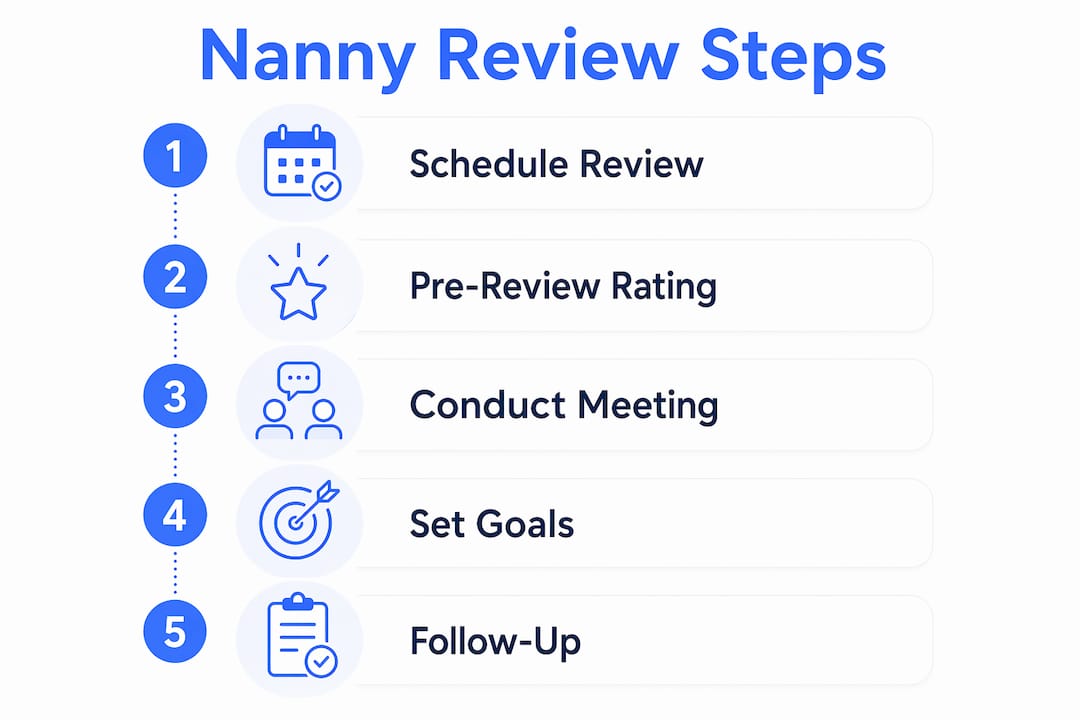
A productive review meeting starts with preparation, not the meeting itself. Scheduling reviews with at least one week's notice, in a distraction-free setting, makes a measurable difference in how open and focused the conversation stays.
Follow this sequence during the meeting:
- Open with strengths. Start with specific examples of what the caregiver does well. Vague praise ("You're doing great") undermines trust. Concrete examples ("The kids have been sleeping better since you introduced the new bedtime routine") build it.
- Address areas for growth. Use observations, not generalizations. Focus on behaviors and their impact, not personality traits.
- Listen actively. Caregivers often have practical feedback about family communication and scheduling that families haven't heard. Give them space to share it.
- Set 2–3 specific goals together. Examples include completing CPR recertification, introducing a new activity rotation, or improving a specific communication habit.
- Document the discussion. Write a brief summary covering what was discussed, agreed-upon goals, and any compensation changes. Both parties should sign and keep a copy.
- Schedule a follow-up. If any performance concerns surfaced, set a follow-up check-in within a month or two to assess progress.
Pro Tip: Conduct the review when children are not present. The conversation stays more focused, and both sides feel freer to speak honestly.
Sensitive topics require a direct but constructive approach. Focus on specific behaviors, explain their impact on the children or household, and ask for the caregiver's perspective before proposing a solution. When concerns are serious, a written improvement plan with clear milestones and a timeline gives both parties a fair path forward.

How do performance reviews support career growth and employment decisions?
Reviews serve as a professional roadmap for caregivers, not just a feedback session for families. When goals are documented and revisited annually, caregivers can track their own growth, identify skills to develop, and build a record of professional achievement that supports future employment.
Documented review history also protects both parties if employment decisions become necessary. A written record of performance evaluations, improvement plans, and follow-up conversations demonstrates that concerns were addressed fairly and gives families a defensible basis for disciplinary action or termination if issues persist.
Compensation conversations belong in the review, not in a separate awkward moment. Pairing positive feedback with a raise discussion reinforces the connection between performance and pay. Factors that typically inform a raise include attendance, reliability, willingness to take on expanded duties, and adherence to household policies. Pay increases are not guaranteed, but making the criteria transparent builds trust on both sides.
After the review, keep communication open. Brief monthly check-ins or a shared notes system prevent the next annual review from feeling like a surprise.
How Thecaretracker supports your review preparation
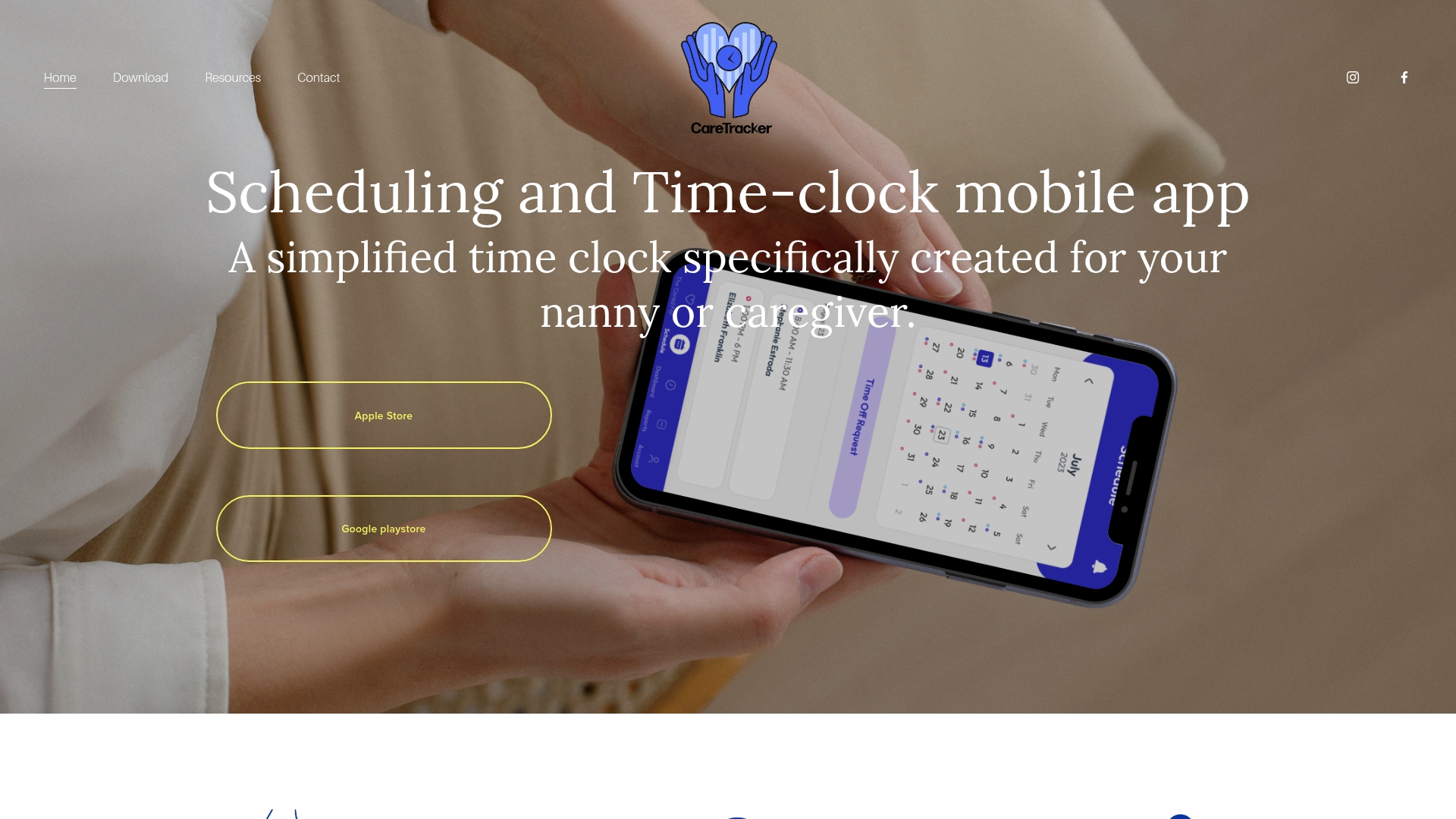
Thecaretracker gives caregivers a practical foundation for every stage of the review process. Accurate time tracking means you walk into a compensation discussion with a clear, verifiable record of hours worked, not a rough estimate. That accuracy matters when raises, overtime, and pay period compliance are on the table.
The app's features directly support review readiness:
- Schedule management: receive and approve schedule requests, view all jobs in one calendar, and document any role changes over the review period
- Hours tracking: log weekly hours accurately so compensation discussions are grounded in real data
- Care information access: store allergies, medications, emergency contacts, and daily routines in one place, making it easy to demonstrate thoroughness during a review
- Payroll consultation: Thecaretracker's premium payroll packages include prior wage reporting and household payroll cleanup, helping caregivers and families stay compliant
| Feature | How it supports your review |
|---|---|
| Time tracking | Verifies hours worked for accurate compensation discussions |
| Schedule calendar | Documents role changes and scheduling patterns over the year |
| Care information storage | Demonstrates attentiveness to child-specific needs |
| Payroll consultation | Supports compliance and prior wage documentation |
Thecaretracker is completely free for caregivers. Download the app and start building the organized work record that makes your next review straightforward and confident.
How to gather feedback from family members and children
A thorough nanny evaluation draws on more than one perspective. Families often see only part of the picture, and children, depending on their age, can offer genuine insight into how they experience their time with a caregiver.
For family members, a simple written nanny feedback form completed before the meeting works well. Ask each adult in the household to note one or two specific strengths and one area where they'd like to see a change. Written responses tend to be more considered than off-the-cuff verbal opinions, and they give the caregiver something concrete to respond to.
For children, keep it informal. Sittercity suggests asking kids a simple question like "What's your favorite thing about your caregiver?" before the review. Young children won't give you performance metrics, but their enthusiasm or hesitation tells you something real. Share those responses at the start of the meeting as a warm, grounding moment before the more structured parts of the conversation begin.
Gathering input from multiple sources turns a one-sided evaluation into a fuller picture of the caregiver's actual impact.
Sample questions and a template for conducting the review
A consistent set of questions keeps the conversation focused and makes year-over-year comparisons possible. Use these as a starting point and adjust them to fit your household's specific needs.
Questions for the family to consider before the meeting:
- Which responsibilities has the caregiver handled particularly well this year?
- Have job duties expanded since the last review, and has compensation kept pace?
- Are there any safety, communication, or routine concerns that need to be addressed?
- What one or two changes would make the working relationship stronger?
Questions to ask the caregiver during the review:
- What part of your role do you feel most confident in right now?
- Is there anything about our communication or household management that makes your job harder?
- What professional development would you like to pursue in the next year, such as CPR recertification or a child development course?
- Are there resources or changes that would help you do your job better?
Goals section (to complete together):
Document 2–3 specific, time-bound goals with a target date for each. Examples: complete CPR recertification by June, introduce a new outdoor activity rotation by March, or send a daily summary message by 4:00 PM each weekday.
After the meeting, both parties sign the completed form. Each keeps a copy. That signed document becomes the starting point for next year's review.
Key Takeaways
Formal nanny performance reviews, conducted at 90 days and annually, create the documented clarity and shared goals that informal daily feedback cannot provide.
| Point | Details |
|---|---|
| Review frequency | Conduct a formal review at 90 days and annually; add a 30-day check-in for new hires. |
| Five core areas | Evaluate child safety, reliability, communication, professionalism, and household duties on a 1–5 scale. |
| Two-way conversation | Give caregivers equal space to share feedback on family communication and household management. |
| Documentation matters | Signed review summaries with agreed goals protect both parties and support fair employment decisions. |
| Thecaretracker supports reviews | Accurate time tracking and schedule records give caregivers verified data for compensation and goal discussions. |