
A complete U.S. nanny contract covers eleven core sections: parties and start date, job duties, work schedule and guaranteed hours, gross compensation and overtime, PTO and sick leave, tax and payroll obligations, termination and notice, confidentiality and social media rules, vehicle and property use, dispute resolution, and an amendment process. Miss any one of these, and you are exposed to wage disputes, tax penalties, or a breakdown in the working relationship.
Before you read further, here is a copy-ready checklist you can use right now:
- Parties and start date — full legal names, address, and the nanny's start date
- Job title and duties — specific child-care tasks listed separately from any household tasks
- Work schedule — daily hours, guaranteed weekly hours, and overtime expectations
- Compensation — gross hourly or weekly rate, overtime rate, pay frequency, and payment method
- PTO, sick leave, and holidays — accrual rules and any state-mandated minimums
- Tax acknowledgment — employee status, W-2, Schedule H, and employer payroll tax responsibilities
- Termination and notice — probation period, notice requirements, and final paycheck timing
- Confidentiality and social media — photo restrictions, NDA scope, and family privacy rules
- Vehicle and property use — mileage reimbursement, insurance, and car-seat responsibilities
- Dispute resolution — mediation or arbitration preference
- Amendment clause — written, signed process for any changes
The U.S. Department of Labor's Wage and Hour Division and IRS Publication 926 are the two federal anchors for every compliance decision you make. For day-to-day recordkeeping, Thecaretracker keeps hours, schedules, and care notes in one place so your contract terms stay documented from the first shift.
Key Takeaways
A legally sound nanny contract combines clear clause language, correct gross-pay terms, and consistent recordkeeping from day one — skipping any of these three creates the disputes the contract was meant to prevent.
| Point | Details |
|---|---|
| State gross pay, never net | Always write the gross hourly rate; net-pay agreements shift tax liability and create IRS exposure. |
| Guaranteed hours protect both sides | A minimum-hours clause prevents income surprises for the nanny and schedule disputes for you. |
| Tax obligations start at $2,800/year | Once earnings hit the IRS threshold, you must withhold payroll taxes, issue a W-2, and file Schedule H. |
| State law adds to federal minimums | California, New York, and other states require daily overtime or paid sick leave beyond FLSA rules. |
| Thecaretracker | Free app that tracks hours, approves schedules, and exports records for payroll and FSA documentation. |
Useful resources and templates
- IRS Publication 926 — the definitive guide to household employer tax obligations, Schedule H, and W-2 requirements. Start here for payroll and filing questions.
- U.S. Department of Labor – Domestic Workers — federal wage-and-hour rules, state-specific domestic worker protections, and compliance resources for household employers.
- DOL Employment Sample Agreement for Nannies (PDF) — a free, clause-level sample contract from the Wage and Hour Division covering parties, duties, pay, overtime, and termination.
- Document.com – Nanny contract forms — attorney-reviewed, fillable templates that address FLSA and state domestic-worker protections.
- Beverly – Nanny contract template and guide — practical guidance on 12 essential contract areas, including guaranteed hours and PTO structuring.
- Thecaretracker – Nanny timesheet template — a downloadable timesheet format for daily hour logs and FSA documentation.
- Thecaretracker – Dependent care FSA guide — step-by-step guidance on documenting hours and receipts to support FSA claims.
- Thecaretracker – Nanny daily log — templates and best practices for documenting daily care tasks, medications, and notes.
This article provides general information about nanny employment contracts and is not a substitute for legal, tax, or payroll advice. Consult a qualified employment attorney or payroll professional to confirm requirements for your specific state and situation.
Table of Contents
- What is a nanny contract and why does it matter?
- Nanny contract essentials: a clause-by-clause breakdown
- U.S. tax and employment compliance every household employer must know
- Where to find a nanny contract template and how to customize it
- How to negotiate, sign, and update the contract
- Recordkeeping and time-tracking best practices
- Common mistakes parents make when drafting nanny contracts
- Thecaretracker makes the recordkeeping side of your contract simple
- Sources
What is a nanny contract and why does it matter?
A nanny contract is a written employment agreement between a household employer (you) and the person you hire to care for your children. It is not the same as a babysitter arrangement. Once a nanny works in your home on a regular basis and earns $2,800 or more in a calendar year (the 2026 IRS threshold per Publication 926), that person is a household employee under federal law, not an independent contractor.
That distinction carries real consequences. Without a written contract, pay disputes, scope creep, and scheduling misunderstandings are almost inevitable. Care that vague terms like "light housekeeping" are among the most common triggers for conflict, precisely because both sides fill in the blank differently. A written agreement removes that ambiguity before it becomes a problem.
Three legal risks a written contract directly reduces:
- Wage and hour disputes — a signed schedule and pay rate prevent "I thought overtime was included" arguments
- Tax misclassification — clearly stating employee status protects you from IRS penalties for treating a household employee as a contractor
- State-law gaps — several states, including California, New York, and Illinois, have Domestic Worker Bills of Rights that add paid sick leave, overtime, and notice requirements on top of federal rules
The DOL's domestic worker guidance covers federal wage-and-hour rules that apply to household employers, and it is worth bookmarking before you draft a single clause.
Nanny contract essentials: a clause-by-clause breakdown
Work through each section below in order. Each one includes a brief note on what to write and a sample phrase you can adapt.
Parties, start date, and care recipients
Open with full legal names, home address, and the nanny's start date. List each child by first name and age. This section also establishes that the nanny is an employee, not a contractor.
Sample: "This agreement is between [Parent Full Name] ('Employer') and [Nanny Full Name] ('Employee'), effective [Start Date], for the care of [Child Name, Age]."
Job duties and explicit exclusions
List child-care duties in one column and any household tasks in a separate column. Be specific: "prepare children's meals" is clear; "help around the house" is not. Then add an exclusions line.

Sample: "Employee's duties are limited to those listed above. Duties not listed require a written amendment signed by both parties."
Care.com's guidance on nanny contracts specifically flags scope creep as the most preventable source of disputes, and a duty exclusion clause is the fix.
Work schedule, guaranteed hours, and overtime
State the daily start and end times, the total guaranteed weekly hours, and what happens when you need extra coverage. Guaranteed hours matter because many nannies budget their income around them.
Key clause language: "Employee is guaranteed a minimum of [X] hours per week. Hours worked beyond 40 in a single workweek will be compensated at 1.5× the regular hourly rate, per the Fair Labor Standards Act."
Beverly's nanny contract guide recommends specifying guaranteed hours and PTO accrual in the same section so both sides understand the full weekly commitment.
Compensation, pay schedule, and pay stubs
Always state gross pay, never net. Specify the hourly or weekly rate, the overtime multiplier, pay frequency (weekly, biweekly), and payment method (direct deposit or check). Note that pay stubs are required in most states.
Sample: "Employee's gross hourly rate is $[X]. Overtime hours are paid at $[1.5×X] per hour. Employer will pay by direct deposit every Friday and provide a written pay stub with each payment."
PTO, sick leave, and paid holidays
List the number of paid vacation days, sick days, and observed holidays. Note accrual rules (for example, one day per month after a 90-day probation). Check your state's mandated sick-leave minimums before you finalize this section.
Tax and payroll acknowledgment
This clause confirms the nanny's employee status and your obligations. It does not replace professional payroll advice, but it puts both parties on notice.
Sample: "Employer acknowledges responsibility for withholding and remitting federal and state payroll taxes, issuing a W-2 by January 31, and filing Schedule H with the annual federal tax return, per IRS Publication 926."
Termination, notice, and final pay
A 30-day notice period for voluntary resignation and employer-initiated termination is standard. Define immediate-cause grounds (theft, endangerment) separately. State when the final paycheck will be issued, because most states have specific deadlines.
Confidentiality, social media, and background checks
Specify that the nanny will not share photos, videos, or personal information about the family or children on social media without written consent. Address background-check expectations upfront, before the contract is signed.
Sample: "Employee agrees not to post photos or videos of the children or the family's home on any social media platform without prior written consent from Employer."
Vehicle, property use, and mileage
If the nanny drives the children, state whose vehicle is used, confirm the nanny carries adequate auto insurance, and set the mileage reimbursement rate. ABC Nannies & Domestics notes a federal mileage reimbursement rate per mile as a common benchmark. Also confirm who is responsible for car-seat installation and maintenance.
Dispute resolution
A simple clause directing both parties to attempt mediation before litigation keeps small disagreements from becoming expensive. Name a preferred mediator or mediation service, or simply state that both parties agree to good-faith mediation as a first step.
Amendment process
Amendment clause: "Any modification to this agreement must be made in writing, signed and dated by both Employer and Employee, and attached to this original contract. Verbal agreements do not constitute amendments."
This single clause prevents the "but we agreed to that verbally" problem that unravels otherwise solid contracts.
U.S. tax and employment compliance every household employer must know
Most nannies are household employees, full stop. That means you cannot issue a 1099 and call it done. IRS Publication 926 lays out the full picture: you must withhold Social Security and Medicare taxes, pay the employer's share of FICA, and file Schedule H with your personal tax return each year.
Federal overtime under the FLSA requires time-and-a-half for any hours over 40 in a workweek. Some states go further. California mandates daily overtime after eight hours in a single day. New York's Domestic Workers' Bill of Rights adds paid days of rest. Check your state's labor department page before finalizing any schedule or pay clause.
Here are the core payroll steps every household employer must complete:
- Obtain an Employer Identification Number (EIN) from the IRS before the first paycheck
- Withhold the employee's share of Social Security (6.2%) and Medicare (1.45%) from each paycheck
- Pay the employer's matching share of Social Security and Medicare
- Deposit withheld taxes on the schedule the IRS assigns based on your liability
- Issue a W-2 to the nanny by January 31 of the following year
- File Schedule H with your Form 1040 to report household employment taxes
Pro Tip: Consider using a payroll automation service or a household payroll specialist to handle deposits, filings, and year-end W-2s. Filing errors on Schedule H are one of the most common — and most avoidable — household employer mistakes.
The DOL's domestic worker resources include state-by-state guidance that is worth reviewing before you set a pay rate or schedule. If your situation is complex (multiple children, split schedules, live-in arrangements), a payroll professional is worth the cost.
Where to find a nanny contract template and how to customize it
Not all templates are equal. A generic one-size-fits-all form downloaded from a random website often skips state-specific sick-leave rules, omits guaranteed-hours language, and uses net pay instead of gross. Prefer templates that are state-aware, editable in Word or Google Docs, and ideally reviewed by an employment attorney.
Strong sources for attorney-reviewed templates:
- DOL's Employment Sample Agreement for Nannies — free, clause-level wording from the Wage and Hour Division
- Document.com's nanny contract forms — attorney-reviewed, fillable, and covers FLSA and state domestic-worker protections
- Beverly's nanny contract template — practical guide with 12 essential areas and sample PTO and guaranteed-hours language
- Thecaretracker's nanny schedule template — a mobile-ready schedule template you can use alongside any contract to document guaranteed hours
Customization checklist before you sign:
- Replace every placeholder with real names, dates, and dollar amounts
- Confirm your state's overtime rules (daily vs. weekly threshold) and update the overtime clause accordingly
- Add your state's mandated sick-leave minimum if it exceeds what you planned to offer
- Mark the trial or probation period clearly so both sides know when the full agreement kicks in
Sample termination clause you can adapt: "Either party may terminate this agreement with 30 days' written notice. Employer may terminate immediately for cause, including but not limited to theft, child endangerment, or material breach of this agreement. Final wages will be paid within [X] business days of the last day worked, per applicable state law."
How to negotiate, sign, and update the contract
The simplest effective process: draft the contract, share it with the nanny at least 48 hours before the start date, discuss any questions together, agree on terms, sign two copies, and begin a 30–90 day trial period. At the end of the trial, review the agreement and make any adjustments in writing.
Negotiation checklist:
- Confirm the gross hourly rate and overtime rate before the first conversation
- Agree on guaranteed weekly hours and what happens when you need fewer
- Settle PTO accrual, sick days, and which holidays are paid
- Clarify driving responsibilities, mileage reimbursement, and vehicle insurance
- Discuss confidentiality and social media expectations openly — surprises here cause friction
- Set a reasonable response window for counteroffers (24–48 hours is fair)
Signing and storage:
- Print two copies, both parties sign and date each page
- Each party keeps one original
- Store a scanned digital copy in a secure folder (Google Drive, Dropbox, or a password-protected email folder)
- Any amendment gets the same treatment: written, signed, dated, and attached to the original
For ongoing schedule coordination, a caregiver scheduling app makes it easier to document approved schedule changes without relying on text messages that are hard to retrieve later.
Recordkeeping and time-tracking best practices
Accurate, contemporaneous timekeeping prevents most pay disputes and simplifies Schedule H and FICA calculations at year-end. "Contemporaneous" means recorded at the time, not reconstructed from memory on a Sunday night.
What to track every week:
- Daily clock-in and clock-out times, including any unpaid breaks
- Total regular hours and any overtime hours, separated
- Mileage driven on employer-related trips
- Receipts for any reimbursable expenses (supplies, activities, gas)
- PTO days used and the running accrual balance
- Any schedule changes and who approved them
Federal law requires household employers to keep payroll records for at least three years. If you claim dependent care FSA benefits, your FSA administrator may ask for documentation going back to the start of the plan year, so organized records pay off twice.
Pro Tip: Use a mobile timesheet app to capture hours in real time rather than relying on end-of-week estimates. Thecaretracker's time-tracking feature lets nannies log hours as they work, and parents approve them directly in the app — creating a shared, timestamped record that holds up for payroll, FSA documentation, and any future dispute.

For variable schedules, document the guaranteed minimum in the contract and track actual hours separately each week. When actual hours fall below the guaranteed minimum, pay the guaranteed amount and note the shortfall in the timesheet. That paper trail protects both sides.
Thecaretracker's nanny timesheet template gives you a ready-made format for daily logs, and the dependent care FSA guide walks through exactly what documentation your FSA administrator will want.
Common mistakes parents make when drafting nanny contracts
- Using net pay instead of gross. Net pay shifts tax liability to the nanny and creates IRS problems for you. Always state the gross rate.
- Misclassifying the nanny as an independent contractor. A nanny who works regular hours in your home is an employee. Issuing a 1099 instead of a W-2 triggers back taxes, interest, and penalties.
- Skipping overtime language. Even if you never expect overtime, the FLSA applies. A contract that is silent on overtime leaves you exposed if hours run long.
- Vague duty descriptions. "Light housekeeping" means something different to everyone. List tasks by name, and add an exclusions line.
- No amendment clause. Verbal agreements to change pay or hours are nearly impossible to enforce. Require written, signed amendments from day one.
- Failing to document schedule changes. A text message is not a contract amendment. Every schedule change should be confirmed in writing and filed with the original agreement.
- Ignoring state law. Federal rules are the floor, not the ceiling. California, New York, Massachusetts, and several other states add requirements your contract must reflect.
A note on why clear contracts protect everyone
A well-written contract protects the child's routine just as much as it protects the professional relationship. When expectations are written down, both sides spend less energy second-guessing and more energy on the actual work.
Consider what happens without a guaranteed-hours clause: a nanny plans her month around 40 hours of income, then a family vacation cuts her to 20 hours with no notice. No one intended harm, but the financial impact is real. A single sentence in the contract, "Employee is guaranteed a minimum of [X] hours per week regardless of family travel," eliminates that entire category of dispute.
The same logic applies to social media and photo rules. Most nannies are not trying to overshare; they just want to post a cute moment. A clear, upfront clause removes the awkwardness of having that conversation after the fact.
Pro Tip: Use a shared scheduling and approval tool so both you and your nanny can see, request, and confirm schedule changes in one place. Thecaretracker's schedule-request feature creates a timestamped approval record that supplements your written contract and reduces the "I thought you approved that" friction.
Thecaretracker makes the recordkeeping side of your contract simple
Once your contract is signed, the hardest ongoing task is keeping accurate records. Thecaretracker is a free app built specifically for nannies and caregivers that turns the recordkeeping requirements in your contract into a daily habit rather than a monthly scramble.
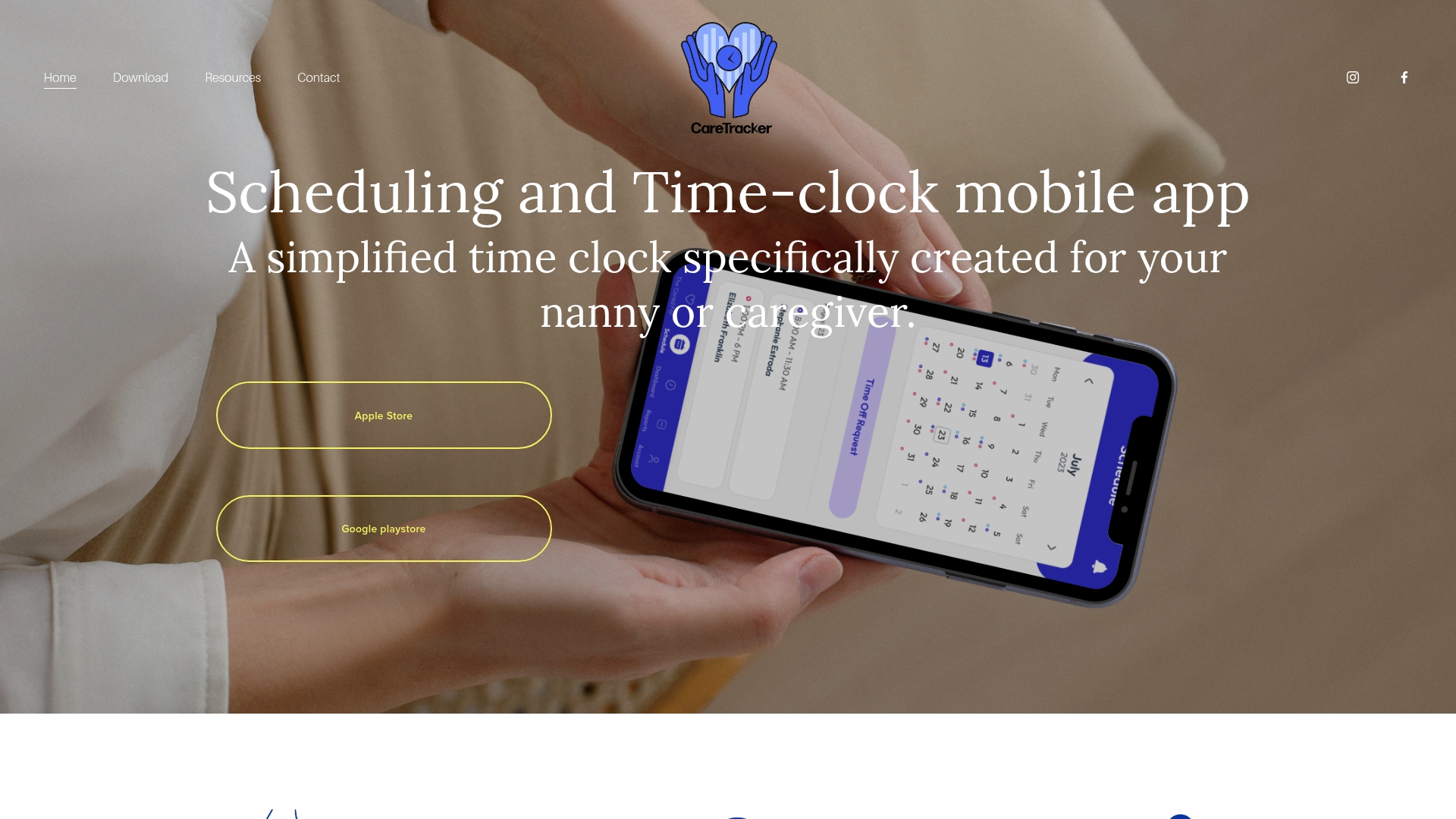
Here is what it handles directly:
- Hour tracking — nannies log clock-in and clock-out in real time; parents approve with one tap
- Schedule requests and approvals — both sides see the same calendar, and every change is timestamped
- Care notes — allergies, medications, emergency contacts, and nap schedules stored and accessible instantly
- Exportable reports — pull weekly or monthly hour summaries for payroll, Schedule H prep, or FSA documentation
- Multiple caregiver support — manage more than one caregiver from a single employer account
The app is completely free for caregivers. Parents who need payroll compliance support can book a payroll consultation through Thecaretracker to get expert help setting up withholdings, deposits, and year-end W-2s. To get started, download Thecaretracker and connect it with your nanny's first shift.
Sources
- U.S. Department of Labor – Domestic Workers
- Employment Sample Agreement for Nannies (WHD sample agreement PDF)
- IRS Publication 926, Household Employer's Tax Guide
- Care
- Beverly – Nanny contract template & free guide