
If you pay a nanny, au pair or home caregiver directly, you are a household employer, and overtime tracking is your job: count every hour worked in a fixed seven-day workweek, pay time and a half after 40 hours (or sooner where your state says so), and keep a record of it. The simplest way to do that is to have the caregiver log hours in a shared app, so the weekly total is never a guess. Our free caregiver app, Thecaretracker, does that tracking, and this guide explains the rules behind it.
TL;DR
- Federal law generally requires 1.5 times the regular rate for hours over 40 in a workweek, and a higher state standard overrides the federal one.
- Hours worked include time on duty and time "engaged to wait," such as a nanny watching a sleeping child. Time when the caregiver is fully free to leave is not work time.
- Live-in caregivers may be exempt from overtime but never from minimum wage, and every interruption of sleep or meals for a call to duty counts as work.
- Keep hours records for at least three years. No special form is required, but the hours must be accurate.
- Catching 40 hours midweek is far cheaper than fixing a payroll error months later.
Table of Contents
- What counts as hours worked
- Travel time and driving
- Set a fixed workweek first
- How to calculate caregiver overtime
- Live-in caregivers and overtime
- The companionship exemption for seniors' caregivers
- Records you need to keep
- A weekly overtime tracking routine
- Our perspective
- Want help getting payroll right?
- FAQ
- Sources
What counts as hours worked
The first tracking question is not math. It is which minutes count. The Department of Labor (DOL) separates two situations in its domestic service guidance on hours worked. A caregiver is working when on duty or "engaged to wait." Think of a nanny watching a sleeping child, or reading while waiting for the next task. That time is paid. Time when the caregiver is completely relieved from duty and free to use the time for personal purposes, such as seeing a movie, running an errand or attending a parent-teacher conference, need not be paid.
In practice, these are the situations that cause disputes:
- Nap time. If the nanny must stay in the house and respond to the child, the hours count, even if the nanny is sitting down.
- Late parents. The shift runs until the caregiver is actually released, not until the scheduled end time.
- Standing evening duty. A caregiver who is on call at home and cannot freely leave is generally still working.
- Errands for the family. Grocery runs and school pickups done for you are work.
A clock-in and clock-out record made on the day is the best way to settle these questions. A number reconstructed on Friday from memory is where underpayment (and disagreements) begin.
Travel time and driving
The DOL's domestic service FAQ draws a clear line. Normal commuting from the caregiver's home to your home is not paid. Travel between worksites for the same employer during the workday is paid. If a caregiver drives your parent or child to appointments or errands, that driving is part of the day's work and must be compensated. Travel away from home during normal work hours is paid too.
For tracking, this means a trip is not a separate category. Log it inside the shift, and log mileage reimbursements separately so they do not get mixed into hours.
Set a fixed workweek first
Overtime is calculated by workweek, not by pay period. The DOL describes a workweek as any set seven-day period, for example Monday to Sunday. Pick one start day and keep it. California's household wage order uses the same idea: a workweek is seven consecutive days starting on the same calendar day each week, a fixed recurring 168-hour period.
The trap is the pay period. If you pay every two weeks or twice a month, a pay period may start midweek and split a workweek in two. Hours must still be added up per workweek. A caregiver who works 30 hours at the end of one pay period and 20 at the start of the next may have worked 50 hours in a single workweek.
How to calculate caregiver overtime
Under federal law, covered workers must be paid at least 1.5 times the regular rate for hours over 40 in a workweek. Where state law is higher, the higher standard applies. The federal minimum wage is $7.25 an hour, but many states set a higher floor, so check yours.
The regular rate is total earnings for the workweek, apart from certain statutory exclusions, divided by total hours worked, according to the DOL's FLSA overview. For a simple hourly caregiver it is just the hourly wage.
Worked example (DOL figures). A caregiver paid $10 an hour works 45 hours. The first 40 hours earn $400. The 5 overtime hours are paid at $15 each, which is $75. The total is $475. The DOL's home care guide shows the same method with 50 hours: $400 plus 10 hours at $15 is $550.
Here is the same arithmetic as a quick table at a higher rate, a $25 hourly wage:
| Hours in workweek | Regular pay (up to 40 hrs) | Overtime pay (1.5 x $25 = $37.50) | Total |
|---|---|---|---|
| 40 | $1,000.00 | $0.00 | $1,000.00 |
| 45 | $1,000.00 | $187.50 | $1,187.50 |
| 50 | $1,000.00 | $375.00 | $1,375.00 |
Those figures are our own arithmetic using the DOL method, not a quote from a source.
When your state is stricter
Some states count overtime by the day as well as the week. In California, for example, the state's Domestic Worker Bill of Rights FAQ says non-live-in domestic workers who are not personal attendants get 1.5 times pay over 8 hours in a day or 40 in a workweek, and double time over 12 hours in a day. Double time also applies over 8 hours on the seventh consecutive day. A weekly total alone would miss a 10-hour Tuesday. If you live in a state with daily rules, your tracking has to show hours per day, not just per week.

Live-in caregivers and overtime
This is the question families ask most. Under DOL Fact Sheet #79B, a live-in worker employed directly by a household may be exempt from federal overtime, but not from minimum wage. The sheet counts a worker as live-in if they reside permanently on the premises, or live there for five days or nights in a row (120 or more hours a week).
Three points matter for your records:
- Hours still have to be tracked. The fact sheet says the employer must record all hours worked regardless of any agreement with the worker.
- Private time need not be paid, but interruptions are. Eating, sleeping and entertaining on one's own time can be excluded. If a call to duty interrupts a meal, sleep or free time, that interruption counts as hours worked.
- Agreements need a paper trail. If you exclude meal, sleep and off-duty periods, keep a copy of the agreement. Make a new written one if actual hours regularly differ from it, as DOL Fact Sheet #79C explains.
State rules can be stricter. California's 2025 household occupations wage order requires live-in employees to have at least 12 consecutive hours free of duty in each 24-hour workday, and no more than five workdays per workweek without a 24-hour day off. Work on the sixth and seventh days is paid at overtime rates. For a deeper walk-through, see our guide to live-in nanny overtime under federal and state law.
The companionship exemption for seniors' caregivers
If you are a senior hiring a caregiver, you may have heard that companionship workers are exempt. The DOL's final rule FAQ describes the exemption as covering fellowship and protection, plus some personal care such as help with bathing, dressing and meals. That care can be no more than 20 percent of the hours worked for one person in a workweek. If care tasks go above 20 percent in a given week, the worker must be paid minimum wage for all hours and 1.5 times the regular rate over 40 hours for that week.
That 20 percent test changes week to week as needs change. It is a good reason to log what the caregiver actually did, not only when the shift started and ended. Our app lets you create a profile for the person receiving care and keep daily activities with the hours, so you have both pieces in one place.

Records you need to keep
Household employers are covered by recordkeeping rules too. DOL Fact Sheet #79C lists what to keep:
- The employee's full name, Social Security number and home address
- Hours worked each workday and each workweek
- Weekly cash wages
- Sums claimed for board, lodging or other facilities
- Extra pay for hours over 40
No particular form is required. Records must be kept for at least three years, and the records used to compute pay for at least two. A live-in worker's hours may be recorded by the worker or covered by a work agreement, but an accurate log is the safer record. The practical benefit is trust: when both of you can see the same hours, there is less to argue about at tax time or if the caregiver leaves. A free starting point is our nanny timesheet template, and our guide to caregiver time tracking for families covers the DOL and IRS side in five steps.
A weekly overtime tracking routine
Here is a routine that works for most households, with the point at each step where it usually goes wrong.
- Choose the workweek. Pick a start day and write it into the work agreement. It goes wrong when the workweek is left to follow the pay period. Our app supports state-specific pay period and overtime tracking, so the week lines up with your state's rules.
- Have hours logged as they happen. The caregiver clocks in and out in the app, and hours go into one record. It goes wrong when hours are texted afterward and rounded. Our app is free for caregivers, so it costs the caregiver nothing to keep the log.
- Approve schedule changes in writing. Extra shifts are where overtime starts. In Thecaretracker, caregivers receive and approve schedule requests, and all jobs show in one calendar, so an added Thursday evening is visible before it happens.
- Watch the running total. Look at the week's hours by Wednesday. If the caregiver is on track for 38 or 40, decide whether to shift hours or plan to pay overtime. Alerts help here: see how to catch 40 hours early with overtime alerts for nannies, and for the general idea of setting overtime alerts at 40 hours in any time system.
- Handle time off and reimbursements separately. Time-off and reimbursement requests can be submitted and approved in the app, so expenses stay out of the hours total.
- Run a weekly report. Total hours per workweek, overtime hours and the rate applied go to payroll. The app generates flexible reports, so you are not building a spreadsheet each Friday.
- File the records. Keep them for at least three years.
For more on household-specific tracking problems, our guide to U.S. household employer overtime rules and time tracking fixes goes further, and the nanny time tracking page shows the clock itself.
Our perspective
Most overtime problems we hear about in households are not about bad intentions. They are about two people remembering a week differently. A parent thinks Tuesday ended at 6:00. The nanny stayed until 7:15 because of traffic and a late meeting. Nobody wrote it down.
That is why we built the app to be free for caregivers. When the person doing the work can log hours in seconds, from the same calendar that shows every job, the record exists. When the family can see it and approve schedule requests in the same place, there are no surprises on payday.
We also know the rules differ by state and by situation: live-in or not, daily overtime or weekly, nanny or senior companion. Our app tracks state-specific pay periods and overtime, and shares care details such as allergies, medications and emergency contacts so caregivers have what they need on the job. For households that need help beyond tracking, our payroll consultations are made for exactly these questions.
Accurate hours give you peace of mind and give your caregiver trust that they will be paid correctly. That is the whole point.
mercedes
Want help getting payroll right?
If you already have an overtime question you cannot answer from the rules above, or you suspect past hours were not recorded or reported correctly, our consultations are built for household employers. The Standard Payroll Consultation package is a one-time $150 service you can find on our store page. Our Premium consultation is also $150 one-off, and our Prior Wage Reporting & Household Payroll Cleanup Services help households sort out earlier records on the payroll consultation page.
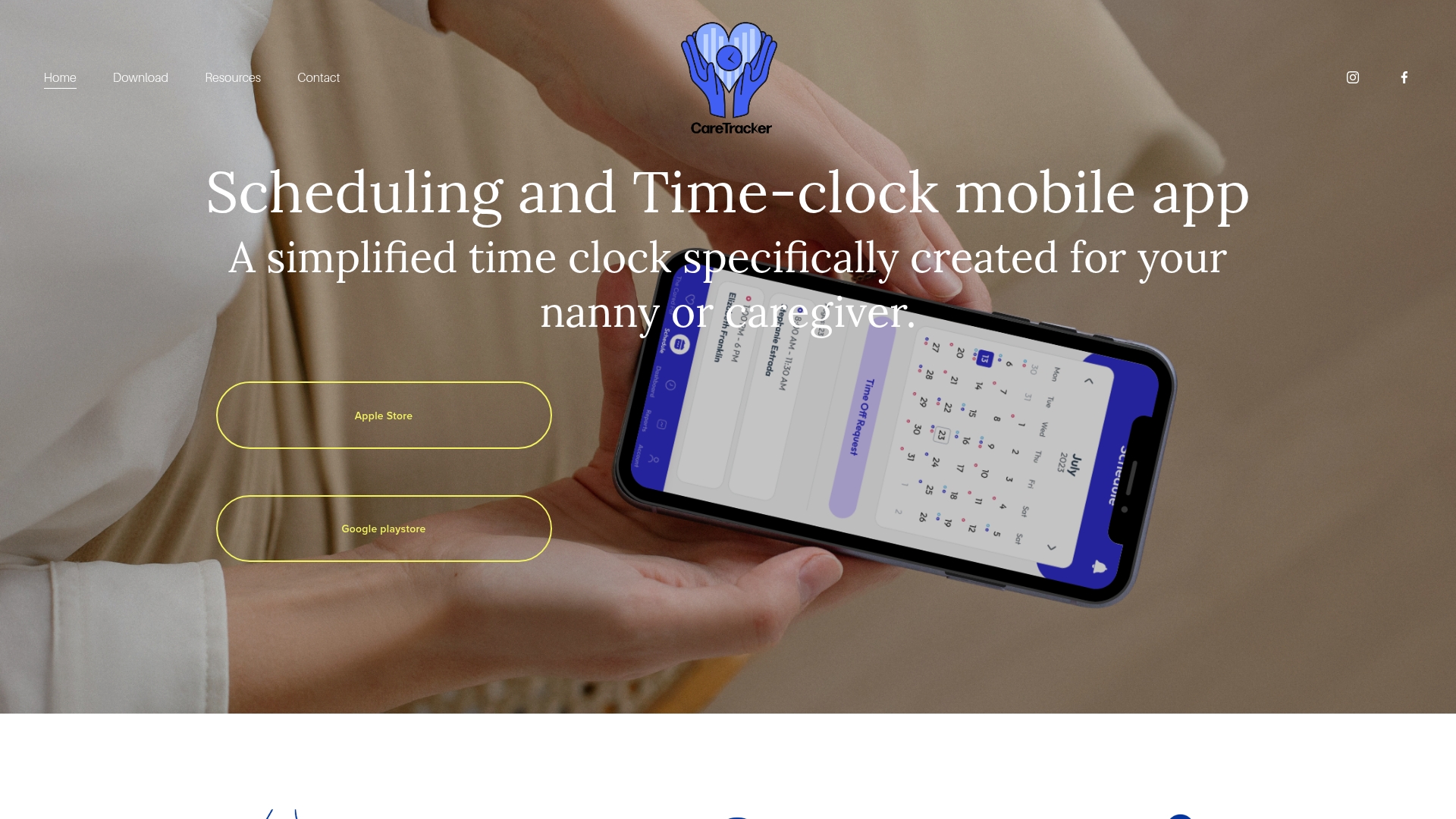
To start tracking today, our scheduling and time-clock app is free for nannies and caregivers.
FAQ
Do live-in caregivers get overtime?
Under federal law, a live-in domestic worker employed directly by a household may be exempt from overtime, but must still be paid at least the minimum wage for all hours worked. Some states, including California, give live-in household workers overtime protection after certain hours. Check your state's labor department, and track hours either way.
How do I figure out overtime hours?
Add up all hours worked in your fixed seven-day workweek. Every hour over 40 is paid at 1.5 times the regular rate. If your state counts daily overtime, check each day's total as well. The table above shows the arithmetic at $25 an hour.
Does nap time count as work for a nanny?
Yes, when the nanny must stay on duty, such as watching a sleeping child or being ready to respond. The DOL treats that as being engaged to wait. Time when the nanny is completely free to leave and use the time as they wish is not work time.
Do I have to pay for the caregiver's commute?
No, normal travel from home to your home is not paid. Travel between locations during the workday, such as driving your child or parent to an appointment, is paid work time.
How long should I keep time records?
The DOL says to keep household employee records for at least three years, and records used to compute pay for at least two years. No specific form is required.
Sources
- DOL Fact Sheet #79D: Hours Worked Applicable to Domestic Service Employment
- DOL: Domestic Service Final Rule Frequently Asked Questions
- DOL: Paying Minimum Wage and Overtime to Home Care Workers
- DOL: Minimum wage, overtime pay and recordkeeping requirements for direct care
- DOL: An Overview of the Fair Labor Standards Act (FLSA)
- DOL Fact Sheet #79B: Live-in Domestic Service Workers
- DOL Fact Sheet #79C: Recordkeeping Requirements for Domestic Service
- California Code of Regulations, Title 8, Section 11150
- California Domestic Worker Bill of Rights (AB 241) FAQ
- California IWC Wage Order 15: Household Occupations (2025)
- Overtime Alerts: Set Rules at 40 Hours, Verify Punches