
A caregiver expense policy spells out which work-related costs a household will pay back, how the caregiver submits proof, who approves each claim, and when payment arrives. Get those four pieces in writing and shared with everyone involved, and you eliminate most of the friction around reimbursement. Families can track submissions and hours through a free tool like Thecaretracker so nothing gets lost between pay periods.
TL;DR:
- Reimbursement policies should specify pre-approved expense categories, limits, and required proof to prevent disputes and clarify expectations.
- Caregivers must submit claims with receipts, purpose notes, and within a set timeframe, typically 30 days, using a consistent process.
- Using a dedicated app like Thecaretracker can streamline tracking, submissions, and recordkeeping, reducing the risk of lost receipts or delayed approvals.
- Mileage should be reimbursed separately at the IRS standard rate and only for work-related trips, not commuting miles.
- Having a written, shared policy with clear approval, payment timelines, and record storage protects both sides and minimizes ongoing reimbursement conflicts.
Table of Contents
- What Belongs in a Caregiver Expense Reimbursement Policy?
- How Should Caregivers Submit Expense Claims?
- Which Reimbursement Method Works Best for Your Household?
- Who Approves Reimbursements and When Do They Get Paid?
- A Copy-Ready Caregiver Expense Policy Template
- Best Practices That Keep Reimbursement Disputes Rare
- Why a Written Policy Protects Both Sides
- Let Thecaretracker Handle the Paperwork Side of Reimbursement
- Sources
- FAQ
What Belongs in a Caregiver Expense Reimbursement Policy?
Every solid policy starts with a short list of what qualifies, because vague rules create arguments later. Nanny employers who spell out reimbursement terms in the initial work agreement avoid the most common disputes, according to guidance from the International Nanny Association. Pre-approving categories and setting limits upfront means the caregiver already knows what's allowed before they ever swipe a card.
Typically eligible expenses:
- Craft supplies, activity materials, and consumables used directly for the child or care recipient
- Admission fees for museums, zoos, pools, or classes tied to the job
- On-the-job meals purchased while out with the family, if the household has agreed to cover them
- Mileage driven for errands, school pickups, or appointments during work hours
- Emergency purchases, like children's medicine or a replacement car seat part, when a parent can't be reached immediately
Typically excluded expenses:
- The caregiver's personal meals, gas for commuting to and from the job, or personal grooming
- Gifts purchased for the family or the caregiver's own family members
- Anything over an agreed per-item cap without prior sign-off
Set a dollar threshold above which the caregiver must text or call before buying. Below that line, purchases can go through without a check-in. If the household provides a card or petty cash for incidentals, state clearly that receipts are still required for every transaction, and that unused petty cash gets reconciled at each pay period. Shared expenses, like a family outing where the caregiver covers their own ticket too, should be split and documented that way on the receipt itself.
How Should Caregivers Submit Expense Claims?
A submission process only works if it's specific enough that nobody has to guess. Texas's accountable plan guidance for employee reimbursements is built on three requirements that translate directly to household caregiving: a stated business purpose, proof of the cost, and prompt reporting.
Here's a workable sequence:
- The caregiver photographs or keeps the physical receipt showing the date, vendor name, and amount.
- They note the business purpose directly on the receipt or in a shared log, such as "sunscreen for park outing."
- They submit the claim within an agreed window, commonly 30 days, through whatever format the household prefers, a simple expense form, an in-app upload, an email attachment, or a line item added to the weekly timesheet.
- The employer reviews and either approves or asks a clarifying question within a few days.
When a receipt gets lost, a signed log entry with the date, amount, and purpose is a reasonable substitute, as long as both parties agree in advance that this is acceptable. A photo of the item alongside a bank or card statement can also fill the gap.
Pro Tip: Pick one submission day each pay period, like Monday morning, so claims don't trickle in one at a time and create a pile of tiny approvals to track.
Which Reimbursement Method Works Best for Your Household?
Most households land on one of four methods, and each carries its own tradeoffs.
- Employer card or petty cash works well for frequent small purchases, but it requires someone to reconcile receipts against the balance every pay period, or cash tends to disappear without a paper trail.
- Receipt-based reimbursement means the caregiver pays out of pocket and gets repaid, which tends to reduce disputes because the caregiver has already screened the purchase as worth making.
- Mileage reimbursement should cover only miles driven during work duties, never the caregiver's commute. Many household employers use the IRS standard mileage rate as a consistent, defensible benchmark rather than negotiating a number from scratch.
- A flat stipend or a small pay-rate bump can replace itemized tracking for predictable costs, though it shifts risk: if actual expenses run higher some months, the caregiver absorbs the difference.
Mileage disputes are among the most frequent friction points in nanny households, and a simple tracking habit, whether a paper log or an app, resolves most of them before they start. The fix isn't complicated: log the trip, note the purpose, exclude the commute, and reimburse at a consistent rate every time.
Who Approves Reimbursements and When Do They Get Paid?
Reimbursement only feels reliable when the timeline is written down, not implied. Assign one approver, typically the employing parent or a designated household manager, and give that person a review window, five business days is reasonable for most families.
- Approver reviews the claim against the receipt and stated purpose within the agreed window.
- Once approved, reimbursement rides along with the next payroll run or arrives within a set number of days, whichever the household prefers.
- Records, receipts, logs, and approval notes, live in one place: a shared folder, a labeled envelope, or an app built for the purpose.
- Keep records for at least a year, longer if the household files nanny taxes and wants backup documentation.
- If reimbursements start happening every week and grow complicated, that's usually a sign it's time to loop in a household payroll specialist rather than keep patching the process by hand.
A Copy-Ready Caregiver Expense Policy Template
Paste this into your household employee handbook or attach it to the work agreement.
Policy summary: The household reimburses the caregiver for pre-approved, work-related expenses when submitted with proof within a timely window. Reimbursement is paid with the next regular payroll cycle.
- Eligible expenses: activity supplies, admission fees, on-the-job mileage at the agreed rate, and emergency purchases up to $50 without prior approval.
- Excluded expenses: personal meals, commuting costs, gifts, and any single purchase over $50 not pre-approved by text or call.
- Proof required: a dated receipt showing vendor and amount, plus a one-line note on the purpose. A signed log entry is acceptable when a receipt is lost.
- Submission: claims go in through [the agreed format] within 30 days of purchase.
- Approval: [Name] reviews and approves within 5 business days.
- Payment: approved amounts are added to the next payroll payment.
- Amendments: either party may propose a change; changes take effect once both sign below.
Employer signature: _______________ Date: _______
Caregiver signature: _______________ Date: _______
Store signed copies and receipts in a shared folder or app, and keep them for at least a year. A nanny timesheet template works well as the attachment point for logging both hours and expenses in one document.
Best Practices That Keep Reimbursement Disputes Rare
Small habits prevent most of the headaches. Pre-approve a modest recurring budget, say $20 a week for activities, so you're not texting back and forth over every craft purchase. Agree on one mileage log format up front and state plainly that commute miles don't count. Pick a single reconciliation point each pay period instead of processing claims as they trickle in.

Photographing receipts the same day and uploading them to a shared app avoids the classic lost-paper problem entirely.
Pro Tip: If a claim gets denied, explain why in one sentence, "this wasn't pre-approved and exceeds the $50 threshold," so the caregiver knows exactly what to fix next time rather than guessing.
Why a Written Policy Protects Both Sides
A caregiver expense policy that lives only in someone's memory eventually fails, usually right when money is involved and memories conflict. Writing it down, sharing it before the first paycheck, and revisiting it once a year keeps the relationship running on facts instead of assumptions. There are free tools where caregivers can track hours, submit schedule requests, and document expenses in one place, so nothing depends on someone remembering a verbal agreement three weeks later.
— mercedes
Let Thecaretracker Handle the Paperwork Side of Reimbursement
There are free apps that serve as alternatives to juggling receipts, group texts, and spreadsheet logs for households managing a caregiver's hours and expenses. Caregivers can use such apps to upload photos of receipts, track schedule and hours in one calendar, and get notified when a claim is approved.
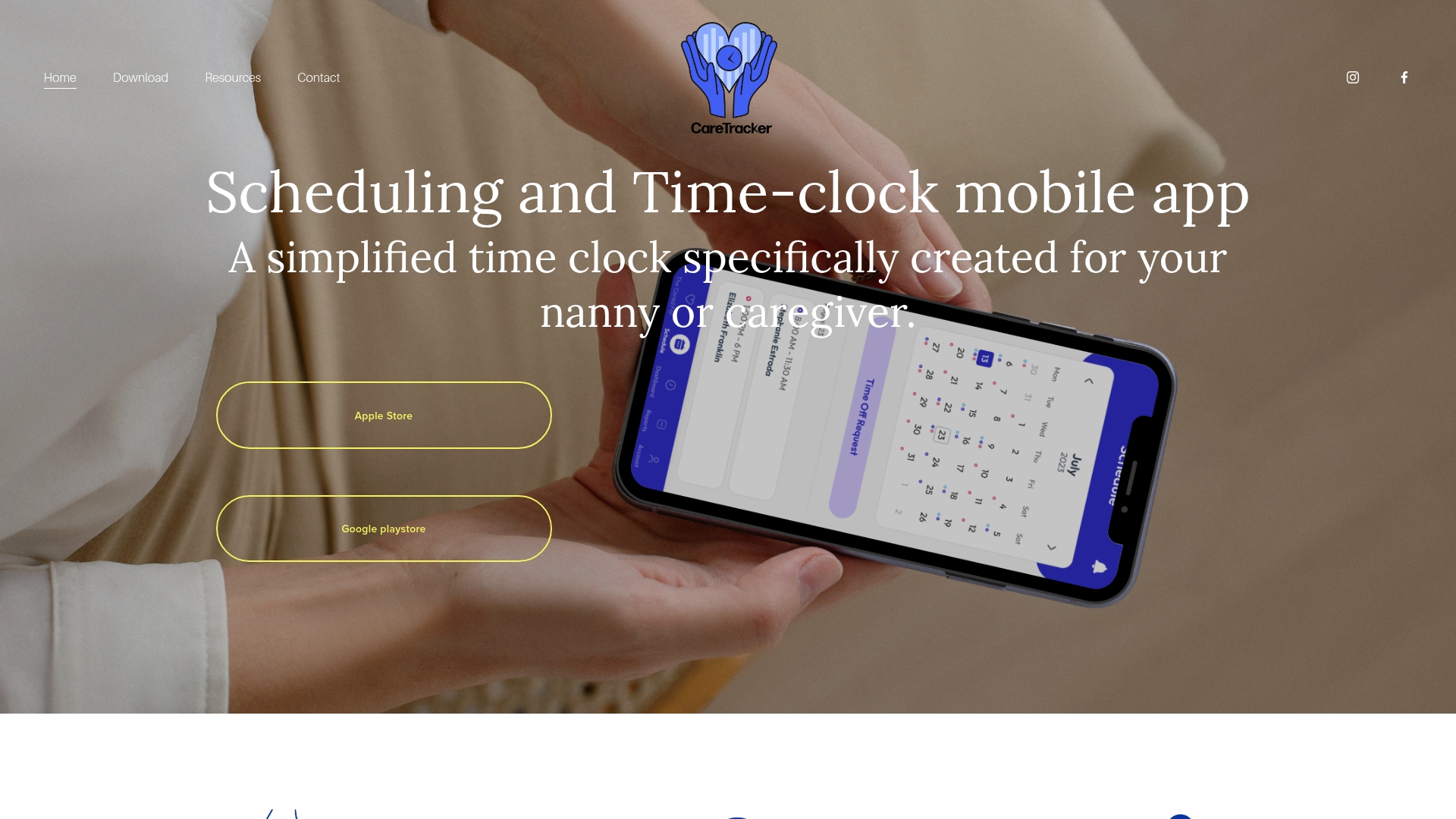
Families who want their reimbursement policy fully integrated with payroll, so approved expenses flow cleanly into pay stubs and tax filings, can book the Premium payroll consultation for $150 one-off. Households sorting out back pay or cleanup work can also use the Prior Wage Reporting & Household Payroll Cleanup Services, and the Standard Payroll Consultation package is available for $150 one-off as well. Download the scheduling and time-clock app today and start tracking hours and expenses in one place.
Sources
FAQ
What Is a Caregiver Expense Policy?
It's a written set of rules stating which work-related costs a household will reimburse, what proof the caregiver must provide, who approves each claim, and when payment happens. Households that put this in writing from the start avoid most disputes over incidentals, according to the International Nanny Association.
How Long Does a Caregiver Have to Submit a Receipt?
Most households set a 30 day submission window from the date of purchase. Claims submitted after that window can still be reviewed, but the policy should state upfront whether late claims get denied or simply flagged for follow up.
Should Mileage Be Reimbursed Separately From Other Expenses?
Yes, mileage should be tracked and reimbursed on its own, covering only miles driven during work duties, not the caregiver's commute. Many households use the IRS standard mileage rate as a steady benchmark instead of setting an arbitrary number.
What If a Caregiver Loses a Receipt?
A signed log entry noting the date, amount, and purpose is a reasonable substitute when both parties agreed to accept it in advance. Requiring a business purpose and some form of proof, even without the original receipt, keeps the process consistent and reduces disputes, per Texas's accountable plan guidance.
Does Thecaretracker Help With Expense Claims?
Yes, Thecaretracker is free for caregivers and lets them upload receipt photos, track hours, and submit expense requests alongside schedule approvals in one app. Families wanting the reimbursements integrated with payroll can add the Standard Payroll Consultation package for $150 one-off.