
In most cases, at-will employment applies to nannies, so there's no federal rule mandating two weeks' notice or severance. Your written agreement and your state law can override that default. Whatever happens, pay all earned wages, preserve your records, and expect a possible unemployment claim afterward.
TL;DR:
- State and local laws may require two weeks' notice or severance pay for nannies, especially in states like New Jersey and Massachusetts.
- Accurate recordkeeping of hours, warnings, and communications is essential to defend against unemployment claims or discrimination allegations.
- Final pay should cover all hours worked, unused vacation, and reimbursable expenses, with deadlines varying by state law.
- Proper legal termination involves confirming classification, reviewing contracts, documenting reasons, and following specific step-by-step procedures.
- Employer-employee disputes can be minimized through clear agreements, thorough documentation, and early consultation with a legal professional.
Table of Contents
- What Do Nanny Termination Laws Actually Require?
- How Do Contracts and State Law Affect Notice and Severance?
- What Records Protect You During a Nanny Contract Termination?
- What Happens to Final Pay, PTO, and Taxes After Termination?
- How Do Unemployment Claims Work After a Nanny Is Fired?
- Which State Rules Actually Change the Outcome?
- What's the Right Way to Fire a Nanny Legally?
- How Does Good Recordkeeping Reduce Termination Risk?
- Can Firing a Nanny Trigger a Discrimination or Harassment Claim?
- Does Firing a Nanny Affect Her Visa or Work Authorization?
- What Happens to Benefits Like Health Coverage After Termination?
- A Human Note on Ending a Nanny's Employment
- Get Hands-On Help With Payroll, Taxes, and Recordkeeping
- Sources
- FAQ
What Do Nanny Termination Laws Actually Require?
Nannies fall under domestic-service employment, and coverage under the Fair Labor Standards Act depends on the specific duties, living arrangement, and employer type. Classification hinges on facts, not job titles. Calling your nanny an "independent contractor" doesn't change her legal status if she works set hours in your home under your direction.
That classification matters most at termination, because it determines what records you're required to have and what you owe on the way out. The FLSA places recordkeeping responsibility squarely on you as the employer, not the caregiver.
Here's what stays true no matter which state you're in:
- At-will status lets either party end the relationship without cause, in most circumstances.
- At-will does not override a signed contract's specific terms about notice or severance.
- At-will never overrides anti-discrimination or anti-retaliation protections.
- Federal law sets no minimum notice period; state and local law might.
How Do Contracts and State Law Affect Notice and Severance?
Before you say anything to your nanny, pull out the contract. Look specifically for clauses covering notice period, pay in lieu of notice, severance, and what counts as "cause" for immediate dismissal. The Department of Labor's sample nanny agreement includes fields for exactly these terms, which is why families who use a written agreement from day one tend to have far fewer disputes when the relationship ends.
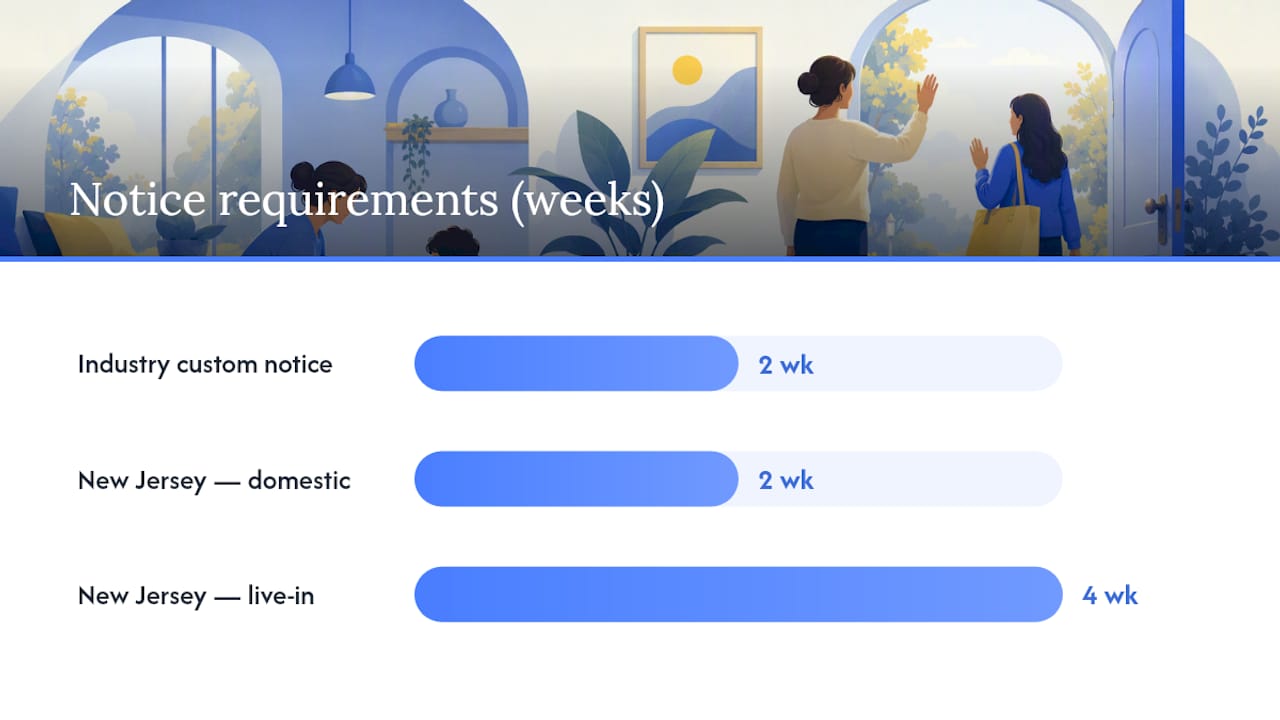
Industry custom leans toward two weeks' notice or pay in lieu, but custom isn't law. Some states make it law.
Statistic Callout: New Jersey requires at least two weeks' notice for a domestic worker and four weeks for a live-in worker, or severance equal to the missed notice period's regular wages, unless the worker committed serious misconduct.
Contract terms to check:
- Notice period length and how it's calculated.
- Whether pay in lieu of notice is allowed instead.
- Severance triggers and amounts.
- Defined grounds for immediate termination without notice.
When your contract and state law conflict, the stricter standard usually wins. If your agreement offers less than your state guarantees, the state rule controls.
What Records Protect You During a Nanny Contract Termination?
Good documentation does double duty. It helps you calculate final pay correctly and respond to an unemployment claim, and it shows the termination wasn't a pretext for something illegal, like retaliation.
Keep these items on hand before you ever schedule the termination conversation:
- Weekly schedules and actual hours worked, not just planned shifts.
- Signed timesheets or app-based time logs.
- Any written warnings or performance conversations, dated.
- Relevant texts and emails, especially anything referencing attendance or conduct.
- Notes on specific incidents, written the same day they happened.
- Names of any witnesses present for key incidents.
Pro Tip: Gather and back up every document before the termination conversation happens, not after. Once the meeting ends, memories shift and messages sometimes disappear.
What Happens to Final Pay, PTO, and Taxes After Termination?
Federal law doesn't set one universal deadline for issuing a final paycheck. Some states require it immediately or within a few days; others allow it to align with your normal pay cycle. Check your state labor department before you assume your regular payday works.
What federal law does require: final wages must cover every hour worked through the last day, plus anything else your agreement or state law adds on top, like unused vacation.
On the tax side, IRS Publication 926 governs household-employer obligations, including W-2 issuance and Schedule H reporting. A nanny who leaves mid-year still gets a W-2 the following January, timed to your normal filing schedule, not an early one triggered by the termination itself.
Before you cut that final check:
- Confirm the state-mandated final-pay deadline for your situation.
- Calculate unpaid vacation, notice pay, and severance as separate line items rather than one lump guess.
- Add any outstanding reimbursements for supplies or mileage.
- Document how each figure was calculated, in case it's questioned later.
How Do Unemployment Claims Work After a Nanny Is Fired?
Your former nanny's eligibility for unemployment benefits is decided by the state workforce agency, not by you. Your job is to respond accurately and quickly when the agency contacts you for fact-finding.
Agencies typically request dates of employment, wages paid, and the stated reason for separation. This is exactly where your saved schedules, time records, and written warnings earn their keep.
Common mistakes families make when contesting a claim:
- Giving a vague reason ("it wasn't working out") instead of a specific, documented one.
- Contradicting what they told the nanny at the termination meeting.
- Failing to respond within the agency's deadline, which often defaults the claim in the worker's favor.
Which State Rules Actually Change the Outcome?
State and local law can turn a routine dismissal into a costly mistake if you skip the check. Generic at-will advice is not safe advice once you cross into states with specific domestic-worker statutes.
- New Jersey: Two weeks' notice for standard workers, four weeks for live-in workers, or equivalent severance, unless the dismissal is for serious misconduct.
- Massachusetts: Live-in workers get written notice plus 30 days of housing or two weeks' severance pay unless fired for cause, and any earned, unused vacation must still be paid out.
- Washington: The state recently expanded domestic-worker protections around notice and severance; confirm effective dates and coverage with Washington's Department of Labor & Industries before assuming it applies to your household.
Municipal ordinances add another layer in some cities, so a quick call to your state labor department before the termination meeting is worth the ten minutes it takes.
What's the Right Way to Fire a Nanny Legally?
Sequence matters here almost as much as the substance. Rushing the legal steps is how families end up with a wrongful-dismissal complaint on top of an already hard situation.
- Confirm classification and check which state and local laws apply to your household.
- Reread the contract for notice, pay-in-lieu, severance, and cause provisions.
- Decide whether you'll give notice or pay in lieu, based on the contract and state minimums.
- Gather documentation: timesheets, warnings, incident notes, and any relevant messages.
- Write down the specific reason for termination before the meeting, in plain language.
- Hold the conversation privately, calmly, and briefly. Avoid ambiguity about the effective date.
- Issue final pay according to your state's deadline, including accrued PTO and reimbursements.
- Recover house keys, car access, or other property the same day if possible.
- File the W-2 and Schedule H on your normal tax schedule and keep all records for several years.
| Step | Action | Why it matters |
|---|---|---|
| Before the meeting | Confirm state notice/severance rules | Avoids underpaying a legally required amount |
| During the meeting | State the reason clearly, once | Prevents conflicting explanations later |
| After the meeting | Pay final wages on time | Reduces wage-claim exposure |
| After the meeting | Preserve all records | Supports unemployment and discrimination defense |
How Does Good Recordkeeping Reduce Termination Risk?
Most termination disputes come down to one thing: nobody can agree on what actually happened. A time-tracking habit fixes that before it ever becomes a problem.
- Digital time logs remove arguments about hours worked and pay owed at the final check.
- Shared job notes and care logs create a dated record of performance concerns, not just a memory of one.
- A nanny timesheet template gives you a consistent format to calculate final pay accurately.
- Households untangling back pay or unfiled W-2s often need a payroll cleanup service rather than guesswork.
Can Firing a Nanny Trigger a Discrimination or Harassment Claim?
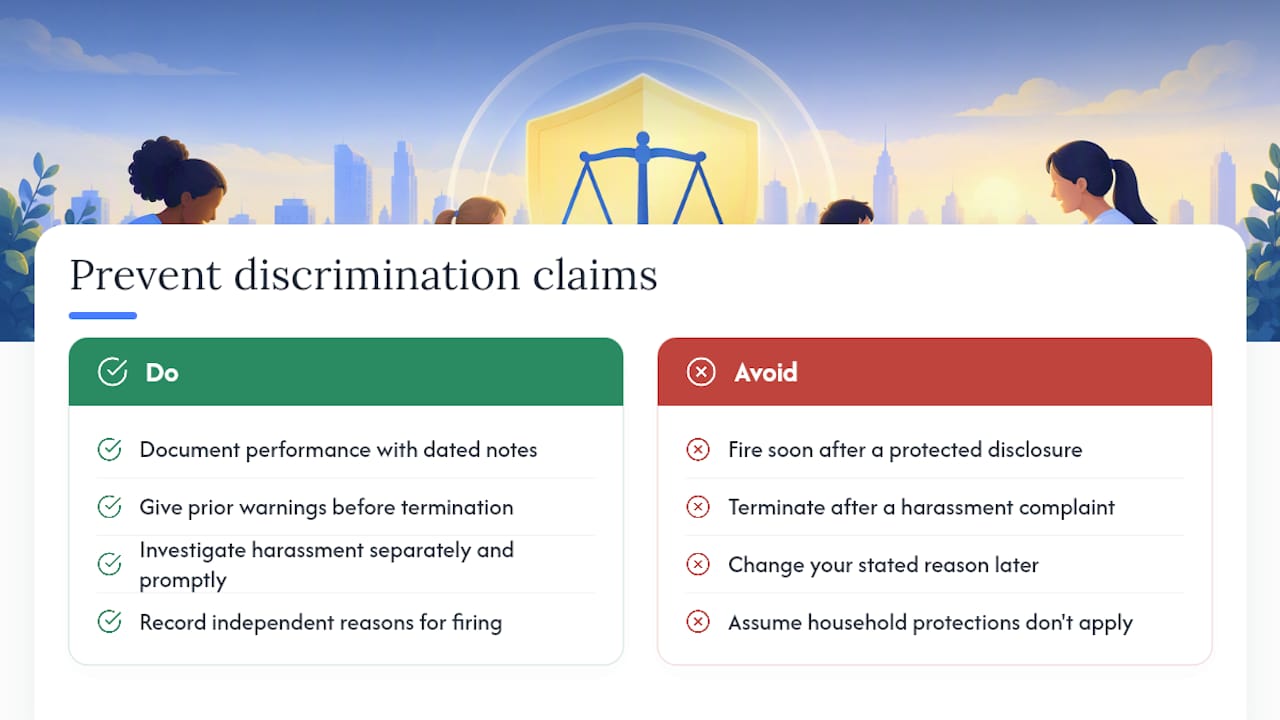
At-will employment doesn't protect you if the real reason for a termination touches a protected characteristic. If a nanny is fired shortly after disclosing a pregnancy, requesting a religious accommodation, or reporting harassment by a family member, the timing alone can invite scrutiny even when your stated reason sounds legitimate.
This is where documentation stops being a formality and becomes your best defense. A termination backed by dated performance notes, prior warnings, and a consistent explanation looks very different to an investigator than one where the reason changes depending on who's asking. If you can't point to specific, contemporaneous documentation showing a performance or conduct problem, a sudden termination following a complaint or disclosure is exactly the pattern that draws legal attention.
Harassment complicates things further. If your nanny reports harassment by you, your spouse, or another family member and you terminate her afterward, that sequence can look like retaliation regardless of your actual motive. The safest path is to separate the two issues entirely: investigate any harassment complaint on its own timeline, and if termination is genuinely warranted for unrelated reasons, document that reasoning independently and thoroughly.
Families sometimes assume that because they're not a "real" employer, workplace protections don't apply the same way. They do. A private household is still a workplace under most federal and state anti-discrimination frameworks, and the size exceptions that apply to small employers under some laws don't automatically extend to every protection a nanny might invoke.
Does Firing a Nanny Affect Her Visa or Work Authorization?
If your nanny is working under an employment-based visa sponsored by your household or a placement agency, termination can directly affect her ability to remain legally employed in the United States. Some visa categories tie authorization to a specific employer, which means losing that job can start a countdown toward losing legal status entirely.
This is a conversation to have early, not something to figure out mid-termination. If you know or suspect your nanny's work authorization is employer-specific, loop in an immigration attorney before finalizing the termination date, especially if there's any flexibility on timing that could help her transition to a new sponsor or status.
Au pairs present a related but distinct situation, since their program status runs through a sponsoring agency rather than the household directly. Ending an au pair placement early typically requires notifying that agency, which handles the visa and program compliance side separately from your payroll obligations.
None of this changes your legal termination rights as the employer. It does mean the human stakes are higher than a typical staffing change, and a little extra care in how you communicate the timeline can matter enormously to someone whose immigration status is on the line.
What Happens to Benefits Like Health Coverage After Termination?
COBRA continuation coverage generally applies to group health plans sponsored by employers with 20 or more employees, which puts most individual households well outside its scope. If you've been providing health insurance informally, or reimbursing premiums as part of compensation, that arrangement typically ends on the date you specify in the termination, unless your contract says otherwise.
Check your specific agreement here rather than assuming. Some nanny contracts specify a wind-down period for benefits, such as covering the current month's premium in full regardless of the termination date. If yours does, honor it. If it doesn't, communicate the end date for any benefit clearly and in writing so there's no confusion about what's covered and when.
Any unused paid time off is a separate matter from benefits and gets handled under the final-pay rules discussed earlier, following whatever your state requires for vacation payout.
A Human Note on Ending a Nanny's Employment
Firing someone who has cared for your children is rarely simple, even when it's clearly the right call. The legal steps exist to protect both sides, and skipping them to avoid an awkward conversation almost always creates a worse one later.
Clear agreements and consistent records aren't bureaucratic overkill. They're what let you end things cleanly and, when possible, leave the door open for an honest reference.
— mercedes*
Get Hands-On Help With Payroll, Taxes, and Recordkeeping
Sorting out final pay, back taxes, or an unfiled W-2 after a nanny termination isn't something most families want to handle alone, and it isn't something you have to. Thecaretracker's Standard Payroll Consultation package walks you through the close-out calculations, while the Prior Wage Reporting & Household Payroll Cleanup service untangles back pay and reporting gaps if things weren't tracked cleanly before now.
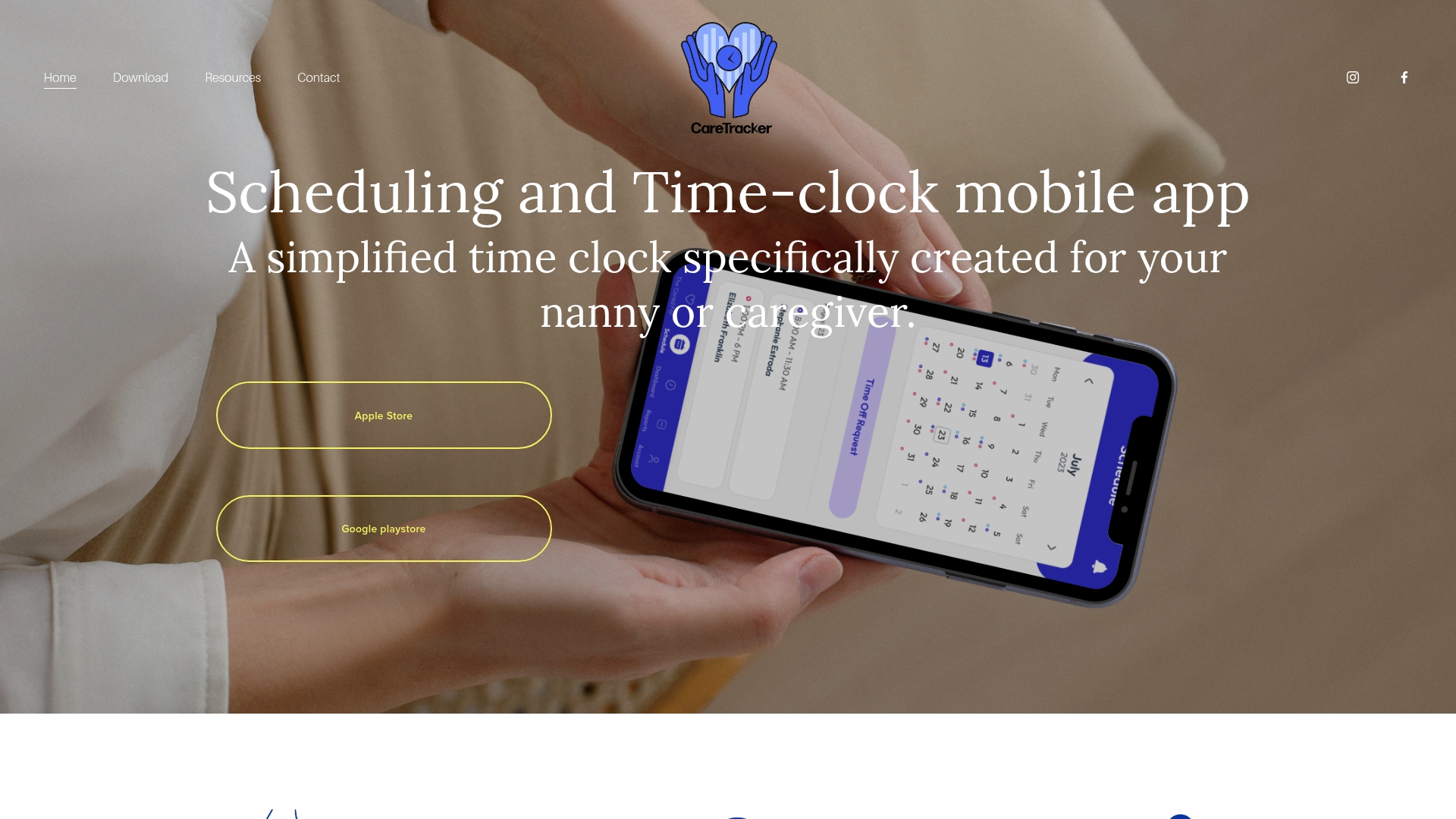
On the day-to-day side, the free Scheduling and Time-clock app gives you accurate hour logs, shared schedules, and care notes all in one place, so if a termination ever comes up, you already have the documentation an unemployment agency or attorney would ask for. It costs caregivers nothing to use, and it's the kind of habit that makes the legal side of a termination far less stressful when the day actually comes. Set it up now, before you need it.
This article is general information, not a substitute for advice from a qualified lawyer. Consult a qualified legal professional about your own circumstances before acting on anything here.
Sources
- Fact Sheet #79: Private Homes and Domestic Service Employment Under the Fair Labor Standards Act (FLSA) | U.S. Department of Labor
- Publication 926 (2025) — Household Employer's Tax Guide | IRS
- Domestic worker employer guidance | New Jersey Department of Labor
- Mass
FAQ
How Much Is Severance Pay for a Nanny?
There's no federal severance requirement for nannies. Some states set specific amounts. New Jersey requires severance equivalent to the pay for the missed notice period when proper notice isn't given, and Massachusetts requires roughly two weeks' severance pay for live-in workers let go without cause.
Are Nanny Contracts Legally Binding?
Yes, a signed nanny employment agreement is a legally binding contract, and its notice, severance, and cause provisions generally hold up as long as they don't conflict with state law. The Department of Labor's sample agreement shows the standard terms families should include from the start.
What Qualifies as a Wrongful Termination?
A wrongful termination happens when a nanny is fired for an illegal reason, such as discrimination based on a protected characteristic, retaliation for reporting harassment, or a violation of specific contract or state notice requirements. At-will status protects most terminations, but it never overrides anti-discrimination or anti-retaliation law.
How Do You Properly Terminate a Nanny?
Confirm your state's notice and severance rules, review your contract, and document your reason before the meeting. Then pay all final wages on time, recover household property, and handle W-2 and Schedule H filings on your normal tax schedule using Publication 926 as your guide.
Do I Need Documentation Before Firing a Nanny?
Yes. Saved schedules, timesheets, and written warnings support your final-pay calculations and give you something concrete to point to if an unemployment claim or discrimination complaint follows. Apps like Thecaretracker's time-tracking tool make that documentation automatic rather than something you scramble to reconstruct later.