
No federal law forces private families to run criminal background checks on nannies. But several federal rules govern how you screen a caregiver once you decide to: get written FCRA consent, complete Form I-9, and follow pre-adverse and adverse-action steps if you rely on a consumer report. State and local rules add another layer, so check your area's requirements before you hire.
TL;DR:
- Families should conduct county-level criminal searches in all areas where the nanny has lived, as national databases often miss local records.
- Background checks must be ordered only after extending a conditional job offer and obtaining written consent to ensure legal compliance.
- Pre-adverse and adverse action notices are required if the background report influences the hiring decision, with a typical waiting period of five business days.
- State and city laws may impose additional screening requirements, such as California’s Trustline registry or Chicago’s language-specific work contracts; verify local rules before hiring.
- Evaluating criminal record findings requires considering the offense's severity, time elapsed, and evidence of rehabilitation, avoiding blanket disqualifications to prevent discrimination risks.
Table of Contents
- Understanding Nanny Background Check Laws at the Federal Level
- What Does a Thorough Nanny Background Check Include?
- Do State or City Laws Add Extra Nanny Screening Requirements?
- When Should You Run a Nanny Background Check, and How?
- How Do You Fairly Evaluate a Nanny's Background Check Results?
- Your Nanny Hiring Checklist: Documents, Consent, and Recordkeeping
- How The CareTracker App Supports Your Onboarding Process
- Official Resources Worth Bookmarking
- Where Most Parents Get This Wrong
- Sources
Understanding Nanny Background Check Laws at the Federal Level
Federal law doesn't require you, as a private household employer, to run a criminal background check before hiring a nanny. What it does require is strict process discipline the moment you decide to order one. That distinction trips up a lot of families who assume "no mandate" means "no rules."
The Fair Credit Reporting Act kicks in whenever you use a third-party consumer-reporting agency to pull criminal, credit, or driving records. You must give the candidate written disclosure that a report may be requested, and you need their signed consent before you order it. If the results influence your decision, FCRA requires a two-step notice process: a pre-adverse action notice with a copy of the report first, then a final adverse action notice if you move forward with declining them.
Separately, immigration law requires every household employer to complete Form I-9 within three business days of the nanny's first day of work, verifying her eligibility to work in the United States. This applies whether you're hiring a full-time nanny or a part-time after-school sitter classified as an employee.
A few other federal pieces matter here:
- The National Child Protection Act and later amendments created fingerprint-based national check systems for child-protection purposes, but access is generally routed through qualified agencies, not individual families.
- The Department of Labor treats most nannies as employees, not independent contractors, which brings Fair Labor Standards Act rules on pay, overtime, and recordkeeping into play alongside your screening process.
- FCRA rights apply equally whether you order the check yourself through a background-check company or through a nanny placement agency acting on your behalf.
What Does a Thorough Nanny Background Check Include?
A comprehensive nanny background check typically layers several search types rather than relying on one national database, because no single source captures everything relevant to childcare safety.
The core components most families order:
- SSN trace and identity verification to confirm the candidate is who she says she is and to surface any address history you'll want to search.
- County-level criminal record searches in every county where the candidate has lived, since many counts never appear in national databases.
- Multi-state or nationwide criminal database searches as a supplement, not a replacement, for county-level checks.
- Sex offender registry search across all 50 states.
- Motor vehicle record check if the nanny will drive your children.
- Fingerprint-based FBI checks, where available through a qualified agency, for an added layer of certainty on identity and criminal history.
Beyond the core package, many parents add employment and education verification, professional reference checks, and occasionally a credit check when the role involves handling money or purchases. Credit checks require the same written consent as any other consumer report and should only be run when genuinely job-relevant.
Pricing snapshot: basic packages covering SSN trace, national database, and sex offender registry checks generally run $15 to $40. Comprehensive packages that add county-level criminal searches, motor vehicle records, and reference verification typically land between $30 and $80. Fingerprint-based FBI checks cost more and take longer, often adding a week or more to your timeline since they route through a qualified entity rather than an instant database pull.
Do State or City Laws Add Extra Nanny Screening Requirements?
Licensed daycare centers and in-home childcare programs face detailed, state-mandated background check rules. Private household employers hiring a nanny directly generally do not fall under those same licensing statutes, which is exactly why federal FCRA compliance and voluntary diligence matter so much.
Still, a handful of states and cities layer on requirements or resources worth knowing about:
- California operates Trustline, a state registry for license-exempt care providers, and requires online child-care job platforms to disclose specific details about the background checks they run.
- Chicago requires household employers to provide a written contract in the worker's preferred language, part of a broader domestic worker ordinance covering pay, breaks, and recordkeeping.
- Some states restrict how far back a criminal record can be considered or limit questions about sealed or expunged records, regardless of what a background check report shows.
Because these rules shift by jurisdiction and change over time, don't rely on secondhand summaries. Check your state attorney general's website, your state Department of Justice consumer-protection page, or your city's labor or domestic-worker resource page directly. If you're in a state with a nanny-specific registry or licensing carve-out, that page will usually spell out whether it applies to private, in-home hires or only to licensed facility staff.
When Should You Run a Nanny Background Check, and How?
Timing and sequence matter almost as much as the check itself. Get this wrong and you risk both legal exposure and a bad hiring decision.
- Extend a conditional offer first. Most employment law guidance recommends running background checks after you've made a conditional job offer, not during initial screening. This keeps your evaluation focused on qualifications up front and gives you a defensible, consistent process if you later decline a candidate based on the results.
- Get written disclosure and consent. Before ordering any consumer report, provide a standalone written disclosure stating you may obtain a background report, and get the candidate's signature authorizing it. Keep a dated copy on file.
- Order the check through a reputable consumer-reporting agency rather than piecing together searches yourself, since agencies build FCRA compliance into their process and can provide fingerprint-based options you likely can't access directly.
- If the report affects your decision, send a pre-adverse action notice with a copy of the report and a summary of the candidate's rights, then wait a reasonable period, often five business days, before finalizing anything.
- Send the final adverse action notice only after that waiting period, if you're still declining to hire based on the report.
Pro Tip: Keep every signed consent form and notice in one place from day one. If a hiring decision is ever questioned, a clean paper trail matters more than a spotless memory of what you told the candidate.
How Do You Fairly Evaluate a Nanny's Background Check Results?
A criminal record on a report isn't an automatic disqualifier, and treating it that way can create legal exposure. Evaluate each finding individually rather than applying a blanket rule.
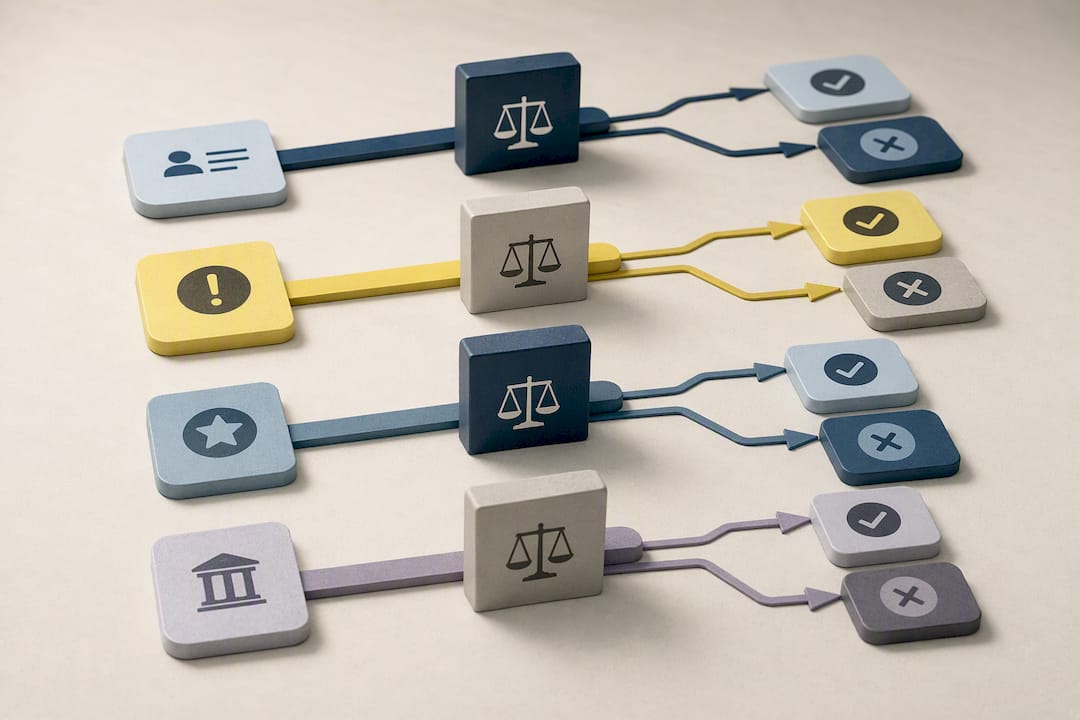
Consider the nature of the offense, how much time has passed, evidence of rehabilitation, and whether the conviction actually bears on childcare responsibilities. A decade-old minor offense unrelated to safety carries different weight than a recent conviction involving violence or dishonesty.
The Equal Employment Opportunity Commission has flagged blanket exclusion policies as a discrimination risk when they disproportionately affect protected groups without individualized review. The safer approach:
- Apply the same evaluation criteria to every candidate, and write that criteria down before you start reviewing results.
- Give the candidate a chance to explain or dispute anything on the report before you decide.
- If a candidate flags an error, let her work directly with the reporting agency to correct it, and pause your decision until that process resolves.
- Keep documentation showing what you considered and why, in case your process is ever questioned.
Your Nanny Hiring Checklist: Documents, Consent, and Recordkeeping
Print this before your next interview round. It covers the legal minimum, not the nice-to-haves.
- Signed background check disclosure and consent form, dated and filed.
- Form I-9 completed within three business days of the nanny's first day, with acceptable ID documents copied per USCIS guidance.
- Background checks run and results reviewed against your written evaluation criteria.
- Reference calls completed and documented, ideally by someone other than the person who conducted the interview.
- A signed written work agreement covering pay, hours, and duties, following the DOL sample nanny agreement format where helpful.
- All documents stored securely, with access limited to those who genuinely need it.
A basic consent clause might read: "I authorize [Family Name] to obtain a consumer report, including criminal history and driving records, for employment purposes. I understand I will receive a copy of any report used in an adverse decision." Adapt the language to your state's specific disclosure requirements before using it.
Pro Tip: Store background check reports separately from day-to-day nanny files like schedules and pay records. Limiting who sees sensitive screening results reduces both privacy risk and liability.
How The CareTracker App Supports Your Onboarding Process
Once the legal steps are done, the app helps you stay organized without replacing any of them. The CareTracker app gives you a calendar view of jobs, a way to approve schedule requests, and accurate weekly hour tracking. It also stores emergency contacts, allergies, medications, and daily care details in one place your nanny can access instantly.
None of that substitutes for FCRA consent or Form I-9. But centralizing onboarding documentation, once you've completed the legal steps, gives you a consistent record if questions ever come up later.
Official Resources Worth Bookmarking
- USCIS Form I-9 resources
- DOL sample nanny agreement
- ChildCare.gov staff background checks
For a deeper walk-through of screening options, Thecaretracker's complete nanny background check guide covers document collection in more detail, and families juggling payroll setup alongside screening may find the nanny payroll setup guide useful for the compliance side that runs parallel to hiring. Parents navigating the broader adjustment of bringing on household help sometimes also lean on general parenting resources like pregnancy and newborn support guides during the same stretch of decision-making.
Where Most Parents Get This Wrong
The conventional advice on nanny screening treats the background check itself as the finish line. It isn't. The check is the easy part, ordering it takes ten minutes online. The part families skip is the process around it: written consent before you order anything, a conditional offer before you screen, and a documented, consistent standard for how you'll judge what comes back.
I'd also push back on the assumption that a clean national database search means a clean history. County-level searches catch things national databases miss, and skipping them because they cost more or take longer defeats the purpose of screening at all.
If you take one thing from this, prioritize the paperwork sequence over the search itself: consent form first, conditional offer before ordering, written evaluation criteria before you open the report. Get that order right and the actual screening choices become far less risky, legally and practically.
— mercedes
Sources
- Form I-9 resources, statutes and regulations (USCIS)
- Employment Sample Agreement for Nannies (DOL)
- California Business and Professions Code — Chapter 2.3 (Trustline and disclosure rules)
- For households — City of Chicago domestic worker guidance