
Choose an au pair when you want affordable live-in care and cultural exchange within regulated hour limits. Choose a nanny when you need professional experience, flexible hours above 45 per week, or long-term continuity. That one-sentence verdict covers most U.S. families, but the details matter.
The U.S. Department of State's J-1 au pair program caps au pair hours at 45 per week and 10 per day, sets a weekly stipend minimum of $195.75, and requires host families to support educational coursework. Nannies are household employees: you set the hours, negotiate the duties, and take on payroll tax obligations. Both models can work beautifully, but they are structurally different, and picking the wrong one creates friction fast.

Thecaretracker is a free app that helps families and caregivers stay on the same page, whether you go the au pair route or hire a nanny. It tracks hours, manages schedule approvals, and stores care details like allergies and emergency contacts in one place.
Table of Contents
- Au pair vs nanny: a side-by-side comparison
- What does it actually cost to hire an au pair or a nanny?
- What do daily hours, duties, and living arrangements look like?
- What are the visa, legal, and tax rules for each option?
- Which family profile fits an au pair, and which fits a nanny?
- How do you choose, interview, and onboard the right caregiver?
- How do you manage hours, handovers, and records day to day?
- Key Takeaways
- What families are often surprised to discover when they switch
- Thecaretracker makes managing either option simpler
- What families often discover when they switch caregivers
- Useful sources and where to verify state rules
Au pair vs nanny: a side-by-side comparison
| Dimension | Au Pair | Nanny |
|---|---|---|
| Google Reviews | N/A (program category) | N/A (employee category) |
| Annual all-in cost | $27,000–$30,000 all-in per year | $55,000–$100,000+ per year (varies by market and experience) |
| Living arrangement | Live-in (required) | Live-in or live-out |
| Work hours / overtime | Max 45 hrs/week, 10 hrs/day (J-1 rules) | Negotiable; overtime at 1.5× over 40 hrs |
| Duration / term | 12 months (extendable to 24 months) | Open-ended or contract-based |
| Visa / legal status | J-1 cultural exchange visa | U.S. resident or work-authorized employee |
| Screening & training | Standardized agency vetting, background check, pre-arrival training | Varies by recruiter or family; no universal standard |
| Typical duties | Child-related tasks only | Child care plus negotiable household tasks |
| Best for | Budget-conscious families needing full-time live-in coverage for multiple children | Families needing specialized infant care, 45+ hrs/week, or long-term continuity |
The cost gap between these two models is the single biggest driver of the decision for most families. Annual costs for a J-1 au pair are typically $27,000–$30,000 all-in, while full-time nanny costs are usually $55,000–$100,000+ per year, varying widely by location. Nanny costs vary significantly by metro area; au pair program costs are more standardized.
One important note on nanny payroll: state rules on overtime, workers' compensation, and unemployment insurance vary. California, for example, has specific nanny overtime thresholds that differ from federal FLSA rules. Always verify your state's requirements before finalizing a nanny's compensation structure.
What does it actually cost to hire an au pair or a nanny?
Au pair cost breakdown
The J-1 au pair program's cost structure is more predictable than most families expect. Here is a typical annual breakdown:
- Weekly stipend: the program minimum is $195.75 per week, paid throughout the year
- Agency program fee: $9,000–$12,500 per year to cover placement, vetting, and ongoing support
- Education allowance: approximately $500 per year as required by the program
- Household costs (room, board, food, car/insurance if driving): typically $5,000–$8,000 per year for providing room and board and related expenses
That puts the realistic all-in range at roughly $27,000–$30,000 per year. One structural advantage: au pair program fees are priced per family, not per child, so a household with three children pays the same program cost as one with a single child.
Nanny cost breakdown
Nanny costs are less predictable and depend heavily on your market. Typical all-in costs for a full-time nanny are $55,000–$100,000+ per year, factoring in gross wages, employer FICA (7.65%), FUTA, state unemployment and workers' comp, overtime, and payroll service fees. Hourly rates in major metro areas often run $25–$35 or more, while smaller markets may see $18–$22. Nanny employers are responsible for running payroll, issuing a W-2, and handling employer tax filings. That administrative burden is real, and it catches many first-time household employers off guard.
Pro Tip: Before you finalize a nanny's hourly rate, use a nanny timesheet template to model weekly hours and overtime scenarios. Knowing your true weekly cost before you make an offer prevents uncomfortable renegotiations later.
What do daily hours, duties, and living arrangements look like?
Au pair schedules and duties
The J-1 program sets firm limits: 45 hours per week, 10 hours per day, and at least one full weekend off per month. The EduCare variant caps hours at 30 per week and requires a larger education allowance. These are not negotiable. Families who regularly need 50-hour weeks will hit a compliance wall.
Au pair duties are restricted to child-related tasks: getting kids ready for school, driving to activities, preparing children's meals, and light tidying of children's spaces. General housekeeping, cooking for the whole family, or running adult errands falls outside the program's scope. CulturalCare describes the au pair relationship as a cultural exchange, not a standard employment arrangement, and that framing has legal weight.
Because au pairs live with the family, room and board are part of the arrangement. The family provides a private bedroom, meals, and typically a phone plan or transportation access. That live-in dynamic shapes the relationship in ways that surprise some families: an au pair is closer to a temporary family member than a professional employee.
Nanny schedules and duties
A nanny's schedule is whatever you negotiate. Part-time, full-time, overnight, split-shift, or weekend-only arrangements are all possible. Overtime rules apply under federal law once hours exceed 40 per week, and some states set stricter thresholds.
Duties are negotiable. Many nannies take on light housekeeping, family meal prep, school pickups, and errand running alongside direct child care. A household manager nanny may handle scheduling, vendor coordination, and household logistics. That flexibility is one of the model's core advantages over the au pair structure.
Au pairs typically fall in the 18–26 age range and may have limited professional childcare experience. Career nannies often bring years of documented experience, CPR certification, and sometimes specialized training in infant care or child development. Screening standards for au pairs are standardized through sponsor agencies, including background checks and reference verification, while nanny vetting quality depends entirely on the recruiter or family doing the hiring.
Pro Tip: Use a nanny schedule template to map out your weekly care needs before you start interviewing. Knowing your exact hours and shift patterns helps you evaluate candidates against real requirements, not hypothetical ones.
What are the visa, legal, and tax rules for each option?
Au pairs and nannies sit in completely different legal categories, and confusing them creates real compliance risk.
Au pair legal framework:
- Au pairs enter on a J-1 cultural exchange visa, sponsored by a U.S. Department of State-designated agency
- The sponsor agency manages insurance, program compliance, and required educational enrollment
- Host families must sign a program agreement and comply with hour caps, stipend minimums, and cultural exchange requirements
- Treating an au pair like a standard household employee (assigning non-child tasks, exceeding hour caps) risks program violations and potential visa consequences
Nanny legal framework:
- Nannies are household employees under U.S. tax law; if you pay a household employee $2,700 or more in a calendar year (the current IRS threshold), you have employer obligations
- You must issue a W-2 at year end
- You withhold and remit employee FICA (Social Security and Medicare) and pay the employer's matching share (~7.65%)
- FUTA applies to most household employers; state unemployment insurance and workers' comp requirements vary by state
- Overtime is governed by the federal Fair Labor Standards Act and applicable state law; California's nanny overtime rules, for example, differ from the federal standard
Pro Tip: Household employer payroll is more complex than it looks. A payroll consultation with a specialist before your nanny's first day can prevent costly filing errors and back-tax situations.
Two common violations worth flagging: assigning an au pair regular household cleaning or cooking for adults, and allowing an au pair to exceed the 45-hour weekly cap during busy periods. Both can trigger program review. On the nanny side, misclassifying a nanny as an independent contractor to avoid payroll taxes is the most frequent mistake, and the IRS scrutinizes household employment closely.
Which family profile fits an au pair, and which fits a nanny?
Childcare experts frame the decision around two priorities: cultural integration and affordable live-in coverage point toward an au pair; professional experience and long-term continuity point toward a nanny. Most families land clearly in one camp once they map their actual needs.
Au pairs tend to work well for:
- Two-income families with two or more school-age children who need full-time coverage within the 45-hour cap
- Families interested in cultural exchange and comfortable with a live-in dynamic
- Households where childcare cost is a primary constraint and the all-in au pair model is significantly cheaper than local nanny rates
- Families who want a fresh placement every 12–24 months and are comfortable with the onboarding cycle that brings
Nannies tend to work well for:
- Families with infants or children with specialized medical needs; au pairs are not suited to complex infant care or medical situations that require documented professional experience
- Households that regularly need more than 45 hours of care per week
- Families who want a long-term caregiver relationship and value continuity for their children
- Parents who need a household manager role that goes beyond child-specific tasks
The relationship dynamic is worth naming directly. CulturalCare notes that au pairs are integrated into family life as temporary members, sharing meals and household rhythms, while nannies maintain a professional employee-employer relationship. Neither is better, but they feel different day to day, and families who expect a professional employee and get a live-in cultural exchange participant often find the adjustment harder than anticipated.
How do you choose, interview, and onboard the right caregiver?
Start with your own requirements
Before you look at a single candidate profile, answer these questions honestly:
- How many hours of care do you need per week? If the answer is consistently above 45, an au pair is not a viable option.
- Do you have an infant or a child with specialized medical or developmental needs? If yes, prioritize a professional nanny with documented experience.
- Are you comfortable with a live-in arrangement? An au pair requires it; a nanny gives you a choice.
- Is cultural exchange a genuine priority, or just a nice-to-have? The J-1 program requires families to actively support it.
- What is your realistic all-in budget? Run the full cost comparison, including employer taxes for a nanny, before you decide.
What to include in your contract or program agreement
- Exact weekly hours and daily schedule
- Specific duties (and, for au pairs, explicit confirmation that duties are child-related only)
- Paid time off and sick day policy
- Room and board details for live-in arrangements
- Education allowance and coursework expectations for au pairs
- Overtime rate and calculation method for nannies
- Termination notice period for both parties
- Emergency procedures and backup care plan
Interview questions that reveal fit
For au pairs, ask scenario-based questions: "What would you do if one of the children had a fever and you couldn't reach me?" and "How do you handle a toddler's meltdown in public?" These reveal judgment under pressure, not just language skills.
For nannies, ask about specific experience: "Describe your experience with newborns" or "Tell me about a time you disagreed with a parent's instruction and how you handled it." Behavioral questions surface professional maturity.
Red flags for both: gaps in childcare experience they cannot explain, references who are unavailable or vague, inability to commit to your specific hours, and any reluctance to sign a written agreement.
After you choose: onboarding steps
- Schedule a structured orientation week before the caregiver is solo with your children
- Prepare a written onboarding packet: routines, allergies, medications, emergency contacts, and daily activity preferences
- Set up a shared calendar and time-tracking system from day one
- Establish a weekly check-in rhythm to catch issues early
A babysitter information sheet is a practical starting point for building your onboarding packet, even if you are hiring a full-time caregiver.
How do you manage hours, handovers, and records day to day?
Consistent recordkeeping prevents most caregiver disputes. That is not a general principle; it is the specific finding that comes up repeatedly in household employment guidance. The families who avoid payroll disagreements and program violations are the ones who track hours contemporaneously, not from memory at the end of the week.
Daily and weekly workflows that reduce friction:
- Capture start and stop times at the moment they happen, not retroactively
- Use written handover notes: what the children ate, nap times, any behavioral incidents, and medication given
- Keep a shared log of allergies, medications, emergency contacts, and daily routines accessible to both caregiver and parent
- Approve timesheets weekly, not monthly; errors are easier to catch and correct in real time
What to track and why it matters:
- Hours worked: required for W-2 payroll accuracy and J-1 program compliance
- Overtime hours: triggers different pay rates; state rules vary
- Mileage and reimbursements: deductible in some cases and necessary for accurate expense records
- Care notes and incident logs: protect both the family and the caregiver if a dispute arises
Good scheduling practices also affect caregiver retention. Caregivers who have clear, predictable schedules and feel their time is tracked fairly stay longer, which matters especially when you have invested weeks in onboarding.
Pro Tip: Thecaretracker's nanny time tracking feature gives caregivers and families a single source of truth for hours and schedule approvals. Caregivers log time in the app; families approve it. No spreadsheets, no end-of-week guesswork.
Key Takeaways
The most important decision factor in the au pair vs nanny comparison is whether your weekly care needs, budget, and household dynamics align with a regulated cultural exchange program or a professional employment relationship.
| Point | Details |
|---|---|
| Cost gap is significant | Au pair all-in costs typically run $27,000–$30,000/year vs $55,000–$100,000+ for a full-time nanny. |
| Hour cap is non-negotiable | J-1 au pairs are capped at 45 hours/week; families needing more must hire a nanny. |
| Nannies carry employer tax obligations | W-2 payroll, employer FICA (~7.65%), FUTA, and state filings apply when you hire a nanny. |
| Infant and special needs care | Au pairs are not suited to specialized infant or complex medical care; hire a professional nanny for those situations. |
| Thecaretracker simplifies management | Free for caregivers, Thecaretracker tracks hours, approves schedules, and stores care details for both au pair and nanny arrangements. |
What families are often surprised to discover when they switch
The most common surprise when families move from a nanny to an au pair is the relationship shift. You are no longer managing a professional employee who clocks in and out. You are sharing your home with someone who eats dinner with your family, uses your living spaces, and is genuinely embedded in your daily life. That can be wonderful. It can also be unexpectedly complicated if the personalities do not mesh, and there is no clean "end of shift" boundary to fall back on.
The onboarding time for a new au pair also catches families off guard. Even with agency pre-screening, a new au pair typically needs two to four weeks before they are fully comfortable with your children's routines, your home's layout, and your expectations. Families who treat the first week as a structured orientation, with written routines and shadowing time, report a much smoother transition than those who hand over the keys on day one.
Going the other direction, families switching from an au pair to a nanny often underestimate the administrative lift. Suddenly you are a household employer: setting up payroll, tracking overtime, filing quarterly taxes. Two practical tips that smooth the transition: build your written routines and care notes before the new caregiver starts (not after), and set up your time-tracking system on day one so records are accurate from the beginning.
Thecaretracker makes managing either option simpler
Whether you hire a nanny or host an au pair, the day-to-day management challenge is the same: keeping accurate records, communicating schedule changes clearly, and making sure care details are always accessible. That is exactly what Thecaretracker is built for.
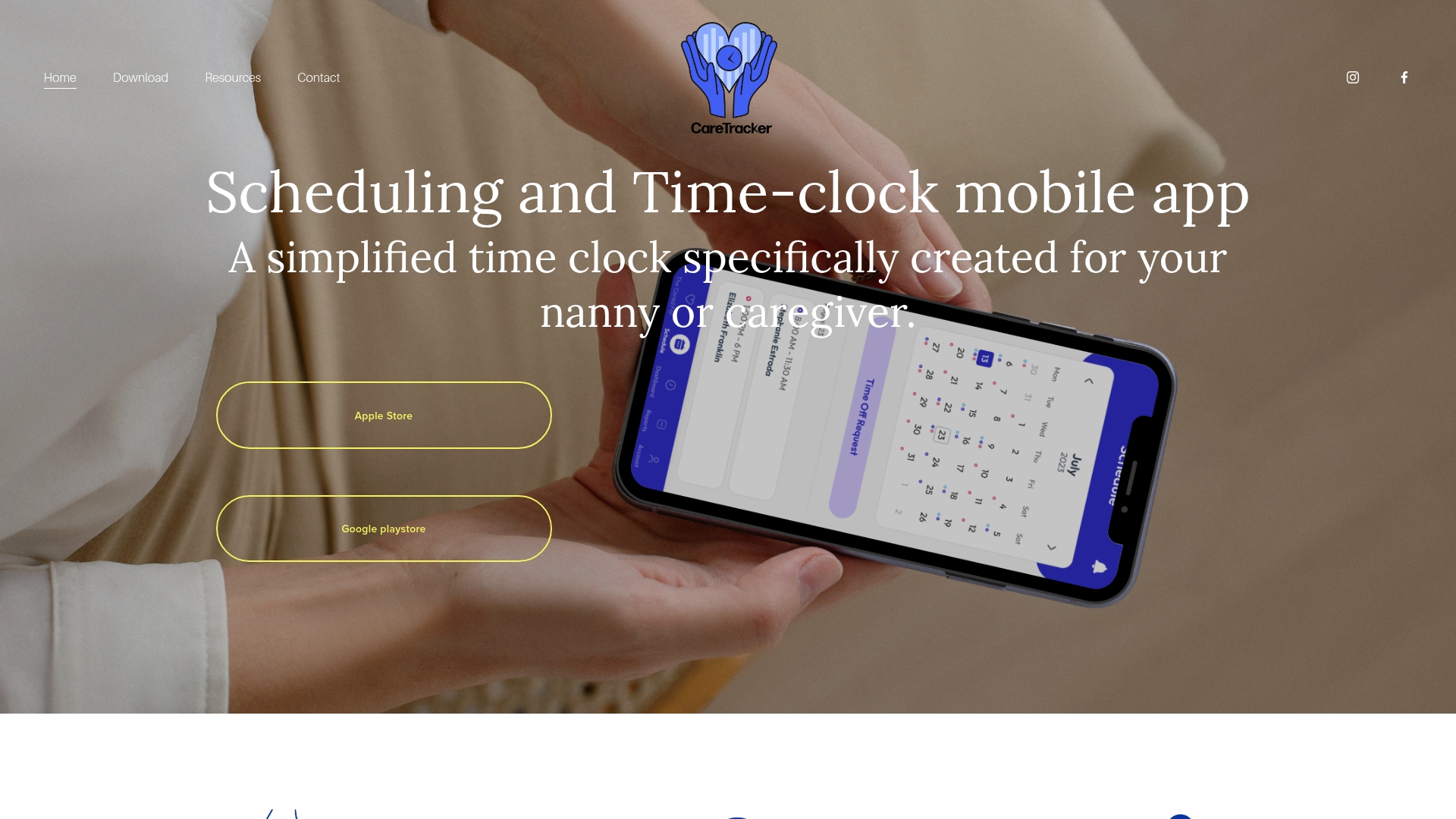
Thecaretracker is a free app for caregivers that gives families and their nannies or au pairs a shared, organized system from day one. Caregivers log hours in real time, submit schedule requests, and access care profiles with allergies, medications, emergency contacts, and daily routines. Families approve timesheets, review hours, and export payroll-ready summaries without chasing down a paper timesheet.
- Track weekly hours accurately with real-time logging
- Approve or adjust schedule requests from your phone
- Store allergy, medication, and emergency contact details in one place
- Generate time summaries ready for your payroll provider
The core app is completely free for caregivers. Families who need payroll compliance support can access a payroll consultation to get household employer tax obligations handled correctly from the start.
Start tracking hours and managing your caregiver's schedule with Thecaretracker today.
What families often discover when they switch caregivers
The editorial perspective below reflects analysis of the patterns that emerge when families navigate this decision.
The conventional wisdom on the au pair vs nanny decision focuses almost entirely on cost. That framing misses the more consequential variable: relationship structure. Families who choose an au pair primarily because it is cheaper, without genuinely preparing for the live-in cultural exchange dynamic, tend to struggle in ways that have nothing to do with money. The au pair program is a legal cultural exchange, not a budget staffing solution. Host families who treat it as the latter often find themselves in program compliance issues or interpersonal friction that no cost saving justifies.
The flip side is equally true. Families who hire a professional nanny without setting up proper payroll infrastructure from day one create a different kind of problem. The IRS does not give household employers a grace period for figuring out W-2 obligations. Getting payroll right from the first paycheck is far easier than correcting a year of errors.
The families who navigate this decision well share one habit: they write things down. Written routines, written schedules, written agreements. Not because caregivers cannot be trusted, but because clarity protects everyone. A caregiver who knows exactly what is expected, when they work, and how they will be paid is a caregiver who stays. That is true whether you are hosting an au pair through Au Pair in America or managing a career nanny you found independently.
Useful sources and where to verify state rules
The references below are the authoritative starting points for verifying program rules, stipend minimums, and employer obligations.
| Source | What it covers |
|---|---|
| U.S. Department of Labor — Childcare | Federal childcare policy, household employer wage guidance |
| CulturalCare Au Pair | J-1 program rules, au pair vs nanny differences, host family guidance |
| Au Pair in America | Sponsor agency program details, cost comparisons, placement process |
| AuPairCare — Au Pair vs Nanny vs Daycare | Screening standards, program fee structure, cost-per-family model |
| Care.com — Au Pair vs Nanny | Employer tax obligations, nanny hiring guide, infant care guidance |
| Beverly — Au Pair vs Nanny | All-in cost breakdowns, annual cost comparisons |
| Thecaretracker — Nanny Time Tracking | Hour tracking, schedule approvals, payroll-ready time summaries |
For state-specific nanny payroll rules, workers' compensation requirements, and overtime thresholds, start with your state's Department of Labor website. Rules vary meaningfully across states, and a household payroll specialist can confirm which obligations apply to your specific situation before you make your first hire.
This article provides general information about childcare arrangements and household employment. It is not legal, tax, or immigration advice. Verify current program rules and employer obligations with the U.S. Department of State, the IRS, and a qualified payroll or employment professional before making hiring decisions.