
What is a home care plan template and why does every caregiver need one?
A home care plan template is a structured document that organizes everything a caregiver needs to know about the person in their care: medical details, daily routines, emergency contacts, preferences, and goals. Think of it as a single source of truth that keeps every caregiver on the same page, whether that's a family member covering weekends or a professional aide on weekdays.
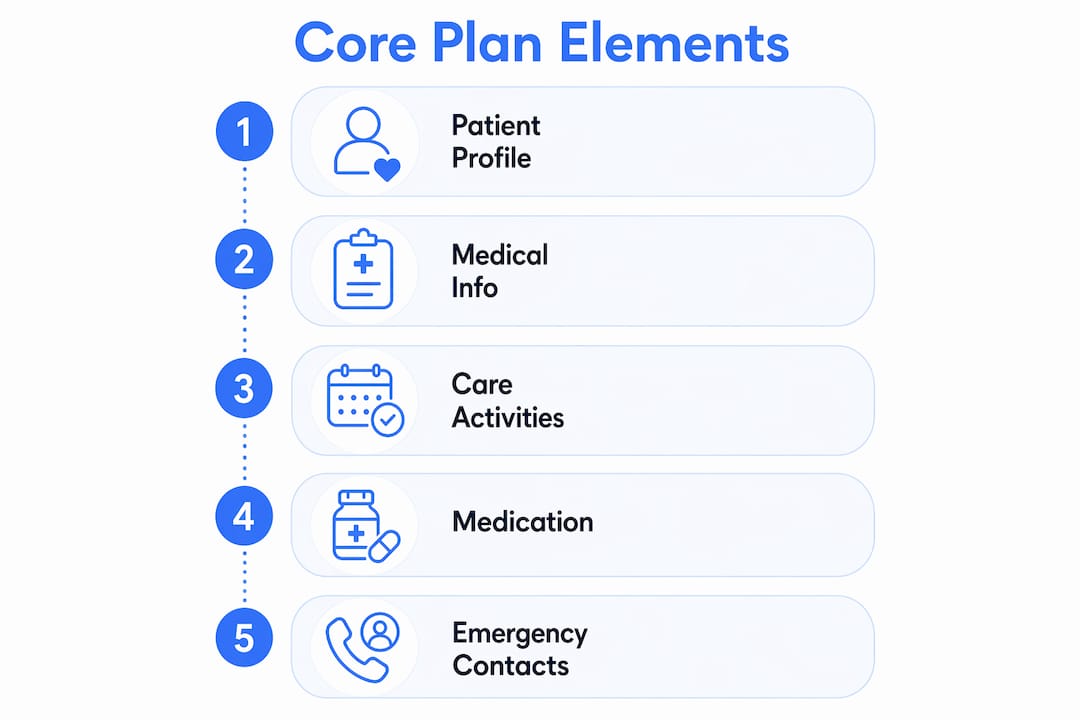
The CDC's caregiving guidelines identify five core sections every plan should cover:
- Person's profile: name, date of birth, contact information, and key personal preferences
- Medical needs: diagnoses, medications, allergies, physician contacts, and therapy requirements
- Daily routine: wake and sleep times, meals, hygiene, exercise, and personal preferences
- Safety and emergency protocols: emergency contacts, hospital preferences, and escalation triggers
- Goals and review schedule: defined care objectives with assigned responsibilities and update timelines
The plan works best as a living document, not a form you fill out once and file away. Health changes, new medications, and shifting routines all require updates. Treating the plan as static is one of the most common mistakes families make, and it's the kind of error that leads to missed medications or conflicting instructions between caregivers.
Core elements to include in every home care plan template
A practical care plan covers the person fully without becoming a binder no one reads. The CDC's Complete Care Plan form recommends keeping the main document to 1–3 pages, with detailed medical protocols attached separately so the core plan stays readable.
Essential components at a glance:
- Patient profile: full name, date of birth, address, phone, mobility notes, and cognitive status
- Medical conditions: each diagnosis, the provider managing it, and relevant treatments
- Medications: drug name, dose, timing, and any special instructions (refrigeration, take with food)
- Allergies: food, drug, and environmental, with noted reactions
- Physician and specialist contacts: names, phone numbers, and when to call each one
- Dietary needs: restrictions, texture preferences, hydration requirements
- Daily routine: morning and evening schedules, meal times, hygiene steps, and preferred activities
- Emergency contacts: at least two people, their relationship, and their phone numbers
- Advanced care planning: power of attorney, insurance information, and documented wishes
- Care goals: short-term and long-term objectives with a named responsible person for each
- Review dates: scheduled check-ins to update the plan after any health or life change
For Medicare-certified home health situations, the plan of care must also include measurable outcomes, visit frequencies, prognosis, functional limitations, and a physician's signature. Family caregivers don't face those formal requirements, but borrowing that level of detail makes any home plan stronger.
| Section | What to include |
|---|---|
| Patient profile | Name, DOB, address, mobility and cognition notes |
| Medical needs | Diagnoses, meds, allergies, physician contacts |
| Daily routine | Wake/sleep times, meals, hygiene, activities |
| Emergency protocols | Contacts, hospital preference, escalation triggers |
| Goals and reviews | Objectives, assigned caregiver, next review date |
How to create and maintain a home care plan step by step
Building a care plan from scratch feels daunting, but breaking it into clear steps makes the process manageable. Collaborative creation involving the care recipient, family members, and any professional caregivers produces the most practical and realistic plan.
-
Assess the person's needs. Talk with the care recipient, their physician, and any current caregivers. Note medical conditions, daily challenges, personal preferences, and what tasks require professional help versus what family can handle.
-
Draft the plan using the core sections. Start with the patient profile and medical details, then build out the daily routine and emergency contacts. Use plain language throughout. Person-centered care guidance from CMS recommends avoiding dense medical jargon so every caregiver can act on the plan without confusion.
-
Assign clear responsibilities. Name who handles each task and when. Vague assignments like "someone will give medications" create gaps. Specific entries like "Maria gives morning medications at 8:00 AM" leave no room for misunderstanding.
-
Set a review schedule. Build in a standing review every three to six months, and trigger an immediate update after any hospitalization, new diagnosis, or significant change in condition. The CDC notes that outdated care instructions are a direct safety risk.
-
Make the plan visible and accessible. Print a copy and post it in a common area where all caregivers can easily see it. Share a digital version with all active caregivers so updates reach everyone instantly.
-
Keep it simple. Attach detailed medical protocols as separate documents rather than cramming everything into the main plan. A brief daily care summary that any caregiver can quickly scan is more useful than a ten-page document that sits unread.
Home care plan examples for different conditions and caregiving situations
No single template fits every situation. A care plan individualized to the person's specific condition is safer and more effective than a generic form applied to everyone.
-
Dementia care: Prioritize behavioral triggers, calming routines, safe wandering protocols, and memory aids. Include specific phrases that comfort the person and a list of activities they still enjoy. Cognitive status notes belong front and center.
-
Post-operative recovery: Focus on wound care instructions, physical therapy exercises, activity restrictions, and medication schedules tied to surgery dates. Include the surgeon's after-hours contact and clear criteria for when to call 911 versus the doctor's office.
-
Senior care at home: A senior care plan template typically covers fall prevention measures, mobility aids, medication management, and social engagement goals. Nutrition and hydration tracking are especially relevant for older adults living alone.
-
Pediatric care: For children with chronic conditions or special needs, the plan should include school contacts, an Individualized Education Program reference, therapy schedules, and caregiver instructions for managing flare-ups. Parents often find a visual daily schedule chart works better than a text-only document for younger children.
-
General family caregiver use: A personal care plan example for a relatively healthy older adult might be two pages covering medications, physician contacts, daily preferences, and emergency contacts. Simple, current, and shared with everyone who helps.
Printable templates are available directly from the CDC's caregiving resources. Fillable digital versions let you update details without reprinting the entire document every time something changes.
Benefits of using a home care plan and tips for getting the most from it
A written care plan reduces errors, clarifies roles, and gives every caregiver the confidence to act correctly without guessing. When responsibilities are documented, caregivers spend less time asking "what am I supposed to do?" and more time actually providing care.
- Fewer communication gaps: All caregivers work from the same information, reducing the risk of double-dosing medications or skipping a therapy session.
- Dignity and person-centered care: Documented preferences, from preferred meal times to favorite TV programs, remind caregivers that the plan is about a person, not just a set of tasks.
- Reduced caregiver stress: Clear role assignments mean no one has to make judgment calls about tasks that should already be defined.
- Continuity across shift changes: When a new caregiver steps in, the plan gets them up to speed immediately.
Pro Tip: Review the plan together as a family at least once every three months. Even when nothing seems to have changed, a group review often surfaces small adjustments that prevent bigger problems later.
Post the plan where caregivers naturally gather, and share it digitally so updates are immediate. A plan that lives only in a drawer does not protect anyone.
How technology can make managing your home care plan easier
Digital tools close the gap between a well-written care plan and consistent daily execution. When caregivers can access the plan from their phones, updates reach everyone instantly instead of waiting for the next in-person handoff.
- Centralized care information: Apps that store allergies, medications, emergency contacts, and daily routines in one place eliminate the risk of a caregiver working from an outdated printed copy.
- Schedule coordination: Digital calendars with approval workflows prevent double-bookings and missed visits.
- Hour tracking: Accurate time records support payroll accuracy and help families monitor how much care is actually being delivered each week.
- Real-time updates: When a physician changes a medication, the digital plan updates for every caregiver simultaneously.
Thecaretracker is a free app built specifically for caregivers and families managing home care. It centralizes schedules, care details, and hour tracking in one place, so every caregiver has the right information at the right time.
Pro Tip: Use Thecaretracker's care information features to store allergies, medications, and emergency contacts digitally. That way, even a substitute caregiver has everything they need before their first shift.

Legal and privacy considerations when creating and storing home care plans
Home care plans contain sensitive health information, and how you store and share that information matters. The Health Insurance Portability and Accountability Act (HIPAA) governs how professional providers handle medical records, but family-managed plans carry their own privacy responsibilities.
Share the plan only with people who are actively involved in care. Sending a full medical history to a distant relative who plays no caregiving role creates unnecessary exposure. When storing plans digitally, use password-protected apps or secure cloud folders rather than unprotected email attachments.
For formal home health situations, the HHS Office of Inspector General oversees compliance with Medicare and Medicaid care documentation standards. Families using Medicare-certified agencies should ask how the agency stores and shares plan of care documents. Keep a personal copy of any signed plan of care, and document the date of every update.
Advanced care planning documents, including a medical power of attorney and living will, should be stored alongside the care plan and shared with the primary physician. Medicare's getting started resources outline what documentation Medicare-covered home health services require.
Common challenges in implementing home care plans and how to overcome them
Even a well-written plan runs into real-world obstacles. Knowing the most common ones in advance makes them easier to handle.
Caregiver resistance: Some caregivers feel that a written plan implies distrust. Frame the plan as a tool that protects them as much as it protects the care recipient. When everyone follows the same documented process, no one gets blamed for a miscommunication.
Plans that go stale: A plan written at hospital discharge may be outdated within weeks as the person recovers or declines. Assign one person, typically the primary family caregiver, to own the update process and set calendar reminders for reviews.
Too much detail: A plan that tries to document every possible scenario becomes unreadable. Keep the main document focused on daily essentials and attach detailed protocols separately.
Inconsistent access: If some caregivers have the current plan and others are working from an old version, errors follow. A shared digital copy solves this more reliably than printed handouts.
Unclear responsibilities: When the plan says "family will handle medications" without naming a person, tasks fall through the gaps. Every entry should name a specific individual.
How to involve caregivers and family members in the care planning process
The most practical care plans come from conversations, not from one person filling out a form alone. Person-centered planning works best when the care recipient, family members, and professional caregivers all contribute.
Start by asking the care recipient directly what matters most to them. Their preferences about daily routines, privacy, and social activities should shape the plan, not just their medical needs. When people feel heard in the planning process, they're more likely to follow the plan consistently.
Hold a brief family meeting to divide responsibilities honestly. Some tasks require professional training; others are well within a family member's ability. Mapping this out together prevents both overload and gaps. Assign a single point of contact for coordinating updates so the plan doesn't get revised by five people simultaneously.
Professional caregivers bring practical insight that families often miss. A home health aide who works with the person daily will notice patterns, preferences, and safety concerns that don't show up in a medical chart. Build in a regular check-in where caregivers can flag needed changes before small issues become serious ones.
Key Takeaways
A well-maintained home care plan template is the single most effective tool for keeping every caregiver aligned, reducing errors, and delivering care that respects the person's preferences and needs.
| Point | Details |
|---|---|
| Keep it to 1–3 pages | A concise main document with attached protocols stays readable and usable for all caregivers. |
| Update after every health change | Outdated instructions are a direct safety risk; schedule regular reviews every few months. |
| Name specific people for each task | Vague assignments create gaps; every care task should list the responsible caregiver by name. |
| Share digitally for instant access | Digital plans reach all caregivers simultaneously when medications or routines change. |
| Build the plan collaboratively | Including the care recipient, family, and professional caregivers produces a more accurate and trusted plan. |